Suddenly designers are copying their Malaysian counterpart’s work. One victim is orang Kuching Dickson Lim
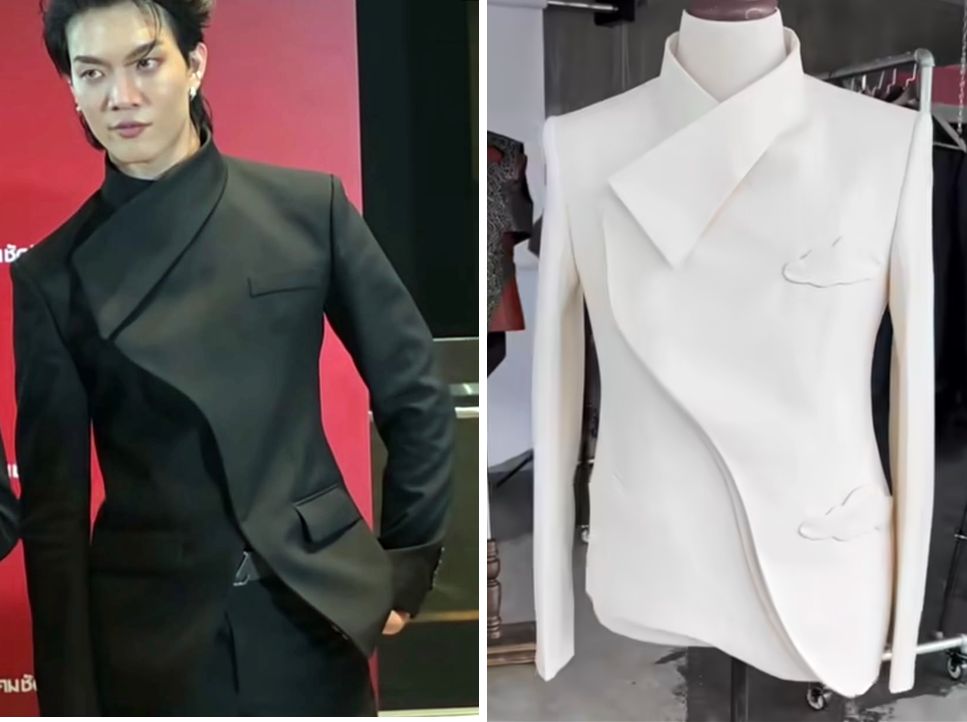
Design wonder kid Dickson Lim is celebrating again. After exulting over his jacket worn by Beyoncé’s stylist Ty Hunter at the Met Gala early this month, he is now basking in the joy of someone supposedly copying his work. Yesterday, Mr Lim was hyperventilating on his eponymous brand’s Instagram page, writing: “This celebrity stole my design w/o credit.” That’s a fascinating charge. Thieves must credit their source? Another instance of beautifully sloppy thinking born of the digital age. To us, calling it “stealing” but also “without credit” is paradoxical, because the act of crediting is what usually disguises stealing as homage. If there’s no credit, the theft isn’t even staged; it’s just erasure. Silence of source could be because the design disappeared into the wearer’s own aura. It is less theft than absorption. In any case, the real puzzle: If it was the wearer, who exactly was doing the stealing: the celebrity or his unidentified designer?
The accused, according to Mr Lim’s post, is Thai actor Yongyut ‘Boat’ Termtuo, famous primarily for his roles in Boys’ Love (BL) dramas, where he has successfully cornered the market on intense eye contact and accidental hand-brushing. In the photos Mr Lim shared, the actor wore a black blazer with an asymmetric left-over-right front, sans lapels. In place of the fold-backs on the chest is a tab collar that broadens towards the curvy opening of the jacket. The garment does bear similarity to what Mr Lim had designed for a groom last year, a tailored garment known as the ‘cloud jacket’ because the pocket flaps are shaped like clouds (even MediaCorp artiste Zhai Siming [翟思铭] has worn it at the recent Stars Awards). The jacket was, in fact seen, as early as 2024. The question is, does wearing amount to stealing? To mistake a lack of imagination for a crime is giving the culprit far too much credit. Moreover, the act of putting a jacket on is consumption, not appropriation. What, perhaps, was really at stake is recognition. To him, the missing name check felt like grand larceny, conveniently forgetting that a legitimate acquisition —whether Mr Termtuo bought the jacket, was gifted or loaned—really took place.
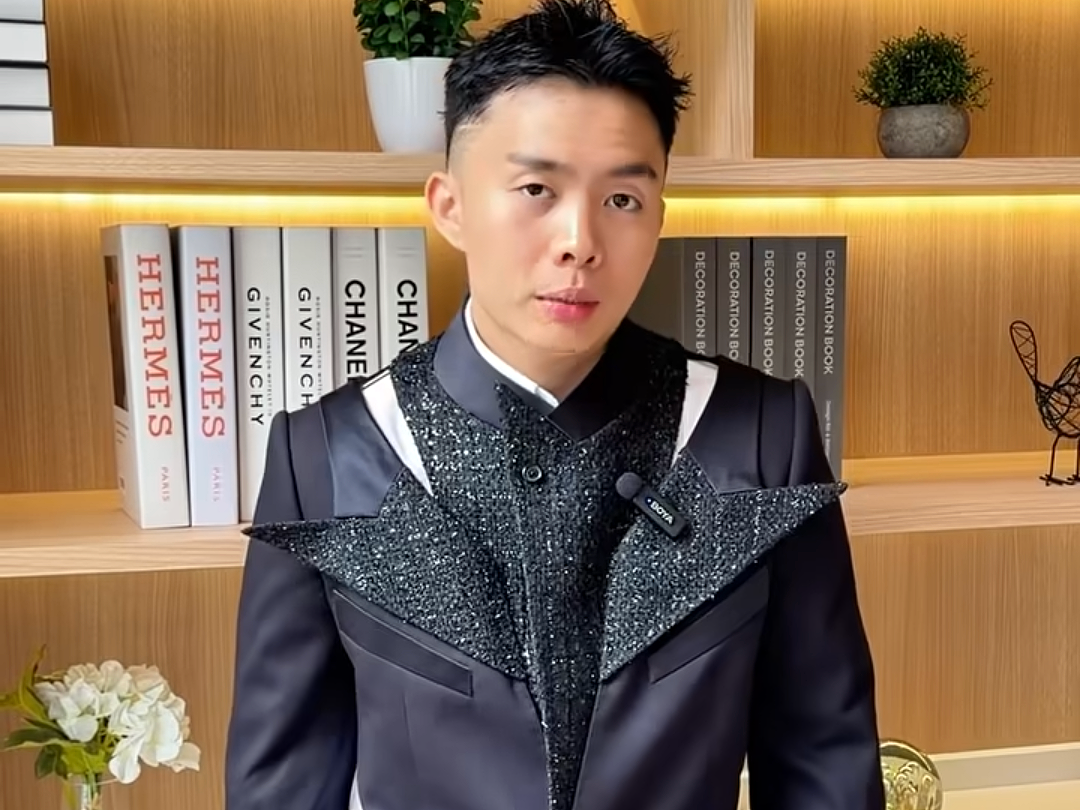
Dickson Lim. Photo: thedicksonlim/Instagram
Malaysia seems to be afflicted by such thieving of designs. Three weeks ago, veteran designer Douglas Chew similarly claimed that a design of his from 1992 was stolen by the wearer (but he used the word “bitch”, which could also reference to the designer), who was dressed by Saint Laurent. In both instances, the designers specifically used the word “stole”—a loaded, almost prosecutorial term. It doesn’t just describe a grievance; it frames the act as criminal, intentional, and morally outrageous. Now, far be it from us to champion the dubious art of plagiarism. We love original property. But we also love context and basic logic, so let’s take a breath and look at what has been happening in the digital town square. Fashion trends once belonged exclusively to local regions or the high-fashion elite before commercial mass-production inevitably watered them down. Today, the moment a designer posts a bespoke piece on Instagram or TikTok, it enters a global visual pool. When a designer works within a highly specific, trend-forward vernacular—whether it is technical modular outerwear or structural deconstructed tailoring—the vocabulary is shared. The closer everyone stands to the same fountain of inspiration, the more frequently they will step on each other’s toes.
We are not saying that copying by way of inspiration did not take place in what Mr Termtuo wore. But, two weeks ago, Mr Lim declared on IG, “Being a good designer isn’t enough… Fashion isn’t just about design. It’s also about visibility. Status. Connections. And who wears your work. Because no matter how original a piece is, if nobody influential wear it, sometimes it gets overlooked.” But why was he then criticising an influential actor such as Yongyut Termtuo for wearing the output of the unidentified designer? Reducing fashion to celebrity endorsement is not analysis, it’s insecurity. And by his logic, if no one copies him, his designs would be unnoticed. But when he is not copied, it doesn’t mean he is a protected genius—it means he is irrelevant. There is a stunning irony in his public meltdown: those copycats are the only real evidence that he has finally acquired the status he so desperately craves. He wants to worship at the altar of hyper-visibility, yet he seems personally offended by the cost of admission.
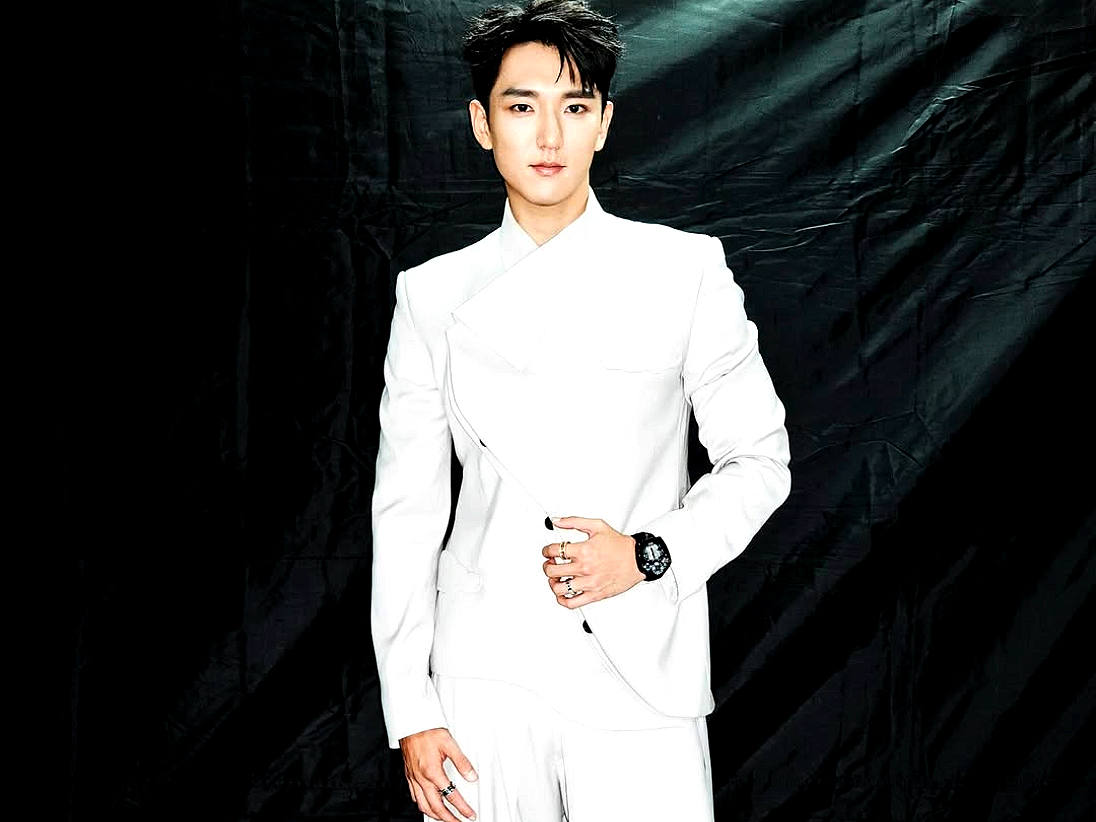
MediaCorp artiste Zhai Siming wearing the same jacket. Photo: zhaisiming/Instagram
In that text-only post, he added: “That’s the reality of this industry. Talent matters. Visibility matters even more.” Mr Lim is thus admitting that the industry is no longer governed by the meritocracy of craft, but by the tyranny of attention. But what does he really know about the industry? He works out of the pepper capital Kuching, is self-taught and participates in Kuala Lumpur Fashion Week. His fundamental concept of the industry isn’t built on the historical, commercial, or structural realities of the trade—it is entirely simulated through a screen. When your primary textbook is an Instagram feed, your worldview becomes dangerously distorted. Operative isolation in Kuching, combined with being entirely self-taught, creates a very specific kind of creative myopia. To him, the industry is a flat landscape of digital imagery. He sees Virgil Abloh’s meteoric rise, styling credits on TikTok, and celebrity placements as the entirety of the business. This is the total intoxication of the single image of his suit appearing alongside Beyoncé on the cover of The Wall Street Journal. He shared nine posts on IG about the WSJ editorial, but not once did he say that he bought the paper and read it. Easy it is to mistake the glow of a screen for the weight of an industry.
More than image-harvesting, the deepest irony here is that Mr Lim grew up helping out in his parents’ traditional tailoring shop in Kuching—a craft that he initially found boring before pivoting to “deconstruct” it. In a stunning display of generational predictability, the twenty-six-year-old seeks to innovate fashion the only way he knows how: turn creation into autopsy, while mistaking gimmick for subversion. When deconstruction first emerged from the likes of Rei Kawakubo and Martin Margiela in the ’80s and ’90s, it was a radical, philosophical protest and an intellectual act of destruction. Fast forward nearly four decades, what Dickson Lim is doing isn’t a dissent, but operating from a standardised template. To stand out, he needed to top that, and over-design became his calling card. His stylistic courage began and ended at the lapel—a self-imposed boundary he prefers not to cross. To imagine fashion only occurs when a garment is hacked to pieces is a wonderfully juvenile misunderstanding of the medium. True mastery of the craft is felt in the quiet intelligence of a shoulder slope or the exact weight of a textile. It doesn’t require you to cleave a blazer in half and scream about your originality on Instagram. Tailoring is an art of whispers. If you have to scream, it’s because your work has nothing to say.
 Style on the Dot