FIFA and the illusion of grassroots growth
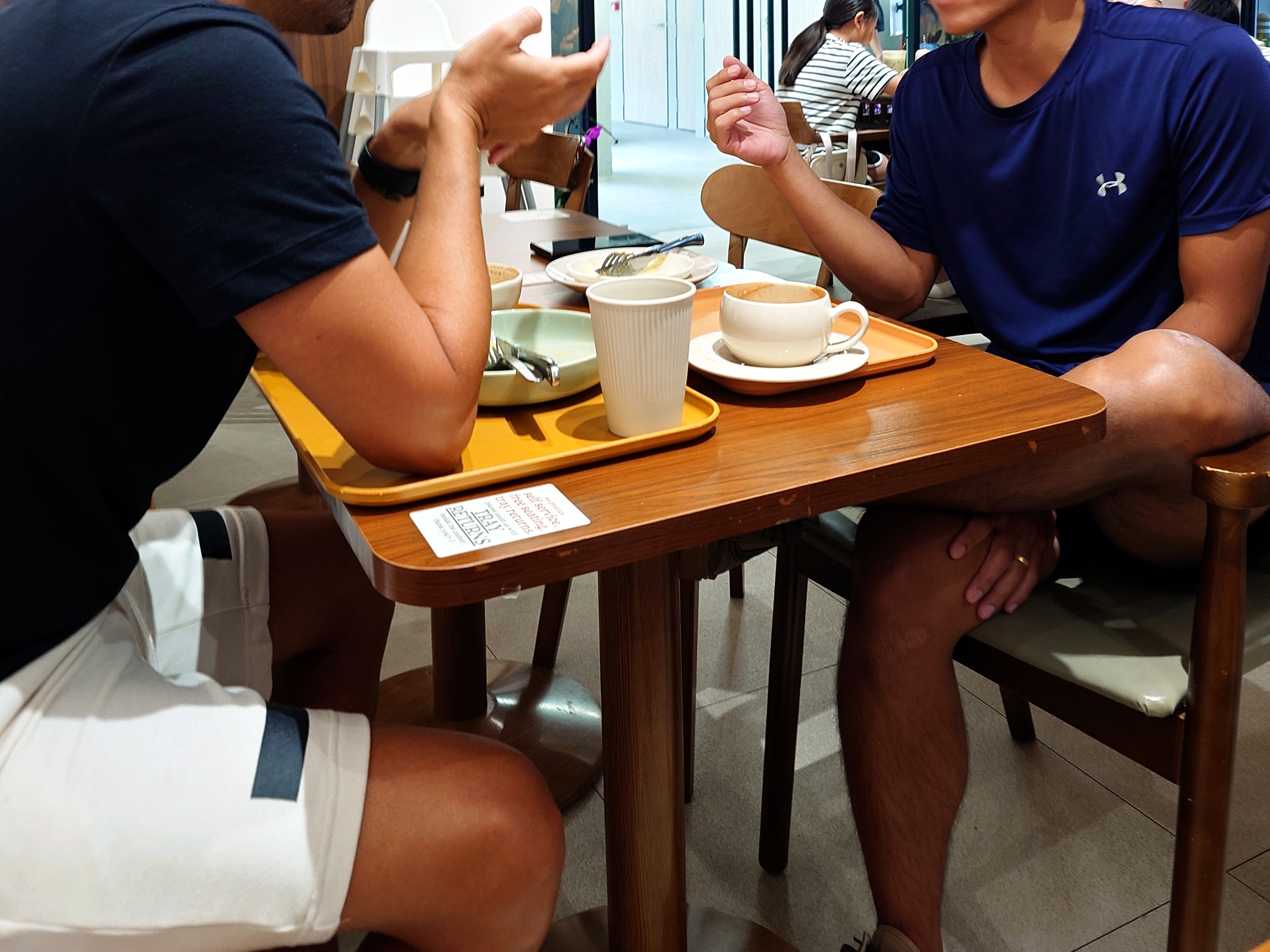
It is the football season and there are very few, if at all, online opportunities that you do not collide with news about the World Cup, its unfortunate staging in the U.S., and a deluge of sports influencers offering their ‘insider’ accounts. Fashion folks are rarely football fanatics. To escape the disturbing din, we thought we’d have breakfast in a café known for their doughnut balls than footballs. But, with a predictability that bordered on the tragic, the stars had other arrangements. Seated directly next to us in the café with the vibe of a minimalist Swiss chalet, were two mates in their late twenties. Eavesdropping was inevitable as they spoke with the softness of a football referee issuing a red card mid-game. We soon learned that one of them was from Portugal and the other, Singapore. Both looked like they’d just fled a training pitch and were currently mourning the nap they were clearly owed, still trapped in the tragic aesthetic of post-game casual, usually blamed on our typical weather. The Singaporean was extra tanned because he has, as he gleefully announced, just returned from a holiday in Bali. The angmo ordered scrambled eggs and his companion chose an immoderate donut ball. An athlete’s diet is clearly broad: One man’s high-performance fuel is another’s deep-fried liability.
From the excited conversation, we gathered that the men were football club administrators or, at least, involved in football training. Both were lamenting the current state of player recruitment and the promotion of football, and how schools are not doing enough to push for the sport to be more popular. How much more popular, or through what mechanism, they did not say. The Singaporean was unimpressed by the influx of foreign talent into the national ranks. He remarked upon their palpable sense of entitlement with the weary detachment of a man accounting for a poorly curated pasar malam, suggesting that perhaps, like the appearance of pasta stalls, some had arrived with a white superiority complex, packed firmly in their carry-on luggage. He said that “quality as foreigners is not high.” Foreign imports, as we understand it, are supposed to be the force multipliers—they don’t just add value on their own, but amplify the effectiveness of the existing team. His admission looked to target a systemic scouting problem. Because Singapore isn’t a top-tier footballing destination, the league often struggles to attract prime foreign talent. Instead, it frequently becomes a landing pad for ‘journeymen’ looking for a comfortable paycheck or players who will never meet their prime.
Both looked like they’d just fled a training pitch and were currently mourning the nap they were clearly owed, still trapped in the tragic aesthetic of post-game casual, usually blamed on our typical weather
The local chap continued: “From where they come from, they have little. But the moment they come here, they find gold!” And recounted how many would spend their money, including blowing their first pay on parties and drinking, which sounded like an exposé of the massive underbelly of the game’s entire import strategy. The flooding of foreign talent might elevate the local game, but the reality, it seems, has been an absolute disaster of inflated expectations and mediocre output. The Portuguese then revealed that back in his home country, the typical newbie salary is “one thousand two”—a figure he left tantalisingly ambiguous as to currency. Whether in Euro or U.S. dollars, it was a brutal look at the stark economic divide between the global football elite and the rank-and-file workers of the sport. Reports have indicated that Portugal’s national minimum wage is set at 920 euros per month, meaning an entry-level professional athlete in a second-tier or lower-table Portuguese club is earning just slightly above the legal baseline for a factory or retail worker. And possibly less than a dishwasher here. Under the Progressive Wage Model (PWM), a dish-washing auntie could possibly out-earn a professional footballer in a major European footballing nation.
The conversation cut straight to the heart of football’s mythology. It made us realise that FIFA had largely peddled a lie: that football is a meritocratic aero-bridge out of poverty and education inequity. What we heard was not an anomaly. It did not take long for us to learn that the bridge is guarded by toll gates: access to elite academies, exposure to scouts, networks of agents, and the infrastructure of leagues that matter. Singapore, despite our damning affluence, sits outside the glamour circuits of Europe and South America. That marginality means the process of recruitment often treats the region as an afterthought, reinforcing inequities rather than dissolving them. What’s striking is how FIFA’s rhetoric mirrors broader neo-liberal promises: talent supposedly transcends geography, class, and race, but in practice, structural barriers dictate who gets seen and who gets discarded. The aero-bridge truly collapses when one learns that most players never even get a boarding pass. In fact, many of them have never left their own country, let alone are equipped with any inkling of what Southeast Asia, particularly Singapore, is like. These aren’t explorers or athletes seeking a new challenge; they are employees filling a slot in a league they likely didn’t even know existed six months prior.
Many of them have never left their own country, let alone are equipped with any inkling of what Southeast Asia, particularly Singapore, is like
Such an institution is treating the 2026 World Cup as its grand finale of decay—a deadline it seems remarkably motivated to meet. As has become painfully apparent, the tournament is being staged in America, a nation where the sport is less a cultural cornerstone and more an expensive branding exercise, frantically shoehorned into massive stadiums designed for the habitual consumption of American football, not, as the rest of the world knows it, football, rather than soccer. These colossal bowls are optimised for tailgating, halftime shows, and commercial breaks. Ultimately, it is all-American, forcing a “global game”, as FIFA like to call it, into an American mold. FIFA isn’t nurturing football culture globally; it’s about owning it, even if that means distorting the game to fit an incessantly American spectacle economy. The “beautiful game” is being swollen to the “big beautiful game”, to better fit the Donald Trump aesthetic: sheer size, sponsorship saturation, and the very picture of dominance. FIFA does not just own football, as they extraterritorially do; they reshape it into whatever cultural costume—or peace prize—that suits their expansionist ambitions. The game is no longer the objective, but merely the scaffolding for their brand of manufactured unity and, more importantly, raging revenue streams.
Beyond the logistical absurdity of the venues and the reported “dynamic pricing” (ticket prices rise and fall based on demand, much like airline seats or Grab fares—a structural distortion of what football is supposed to be), there is the fundamental branding crisis that FIFA seems pathologically unable to address: America itself. It turns out that when your primary qualification for a country is a check that doesn’t bounce, you occasionally end up with a partner that creates a rather awkward national narrative, whose cultural posture collides with FIFA’s myth of universality. Football may still be beautiful, but America is not. What it is showing the world today is a pageant of self-validated ugliness, a spectacle where the lack of shame is marketed as virtue. Where past World Cups were framed as cultural festivals, this one risks being remembered as a gated extravaganza: fans priced out, ICE fenced in, football distorted into a commodity. It’s less about the game and more about FIFA proving its sovereignty by forcing football into America’s rusty mould—it’s no custard cream in a doughnut ball. FIFA had successfully landed their circus in a country that mistakes sprawl for grandeur and consumption for culture. Meanwhile, back at the café, the two men in their moisture-wicking duds had finally finished their breakfast, rather oblivious to the fact that they were merely the volunteer stagehands in a wayang that had already written them out of the script.
Photo illustration: Jim Sim

