Malaysia’s “luxury” streetwear retailer Stealplug has suddenly announced that they are “closing down” after regaling their 21.3K followers on Instagram with a dramatic tale of merchandise heist. It is hard not to admire the cinematic timing of it all; a narrative arc so perfectly calibrated for a quick exit
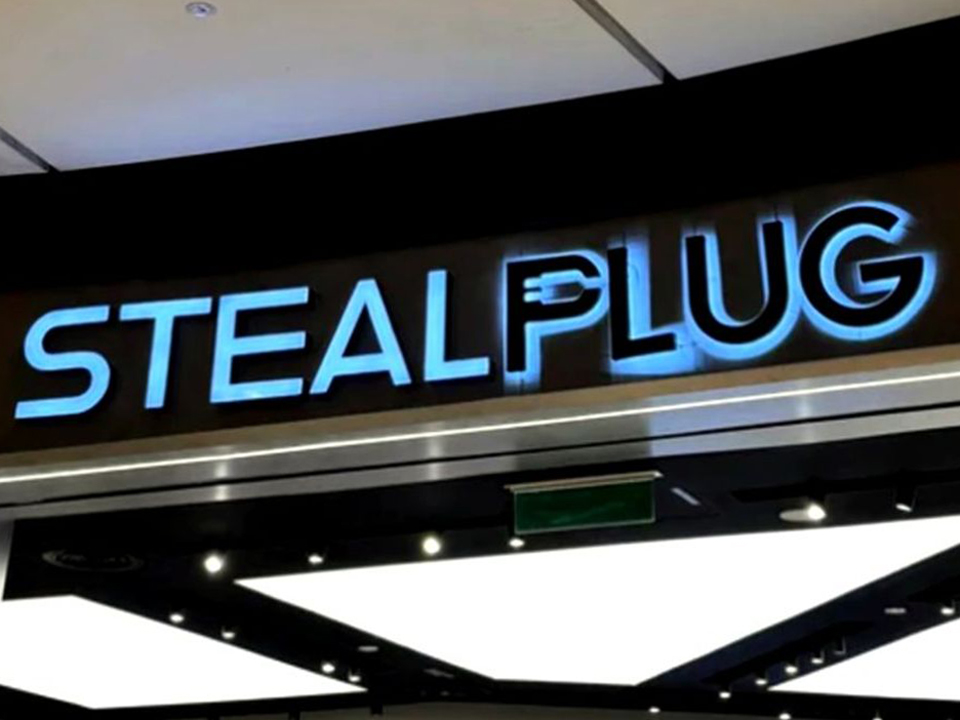
Soon-to-shutter Stealplug at The Starhill mall, Kuala Lumpur. File photo: Dan Lim for SOTD
Stealplug shall be no more. This comes just ten days after Kuala Lumpur’s headlining Rain Rave Water Music Festival, positioning the city as one of the coolest in Southeast Asia. The ‘luxury’ sneaker/streetwear retailer with a bright, fancy store in The Starhill, Kuala Lumpur, has, 18 hours ago, suddenly announced on Instagram that they are “closing down”. The message was clear: “it is with a heavy heart that we announce the closure of our business.” This came just three days after the brand and its owner released a dramatic IG reel on their respective pages, showing a supposed driver of the retailer’s transport contractor being chased to an unidentified field, hurled at with an object, and then pinned to the ground, and accused, in Malay, by the panting chaser of causing him to lose “dua (two) million (ringgit?)”. And then the proprietor of the business, Joven Neo appeared in the same reel to report a recent incident, claiming “真个M的货就这样不见掉了, an entire million worth of goods disappeared just like that”. While ‘M’ is used among the digital-native streetwear resellers in Malaysia to refer to products that are from mainland China, the reference here is likely monetary. Spectacularly, it all hit the fan while he was enjoying himself in the City of Angels, Bangkok.
It was a conveniently climactic finale for a sneaker-retail presence that appeared to have traded operational logic for high-octane melodrama. Mr Neo went on to explain that he had to cut short his holiday to rush back to KL to address the logistics mishap. He quickly outsourced the accountability: “就死在这uncle的手上, die in the hands of this uncle.” He even shared the photo of the middle-aged man, beseeching anyone who has dashcam images of the accused to share it with him. He explained that the mysterious heist took place during a relocation of their office cum warehouse, assuring his viewers that he did not use a new mover, but one who was previously involved in the move of his shop, office, and even his own home. There is beautiful contrast here: a middle-aged contractor’s supposed low-spec/unreliable nature and Mr Neo’s high-visibility, high-spec, and technical persona. He claimed the missing goods amounted to “(RM)800 to 900 多千 (thousand plus)” and the payment of those items have not been made. He asked, “我哪里挖这个钱来cover喔, where do I dig out this amount to cover [the losses]?” Logistics failure became narrative climax.

Joven Neo, describing what happened to his consigned stock. Screen shot: jovennnnnnnnnn/Instagram
In claiming that the lost goods have not been paid and admitting that “我一定周转不回来了, I definitely won’t be able to make it back”, was he publicly admitting to the insolvency of Stealplug? In business terms, “周转 (zhouzhuan) or rotating” refers to cash flow and liquidity. By admitting he can’t “rotate”, he is essentially documenting his business’s own insolvency in real-time. Mr Neo did say in that video, addressing the “剩下的 (remaining) supplier and consignment (sic)”, to give him time. He will bear the responsibility, he said. In one quick move, he basically issued an assurance: “I will pay”, turning a potential criminal matter into a civil one. If consignors’ goods were perceived to have been withheld or misappropriated, that could land him in legal hot soup. The situation had to inevitably go from a theft to a debt. His statement, therefore, positioned him as insolvent, not malicious. It cleverly underscored that Stealplug’s finale wasn’t just about logistics; it was about controlling the narrative of collapse. Despite the compelling recount, the vigilant are asking, “Why was such a high-value move handled so casually that a single ‘uncle’ could cause a million-ringgit blackout?” More importantly, why was there no goods-in- transit insurance to ensure that there won’t be those who ignore their basic duty to protect a company’s assets?
A major merchandise heist involving a transport contractor who vanished with a significant portion of the inventory, leaving the business deep in debt is the kind of daylight caper that would attract the constabulary, yet Mr Neo did not say he would be making a police report, or had. This was a million-ringgit theft, not a supply chain hiccup; it was potentially a criminal matter. In a second IG reel posted two days later, he continued to say that the incident had impacted Stealplug severely and that there is no way they would be able to continue with their operations. The only thing left to do is to conduct a sale at the stores and try to recoup their losses. He was certain: “Stealplug 是做不下去了啦, it’s impossible for Stealplug to continue.” Mr Neo announced that everything in the stores will be drastically marked down and even said: “希望你们给小弟一个机会,过来support Stealplug最后一次, give your little brother a chance and support Stealplug for the last time.” Calling himself “小弟 (xiaodi, little brother)” positioned him as a humble, vulnerable, and familial—not failed—businessman, but a younger sibling asking for support. Curiously, that plea for support is for the merchandise clearance, not the recovery of what was allegedly lost.
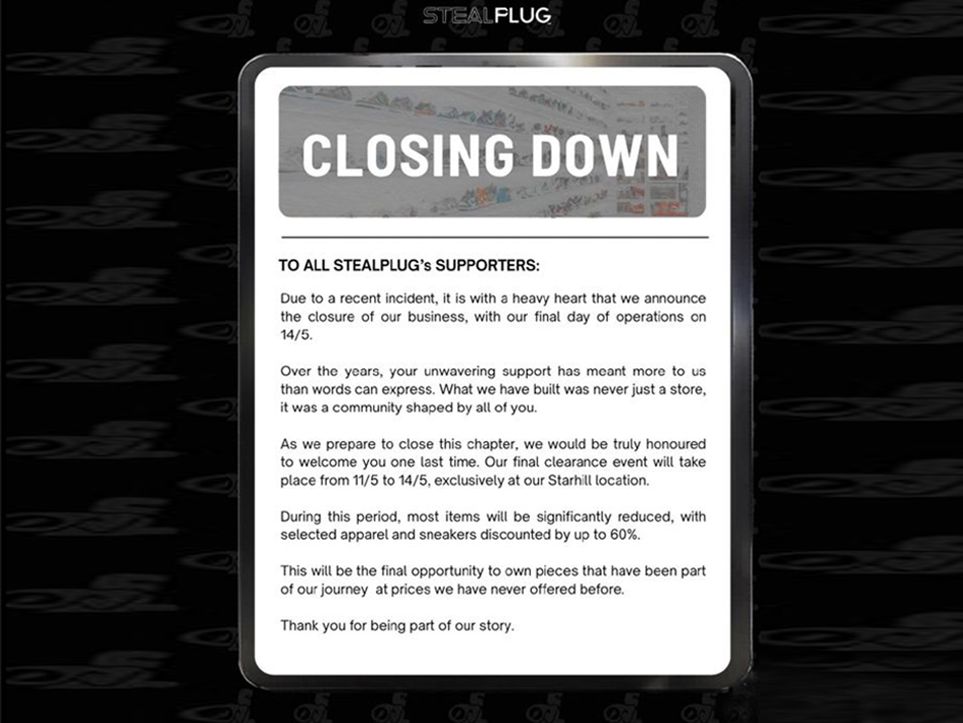
Stealplug’s latest Instagram post. Screen shot; stealplug/Instagram
It is indeed psychologically harder to scream at a vulnerable younger sibling than a director of a limited company. This is rather odd as Mr Neo’s public persona hinges on the alpha-samseng-bodybuilder who found success through fashion retail, and, thereby, improved his personal image. Stealplug,—Mr Neo gleefully pronounces it as “still-plug”—is a conflation of ‘steal’ (something valuable that was had for a song) and ‘plug’ (a slang for connection or a reliable source). The brand was founded in Kuala Lumpur in 2017 by Mr Neo, and quickly became Malaysia’s most prominent sneaker and streetwear reseller, in a similar vein to Singaporean Limited Edt, Stealplug quickly gained momentum when they opened their flagship in The Starhill in 2023, followed very shortly by a Genting outpost at the SkyAvenue Mall. They are seen as “premium” and “curated”, even when they are not official retailers of many of the brands they carry, nor are they sourced from licenced distributors. Among the expensive labels that they stock are Loewe and Balenciaga, neither brand is affiliated with these stores. They are obtained from what is largely known as the ‘grey market’. When we visited Stealplug at The Starhill in March, the integrity of the stock felt precarious. Despite a publicised authentication protocol, the absence of official brand affiliation for many of the labels left a void of confidence that no amount of premium shelving could fill.
If shoppers are hoping to find official lineage, they might uncover it elsewhere… in throbbing Subang Jaya. In 2024, Stealplug marked their first anniversary by collaborating with compatriot streetwear brand Stoned & Co. The collaboration was part of a special event held at Stealplug’s The Starhill store on 8 July of that year. It symbolised Stealplug’s positioning not just as a reseller of global hype goods, but as a local cultural hub, linking international sneaker culture with Malaysian streetwear identity. A year later, Stoned & Co went viral, not because of product but a person. The brand’s face-facing co-founder Tan Jia Hui, was toppled, ironically via a dashcam footage that went viral, showing him in a dramatic roadside and mid-chase meltdown. There is no evidence that Mr Tan and Mr Neo are mates other than that they had a professional relationship. Since that anniversary, the two brands have maintained a close partnership. Stealplug continues to act as a primary retailer for Stoned & Co., often receiving exclusive drops like the Stoned Force NFL Jersey and the Eye of the Tiger collection, affirming that this kind of partnership blurs the line between retailer and collaborator. Instead of simply distributing products, Stealplug becomes part of the storytelling and hype cycle that Stoned & Co thrives on.
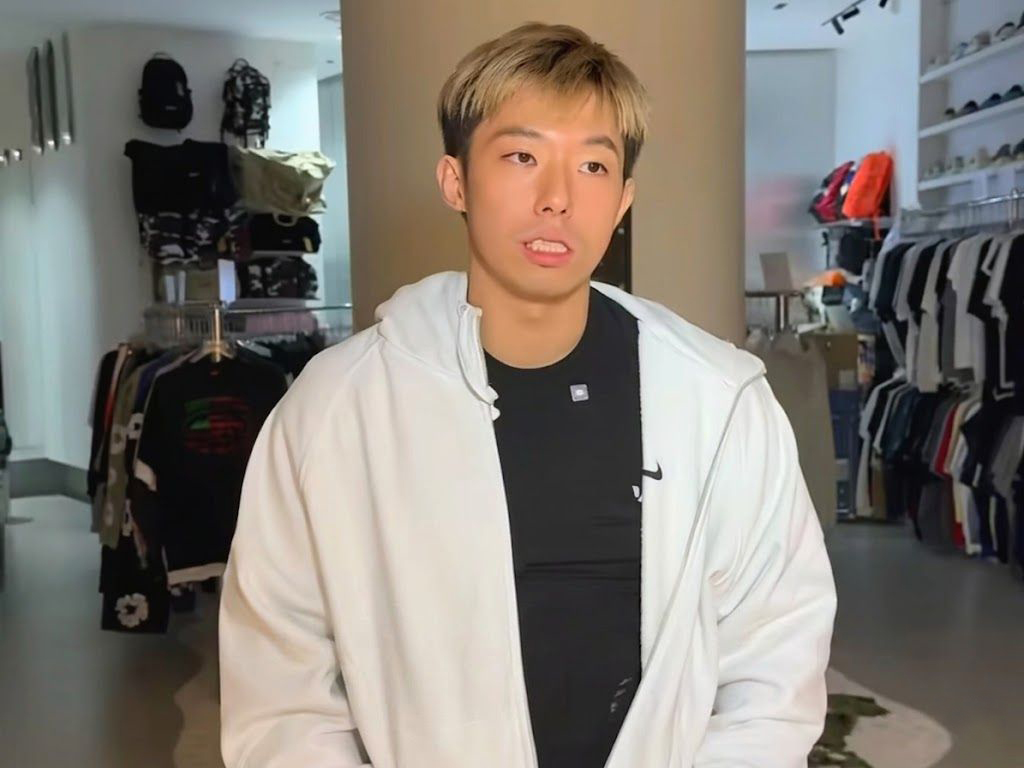
Mr Neo announcing the “closing down” sale on Instagram. Screen shot: stealplug/Instagram
It’s a neat approach to keep both brands relevant and desirable in the streetwear landscape that is distinctly Malaysian. The KL streetwear scene is primarily community-driven. Pop-ups, collaborations, and fashion shows are central to the scene, creating spaces for enthusiasts to connect. In KL, local brands act as cultural storytellers while stores serve as community anchors. Stoned & Co, with their flagship in Subang Jaya, attract the inevitable herd of locals and students who treat the areas outside campus as their entire personality. Stoned & Co securing a spot on the shelves of Stealplug is less about inventory and more about a strategic glow-up. It’s the retail equivalent of being seen at the right table—suddenly, the brand isn’t just available, it’s “curated”. However, it is hard to see if Stealplug lived up to their “premium” positioning. They are in The Starhill, today a shadow of their former high-end self, but crucially, it still has Louis Vuitton fronting the entrance. But Stealplug does not have LV as a close-enough neighbour. They are relegated to the same moribund wing of the mall that serves as a final resting place for fashion outsider, Philipp Plein. Even Mr Neo called it “鸟不生蛋的地方(a place where birds don’t lat eggs)”.
The pairing of Stoned & Co. and Stealplug is almost too on-the-nose: what began as countercultural—stoned, DIY, underground—now finds validation in a space that thrives on exclusivity—steal, ‘curated’ shelves. In some ways, this mirrors the larger tension in KL’s fashion scene—a desperate, sweating tug-of-war between luxury, street-centric, hoodie-galore aspirations and a tropical climate that demands we all just give up and wear Uniqlo Airism. Crucially, what the association of the two brands reveals is that both are part of the same, spectacle‑driven, Mandarin-speaking Malaysian streetwear ecosystem aiming higher, where logographically-obsessed charisma and overblown hype had outweighed operational discipline. Some observers of the KL streetwear scene noted that, three weeks ago, Stealplug conducted a “Buy 1 Get 1 Free event” and saw a possible preface to a collapse. It was a red flag since a consignment store shouldn’t need to liquidate stock at that scale unless cash flow had already broken down. With that pricing, the only thing they weren’t liquidating was their sense of denial.
Post-Script: Since the publication of this post, chatter within the KL streetwear community has pivoted towards the theory that this ‘collapse’ is, in fact, a sophisticated, if desperate, publicity stunt to facilitate a total inventory exit. A crowd has truly gathered at Stealplug’s The Starhill store (there is, in fact, no mention of similar event at the SkyAvenue Mall outlet). The action is localized only to the flagship, where the crowd can be photographed, and they have been. Whether we are witnessing a genuine retail tragedy or a scripted melodrama is secondary to the technical verdict: when a brand must resort to faking a felony to clear its shelves, the ‘curation’ is cosmetic and the ‘premium’ has already perished. In the spectacle-driven ecosystem, the heist is merely the last stitch of a garment that was already coming apart
 Style on the Dot