Kuala Lumpur cancelled clear skies to fake torrential rain in order to draw crowds to a typically congested downtown. Dior must be having a sodden good time with the action right in front of their store—because nothing screams luxury retail like a high-velocity, fire-hose-induced deluge filtering through one’s flagship to entice the VVICs
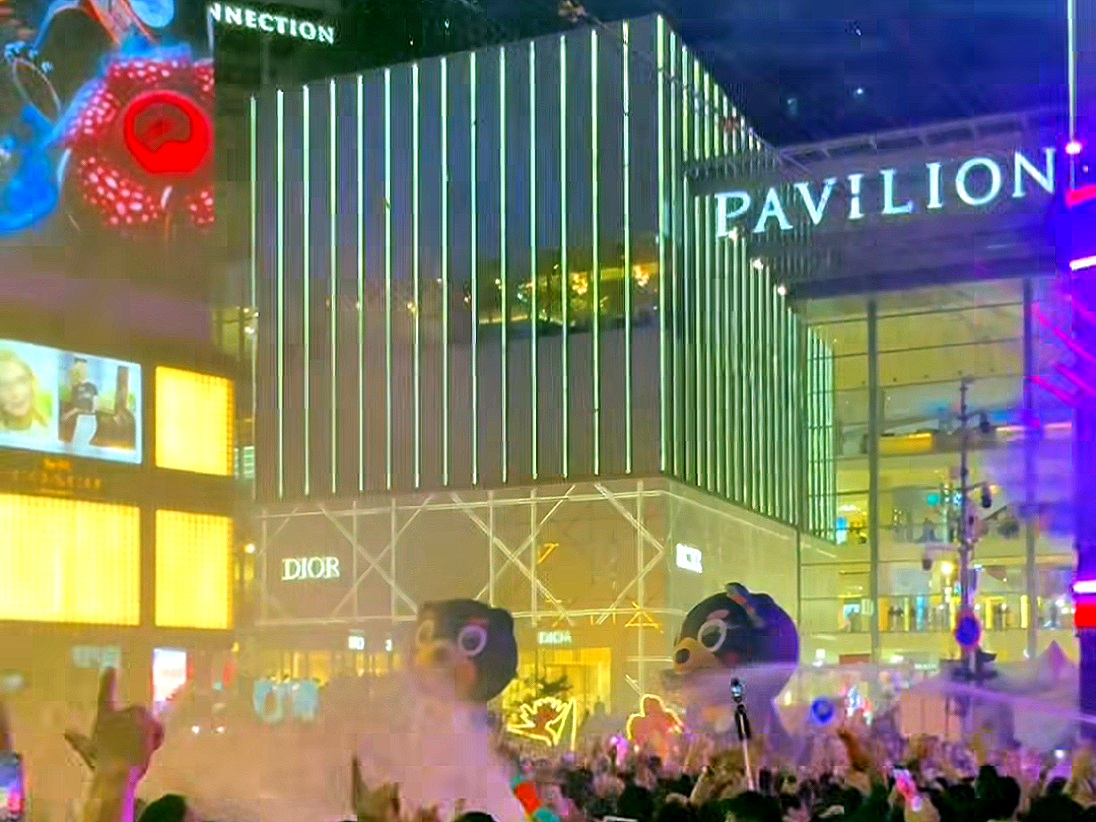
The beauty of Kuala Lumpur’s debut Rain Rave Water Music Festival is that it did not need to depend on inclement weather for the required torrent. All that was called for were several well-positioned industrial-grade water turrets to get the deluge blithely going. On Labour Day, the second of the three-day event, the rain gods enjoyed a public holiday—their services outsourced to expensive commerical spray guns. As realism was neither required of the festival’s branding or expected, there was scant attempt at atmospheric illusion—no misting systems, no fine spray to mimic rainfall—just blunt-force hydraulics drenching bodies in long pulses. The engineered hujan gave nature a miss, and went straight for a theme park ride.
This was, of course, never about the experience of rain, but about the image of it. The vibe looked good on a screen, but may feel abysmal in person. As a music festival veteran told us, in response to the promise of precipitation: “Where got rain? They spray water at you, lah. Kurang aja.” Getting drenched by jets of water is naturally more intrusive than when it is meteorological. To be certain, we sat Rain Rave out; we figured it was best not to be standing in the path of a pretend downpour, lest their first attempt opened the floodgates. We followed the event through social media, as the organisers had hoped many would, and saw that while the participants seemed to embrace the explicit atmospheric scam, there was something else that did not spell festival clout. As the day unfolded, it became clearer that the staging reflected a broader tension in event design: do you prioritise immersion or impact?
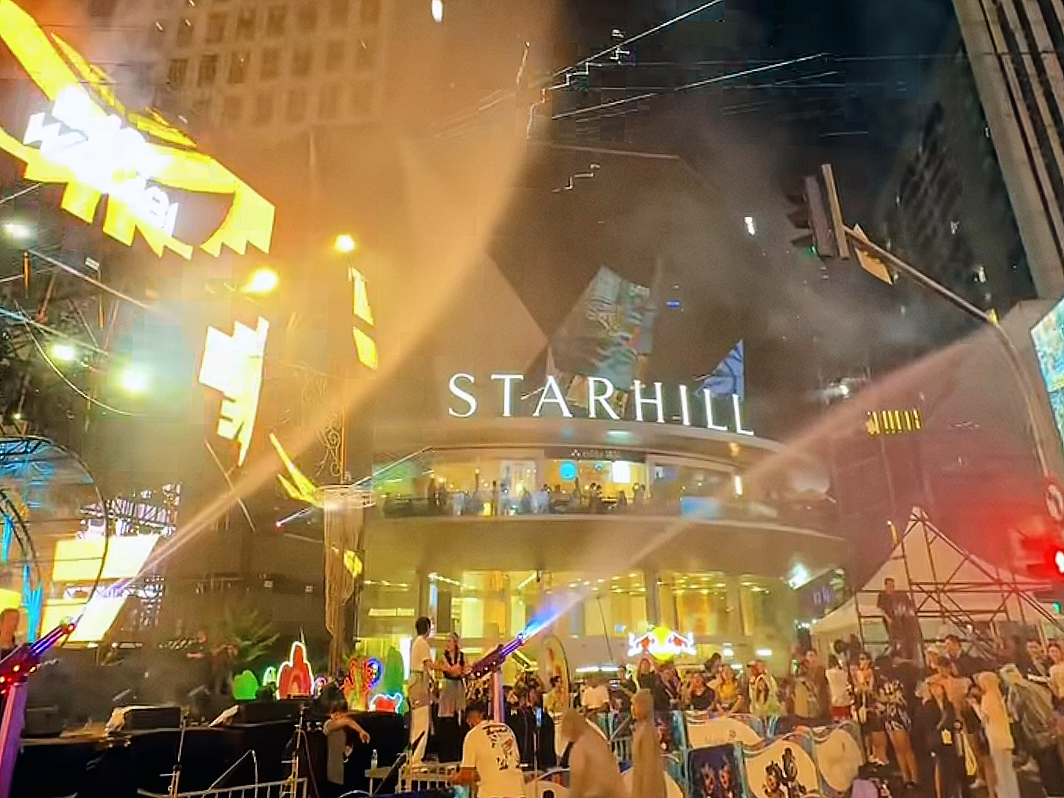
Much of the official messaging for the Rain Rave has been about presenting Kuala Lumpur—and by extension, Malaysia—as a “modern” city. There has never been any doubt that the valley in which the Twin Towers stand is architecturally caffeinated. But glass and steel are not enough to say you have arrived as a culturally-advanced destination. You need to possess a soul that isn’t just waiting for the next mega mall to be erected. But a truly bandar moden shouldn’t have to resort to water turrets and street blockades to generate urban vibrancy. It should be so by design, not by state-sponsored disruption. Genuine urban development should be distinguished from superficial, content-first desperation of official standing. Hard, therefore, it is to say if the Rain Rave was a push for modernity through an event that felt culturally authentic or one that came across more as a performance for outsiders. Sure, there were cultural dance groups tarian-ing to the transcendental and gerai makanan offering street food, but are they cultural tokenism or true enlightenment?
The desire to turn possibly KL’s oldest commercial heart into a frenetic living theatre is understandable. Essentially, the organisers are betting that while tourists appreciate the air-conditioning in the prominent-placed Pavilion mall, they are more eager to tell people they survived a rave in the rain, directed in the middle of the Golden Triangle. There is also the assumption that once you’ve assembled a throng of thousands, the gravitational pull of the surrounding retail hub will naturally absorb the overflow. Malls become the “secondary stage,” monetising the spectacle by converting foot traffic into consumption. In most of the reels of the event shared on social media, logotypes of luxury brands form the backdrop of one side of the 360-degree-advantaged music festival. But do rave-goers naturally gravitate towards Balenciaga, Burberry, Cartier, Dior, Louis Vuitton, and Rolex, whose light boxes served as one stretched procenium to the wet action unfolding on the tarmac and pavement. The cultural codes simply didn’t align: the rave offered music, energy, and communal release, while Dior, Louis Vuitton, Cartier, and Rolex promised exclusivity and heritage. It’s a stylistic clash, like serving Pule cheese on a paper plate at a hawker stall in nearby Jalan Alor.
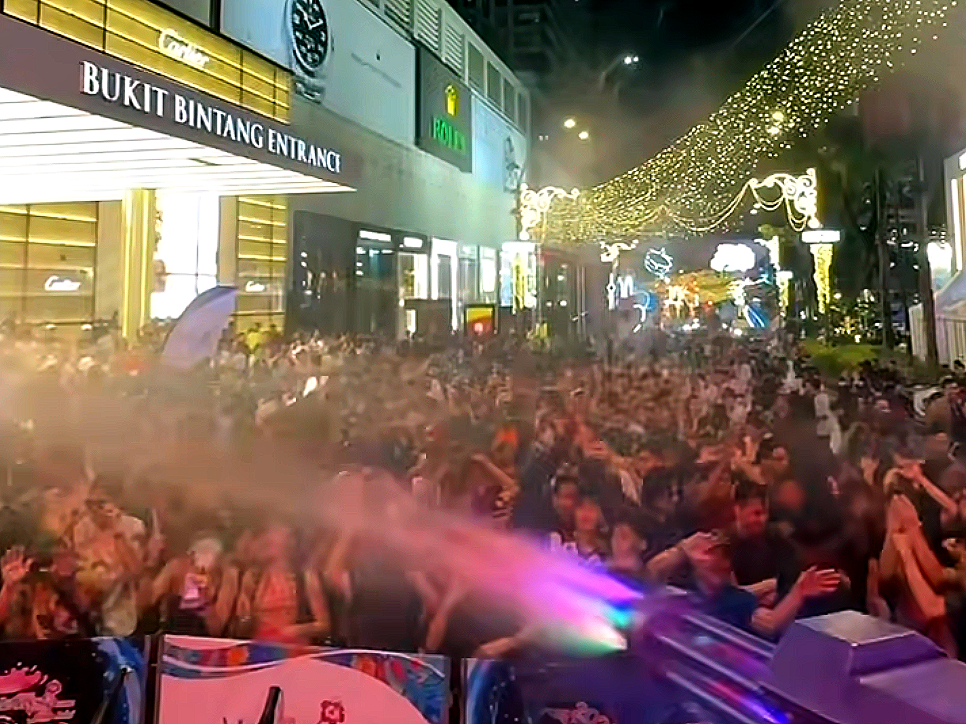
The inspiration for the Rain Rave is so thinly veiled, it’s basically wearing a transparent raincoat. Critics are accusing the organisers of mimicking Thailand’s Songkran festival. But Songkran is, at its core, a cultural event. It is a community-driven expression of renewal, respect, and tradition that has evolved over centuries. Its roots are deep, and the water element is symbolic and communal. Conversely, Rain Rave is manufactured and barely cultural. It did not sprout from the alluvial soil of Malaysian history. Rather it is installed into the landscape, like a pop-up store that springs forth regularly in Bukit Bintang. Culture, urban or otherwise, cannot be plucked in selected parts from one country and grafted on to another. To do so is not to cultivate culture, but to stage a theatrical production. When you rip a custom from its socio-historical foundation, you’re left with just the hollow aesthetic. It is, in effect, an attempt to import rainfall without the climate that necessitates it, leaving us not with an intrinsic cultural evolution, but a drenched novelty.
By late evening, the star on the hill is considerably dimmed. Bukit Bintang was a mess. But many regular visitors are proud that the area is distinguished by its disorder. One comment on social media said, “It’s okay. We can be messy. Let neat go to Singapore.” It was a revelatory shift in perspective: embrace the lived-in spirit of the place over polished perfection. For years, Singapore has owned the dry, the efficient, and the comfortable. Kuala Lumpur is trying to differentiate itself by leaning into its grittier, high-energy street culture. A massive water festival in the middle of the city’s busiest intersection is a loud and wet signal that KL is edgy and happening. Many Malaysians, however, have not embraced the soaked edginess. In Thailand, the chaos works because of the unique cultural context, social tolerance for spontaneity, and the sheer scale of public participation. Meanwhile, Malaysia is still busy negotiating the terms of its own slightly unscripted reimagining. It’s a bold experiment in urban spontaneity, though it often feels like it’s being held together by nothing more than optimism and a really hard-working drainage system.
Screen shots: X and Instagram

