Joven Neo might have hoodwinked unsuspecting shoppers into his trap, but his little performance has all the staying power of a breath on Stealplug’s unsanitised glassdoor—gone before anyone even bothered to notice it was there

Joven Lim in an Instagram reel telling tales. Screen shot: Jovennnnnnnnnn/Instagram
In the sneaker re-selling business, counterfeit shoes are a serious problem. It’s not just about someone getting scammed out of money; fake pairs can undermine trust in the entire sneaker ecosystem. Stealplug, the “premium” streetwear retailers with sneakers as a key product category, takes the real deal so seriously that, like StockX and Stadium Goods, they have an authentication protocol in place so that no customer would be duped. Yes, they would not sell fakes, but, curiously they would not hesitate to fake a narrative. The store’s owner Joven Neo took to Instagram three days ago to mislead the whole of Malaysia and further afield that their merchandise met with a logistics mishap and they will go under soon. But the truth is, he was using the dreamed-up narrative to lure the unsuspecting into his store, dangling a “closing down event” for additional appeal. The brand’s fans saw through the ruse and call it a “clever” marketing push. What we saw was clear, rather than clever: they were manipulating consumer sentiment by creating a false sense of crisis. Crying wolf can be a marketing strategy: You can’t be more diabolical than that.
At this juncture, we have to state that we owe our readers an apology. In our previous analysis of Stealplug’s sudden collapse, we applied a level of professional logic and technical scrutiny that we now realise the subject did not deserve. We treated a staged melodrama as a retail tragedy; we looked for operational failure where we should have been looking for stagecraft. The ‘heist’ that Mr Neo gleefully reported and we dissected with such rigour appears to have been nothing more than a scripted exit ruse—a low-spec performance designed to weaponise all our sympathy and facilitate a final, desperate inventory exit. We saw that a million-ringgit theft is a matter for the authorities, not an IG reel, but we did not push back. We saw the holes in his entire presentation, but we did not think he would plug them with a fake felony. We did not see the ruse because we did not think he would stoop so low. We surprised ourselves to have watched someone exhaust that much effort just to prove they are a polished mediocrity. For that lack of cynicism (and editorial watchfulness), we apologise. And to Joven Neo, we are sorry for treating you like a serious businessman when you were merely a pasar malam barker. From here on, the autopsy continues—but the kid gloves are off.
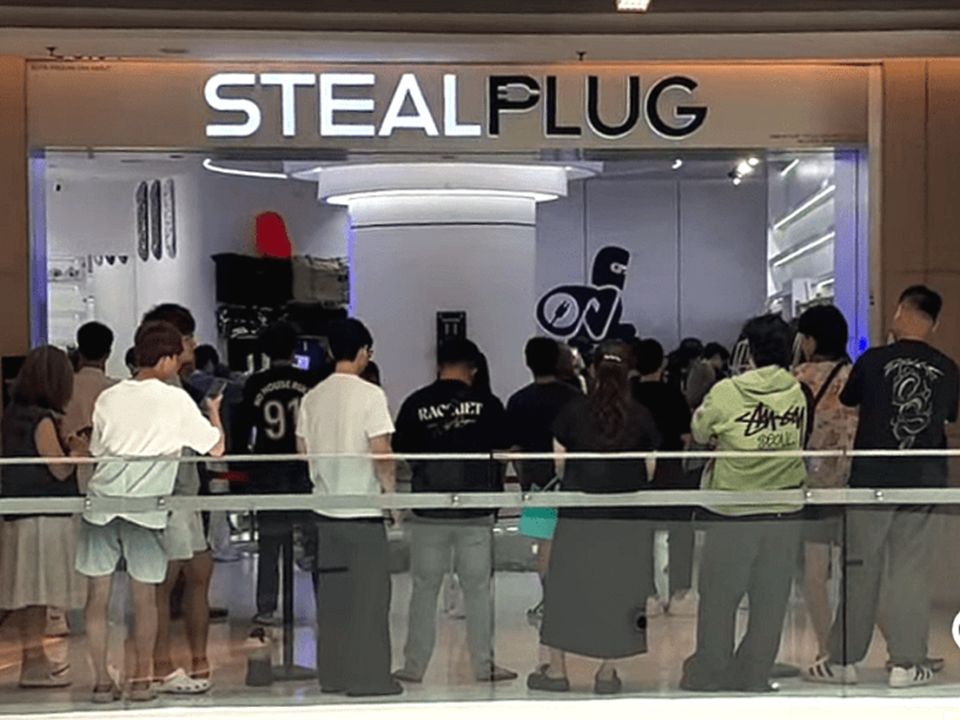
The crowd at the store yesterday. Joven Neo’s beautiful narrative worked. Photo: Dan Lim
A brand that lies about its logistics is, in essence, a counterfeit brand. The modern consumer isn’t just buying an object; they are buying the path that the object took to reach them, even if, as Mr Neo claimed, it was “just between Bukit Bintang and Sungei Wang”. To subvert that path, to fake shipping that was not made is to sell a hantu delivery that had everyone ghosted. It’s a cowardly bit of corporate necromancy: you weren’t waiting for a courier, Mr Neo, you were waiting for your cruel joke to land. If a company treats its supply chain like a dispenser of pranks, they aren’t a merchant—they’re a stage illusion with cheap effects, and the only thing they’re actually delivering is a lesson in being spirited away from their own money. By staging a fake felony to sell dead stock, Mr Neo did not just move sneakers (and whatever he needed to get rid of); he moved the goalposts of what is acceptable in the KL streetwear scene, a betrayal of bros. He proved that for Stealplug, the “premium” label was never about the quality of the service, but the scale of the make-belief. Ultimately, if your delivery is fake, what part of you store is not? A fake Zoom Vomero 5 is a lie about craftsmanship. A brand that lies about logistics is a lie about existence.
In our local culture, supporting a “小弟 (xiaodi, brother)”, as Mr Neo called himself, is a sacred social contract, even if he has, for a large part of his online life, played to the hilt the 啦啦仔 (lalazai, Ah Beng’s louder cousin) that he is. The underlying expectation is that his ‘brethrens’ or community will stand by him. But he is not a 小弟(xiaodi), he’s a 小人 (xiaoren)—a vile character. In the comments section of his posts, followers are saying, “Bro, don’t be sad. I’ll always support you”, “加油 (jiayou, to cheer him on)”, “Joven, 我有DM你,有空看一下, 希望可以帮到你 (I’ve sent you a DM. Take a look when you have time. Hope I can be of help.” Conversely, he took advantage of their sympathy, trust, and, perhaps more disgustingly, lust for a good deal. By faking a crisis, he weaponised the community’s protective instincts. He leveraged his brand’s “premium” positioning to lend credibility to a hoax, contaminating the trust required for the entire ecosystem to function. By framing the clearance as a “rescue mission” to save a failing brother, he allowed shoppers to indulge in a bottom-feeding “lust for a cheap offer” while pretending they were performing an act of generosity. But by then, Stealplug wasn’t selling sneakers anymore; it was selling Joven Neo’s myth of loss, urgency, and spectacle. Trust is, ultimately, a non-renewable resource. You can only fake a heist once.
自导自演,哗众取宠
Stealplug创始人Joven Neo自以为聪明过人,实则不然。当他需要靠透支他人的信任和同情心来获利时,他早就不再是他口中那个谦逊的“小弟”,而是一个彻头彻尾的“小人”

Joven Neo. Screen shot: Jovennnnnnnnnn/Instagram
任何交易都建立在信任之上,所谓“精选”鞋履的销售更是如此。在球鞋转售行业,假鞋是一个严重的问题。这不仅仅是有人被骗钱的问题;假鞋还会破坏整个球鞋生态系统的信任度。然而,有些“高端”运动鞋零售商却会滥用这种信任,捏造物流事故的故事来博取粉丝的同情。一位名叫Joven Neo的店主更喜欢通过发布博取同情的帖子来吸引顾客参与标有“清仓甩卖”字样的促销活动。他声称商店的货物在发出发货后就消失了,但事实证明,根本没有发货。以此为借口,他声称无法“周转”局势来偿还寄售人的欠款,捏造个人困境,并借此博取同情,呼吁追随者支持他这位所谓的”小弟”。本以为网上的一切都是虚构的,没想到他的道德底线居然也是。难道假事不比假鞋烂?
在我们当地文化中,支持像Neo先生这样自称“小弟”的人是一种神圣不成文的社会契约,即使在他大部分的线上生活中,他都尽情地扮演着“啦啦仔”(Ah Beng更俗气的表弟)的角色。基本期望是自己人会支持自己人。但他算不上什么“小弟”,而是不折不扣的“小人”。称兄道弟是讲信任,这二字重千金,破了就再也补不回来。在他的帖子评论区,粉丝们纷纷表示:“加油”, “希望好起来”, “Joven, 我有DM你,有空看一下, 希望可以帮到你。” 竟还有人对他深信不疑,可他却把这份信任当成了商机。人性中那些卑鄙与可憎的面目,确实无有底线。不得不佩服有些人的大脑进化方向。别人进化的是智商,他进化的是‘道德灵活度’,灵活得能把自己缩进任何一个良心的缝隙里。
与其说Stealplug在卖球鞋,不如说它在贩卖Jevon Neo那套充满亏损、紧迫感与虚假戏剧性的个人神话。一个在物流方面撒谎的品牌,本质上就是一个空壳品牌。也许,他以为这只是一次“调皮”的营销手段,却不知在信誉的战场上,在社交媒体的荒野中,只能上演一次“劫案”。Neo先生不是在等快递员,他是在等他的残酷玩笑落空。他不仅仅是在炒运动鞋,他改变了吉隆坡街头服饰界可接受的标准,这是对社群共识的背叛。信任是一项不可再生资源,一旦透支,就只剩下一地鸡毛。无论他未来如何粉饰,他在这个圈子的“技术指标”已经归零。有些价值,是再怎么“清仓甩卖”也换不回来的。
Note: For the first time in our decade-long history, SOTD has shared a bilingual post. The scale of this narrative fraud requires a linguistic expansion to ensure the critique reaches every corner of the community it exploited. A lalazai performance deserves a vernacular rebuttal. Some truths are best served in the mother tongue to ensure that nothing is lost in translation

