Céline, Dior, Hermès, and more follow as French street violence targets luxury retail. The view from the ground across France looks increasingly concerning
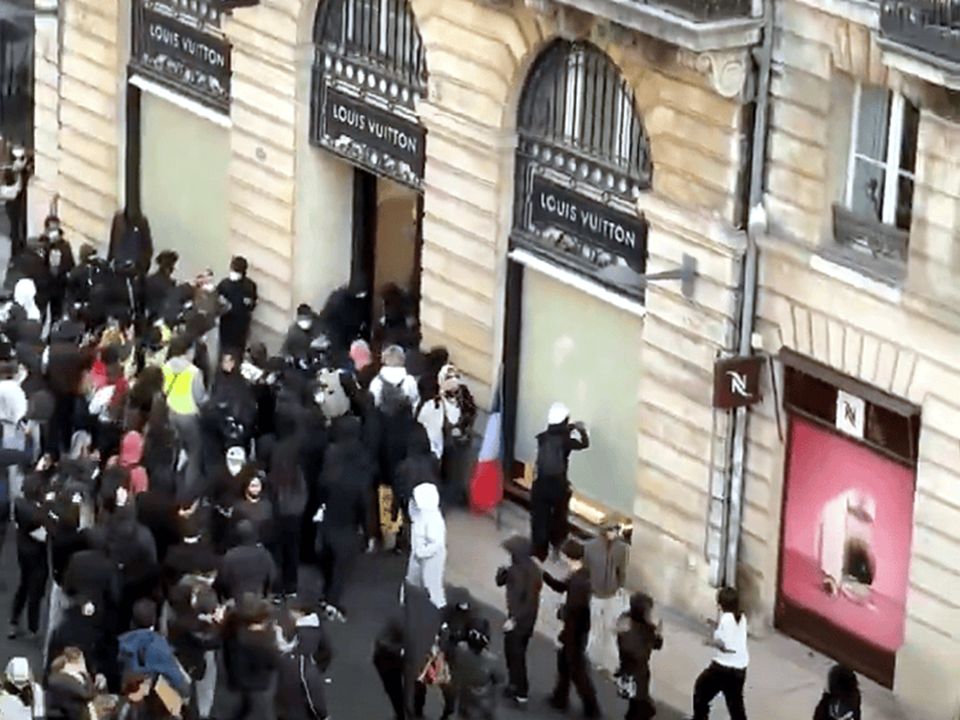
In Bordeaux, a Louis Vuitton store was broken into and looted. Screen shot: @heatermart/X
There has been a major wave of unrest across France in the last 24 hours, and one of the most striking features has been the targeting of luxury retail. What started first as a student protest weeks ago culminated into one expressing cost-of-living fury before it degenerated into violent riots and massive looting across Paris and other regional urban centres. We have been monitoring developments through news networks and social media all morning, and the situation appears troubling, even as rolling broadcasts look alarming. Sky News reporting live in Paris said, “It is basically anarchy… There is no real sign of control or law and order around here now.” The looters did not just target food stores such as Franprix and Monoprix for bags of croissants or chouquettes, they were breaching the premises of luxury stores and helping themselves to merchandise. Named so far in reporting have been Celine, Chanel, Boss, Burberry, Dior, Hermès, and Louis Vuitton. Even Lacoste was not spared.
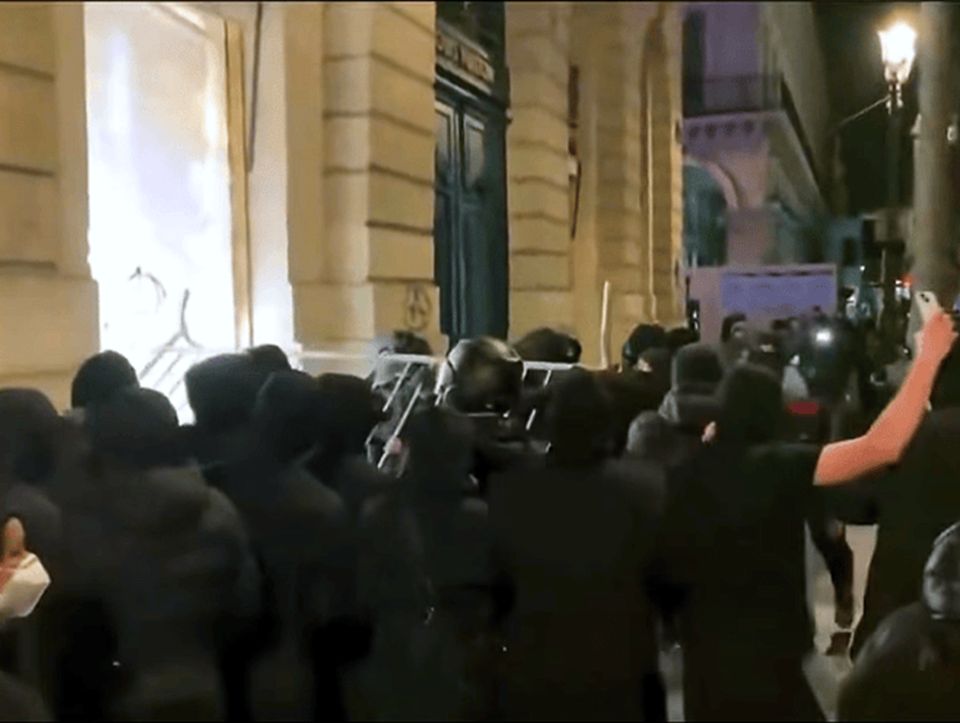
A Louis Vuitton window rammed with a crowd control barricade. Screen shot: toqenhallmedia/Instagram
One of the most eye-opening reels circulating on social media is the attack on the Louis Vuitton store in Bordeaux, specifically at Cours de l’Intendance, a historic, upscale pedestrian avenue that serves as the heart of what is known as the Triangle d’Or (or Golden Triangle). LV’s flagship here is flanked by Chanel and Cartier. But the sole focus of the looters’ attention at that moment appeared to be LV alone. If this was just a riot about the surging costs of food and necessities, the main targets would be stores selling them. To be sure, food shops such as Franprix and pharmacies and discount retailers were hit. But luxury stores are clearly not a source of survival. They are each their own repository of symbolic value. The goods inside are expensive precisely because they are socially desirable even if they are not materially necessary. As the protest progressed, it appeared to us that the demonstrations were increasingly about both the material economy and the status economy. One is about how things have become very expensive—as it is here—and many people can’t make ends meet and the other, where wealth is constantly visible, but people are excluded from the rewards that society promotes.
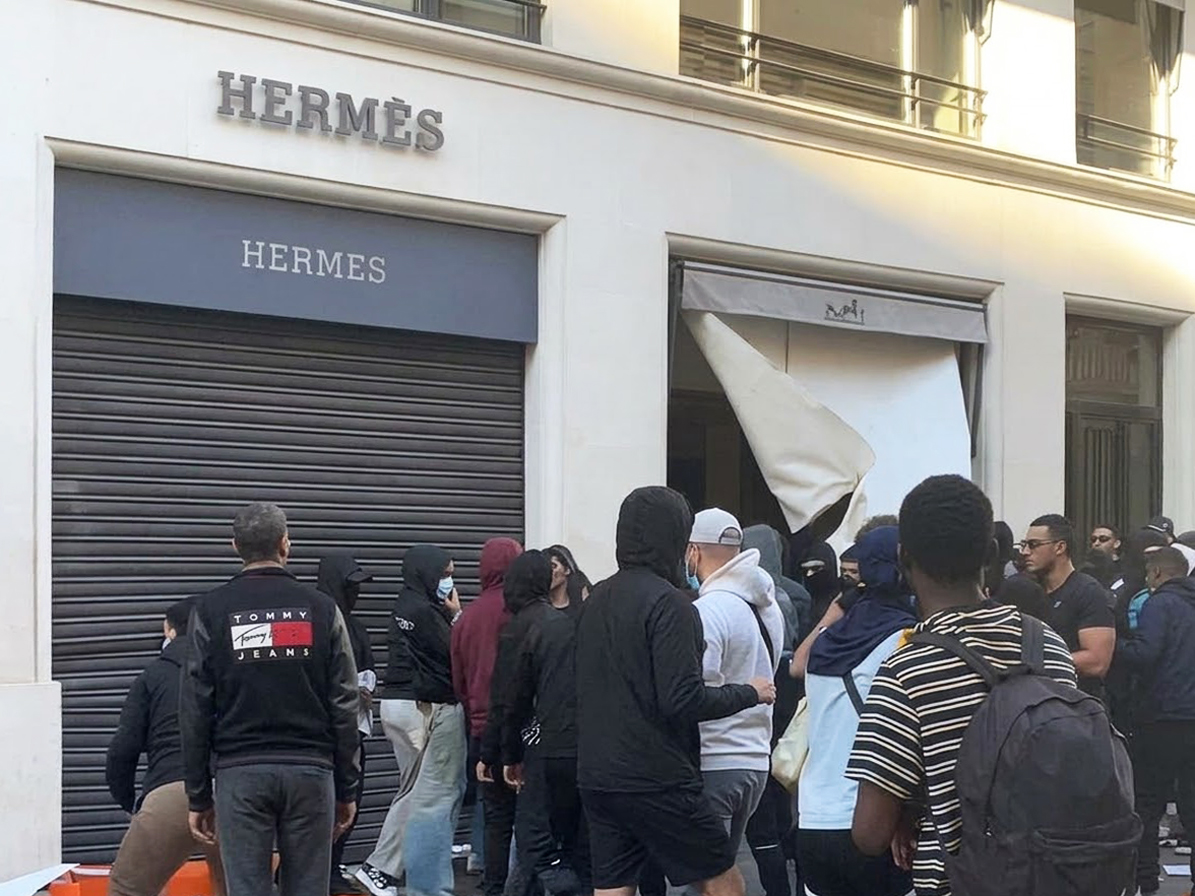
Hermès store on Rue de la Mésange in Strasbourg. Screen shot: @malkocoglu_x/X
Luxury has become a mass spectacle even when it has remained economically unaffordable. In the past, luxury houses maintained a deliberate distance from the general consumer. Today, Louis Vuitton has become something much stranger. It remains expensive, but it is also mass-cultural. The newly wealthy tech boss wants an LV something, as do the fishmonger and his wife. When we stand outside the flagship stores in Paris or Singapore, we often see a queue that has itself become part of the spectacle. The image is almost inverted from older notions of luxury. Instead of discretion and exclusivity, we have scores of people visibly waiting for the opportunity to purchase an LV product. You’d think it was Fauchon offering macarons with a steep discount. When Louis Vuitton stores are looted (and they have been before), we do not always see a crowd attacking an alien symbol of elite wealth. In many cases they are attacking a brand that they already know intimately. They have seen it on TikTok, on footballers, on rappers, in airports, at the bus interchange.
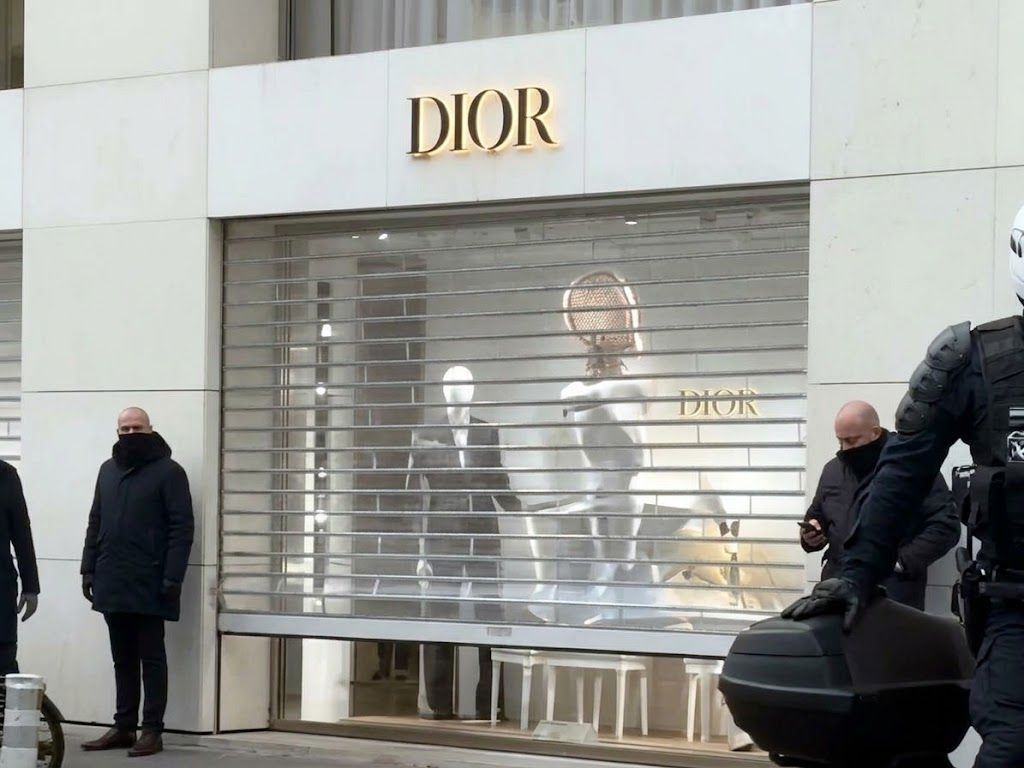
A Dior store targeted and sustained damage seeming before security arrived. Screen shot: @anonymous_10314/Instagram
LV has become a part of many people’s symbolic universe. Even Supreme, absorbed completely into the same hyper-visible status ecosystem, means nothing now. To that extent, LV is arguably closer to Nike than to the luxury we once knew. Obviously not in price, but in social currency and, without doubt, cultural penetration. Nothing illustrates this transformation more clearly than the Louis Vuitton x Nike Air Force 1. By taking a mass-market sportswear staple and funnelling it through the drop-and-resale mechanics of sneaker culture, LV proved that its modern engine runs on Nike’s playbook: converting street-level subculture into high-volume social capital. It is, therefore, too convenient to say that the looters were making a stand against capitalism. They did not smash a symbol that they despised; they were seizing one they desired. And this was rendered literally when, in one video, a man was seen running away with an LV trunk, held aloft! In France, a revolutionary crowd storming a palace is familiar; it demanded, “this institution should not exist”. The looters in Bordeaux and elsewhere were declaring, “These goods should not be restricted”.
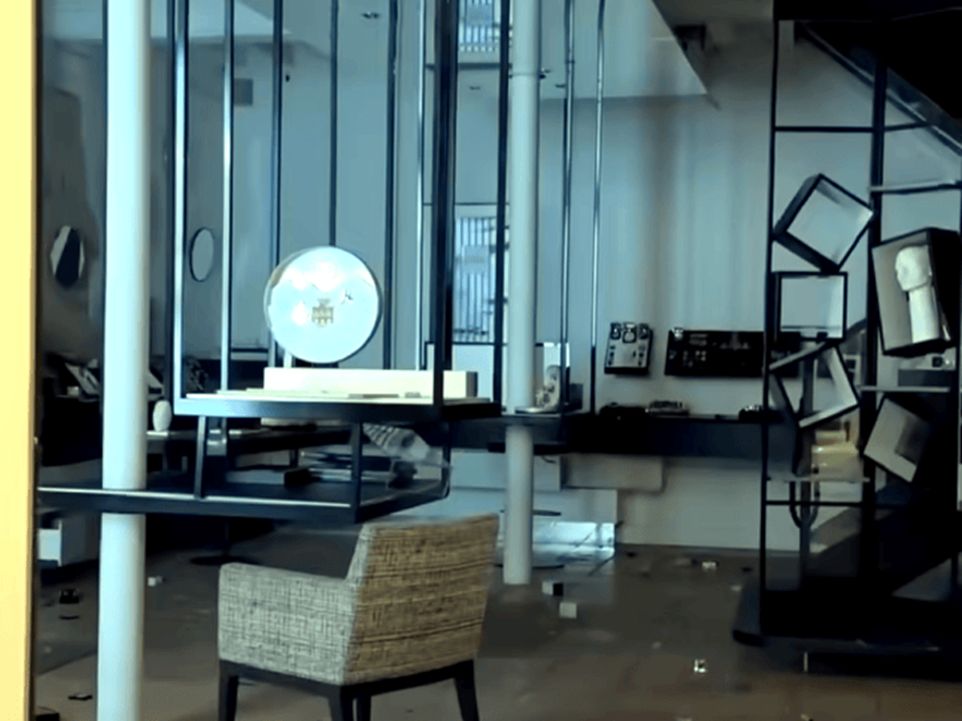
One Chanel store in Paris was not spared. Screen shot: i24news/Instagram
The stores affected quickly grew in number. Most affected were the LVMH brands, including Dior and Céline, and there were Chanel, Goyard, and Hermès, too. A riot targeting Hermès may actually reveal how profoundly everyone, especially the brand’s enemies, accepts the symbolic importance of Hermès. Perhaps, this is what kept us watching the footage of luxury-store looting. It was not just theft (and it clearly was); it was also the sudden and temporary collapse of the normal rules governing access to status. For a few minutes, the gatekeeping mechanism failed. We saw windows smashed—crowd-control dividers shattered them, and in a split second, armfuls of bags were quickly taken away. The entire luxury business model, which depends on controlled scarcity and exclusion, was suddenly not. This could have been counterfeiters running away with their goods when the authorities arrived. France is, in fact, perfect for this drama. French luxury houses are not just corporations; they are gift-boxed in national identity, cultural prestige, and a particular vision of French success. When a Franprix is looted, it looks like disorder. When an Hermes boutique is looted, it looks almost allegorical. It becomes a compelling visual argument about who gets to participate in prosperity.
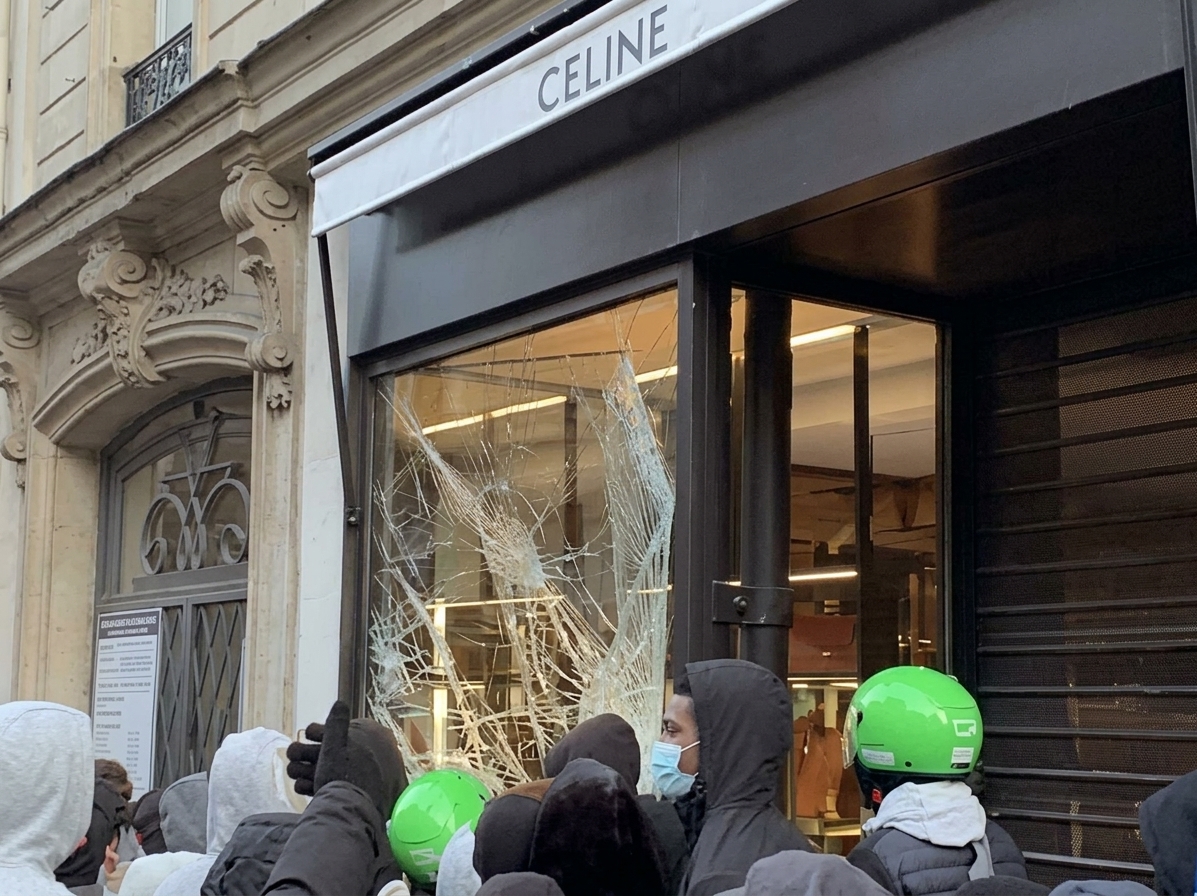
A Celine store the moment the window was smashed. Screen shot: laveulliure/Instagram
In China, observers are watching the developments across France with acute interest, fixating on the sight of Louis Vuitton storefronts breached and pillaged. This fascination is not merely a reaction to the persistent economic blame directed eastward. The global luxury market, especially brands like LV, relies heavily on Chinese consumers, yet the sector has spent the past year aggressively pointing to a massive “luxury slowdown” in China. Today, Chinese consumers navigate a post-Molly Tea retail landscape. Twenty years ago, a trademark dispute might have remained a legal footnote. But now, people question cultural ownership and national identity. Add to that, the overreach of Western luxury houses. The lawsuit became a referendum on LV itself. There is a deeper irony: The more successful luxury becomes at dominating mass culture, the less it can rely on the old luxury privilege of being above public scrutiny. The crowd queuing outside the boutique, those bitching about the brand online, and the crowd attacking the stores are not necessarily different populations. Both are evidence that Louis Vuitton has ceased to be merely a maker of handbags and become a mass cultural symbol. That enlargement of meaning is enormously valuable when the public adores you. It becomes dangerous when the mood turns, and a steel barricade is used to ram store windows.
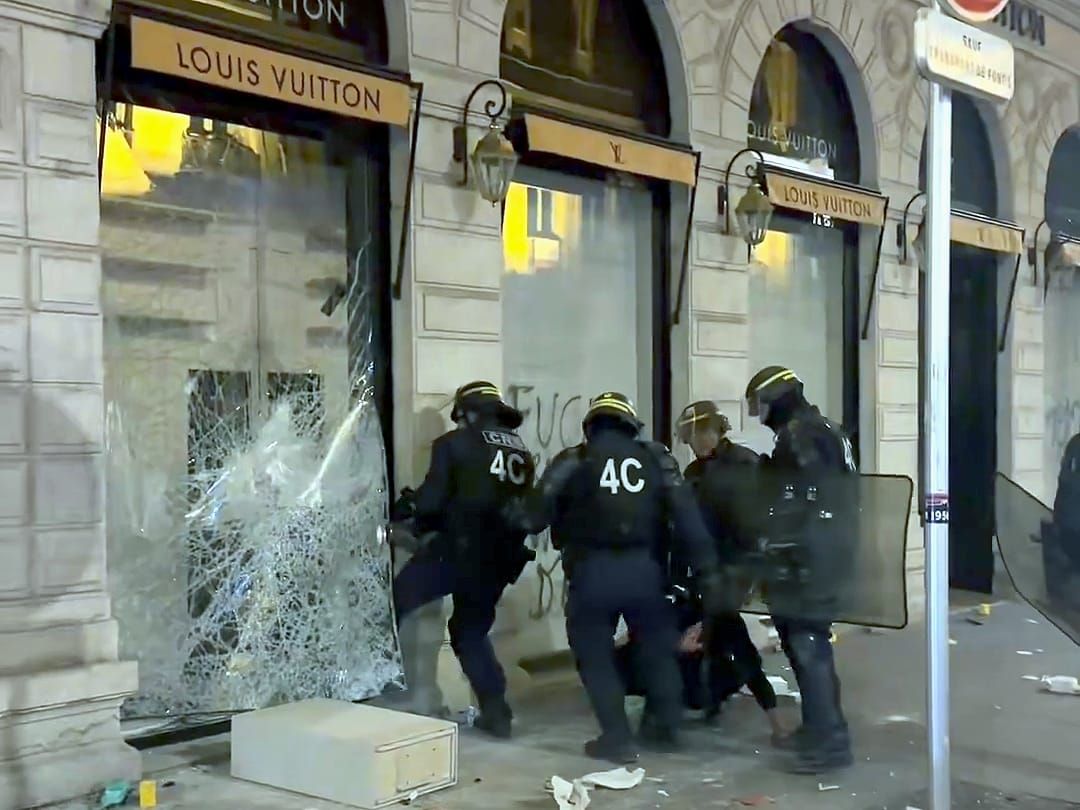
The police arrived just in time to arrest the last few looters at an LV store. Screen shot: actu_lyon/YouTube
At the recent Matières Fécales spring/summer 2027show in Paris, titled The 99%, part of the collection showed the tri-colours of the French flags to reflect Liberté, Égalité, and Fraternité, designers Steven Raj Bhaskaran and Hannah Rose Dalton provided a striking and, more importantly, prophetic critique of the exact economic and social fractures that eventually boiled over into current street protests. Were they prophetic? The show was explicitly staged at Place de la République, a site closely associated with demonstrations and political mobilisation in Paris. To be certain, itt did not predict unrest—at least, we do not think so, but it did appear to diagnose the emotional climate that now makes the unfolding protests coherent. Most luxury fashion today is insulated from the social order that sustains it. They don’t care how an office girl scrimps for months just to buy a name card holder as long as that name card holder is sold. What Matières Fécales did was unusual. They foregrounded the luxury system and the people excluded from its rewards. Looking at footage that is flooding social media, the looting of the stores almost look like an accidental sequel to the show.

