The Sussexes made their first joint public appearance since returning to England and deployed the full royal playbook—with Meghan Markle playing the prodigal daughter to bouquet-bearing fans
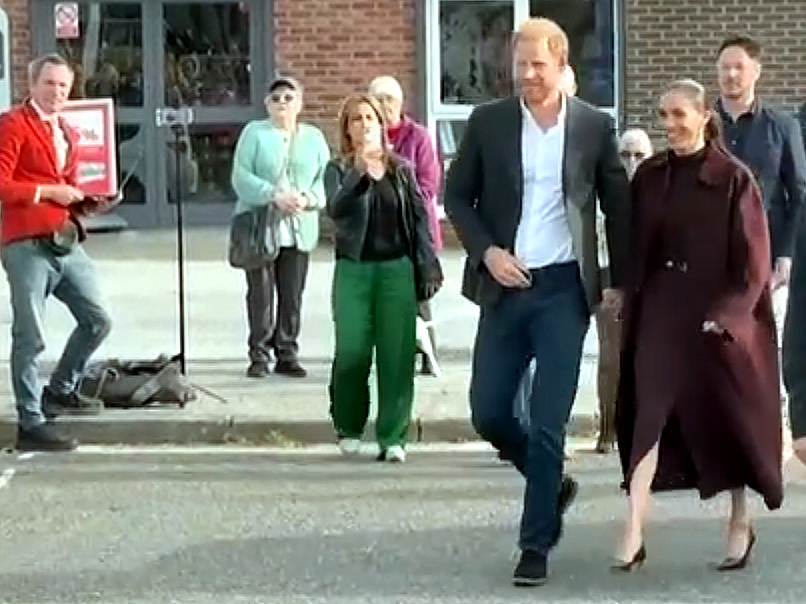
Whatever their real objective, the Sussexes did not return to England to be ensconced in their Cotswolds estate home, minding the children. It was a matter of time before they would loom large and thoroughly unbidden where townsfolk happened to just be standing around behind barricades before the prince and his wife appeared, winsome and worldly. And that was two days ago, in Robin Hood’s storied stronghold Nottingham, the birthplace of Paul Smith, with the Willoughby House flagship and also home to one of the U.K.’s most lauded menswear labels Universal Works and the exceptional fashion store 18montrose. As ever, Meghan Markle was the show-stealer. Officially, the outing was framed around local community advocacy and personal continuity, but, for her, it looked less a shared gathering and more her personal backdrop. In videos now flooding YouTube, there was quite an infrastructure to keep that illusion afloat—handlers to be conspicuously turned down when assistance was offered, PR flacks to compose the narrative, and cameramen to capture every last drop of meticulously choreographed authenticity.
Ms Markle swaddled herself in the resplendent palette of autumn—or “fall,” as she might wish to normalise for her little ones. In fact, it was, with devastating predictability, plum. That was the first thing we noticed: head-to-toe plum or damson, or oxblood—take your pick. To be sure, these are longstanding autumn colours in British dressing. Nobody owns them, and wearing them in autumn isn’t inherently calculated. But the colour story was narratively too neat. It is not unreasonable to assume that in her mind, she was telling herself: “Woman wearing plum because plum is what Britain is supposed to look like in October.” One assumes VisitBritain had not kept her as a retainer, given that even their marketing team possesses a shred of restraint. The irony is that many royal dressers historically avoided exactly this kind of one-note chime. The late Queen, for example, often dressed symbolically, but the symbolism was usually blunt and practical: visibility, national colours, diplomatic references. Princess Catherine tends to layer meanings rather than make them converge on her body. Even Nigella Lawson would never dress to match the filling of her pie.
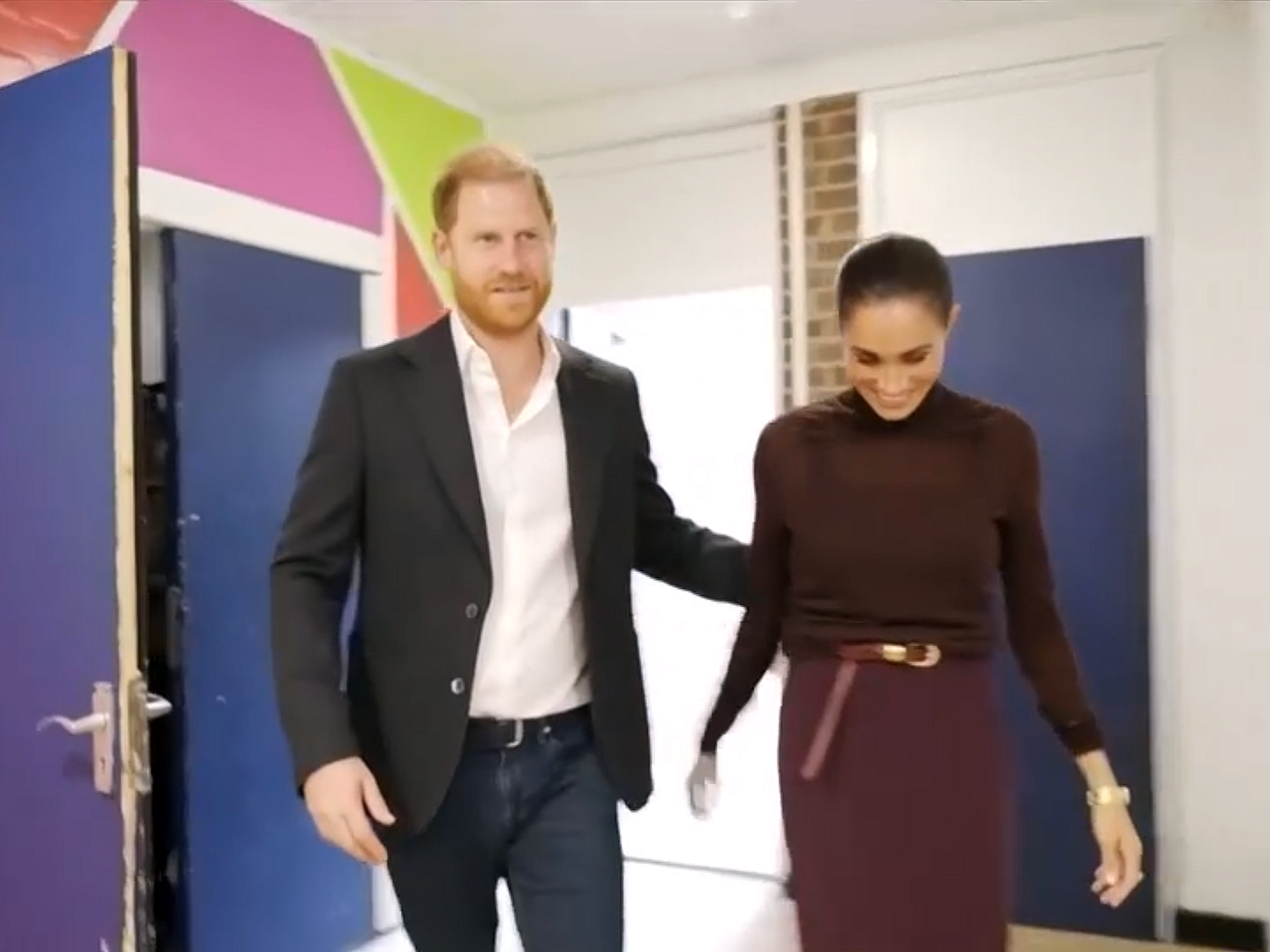
And there was, naturally, the list of British brands to show her unwavering support. She wore a loose-fitting coat and a similarly hued mock-turtleneck pullover by Joseph, where Louise Trotter once enjoyed a successful tenure; a calf-length skirt with a slit right in the middle that rose to there by The Fold London, and a pair of court shoes by Jennifer Chamandi, also in the colour of plum. And then came the strange leather belt with gold buckle from Marks and Spencer. Ms Markle could have made that decision at the very last minute after her convoy left the Cotswolds that her waist needed cinching, and there was the brand’s main store on Albert Street en route. That belt did not effect high-low dressing; it was what is known these days as “accessibility signalling”. It is not clear why we were asked to notice her affordable belt when everything on her was expensive. Did Joseph not offer an ideal one? That belt against the skirt performed communicative work beyond its practical function. It was not the obi of the karate-gi. It did not offer the discipline of a martial art; it simply started a conversation no one asked to hear.
The message was quite clear: “I may no longer be a working royal, but I remain connected to Britain.” The problem is that when every element pointed in the same communicative direction, we started noticing the message rather than the clothes. We stopped seeing a wardrobe and started seeing a press release. The unfortunate thing for Ms Markle is that since leaving royal life, observers are primed to look for messaging. Consequently, a head-to-toe British ensemble presented during a high-profile UK appearance felt less like dressing and more like positioning. The irony is that it might have been intended as a gesture of respect toward Britain. But she publicly condemned the British press, the public, and the royal family, famously fleeing the country in 2020. And then, you were suddenly met with a striking purity of message: Joseph for polished modern luxury, The Fold for the intelligent-professional-woman niche, Jennifer Chamandi for elegant footwear, and M&S for the relatable touch. It was all very neat. And it was all very suspicious. Which brings us back to Nigella Lawson. Her public persona is steeped in Britishness, but it never feels as though she is trying to demonstrate it; she does not dress as though she is illustrating a recipe for plum cobbler.
Screen shots: @pagesix/YouTube

