Alessandro Michele transforms a Paris sanctuary of scholarship into a scene of late-night gaudiness, proving that no quiet space is safe from Valentino’s maximalist racket
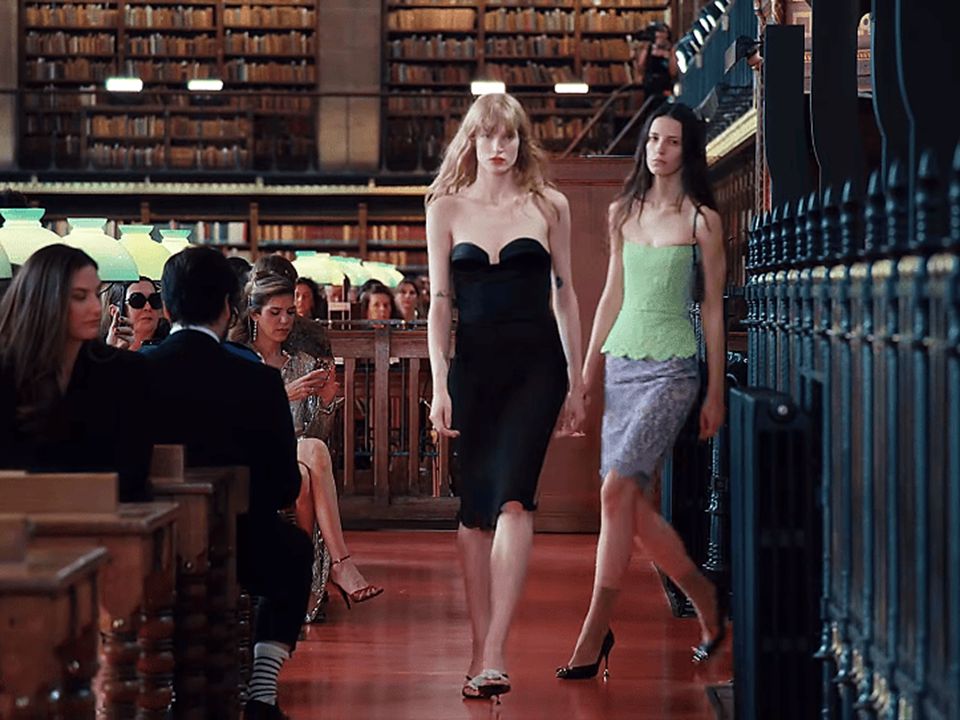
Among the songs in the soundtrack for the Valentino spring/summer 2027 show, which included a sampling of Madonna’s Music to start, was Troye Sivan’s latest, Party. The Australian singer sort-of-rapped: “Party in the park, party in the bush/Party under the bridge, party at the restaurant/Party at the club, party in the day, party at my house/Party on the way to the party in the park.” Already an exhaustive list of party sites, Mr Sivan drew the line at the library. So, Alessandro Michele took his Valentino to party there—the Bibliothèque Sainte-Geneviève, to be exact, specifically in the reading room. Every detail of the 19th-century space serves a singular purpose: concentration. Designed to filter out all distraction, visually and aurally, it narrows the world down to the reader and the page. The famed soaring cast-iron arches, and long wooden tables and green-shaded lamps create a sanctuary calibrated for quiet, disciplined thought. But Mr Michele, despite his self-styled status as an avid biblio-connoisseurr, had not thought of perusing; it was strictly for partying.
But the Valentino library desecration is not new. In 2024, Celine’s Spring/Summer Tomboy collection was staged right inside the Henri Labrouste—who also designed the Bibliothèque Sainte-Geneviève—reading room at the Bibliothèque Nationale de France. Then, Hedi Slimane sent down leather trackpants, shearling coats, running shorts, and Triomphe-embossed headphones—effectively telling us that the ultimate modern student doesn’t actually read; she merely struts through historic archives looking effortlessly disaffected while listening to LCD Soundsystem. Yet they still looked as though they wished to graduate. Fast forward, and Mr Michele swapped Mr Slimane’s indie-cool for disco-era brash. Mr Celine’s deployment of a library actually worked because it matched the cold, upper-crust cadence of the brand’s universe. The setting anchored the collection’s severe, youth-culture bend. By contrast, Mr Michele dragging sixty-plus looks of beaded lace, Victorian capes, cascading pearls, and neon-tinged theatricality into a sanctuary of quiet scholarship is an act of aesthetic vandalism. These were not school-goers at the nearest university; they were party-goers at the old—very old—Les Bains Douches.
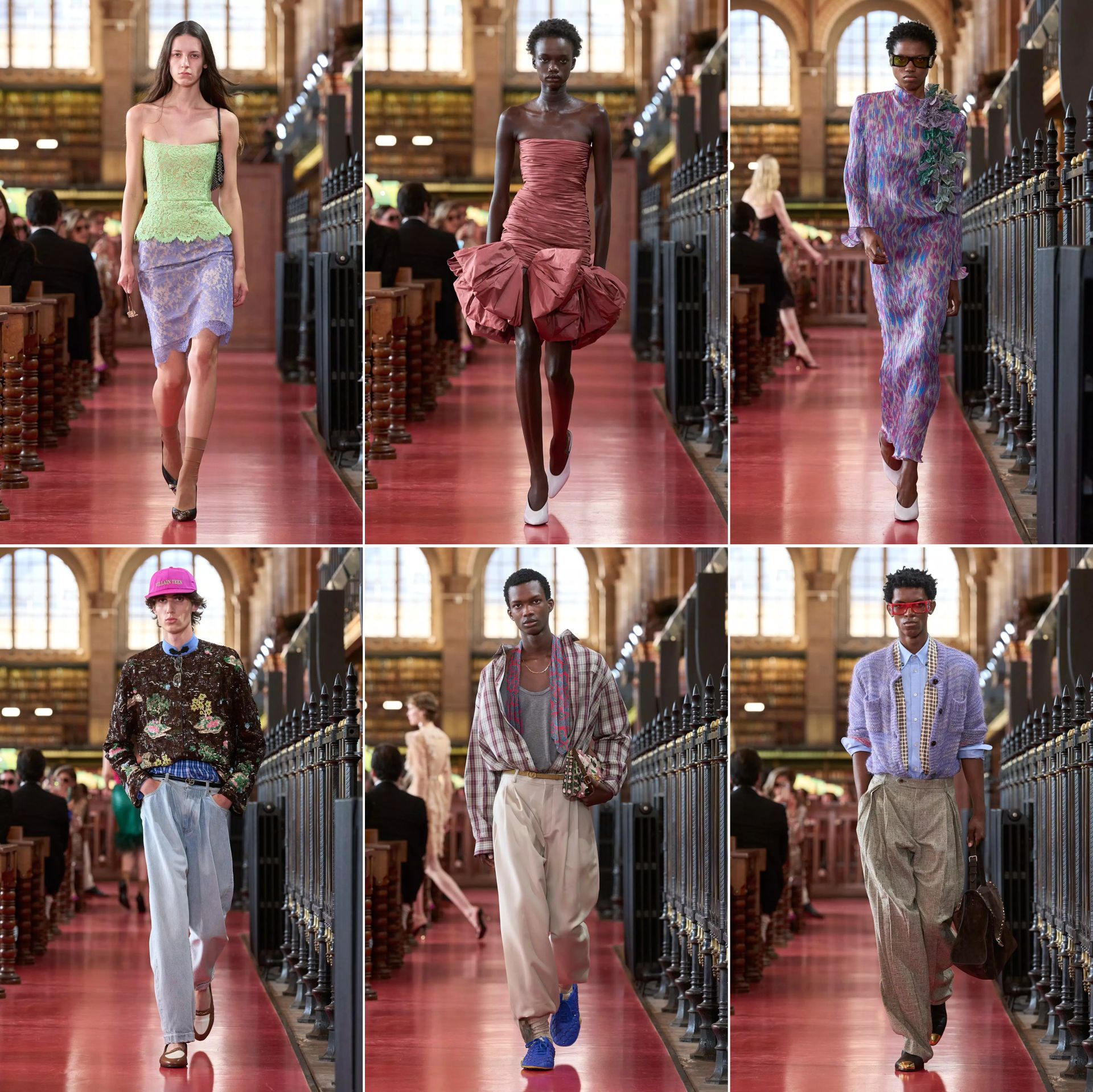
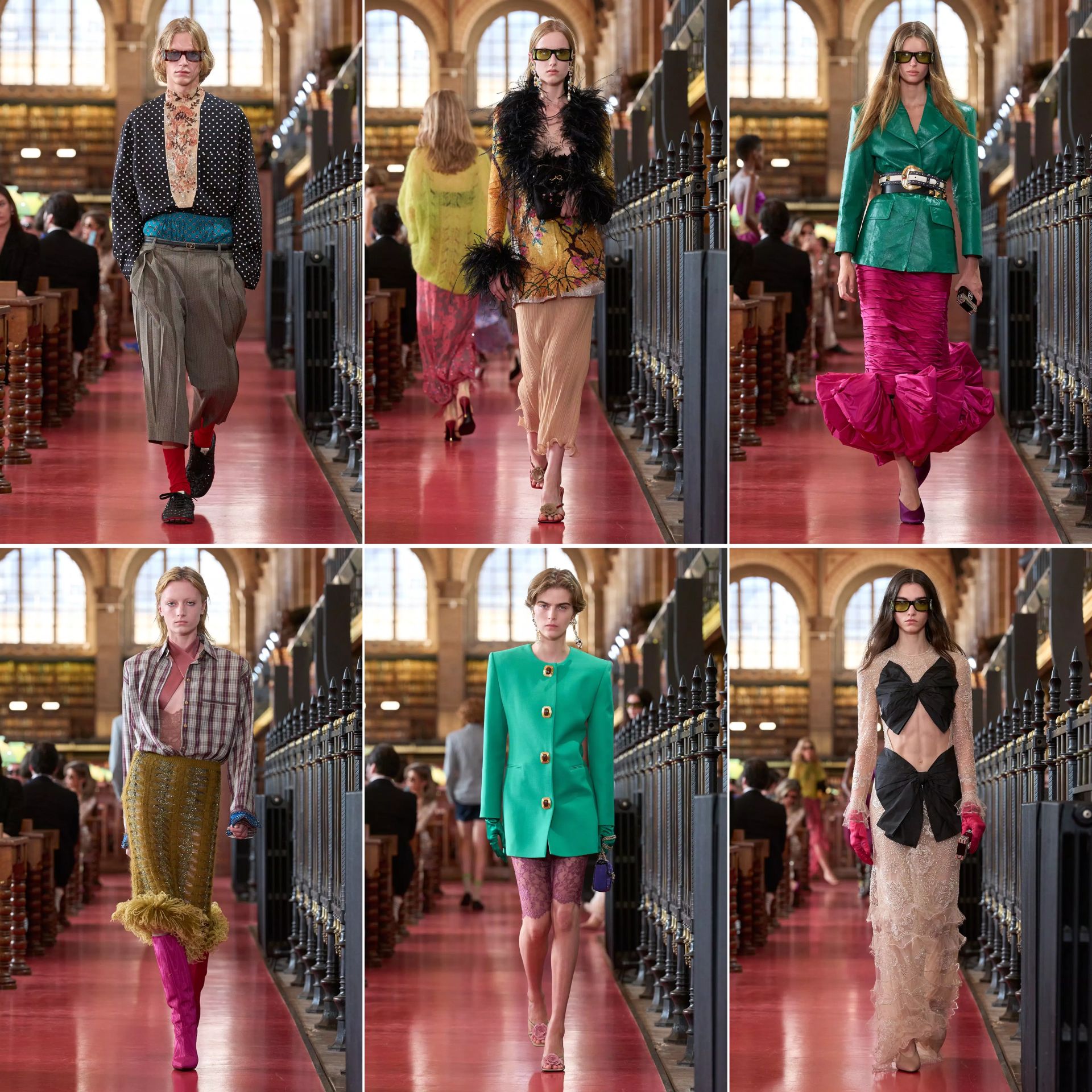
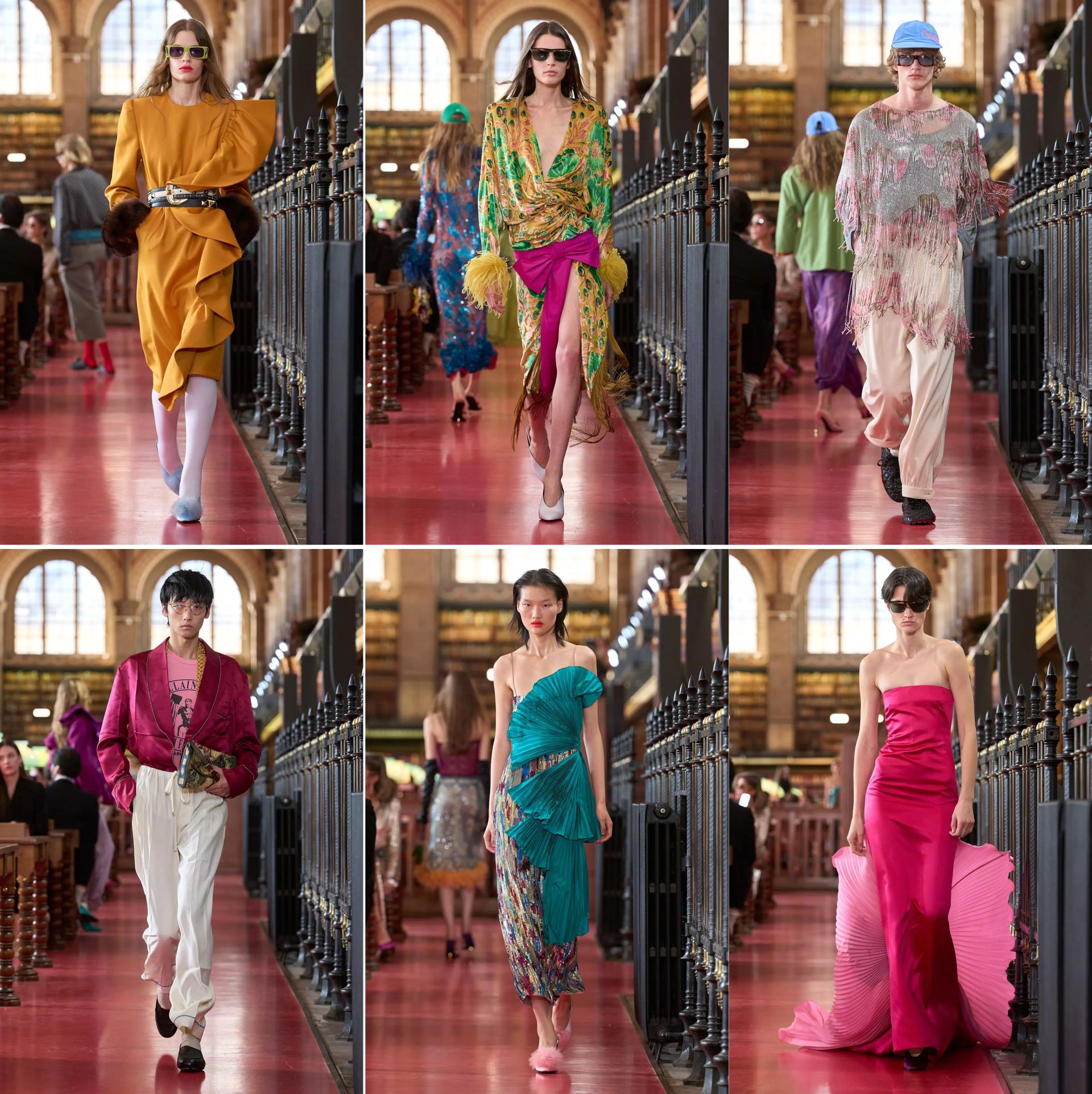
But there is always something deeper behind Mr Michele’s clothing-led musings. According to the show notes, the collection was built around Umberto Eco’s concept of the “antilibrary”, hence the title of the collection, Antibiblioteca. Or, simply put, the unread books we own and the accumulated knowledge we have yet to consume. Guests were reportedly told to lug physical tomes (not Kindles) to the runway for a donation drive. Whether unread volumes were a prerequisite was unclear. Still, Mr Michele appeared to explicitly connect the idea of unread books to unworn clothes sitting in a wardrobe. It seems that he was basically saying that not every garment needs to be worn frequently and not every dress needs to be optimised for function. Long live flounces and sister ruffles! The premise was the grand defence of fashion against the demands of utility. So you need jewel-toned bustiers, lace and floral embellishments, a lot of flounces, feather trims, bows atop the slit of skirts, more than one flashy belt for the waist, or the adult baseball cap that announced proudly “Villain Teen”. Some clothes are, perhaps, left unworn or, better still, un-bought.
Whether in a toilet or in a library, Alessandro Michele’s obsession is clear: excess. A public toilet signifies exposure, bodily functions, anti-prestige, even abjection. A public library represents the accumulation of knowledge, a place for contemplation, or, for some, intellectual prestige. Yet, he approaches everything with the same visual saturation. The toilet show was a seedy hallucination of horror-movie-worthy red cubicles, mirrors bodies and bodices, and ornamentation. The library show was an operatic display of more of the same. The scenery changed, the syntax did not. That’s why we find him exhausting. When we think of great designers, we think of those with transformative registers. Mr Michele’s dominant register is almost always accumulation. Everything, when we look back now—all the way to Gucci—is antilibrary. The wardrobe is full, so is the runway. The unread library is a collection defined by acquisition rather than engagement. A desire to possess than edit. And that is the modern wardrobe tragedy: a closet full of clothes, and still nothing to wear.
Screen shot (top) valentino/YouTube. Photos: Valentino

