When a digital tourist turns Malaysian breakfast staples into performance art—complete with a phonetic execution of roti canai that sounds like a flood control system—the line between cultural appreciation and flat-out farce vanishes completely
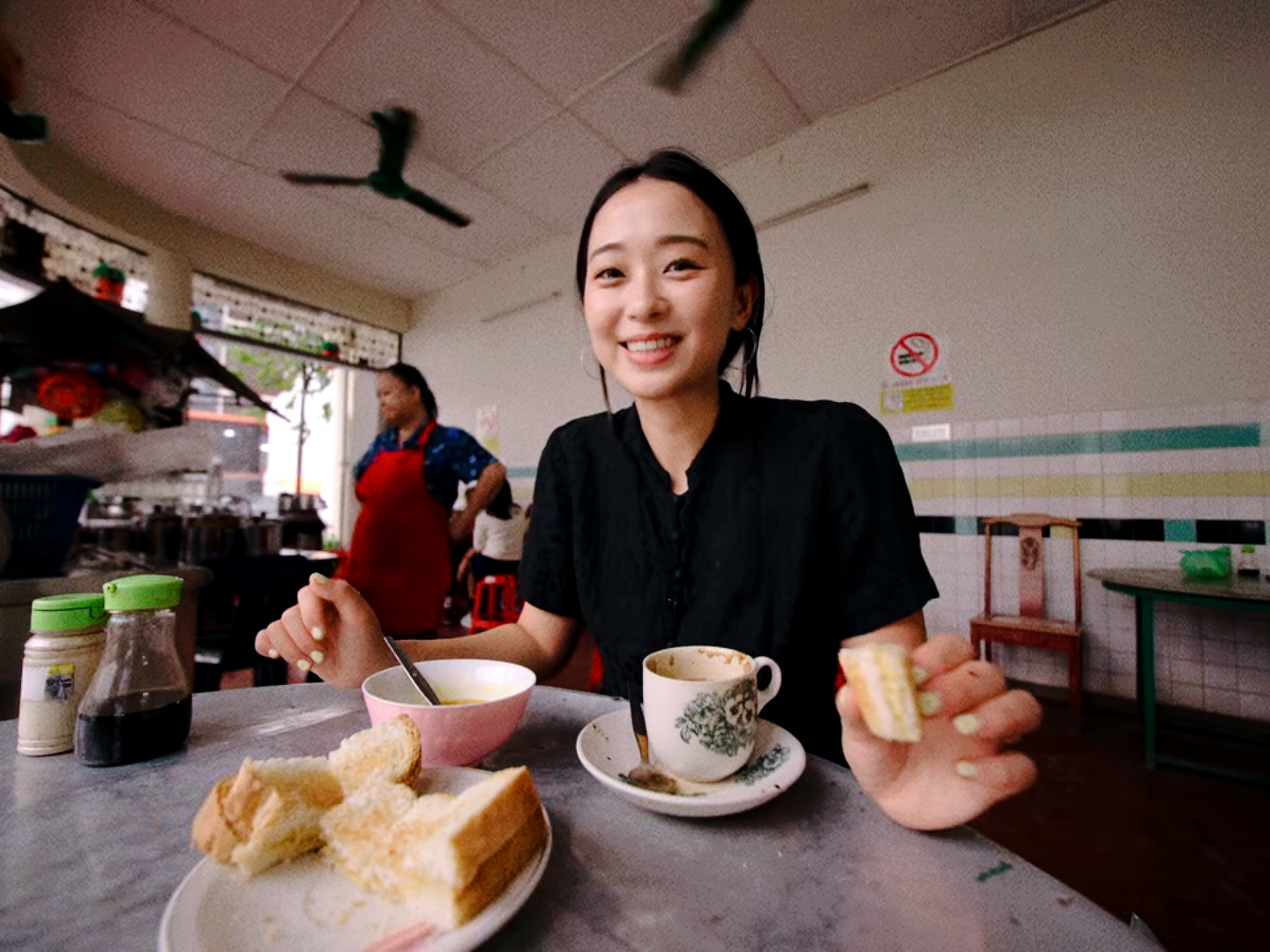
It was a strange encounter, made at a foot massage centre. It would not have happened if the usual television in the facility was not removed. The attendant came to say that they had now replaced it with a projector and I could watch my “favourite YouTube channel”, a happy assumption that we had one. He turned it on, and the homepage showed several shows, and he picked one for us. We yielded control, only to find ourselves suddenly thrown into a travel and food vlogger’s half-baked pontification. The programme offered a vacuous introduction to Penang’s culinary scene, complete with the mandatory vlogger reverence for “tradition”. When the thesis statement is the lyrical “100hrs BEST MICHELIN STREET FOOD in Penang Malaysia”, every subsequent frame is merely an exercise in redundant punctuation. A hundred hours of digital padding later, the Michelin moniker is stripped of all authority and purposed as raw clickbait.
But a wellness upgrade it was not. The digital panacea of the musings of a travel influencer was not how we intended to spend the next hour while our feet were mapped like uncharted territories of pain and relief. Prior to this, we did not know who this vlogger was. She goes by the handle Doobydob and is identified by her family as Tina Choi, a South Korean-American content creator and a food scientist who studied at Cornell. The video, shared 11 days ago, began on shaky ground (more on that tragedy later), but just 21 minutes into its hour-and-fourteen-minute march, we hit our first truly grating milestone. Ms. Choi, sharing the collective vacuity of her vlogging peers, inflicted yet another agonising dispatch of her charmed life and infinite travel. She said imperturbably, when introducing a segment on Indian food, “I remember the first time I watched roti ker-nai being made…” There it was, the pronunciation aberration. It hit us like a wet kembung (local mackerel) across the face.
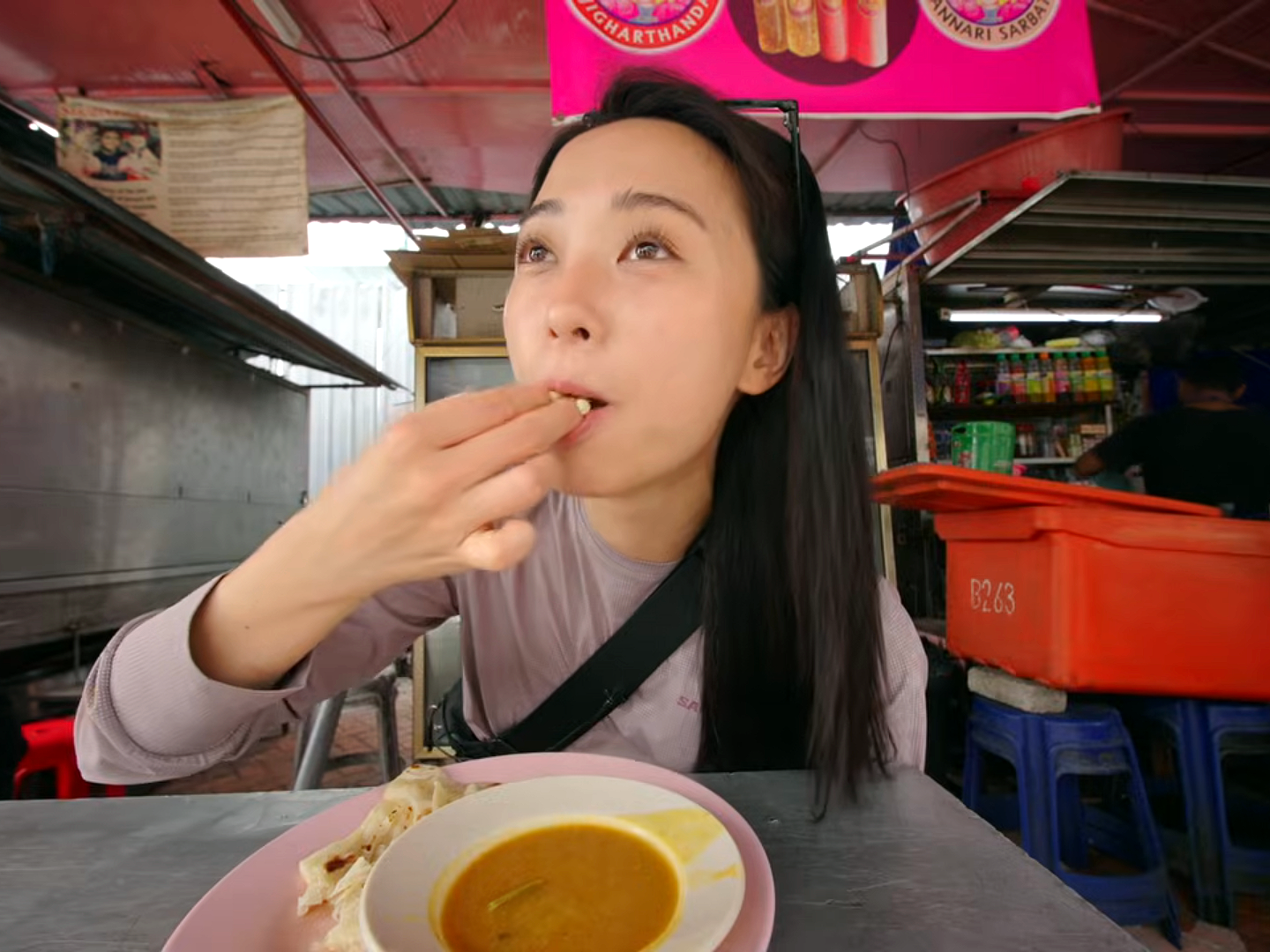
In June this year, Malaysian-American Jaime Tan, content creator-turned-competitor on MasterChef US (aka MasterChef: Global Gauntle), gleefully announced that she was offering a dish of from-scratch roti canai served with curry. She pronounced the Indian fried flatbread as “roti ker-nai”. Very quickly, that beautiful pronunciation went viral, with many Malaysians (and Singaporeans across the Causeway) calling her out for her wonky utterance. On the heels of the unsurprising online backlash, she posted a predictable apology video explaining that she grew up in the United States and didn’t mean to misrepresent the beloved national dish. Of course, she did not. And because lightning apparently loves striking the Asian diaspora twice, another Asian-American influencer has stepped up to sacrifice their heritage for YouTube video clicks. Because cultural continuity is secondary to cultural accuracy. Apparently, influencers aren’t unaware of each other’s faux pas. They just treat them the way ancient nobility treated bubonic plague: deeply tragic for everyone else, but clearly a personal branding opportunity for them.
To render roti canai as “roti ker-nai” is to commit an act of linguistic vandalism that stretches the bounds of credulity. Canai, a foundational South-East Asian culinary term derived from the Tamil word for rolling dough, is flattened like the roti into a mangled phonetic hybrid, sounding less like a beloved griddled flatbread and more like—at least visually—a local flood control system: the canal. It is a staggering feat of auditory cognitive dissonance that a traveller can stand in a bustling Penang lebuh (avenue), watch the deliberate, rhythmic tossing and stretching of dough (as she described), and yet produce a vowel sound completely alien to any speaker of Malay, Tamil, or English within a thousand-kilometre radius. This is gila. Yet, delivered with the breezy, unshakable self-assurance typical of the modern digital nomad, it stands to reason that local heritage was not investigated or respected, but merely phoneticised for the amusement of an algorithmically-dependent home audience.
Apparently, influencers aren’t unaware of each other’s faux pas. They just treat them the way ancient nobility treated bubonic plague: deeply tragic for everyone else, but clearly a personal branding opportunity for them
A pronunciation gaffe isn’t a mistake in that ecosystem; it’s an unbilled content pillar. To be sure, foreign visitors is not expected to instantly master every local pronunciation, but this was a video about “100hrs BEST MICHELIN STREET FOOD in Penang Malaysia”. It is not unreasonable to expect some research and pronunciation should be part of it, in particular a staple food. She was not discovering tempoyak (interestingly, she called durian a “wild fruit” even if, as a tourist, what she got to eat was definitely cultivated); she was learning about a food that can be found practically on every street corner of the island. It’s puzzling that she would put together one hundred hours worth of video footage on Georgetown’s foods, but could not spend a moment to learn that canai is not pronounced with a hard ‘k’ consonant. The issue is not perfection. It is whether the creator approaches the culture as something to be learned from or merely consumed. And pronunciation often becomes a tell. It is where curiosity meets humility. Close enough is not good enough.
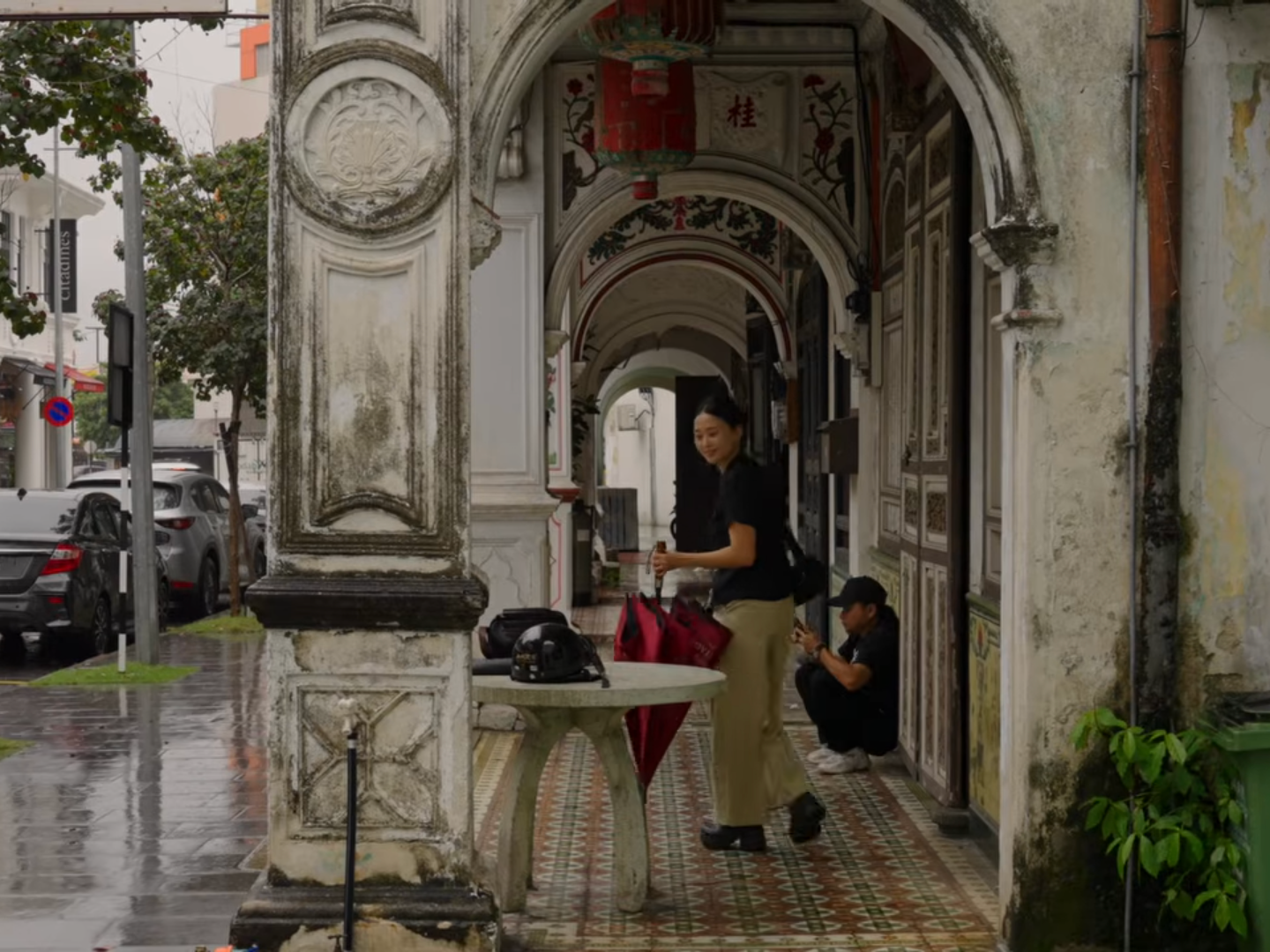
At some point in this segment, she described how the roti “ker-nai” is made and then described the bread “as flaky as my heels in winter”. In Asia, we do not compare food to the foot. This was not just a new low in travel-vlog sensory descriptions, it was a reflection of how the creator’s palate was as arid as her metaphors. That was the exact moment we reached our threshold, hit the pause button, and spared ourselves another minute of the video punishment. So we are unable to say how it ended, but we’re more than happy to rewind all the way back to the catastrophe of how it started. The very curious beginning opened with a rainy Penang and her description: “somehow the rain made Georgetown moodier”. Assuming an audience familiarity that has not been earned aside, why was the old town centre “moodier”? Comparative adjectives normally require an established baseline—a place is busier than usual or is darker than yesterday. “Moodier”, therefore, lacked an articulated first term. Yet influencer language often does this. Why? Because, were were told, it is more “cinematic”.
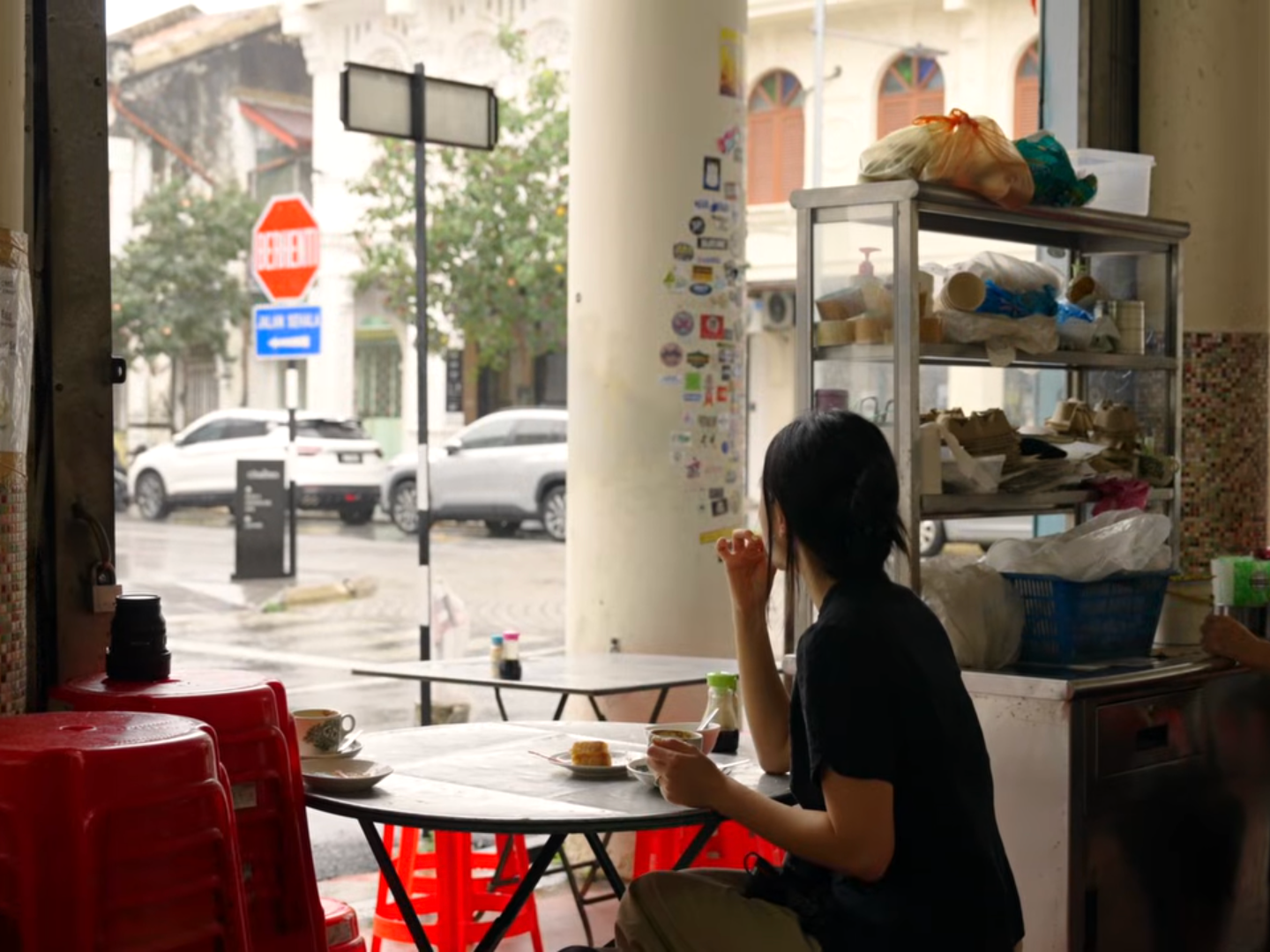
It’s likely “moodier” is cinematic because in Tina Choi’s mind, Georgetown comprises unlit back alleys where nothing happens except the steady, rhythmic rusting of zinc roofs. And then it rains. But we did not see a 王家卫 (Wong Kar Wai) movie. Her videographer was not Christopher Doyle. The video showed a vehicle driving through the rain and then, three snaps of the Georgetown before showing the Auntie Star Coffee in Lebuh Noordin. What did she really reveal before she whipped out “moodier”? A Wong Kai Wai film earns the atmospheric through accumulation—the mood is the result. Christopher Doyle does not point a camera at a street and announce, “You are moodier ”. He offers sodium-vapour yellows, condensation on glass window, crowded interiors, and temporal dislocation, and the audience comes to moody. The filmmaker does not need to say so. Ms Choi’s choice of adjective was what she arrived with, not arrived at. Frankly, it could be any of the influencer descriptions that we are now bored with: even dreamier, even more charming, even cozier. These adjectives carry no observational content. They are as hardworking as a neon sign in broad daylight.
And then, of course, the heavens parted to accommodate more. Despite the rain, she waisted no time in introducing her first food: “classic” kaya toast. But what really got us steaming was her calling kaya a jam, saying with certainty: “kaya jam is a coconut-reduced jam”. Kaya is not a jam; it is a curd. And a coconut—the drupe—cannot be reduced unlike fruit or juice. Kaya uses coconut milk and it is the emulsification of coconut milk’s fats that is key. Unlike jam, kaya does not require pectin to set. The thickening is not analogous to making a fruit preserve. Helping to do the job is sugar and eggs, which, curiously, she did not mention. The egg component in kaya is not incidental. It contributes structure, texture, and the characteristic custardy richness. For Malaysians and Singaporeans “kaya jam is a coconut-reduced jam” sounds like something from another planet. It is akin to telling the British lemon curd is a “lemon-reduced spread”. You can see the vague route the speaker took to arrive there, but the defining ingredient and mechanism just slipped out of view.
It is a peculiar tragedy of modern science that a trained food scientist, who spent years studying molecular bonding, is unable to differentiate between coagulation and gelation. The argument is that food scientists are not trained to communicate food processes to the public. If so, then don’t. There is no shame in saying something straightforward: “Kaya is a sweet coconut-and-egg spread”. Why reach for a bizarre, scientifically illiterate fiction? Ms Choi’s lack of flair is in her inability to differentiate. Not only between curd and jam, but also seemingly between butter and margarine or between toast and “obviously” white bread. She said that on the toast, “you have a thick layer of butter”. Everyone on the Malay peninsular and on island of Singapore knows that when you ask for “kaya butter toast”, you get a slice of cold, hard butter between the bread. When the spread is a “layer”, but melted, as seen in the video, chances are, margarine was used, particularly Planta. Her performance was already hard to sit through when these anomalies keep blaring at you. And then came: “after the toast is toasted.” Was the bread toasted twice? You would not say ‘after the fried rice is fried’, so why, for her, the redundancy department of redundancy?
She continued with describing the kaya after it was spread as “kind of disintegrated”. You could see the brown—from the caramel as colouring—of the kaya. It did not disintegrate, which suggested fragmenting, as in the cream cracker disintegrates into the tea. She continued: “It’s kind of dry, and you want to supplement that dryness with a little bit of that soft-boiled eggs.” A toast is not bread pudding. We were beginning to wonder if it was because American breakfast discourse often treats moisture as inherently desirable: moist banana bread, syrup-soaked pancakes, juicy burger. The kaya toast is supposed to be crisp. To be sure, we do dunk it in the runny egg, but if we do really like it soaked, in Penang, there is also roti goyang (shaking roti)—the soft-boiled eggs pour over the kaya toast, sitting on it wobbly. The dry crunch is, in fact, not a problem that needs fixing or, as she claimed, supplementation. Was she describing vitamin deficiency? You supplement a lack. You supplement B complex; you don’t supplement toast.
And then came: “after the toast is toasted.” Was the bread toasted twice? You would not say ‘after the fried rice is fried’, so why, for her, the redundancy department of redundancy?
And what was her grand verdict about the kaya toast? “Delicious”. Seriously. But more ahead: “It’s buttery, it’s salty; it’s sweet.” So? Tina Choi braved the rain for buttery, salty, and sweet? When it came to this, we realised that it was the superficiality that really grated. The kaya toast kept offering depth and the narration kept declining the invitation. She chose to keep her observations simplistic and, crucially, her comments trite. A food guide is supposed to take us somewhere, but her language stopped at the first landing. Everything remained at the level of the first adjective available or came to mind. To be sure, we are not doubting the veracity of her comments, bur they were exhausted the moment they were uttered. They generated no further insight. They didn’t sharpen perception. They didn’t make the viewer notice anything new. It was like the typical fashion caption, “red dress”, describing a full-colour photograph. It is not inaccurate, but it is beneath the task. Perhaps, contemporary food content is simply satisfied with the obvious.
And that was only the first two minutes and 22 seconds of the whole the 73-minute video. If this was what a hundred hours of digital tourism yields—a relentless procession of phonetic blunders, culinary fabrications, and unearned atmospheric projections—then perhaps the real tragedy is not what was shown on screen, but what was deliberately left out, including the fact that Penang is one of the few cities in Malaysia that toasts their bread over smoking charcoal (which is why toast is also known as roti bakar or grilled bread); what she ingested was shown to have popped out of an electric toaster. Real food culture is not a playground for hollow metrics, nor is it a convenient aesthetic backdrop to be phonetically mangled and repackaged for an indifferent algorithm. It is messy, specific, historical, sensory, and deeply human. It demands reverence, curiosity, and, above all, basic humility. A person can posses all three without being a food scientist, without being a cook, without even being a particularly good scriptwriter. The willingness to stand in front of kaya toast or roti canai and say to oneself, “there may be more than my first impression”. That is humility.

