It says a lot about modern publishing that magazine editors have finally achieved their lifelong dream: making videos about themselves, welcoming readers to their homes, and, more amusingly, commissioning themselves
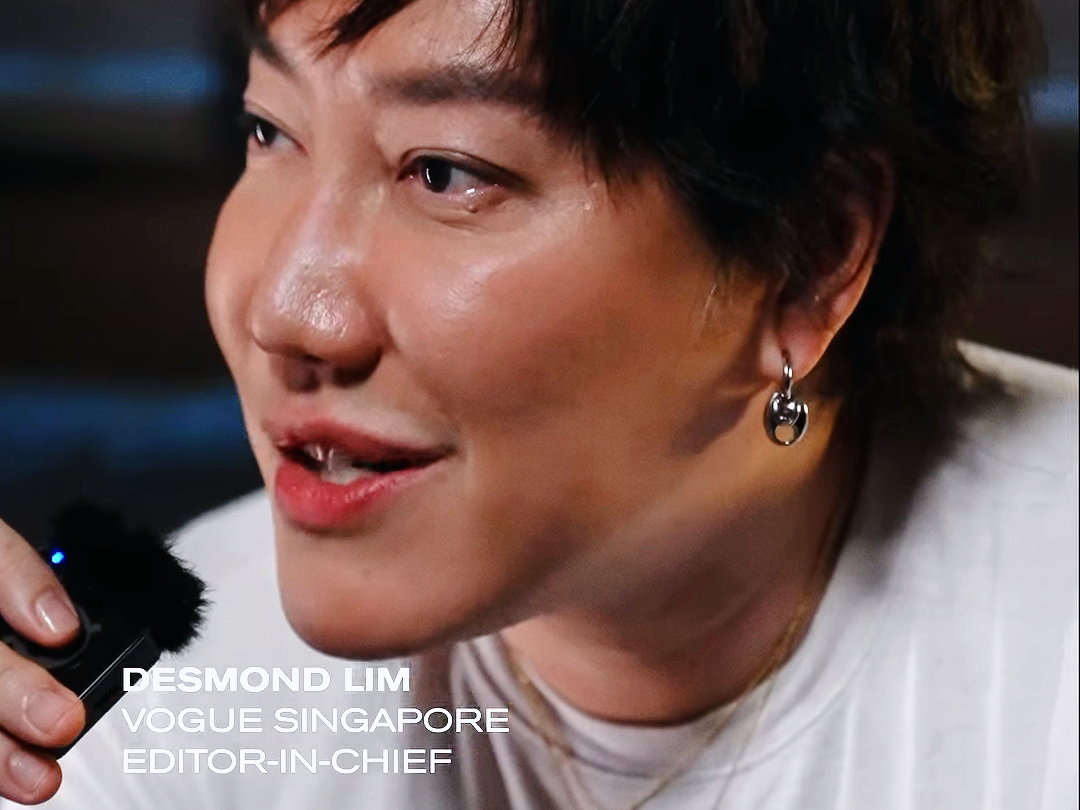
Fifteen hours ago, Vogue SG’s editor-in-chief, Desmond Lim, shared on the magazine’s official Instagram page a video of himself packing for Milan Fashion Week. But, as the highlight of that runway mania this year was an Anna Wintour-led event, he made sure to mention the latter in the next breath: “I’m going to Milan for Vogue World.” If you’re the editor-in-chief of a Vogue edition going to MFW, nobody would regard attendance at Vogue World as revelatory. It’s a bit like saying, “I’ll be attending the United Nations General Assembly and I will hear Donald Trump speak.” Well, sure, but entirely superfluous. The statement isn’t primarily communicating logistics. It’s revealing proximity. In fashion today, participants must name-drop the gravitational centre just to bask in its reflected wattage. As with many social media posts, the informational value is low, but the symbolic value is high. In modern vacuity, you can signify nothing, yet somehow demand an audience. Window dressing can be this good.
In fashion media, there is a hierarchy of symbolic locations: fashion week, front row, celebrity closeness, after parties, private dinners, brand showroom visits, Vogue events, Vogue World. Each signal a degree of access. So when someone mentions Vogue World specifically, they’re not really saying that they are there (or will be there). Rather, they are informing you that they occupy a position within the inner ecosystem that grants access to this thing. The irony is that, for a Vogue editor, access to Vogue World is almost assumed. Yet, Mr Lim made the announcement much like Ms Kuan casually letting her followers know she’d be attending the Prada show. One supposes editorship now requires the same rigorous PR cadence as a sponsored influencer unboxing an invitation. This is where personal branding enters. Institutional communication would simply say: “Vogue SG will be reporting from Milan Fashion Week.” But personal branding must state: “I am going to Milan. I am packing. I am attending Vogue World. Come along with me.”
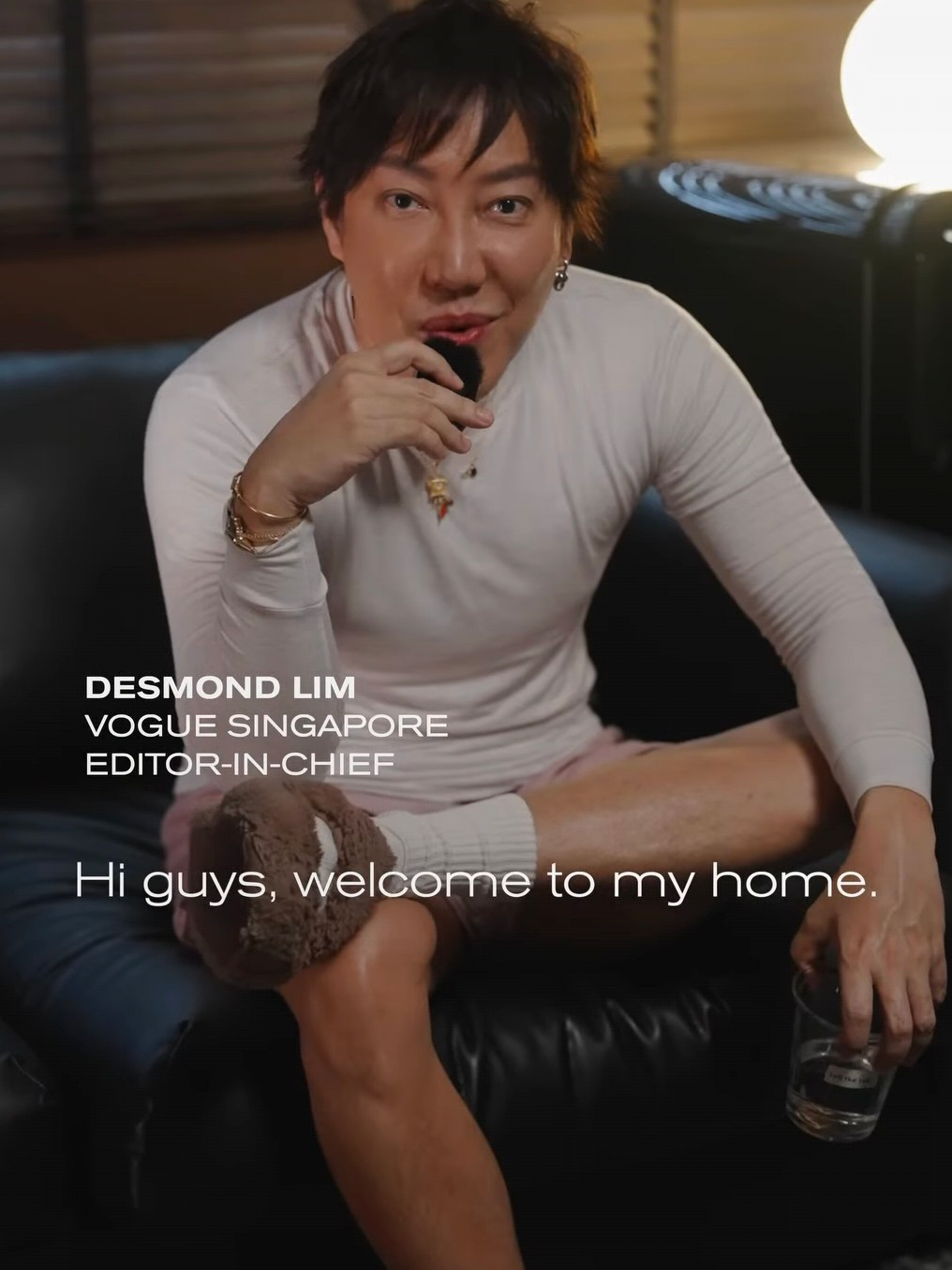
Mr Lim—who retains the editor-in-chief title because Vogue SG is a licensed edition, as opposed to the Condé Nast-owned titles, whose American and British editorial leaders are known as “head of content”—shared not only the video with his recognisable face, but also the repeated stating of who he is, while the Vogue logo remained a constant at the right-hand corner of the reel. He began with the caption on the reel itself, followed by further identifiers in the comments, including his personal Instagram handle, monkiepoo, which is subsequently categorised in the credit block as “talent”. At some point the viewer is no longer being informed who is speaking. We are being reminded of who is speaking. Repeatedly. It completely collapsed the boundary between the press and the product, reducing an individual whose nominal job is to exercise editorial judgment and distance into one of many influencers-for-hire reading a script off a ring light. There’s a subtle difference between personal visibility and personal over-branding. Visibility says: “Here’s who’s speaking.” Over-branding says: “In case you forgot who was speaking three seconds ago, here are the textual reminders.” It’s like Chanel joyfully seeing its name on storefront and merchandise, and dust bag.

In the not-that-distant past, editors-in-chief did not generally write in the first person unless it was the editor’s page/note/letter. These days, they put themselves on the cover, as Anna Wintour did with the very front of the April issue of American Vogue. The joke is that for decades Ms Wintour’s entire mythology was built on not needing to do that. The old Condé Nast model was almost aristocratic. The editor-in-chief’s authority came precisely from not foregrounding themselves. You knew who Ms Wintour was because she occupied the seat, the industry talked about her, designers feared her verdict, and the institution amplified her authority. She didn’t have to repeatedly announce “I am here” or “I am going to Milan and for Vogue World”. Until 2009’s The September Issue, many people did not know what she looked like, not even Americans. To this day, she does not even have a personal Instagram page. But now, the authority no longer seems sufficient on its own. Even she succumbs to the digital exhibitionism of today. And, everyone must also maintain a personal content stream. The editor cannot simply be an editor. The editor must also be a personality, a lifestyle narrator, a content creator, and, the oddest of all, a “talent”.
It is unclear whether it is strictly required by the job description, but the editor insisting on casting himself as a talent is virtually unheard of (unless you count Harper’s Bazaar SG’s Kenneth Goh), yet there it was in the credit list—“Talent: @monkiepoo”. That’s what pushed it from ordinary production credit into self-parody. “Talent: Desmond Lim” would already be mildly amusing because the editor is explicitly crediting himself as the on-screen performer. But “Talent: @monkiepoo” is quite on another level. Because an Instagram packing video is not exactly a feature film where viewers are desperately trying to identify the cast. This shows us how deeply fashion media has absorbed influencer-production conventions. In traditional magazine culture, credits existed primarily to acknowledge labour (the contributors sacrificed high fees for the credit line). The credit block basically told the reader who made the shoot. But the moment “talent” appears for the editor himself, the credit ceases to be informational and becomes ceremonial. Everyone knows who “monkiepoo” is. If the account belongs to the editor, the video stars the editor, the editor introduces himself, and the caption identifies the editor, then “Talent: monkiepoo” isn’t identification. It’s attribution. It’s the bureaucratic thoroughness of it that makes it funny. Not just “I am the editor” nor even “I am on camera.” But, editor-in-chief: me. Host: me. Subject: me. Talent: @me. Simply put, curating culture, starring myself.
Screen shots: voguesingapore/Instagram

