Demna Gvasalia brought his Gucci show ‘in-store’. On home turf, was it really more tempting?
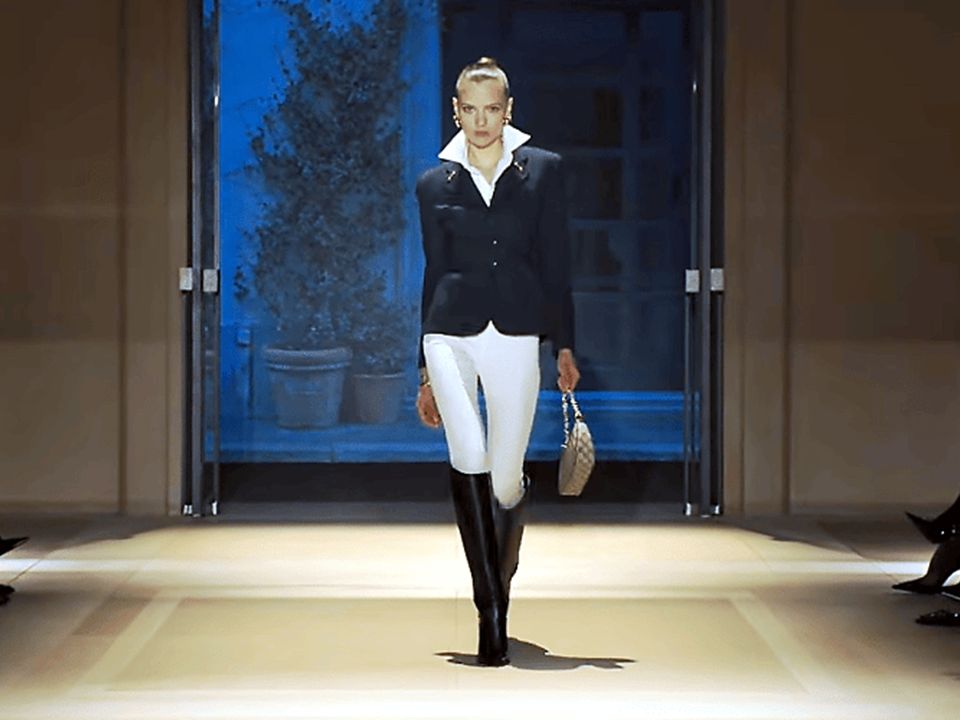
Last weekend, approaching the Gucci store at The Exchange TRX in Kuala Lumpur, we heard a burst of laughter emerging from behind their opened, glass front doors. When we walked past, we saw a group of sales staffers—about four of them—gathered around the front display island-cabinet. They were enjoying a conversation among themselves in a delightful mix of Mandarin and Cantonese. The store was, as much as we could see, empty. This has been our experience in the last three months, when we started paying attention to the Gucci stores themselves. In Hong Kong, Bangkok, and at the Singapore two-storey at The Shoppes @ Marina Bay Sands, we kept finding the region’s best-kept secret: empty Gucci stores. But now, Gucci built one and many came. Within the Allianz MiCo events space in Milan, the brand built a “store”, completely fitted out, and with real merchandise to view, though we do not know if they can be touched. At the first store-as-runway that we remember—the Chanel autumn/winter 2014/15 collection, editors pillaged the shelves. Many attendees helped themselves to the Chanel-labelled “Coco Flakes”, the fruits and vegetables, even the shopping basket. We could not resist wondering if anyone was now seduced by a fur coat hung on a rack at The Store Show.
The runway was set up as a functioning boutique, but this was not a mock-up of those still used today, basically what was designed to house Alessandro Michele’s florid designs. The new space Demna Gvasalia dreamed up looked less overwrought, but the signs of luxury were unmistakable: Carrera marble walls and shelves, Greek and Roman-inspired art and frescoes, even the helpful, suited doorman. It was all very real. So were Mr Gvasalia’s mock parliament, flooded apocalypse, airport (Chanel beat him to it too!), and a city street for Balenciaga. A Gucci store is no doubt the space that matters most to a luxury brand. In that sense, his concept was conceptually consistent. But consistency is not necessary originality. The Chanel show more than ten years ago was a satirical exaggeration of consumerism. The joke was obvious: what happens when a luxury logo colonizes every mundane object in everyday life? Mr Gvasalia’s Gucci boutique, by contrast, is almost anti-satirical. It does not critique consumption, least of all, the store. It venerates it. Perhaps this was a preview of the coming Gucci stores under Mr Gvasalia. But once you build a full-scale boutique on a runway, you are effectively telling the audience: “The Gucci store itself is worthy of theatrical recreation.”
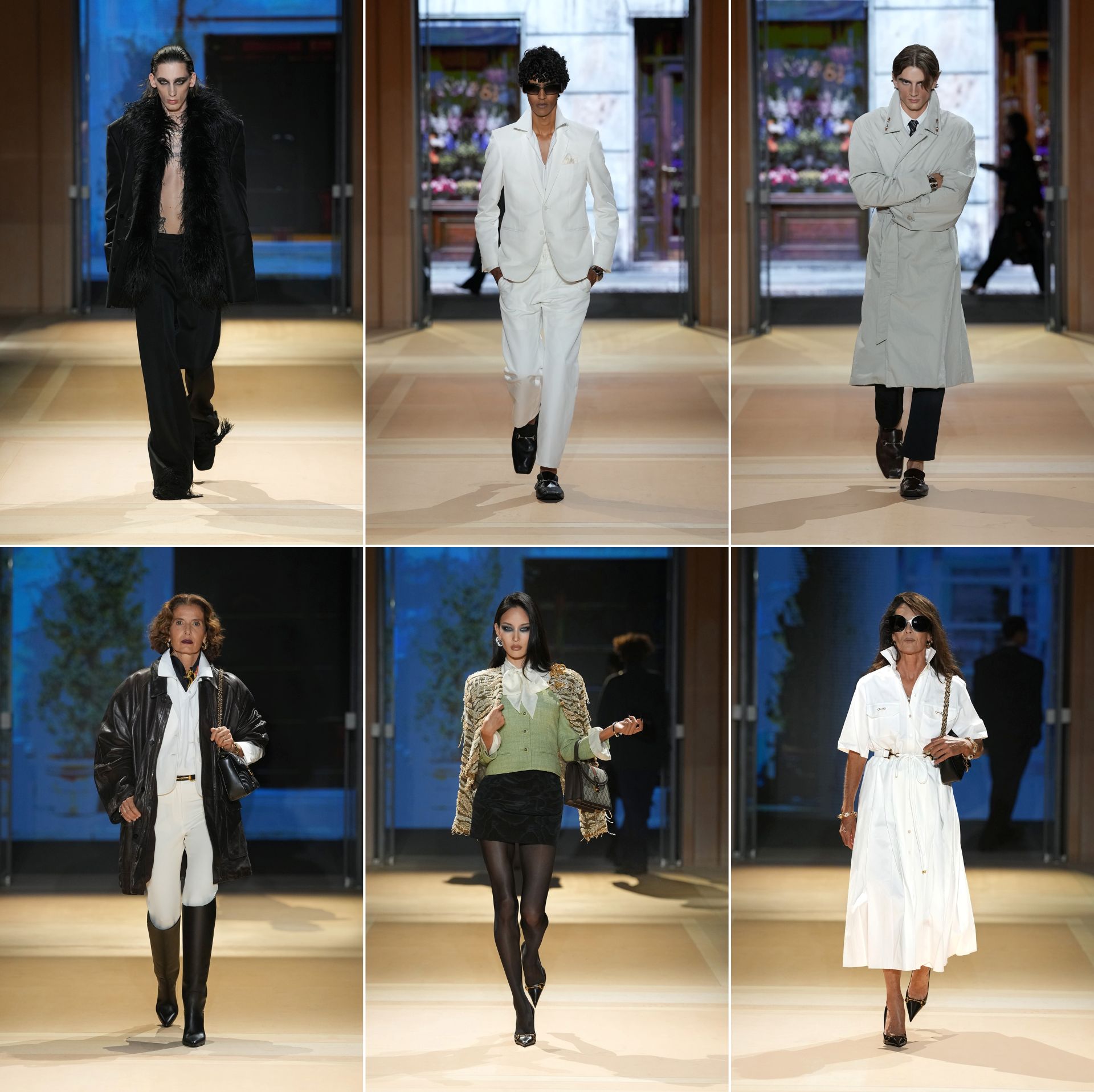
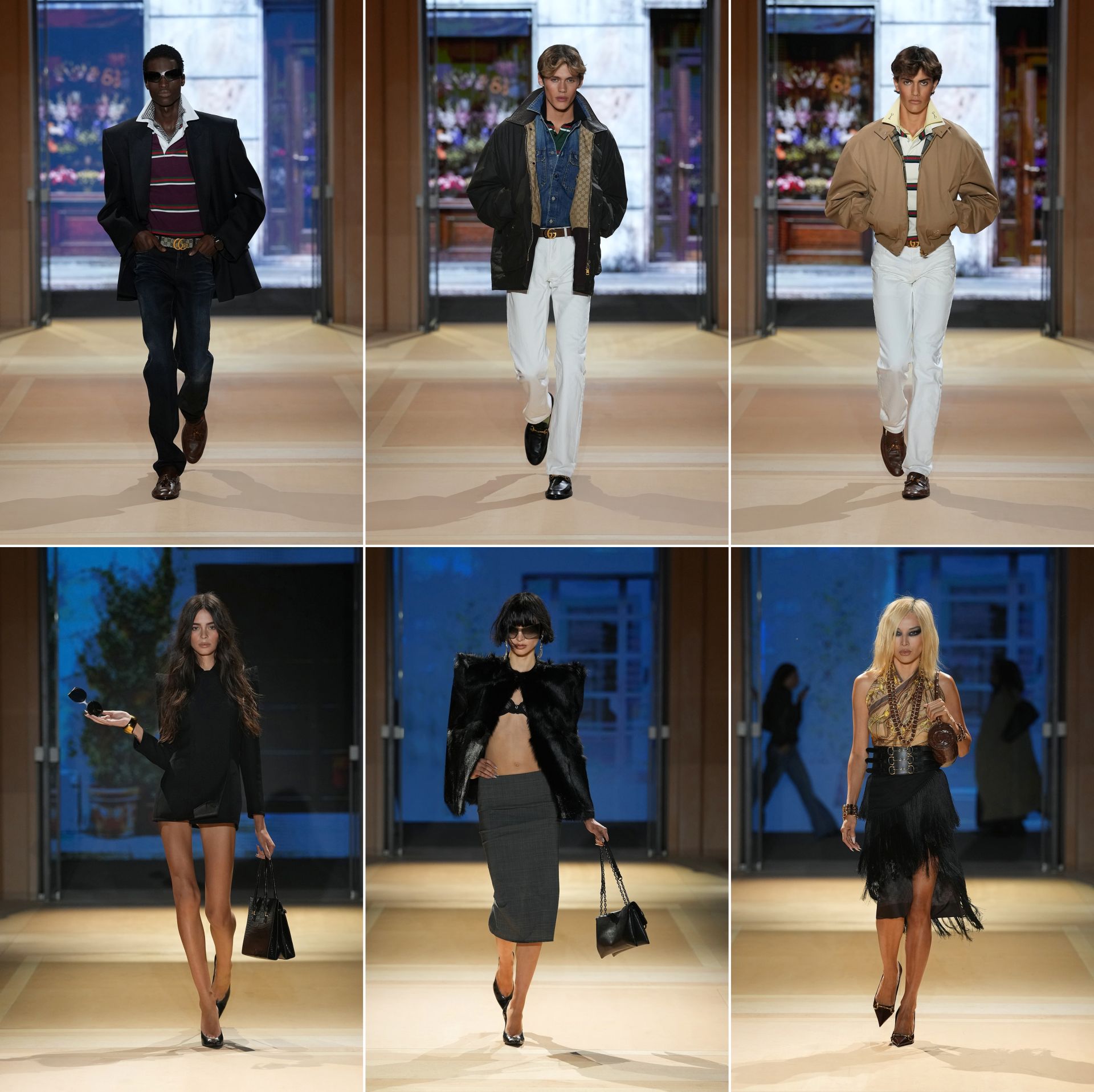
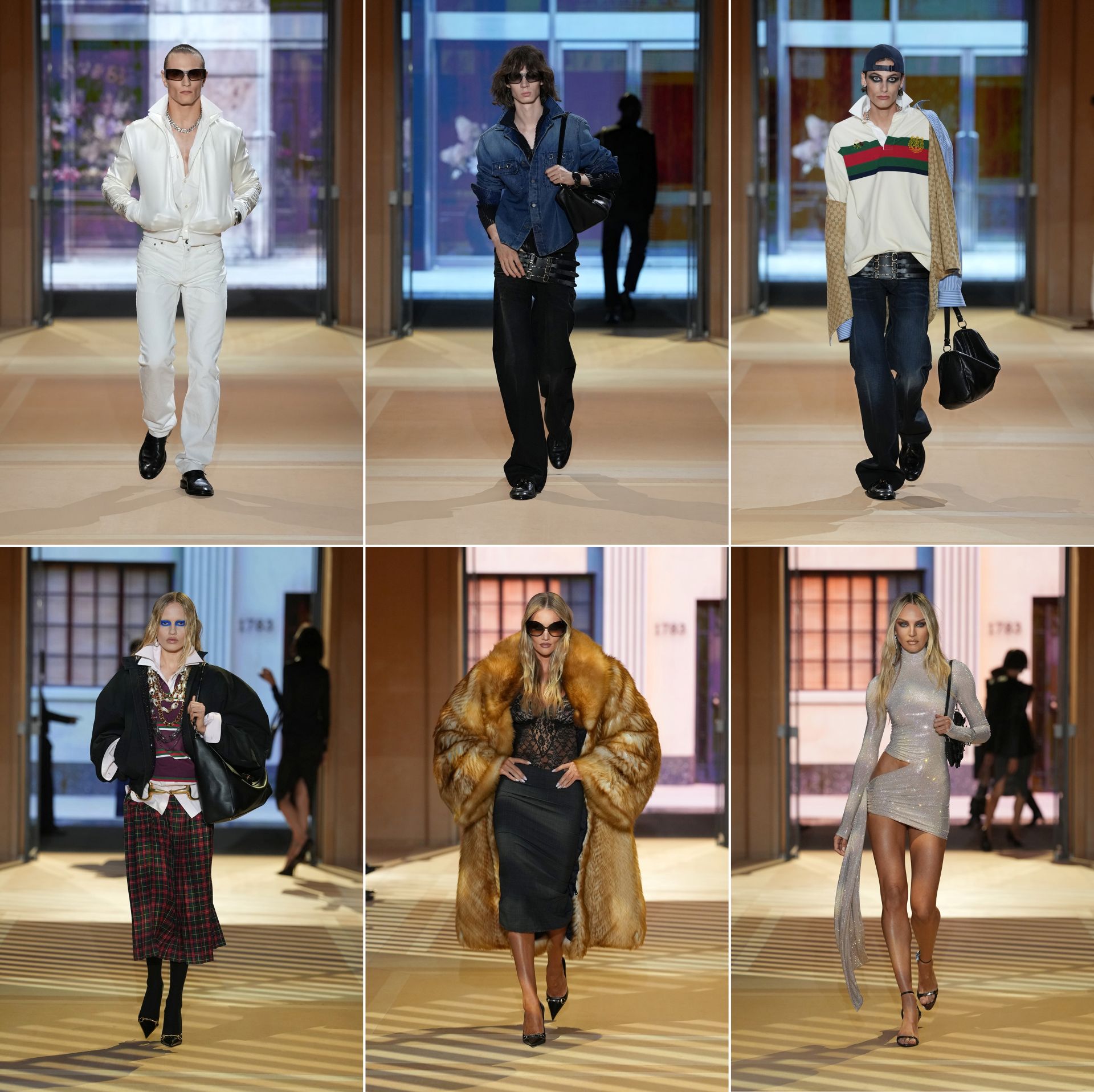
Through the front entrance overlooking an unknown street, which grew nicely busy on cue like an old Hollywood set, the doorman opened the glass doors to welcome dolled-up customers entering one by one. This was reminiscent of the outdoor show that Mr Gvaslia staged in Los Angeles in 2023. Back then, it featured “urban archetypes”: every imaginable city habitues and misfit, including the body-conscious going to the gym, the celebrity going to lunch, the tourist sightseeing, even the hustler working. But these were not actual archetypes; they were Demna Archetypes. The same figures reappear collection after collection, only under different institutional roofs. And now in a staged Gucci store. This was Windsor Street transplanted indoors. City became boutique, but the casting logic remains remarkably familiar. We don’t think observing people is conceited since fashion has always done that. The term implies a level of universality that the clothes don’t necessarily possess. This was fashion observing itself. The city back then was external, the outside world. Now, we are inside a Gucci space. Once the runway becomes that, these “archetypes” are not wandering through society. They are already inside the luxury machine. They work there, shop there, guard it, photograph it, attend it, and, ultimately, consume it.
Perhaps it really boiled down to the clothes. If they were genuinely arresting, would the brand need the explanatory apparatus? As we saw in Mr Gvasalia’s last years at Balenciaga, the narrative arrived before the clothes, the characters before the looks, including real ones such as the journalist Cathy Horyn. This time, it was the same, only now, the social characters did more than half the design work. There were Demna Gvasalia’s usual obsessions, including the hooker. The problem for us is that even she does not desire to dress like one. There is a profound laziness in relying on visual clichés from decades past and passing them off as edgy social commentary. Much has been said about Gucci needing to move merchandise. That perhaps explains why for a summer season, the archetypes required three layers of clothing or why collars of rugby shirts needed to be choked with multiple strands of necklaces under outerwear. Will retail theatrics sell? In another era, that might have been read as embarrassing corporate narcissism. Today, however, luxury brands increasingly behave as if their own ecosystems possess independent cultural significance. The logo is, however, merely a souvenir from a universe many already inhabit.
Screen shot: gucci/YouTube. Photos: Gucci

