It is a fascinating experiment in how quickly an entire country can be hypnotized by a plush mock-bunny conceived by AI, with prompts by someone who does not want anyone to question her art
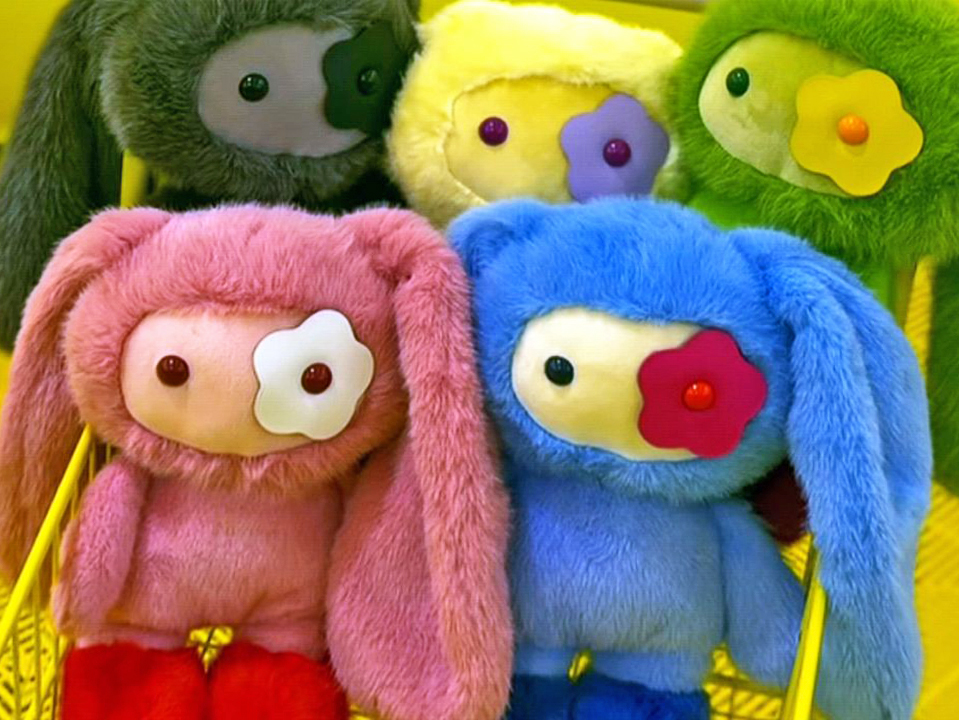
The sold-out plushies. Screen shot: be.imba/Instagram
It took the Juju World plushies four days to realise that the IMBA Theatre wasn’t their forever home. Since opening on 20 June, they’ve been so aggressively adopted that apparently not a single one remains. In fact, according to The Straits Times, the plushies were “sold out within the first weekend of [the] exhibition”. The dolls moved so quickly because of the “result of unexpected demand, not due to a hold-up at the Singapore Custom”, IMBA clarified to the daily. The explanation was necessary because of how typically snappy the creator of the namesake event CJ Hendry was. ST reported that Ms Hendry took to Instagram to announce she was “pissed” the installation shelves were bare, apparently because the Jujus are currently enjoying an extended, unrequested vacation at customs. (That IG post has been removed.) The language is consistent with the authentic artist who loves profanities as much as she enjoys bringing her events to her fans. Apparently, the logistics were not as deliberately curated as her choice of expletives.
By going on Instagram to complain about the supply chain, she was inadvertently admitting that Juju World is not a piece of ethereal high art—it is a retail operation. Artists such as Labubu creator Lung Kasing (龙家升 or Long Jiasheng) do not complain about customs hiccups when discussing their work; merchants do. Expressing shrill frustration about the empty shelves allows her to play the role of the passionate seller-advocate for her fans, while actually shifting the blame for a ho-hum experience away from her own planning and onto the system (customs). It’s a very clever way to manufacture an us-vs-them narrative, even when the slip-up is logistical. It can’t be any clearer: This is a pop-up shop, plushie-d as a cultural event, and the hysteria she whips up is merely the sound of a supply chain management issue rebranded as a tragedy. Venue operator IMBA had to state: “Like any international shipment, any restock shipments are subject to standard customs processing.” Her agitation beautifully revealed that the merchandise is the point. The “art” is just the wrapper for the retail transaction. It is evident she was less interested in the thematic integrity of her event and more in the transactional velocity of her Jujus.
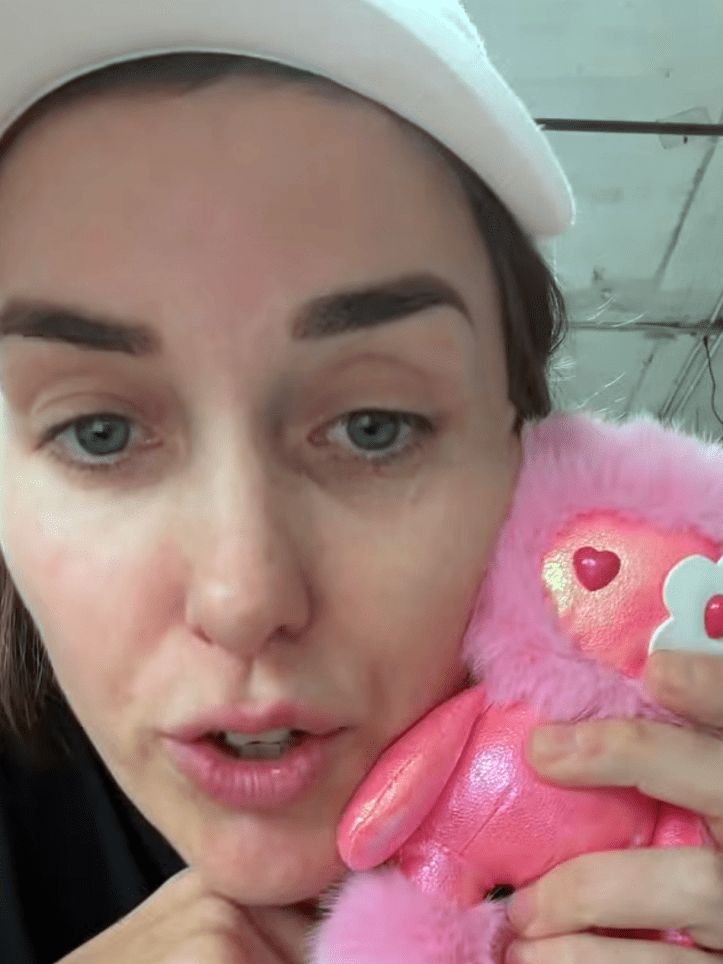
CJ Hendry and her Juju re-introducing her reel on how she used AI to create her Frankenstein bunny. Screen shot: cjhendry/Instagram
Earlier today, Ms Hendry posted an IG reel of her sharing an old video about using AI to create Juju. In the last part, she said “for those of you who are joining us now”. That is possibly to justify her telling that Instagrammer sarcastically, “you must be new here”. Ms Hendry has a flair for rewriting history, as she did with Labubu’s. This time, she was trying to retroactively frame the Instagrammer’s critique as a lack of “familiarity with the process”, rather than a critique of the merit of the process. In that reel, she spoke in a curiously dulcet voice, clutching a pink Juju in a curiously lame attempt to soften her image. She hovered so close to the camers lens that the pixels practically had to elbow their way apart to make room for her pores, offering the audience a high-definition topography of a face that wears only the make-up of performative humility, the kind of aggressive relatability that leaves everyone involved feeling slightly unclean. By using the “joining us now” trope, she is signaling that her work is not for the general public—only the initiated. She is attempting to transform a critique of her work into a failure of the viewer’s education. It is a classic move for an artist who knows their work cannot withstand an objective, independent review.
CJ Hendry likely believes that by coming clean with her AI use, she can justify it. But she is confusing usage with validity. Admitting to AI use does not make the outcome more profound; it just makes it clearer that it’s all about the prompt. “Being new” to her effective prompting does not make one blind to the vacuity of it. It still leaves the Instagrammer’s burning query—what exactly does this contribute to her ‘art’?—unanswered, though clearly, such trivialities are far too pedestrian to require a response at this late hour. With the inventory liquidated a mere forty-eight hours after the all-yellow installation’s debut, she has other concerns to address. But the true fascination is the response to the banal output of someone who does not play down her “authentic” self, even being expletive-happy in reels addressed to the Singaporean audience. Her abrasiveness, like Xiaxu’s, does not repel, it fuels her spectacle. Her salty language, the arrogance (telling people not to come if they don’t see the value of her work), the dismissal of critique—these aren’t slips. They’re packaged as part of her brand. In a culture that fetishises aggressive realness, affability isn’t the currency, but attention, scarcity, and bluntness are. The merchandise sold out not because it is meaningful, but because it’s deliberately not abundant. And as long as the merchandise sells out, the rudeness is irrelevant to the spectacle’s success.

