Former MediaCorp artiste Joanne Peh appeared on TikTok in a near fit, to insist she does not require the trappings of stardom when she is a livestreamer—only the basic, human decency of glass of water
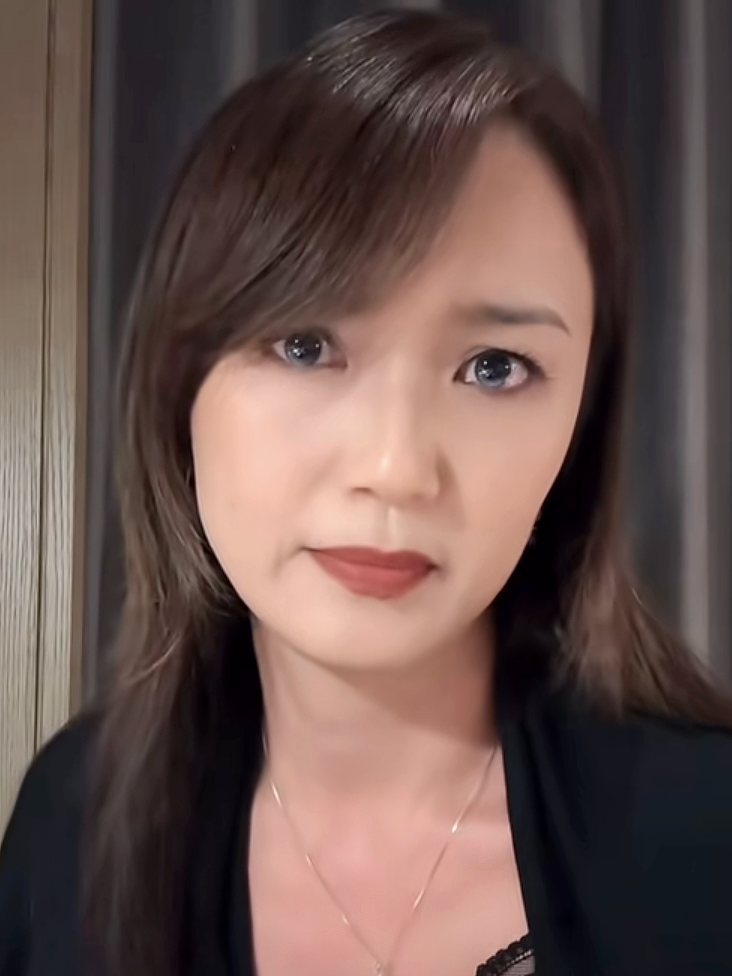
There is a certain dreary charm in witnessing TV’s elite unravel. It shows that even solid standing can be reduced to the same brand of messy, common-corridor kind of lash-out at an inconsiderate neighbour. Two days ago, Joanne Peh (白薇秀, Bai Weixiu) appeared on TikTok livestream to rail at an unnamed (untamed?) individual who, apparently showed her utter lack of respect. She was booked to front a livestream sale in Guangzhou, a task one might charitably describe as commerce-adjacent performance art, only to abandon the appearance moments before the filming was scheduled to start. Her stated rationale—a sudden, performative preoccupation with “drawing a professional boundary”—was, surprisingly, accompanied by the handy platitude: “Respect should never be optional.” Ms Peh made no mention of the logistical chaos she left in her wake, though she found the preservation of her own brand far more compelling than the contractual obligations she was bound to. Professionals, when wronged, tend to demonstrate the profound grace of simply exiting the room and closing the file—leaving the subsequent dismantling of their adversary to the billable hours of legal counsel or their management team. Apparently, the theatre of grievance is a better avenue.
Ms Peh, who curiously looked like Aileen Tan (陈丽贞, Chen Lizhen) in that vivid video, later explained to 8 Days: “The reason why I chose to voice out is to highlight values”. Switching seamlessly from actress to advocate, she spotlighted what matters for her fellow livestreamers, positioning herself as a spokesperson, not just a victim. Throughout that livestream that sold protestations, not products, her outcry oscillated between Mandarin and English, between shouts of anger and tears of personal betrayal. She became a better-dressed fishmonger’s wife, trading screen poise for the frantic roar of the digital stall. Her eyes spoke and then welled-up with choreographic beauty. She used pauses with precision too, mastering the sort of pregnant silences that even a seasoned publicist would find challenging to orchestrate. Her red lips—professionally matted—emoted with stunning clarity, allowing each of her fiery words a strident, revolutionary zeal. She put her experience as an actress to expectedly good use. The entire performance was so meticulously curated that the only thing more artificial than her outrage was the immaculately lit but, notably, ephemeral post.
Her eyes spoke and then welled-up and gleamed with choreographic beauty. She used pauses with precision too, mastering the sort of pregnant silences that even a seasoned publicist may find challenging to orchestrate
The most quoted line in her breakdown is what she said about the merchant: “You are so full of yourself.” We don’t know their side of the story, but that line was a sharp escalation, a direct attack on the merchant’s ego and self‑presentation. By calling them “full of yourself,” she seemed to have positioned her own dignity against their self‑importance. It was a clash of a star’s aura versus a merchant’s spatial swagger. With an incredible economy of words, the merchant was cast as petty ego, she as moral voice. But, her own tearful performance of bitter indignation, invoking “values”, sounded to us like a display of self-importance. It was a skillful way of displacing the critique. She cast them as arrogant so that her own performance could be read as principled, rather than egotistical. The animated scolding wasn’t just about hurt—it was about protecting her stature. The merchant’s self‑importance was expressed through indifferent dominance. Hers was through acrimony and moral rhetoric. Both were performances of ego, but hers was wrapped in the language of values and dignity. Some people say, “they deserve each other”.
One thing that Ms Peh was especially livid about was his insistence on smoking in front of her. She fumed: “You don’t even have decency to not smoke in my presence.” One must always have the correctness to never ever take a puff in the presence of Joanne Peh, not even the Chinese in their homeland. It seems that for Ms Peh, the expectation of respect is not situational—it’s absolute. Her celebrity status becomes a kind of unwritten code of conduct. Ms Peh was shocked—shocked!—that the rest of the world isn’t designed to accommodate her Singaporean preferences. To us, it is obvious there is some cultural friction here. In China, smoking in meetings is still normalised in some contexts. Her emphasis of “decency” collided with a cultural environment where smoking indoors is still acceptable, especially if the space—and the profit margins—belongs to the merchant. The space around her presence meant her aura overrode his ownership. To the Chinese, the logic is often simple: my office, my rules. In Ms Peh’s framing, the logic is inverted: my presence, my dignity. Her refusal collides with that norm, dramatising the clash between local custom and her personal dignity. The irony that was not lost to anyone is that her husband is from Guangzhou.
It seems that for Ms Peh, the expectation of respect is not situational—it’s absolute.
In one part of her breakdown, Ms Peh said that her team did not “expect a lot from the merchants. We do not demand a lot of things. We don’t expect you to come and pick us in a big S-Class; we don’t expect you to give us bouquets of flowers, and have a whole entourage of people waiting for us at your front door; we don’t demand this kind of thing. But just because we don’t ask for it doesn’t mean you don’t even offer us a drink when we sit down.” She was showing humility, but she made a laundry list of what she sacrificed—the very act of enumerating those luxuries implied that such gestures are the baseline hospitalities she deserved. She clearly pointed out “S-Class” and “entourage”, and being denied them was a way of affirming entitlement. The specificity of the items—you don’t casually drop a very particular breed of the Mercedes unless that’s part of your world—invoked the trappings of celebrity reception she has been used to, re‑anchoring her dignity in the language of elite hospitality. The merchant’s failure wasn’t just about smoking—it was about failing to meet even the minimum threshold of respect that, in her framing, sits somewhere between ordinary courtesy and star treatment. So for those things she forwent, including a glass of water, the merchant was doubly obliged to show basic respect. The smoking became symbolic of his failure to recognise her dignity, not just a matter of personal habit.
In 2002, Joanne Peh won the Miss Elegant title at Miss Universe Singapore of that year. It has been a cornerstone of her origin story, encoding her as someone who embodied poise, composure, and grace. Watching that video, it was hard to square her outrage with the implication of earning that title. It is not clear if that was the moment the mask slipped, or simply an impromptu audition for a different genre altogether. To be certain, the unnamed merchant could have done a lot better. Ms Peh’s predicament is essentially a labor dispute performed as a soap opera. But because both she and the merchant are inhabitants of the same ego-centric world, there is no moral high ground to be found. The merchant is a brute, yes. But they are a brute who is honest about the transactional nature of the work; they viewed her as a billboard. Ms Peh is a performer who was upset that she was treated like a billboard, despite the fact that she signed up for the system that treats all participants as such. Perhaps the tragedy isn’t that she was reduced to a billboard, but that she forgot to check if the fine print included a vanity mirror.
Screen shot: joannepehshop/TikTok

