Namewee’s unconvincing pivot from provocateur to patient
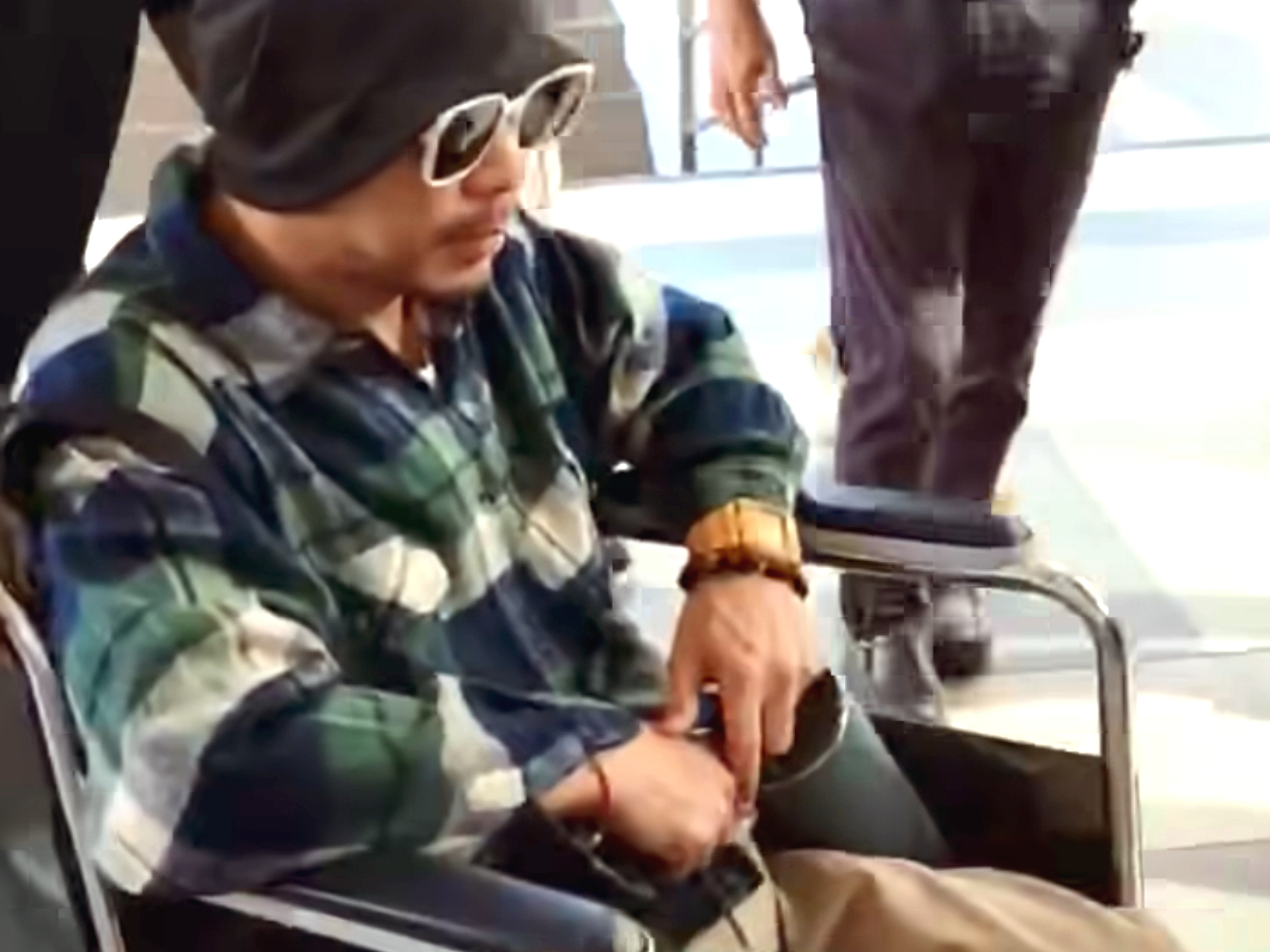
Namewee, wheelchair-bound. Screen shot: theorientaldaily/YouTube
These days, Nameweee (aka Wee Meng Chee, 黃明志 or Wang Mingzhi) does not waltz into a courtroom armed with a camera for the drama or a song for the judge. He uses a personal mobile aid. Mr Wee appeared in court earlier today for a high-profile drug possession case (later acquitted and widely reported), making his grand entrance in a wheelchair. He was propped for the court, but other than curiosity, the only other thing he managed to elicit was a collective eye-roll instead of a shred of public sympathy. Given his track record that has been littered with such narrative liberties, believing him now requires the kind of blind faith usually reserved for unverified Wi-Fi networks in bus terminals. As the news coverage showed, Namewee was wheeled in by an attendant right up the ramp-as-runway of the entrance. He was suitably dressed as an invalid, in a sombre, flannel plaid shirt and khakis, on his head, his security blanket, a flaccid beanie, and on his face, sunglasses with white frames to shield his eyes, but too influencer-obvious for a man truly humbled by an ailing limp, or two. If this is a costume, he was not planning to win an award with it.
Mr Wee shared on Instagram Stories that, the day before, he injured his leg. What caused the injury, he made no mention, nor which leg, or both. He claimed that he was aware sitting in a wheelchair would be seen as “做戏博同情, playing for sympathy”. Apparently, he even practiced walking with different gaits to mask his limp, but found they made him look “更加像做戏 even more like acting”. He did not say how long he practiced or if a professional was at hand to assist him (but he did reveal at the end of the text that he was off to see an orthopedist). Why immediate medical attention was not sought, he did not say either. When he arrived at the courthouse, he saw many photographers, one of them looked as if he was going to “把我拍到死, shoot him to death”. He eventually decided to use the wheelchair because, whether he stood or sat, he would be scolded, so he took to being seated as it was more “轻松 (qingsong, relaxing)”. We have to admire that compelling commitment to reaching an agreement, with himself.
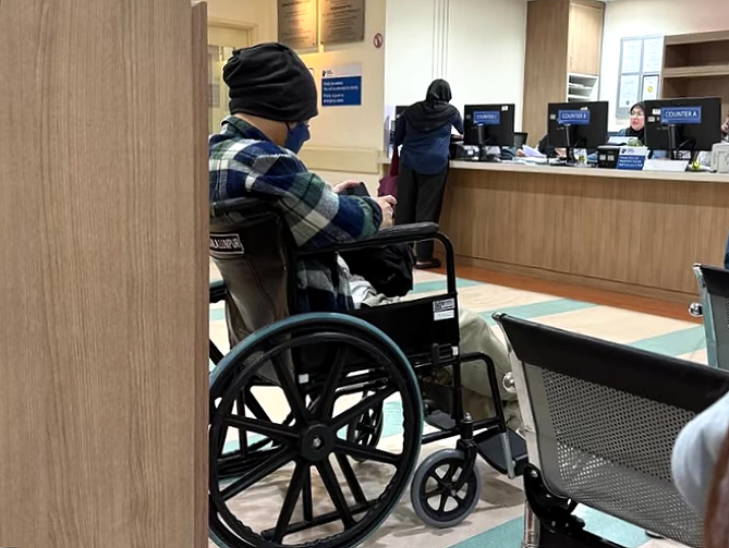
Namewee in a wheelchair. Photo: Namewee/Instagram
A truly injured person seeks a doctor; a dedicated performer seeks a mirror. Mr Wee’s choice of practicing a walk over making a rapid retreat to the A&E brings to mind a recent narrative fraud of sneaker re-seller Joven Neo choosing to hunt down and threaten the driver of a missing van that allegedly contained a million ringgit worth of his goods—even requesting for dash-cam footages so that he can apprehend the thief himself—instead of making a police report. Medical clarity is no match for a wheelchair when what was required was visual clarity. A doctor would have provided legitimacy to his claim of injury, but legitimacy was not what he needed, to express a work of imagination was. He wasn’t trying to heal. Rather, he was trying to frame. We keep being reminded that what we are dealing with is largely the results of a spectacle economy. Mr Wee’s narrative makes sense: drama is currency, procedure is poverty.
Namewee used to position himself as a rebel with a cause, the hero of the common folk. That became undone when in 2024, he staged his own funeral at the Nirvana Center Kuala Lumpur, as part of an elaborate April Fool’s Day stunt. The event was billed as a farewell ceremony, complete with obituary posts, a coffin, and mourners, but it was later revealed to be a promotional event tied to a new song and documentary. It was a classic case of The Boy Who Cried Wolf, but with a much higher production budget and significantly lower stakes for the sheep. By faking his own funeral, he effectively entombed his own credibility, made worse now that his fondness for fiction lives on. Even if his leg is truly shattered, the wheelchair is viewed through the same lens as his funeral flowers: as a prop. The last rites were a deliberate spectacle to promote content and reinforce Namewee’s brand as a fearless, boundary‑pushing artist. But it also hardened public skepticism: after faking death, even genuine injury or hardship looks staged. Perhaps, when the time comes, nobody’s going to show up for the actual funeral—except maybe to check if there’s a trap door in the casket.

