What truly constitutes an original design? Gin Lee shows us
The online media landscape is complicated enough, though evidently not quite sufficiently until a broadcaster starts pandering to the algorithm for scraps of attention. Like most mornings, our feeds served up something passably distracting, and out of sheer reflex, we obliged with a click. This time, the link belonged to a CNA story, though clicking it merely deposited us onto YouTube. But we were not sure of what we were actually watching. By stacking three layers of branding—CNA (the parent news network), ‘CNA Insider’ (a catch-all digital umbrella), and the actual TV show title (such as ‘Insight’ or ‘Undercover Asia’) buried after a vertical slash—Mediacorp seems to prioritise YouTube algorithmic reach over clear editorial labeling, interestingly blurring the line between independent investigative journalism, light lifestyle features, and uncritical sponsored government explainers.
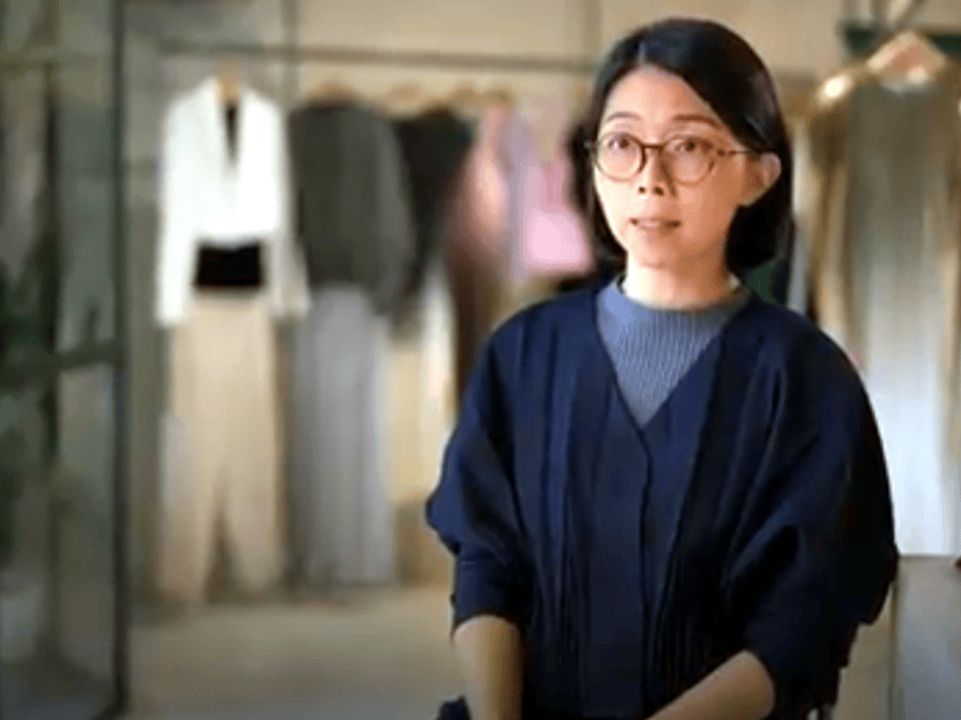
The clip dangling the bait was titled: “Our Design Was Copied. Here’s What We Did To Protect Our Brand”. It took three full minutes for us to discover that the whole affair was “in partnership with the Ministry of Law as part of SGLaw 200” to spotlight the Intellectual Property Office of Singapore (IPOS). Armed with scant knowledge of the law, but tremendous eagerness, we continued—mostly on the strength of pure curiosity. The “insiders” this time were the co-founders of GinLee Studio, the brand’s namesake designer and her husband Tamir Niv. Two seemingly similar dresses on Ms Lee’s smartphone kicked off the roughly eight-minute show, with Ms Lee noting, “We first discovered a similar version of our design being sold elsewhere from our customer.” Mr Niv picked up the thread: “So we bought the piece and then checked,” before Ms Lee finished his thought: “we were shocked.”
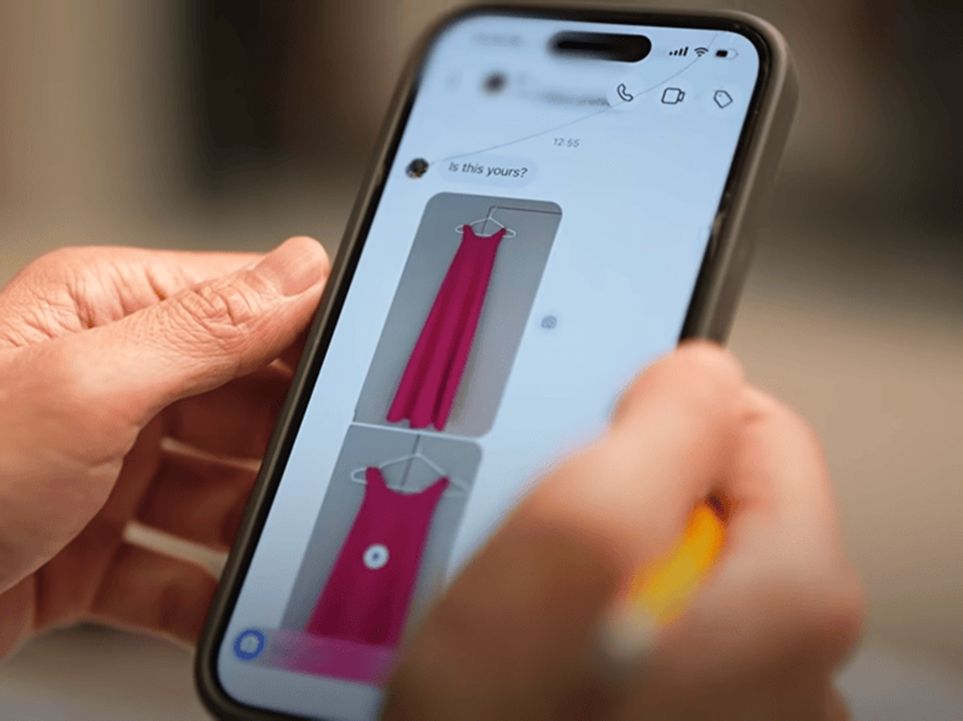
By what, exactly, went unsaid. Mr Niv continued: “The first thing that came to my mind is, how to stop this from happening.” What “this” referred to was similarly left dangling. The follow-up to that was Ms Lee saying: “Each design takes months, if not close to a year, for development. People recognise us for our work and, therefore, we felt that we have to protect that intellectual property of ours.” Recognition by itself does not necessitate IP protection. Whether due to eager editing or the actual sequence of remarks, that much preamble strangely gave way to a mere hint of IP infringement. After the title sequence and a short reel of the Nivs at a photo shoot, as well as a brief intro to who they are and what the brand produces, Ms Lee offered: “We believe in slow fashion because there’s value to developing things that are original.” What made their work “original”, like the rest of their claims up till now, remained unstated. If IP is the heart of the matter, the show was in no hurry to reach it—nearly two minutes after displaying a supposed copy of a dress, the actual violation remained anyone’s guess.
If imitation is the sincerest form of flattery, we had our applause lined up for GinLee Studio (a Singaporean brand was copied)—only to wait around for a show-and-tell that did not quite materialise. Ms Lee’s assertion that there is value in developing original work is not, on its face, a controversial statement. Almost everyone would agree with it. But for us, it invites a reciprocal question: What is the original thing you developed? Instead, what was shared were processes. “When we develop an item, there’s a lot of iteration,” Ms Lee stressed. “So, for example, for our Ivy dress, it went through eight rounds of sampling before we got it right.” We do not doubt that. This rhetorical move might work on a general audience, but for anyone familiar with how fashion is actually made, rounds of sampling are extremely normal. To us, the more technically sophisticated the designer, the less impressive “eight rounds of sampling” sounds.. What was presented as evidence of extraordinary creative labour is, in reality, just the basic mechanics of product development. A pattern is drafted. It doesn’t hang right. The fabric behaves differently than expected. The proportions are off. The pleats don’t behave. The manufacturing partner flags an issue. Another sample is made. Repeat until satisfied.
What was presented as evidence of extraordinary creative labour is, in reality, just the basic mechanics of product development
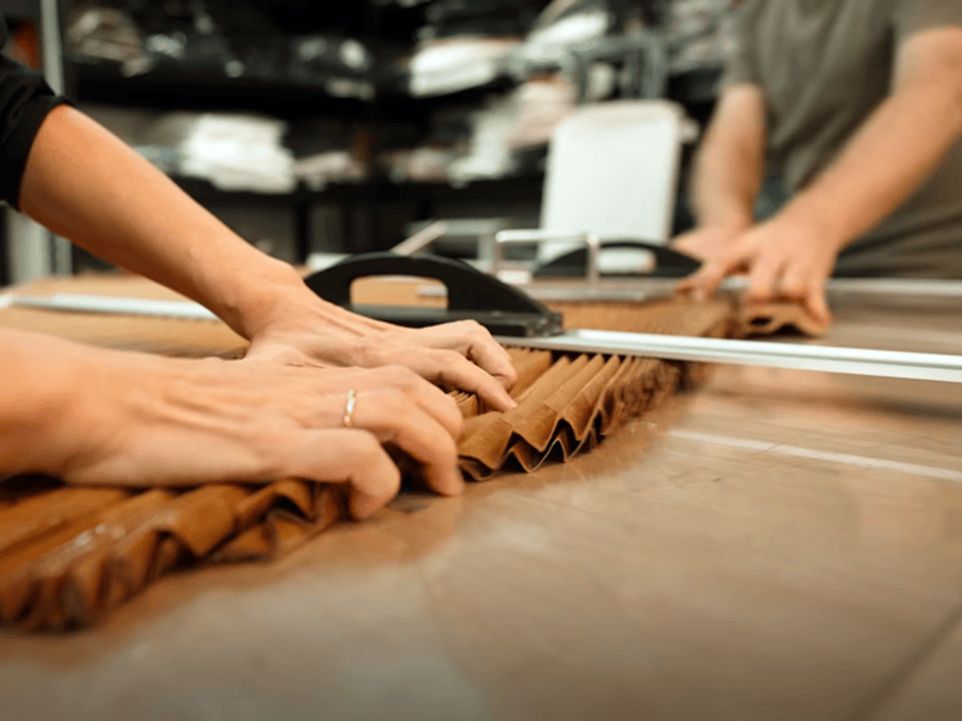
Mr Niv cut straight to the intricacy of his wife’s work, saying, “Her designs are more complex than it (sic) looks.” Maybe they are, but complexity is not evidence of originality. The segment then followed the couple as they both pleated paper to form a mould for a dress, presumably the Ivy. The implication seems to be that complexity is proved by the sheer fact that it takes more than one pair of hands to pleat the paper. But, as one designer told us of what he had seen in a pleating factory, “sometimes it takes up to six people to pleat a large sheet.” Mr Niv continued to elaborate on the processes: “Whenever we design a garment, we design the shape, and then we design the pleat that goes on top of it, especially where the pleats go diagonally, they have a life of their own. There’s a lot of work that needs to be done to adjust the pleat to the shape of the dress for it to be flattering.” Energy expenditure was on display, but “original” designs remained missing.
He went on to say, “We felt quite bad when our designs are copied because it takes years for us to build our signature items, to build our reputation, to have our client base.” Originality was not in that equation. What he was describing was not primarily an aesthetic harm, but rather commercial and reputational damage. The last mention of originality was towards the end of the programme. Ms Lee professed, “We take great pride in doing original work… As designer (sic) we choose to create something original.” The problem here, to us, is not the sentiment. Almost every designer would say that. It implicitly claims something that the episode did not subsequently demonstrate: an original thing. We were shown what took effort, years, IP lawyers, and machines used in-store for customised pleating, but not quite what designs were considered original. Fashion history is full of designers whose originality can be described in a sentence. Rei Kawakubo challenged conventional notions of silhouette and beauty. Martin Margiela turned deconstruction into a design language. Issey Miyake transformed pleating into an industrial design system.
Whether one agrees with these formulations is, perhaps, irrelevant. The important point is that the contribution can be articulated. With Gin Lee, from the CNA segment, the contribution keeps being displaced by discussion of process, investment, complexity, and protection. These do not actually constitute evidence of originality. There appears to be evidence of something else: diligence, perseverance, technical consideration, business building, operational know-how, and IP awareness. To be sure, these are respectable achievements, but they are not synonymous with originality. Looking at the first garment, a tank dress, used as an example of a copied article, pleating is not original—nor is polyester, nor is pink. The couple did not define the term before asking the audience to admire it. CNA appears to frame originality as a moral virtue. The message is quite simple: Originality is good. We are original. Copying us is bad. Officials from IPOS were interviewed, yet none explained what would be considered (or be the legal threshold of) original. For a programme that quoted “insiders” saying that word a few times, that is a surprisingly large omission.
Issey Miyake never had to explain his pleats, even after citing Grès and Fortuny. It was self-evident and the novelty at the time spared him the necessity. When his Pleats Please sub-brand was introduced in 1993 (not long after that in Singapore), shoppers were already familiar with pleats as fashion pieces, lifestyle objects, and accessories. By 2010, when the label GinLee entered the picture, pleats had lost a considerable chunk of their mystery. Before the brand’s foray into pleats, we already had Pleatation exploring pleating as a brand proposition. When the visual territory is already vividly populated, a designer invoking originality cannot rely on the novelty of the medium itself. The explanation has to move one level deeper: not “I use pleats”, rather “I use pleats differently because… and my contribution is…” The irony is that the CNA episode opened with a powerful narrative hook: “Our Design was Copied”, but did not establish what was actually copied and what counted as original. If the allegedly copied item is the tank dress, then the burden of explanation is arguably greater. A tank dress is not, in itself an usual garment category. No one is going to hold up a singlet and say Prada copied me.
Screen shot: cnninsider/YouTube

