It takes a village, they say. The third Yuletide fair in a month, Christmas Together, shows that mixing simulated kampung warmth with corporate high-flyers yields a far more sensational spectacle for the select masses
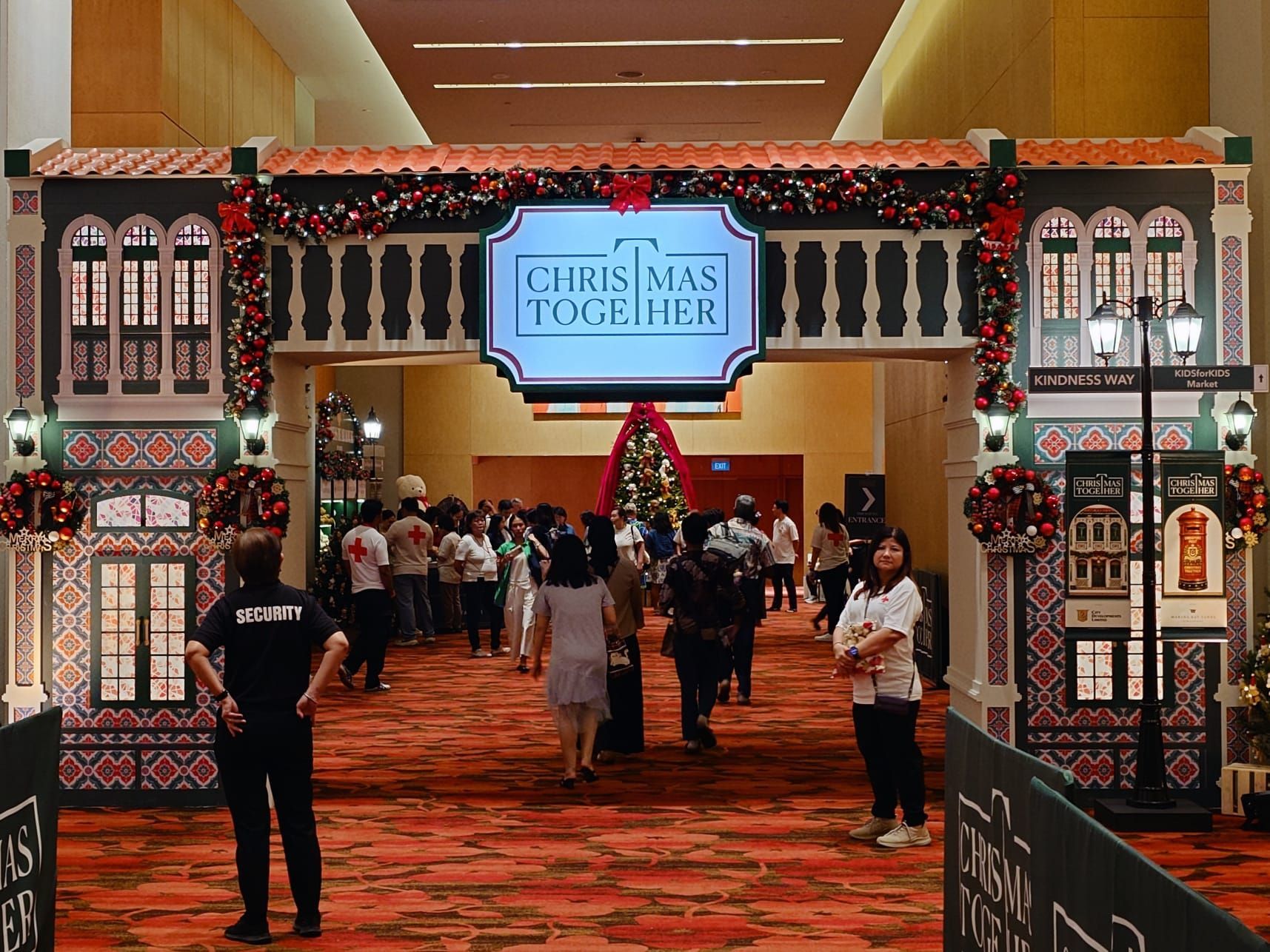
In 2026, “fair” has become a dirty word—not when describing biases or pale complexions, but expositions. While Christmas fairs are quite a Yuletide staple on our island, this year’s organisers have decided the word lacks a certain sheen. So, they’ve upgraded their set-ups into ateliers, boutiques, and now, a “village”. Presumably, nlo one wants to be associated with the Food Fair or the IT Fair. At their core, these renamed gatherings of stalls and booths still look and feel the same, varying only in the aggressiveness of their seasonal decor.
Closing out the month’s retail festivities is Christmas Together (CT), neatly dubbed “Singapore’s Christmas Village with Heart”, according to their promotional copy. A timely nod to goodwill and charity, seamlessly paired with the pleasure of splurging on artisanal gifts. Understatement being of little use at this time of year, the organisers also billed it as “the largest indoor Christmas festival at Marina Bay Sands”. That sell is charming: a rather modest superlative, given that it only needed to outsize whatever else happens to be indoors at Marina Bay Sands.
There had been three Christmas markets this month and that is certainly a crowd. Perhaps they point to a truth lost on mall operators in general: people actually want to buy things. That the entirely non-residential Marina Bay circuit of about 900,000m² manages to conjure such a horde of festive shoppers out of seemingly nowhere is nothing short of a minor seasonal miracle. The CT Village is, however, extra special. There is considerable effort in positioning it away from commerce and towards virtue.
The most fascinating part to us is that the folksy branding invites you to imagine a grassroots gathering held together by Christmas spirit and do-good energy, when the institutional scaffolding behind it resembles a boardroom seating chart, featuring Singapore’s heavyweights in corporate, social-enterprise, and lifestyle-retail circles. Village chief is Eunice Yeo, the noted 大姐 (dajie, big sister) of the art-philanthropy-sustainability ecosystem, and the orang besar kampung (village elders) of illustrious individuals such as branding/PR extraordinaire Tjin Lee and Singapore’s most prominent corporate sustainability figure Esther An of City Developments Limited (CDL).
To be fair, CT makes no secret of the famous businesswomen behind it, also prominently parading Winnie Chan of Bynd Artisan alongside Race Wong (黃婉佩)—one half of the former Hong Kong Cantopop duo 2R and now the founder of DreamR—on its steering committee. While this quintet sets direction, there is a 12-person operational team that builds and runs the Marina Bay Sands showcase. Notable names trotted out include Stephanie Dickson, the sustainability advocate and founder of Green Is The New Black, alongside Andrew Chan, founder and CEO of the creative consultancy Loomworks Studio.
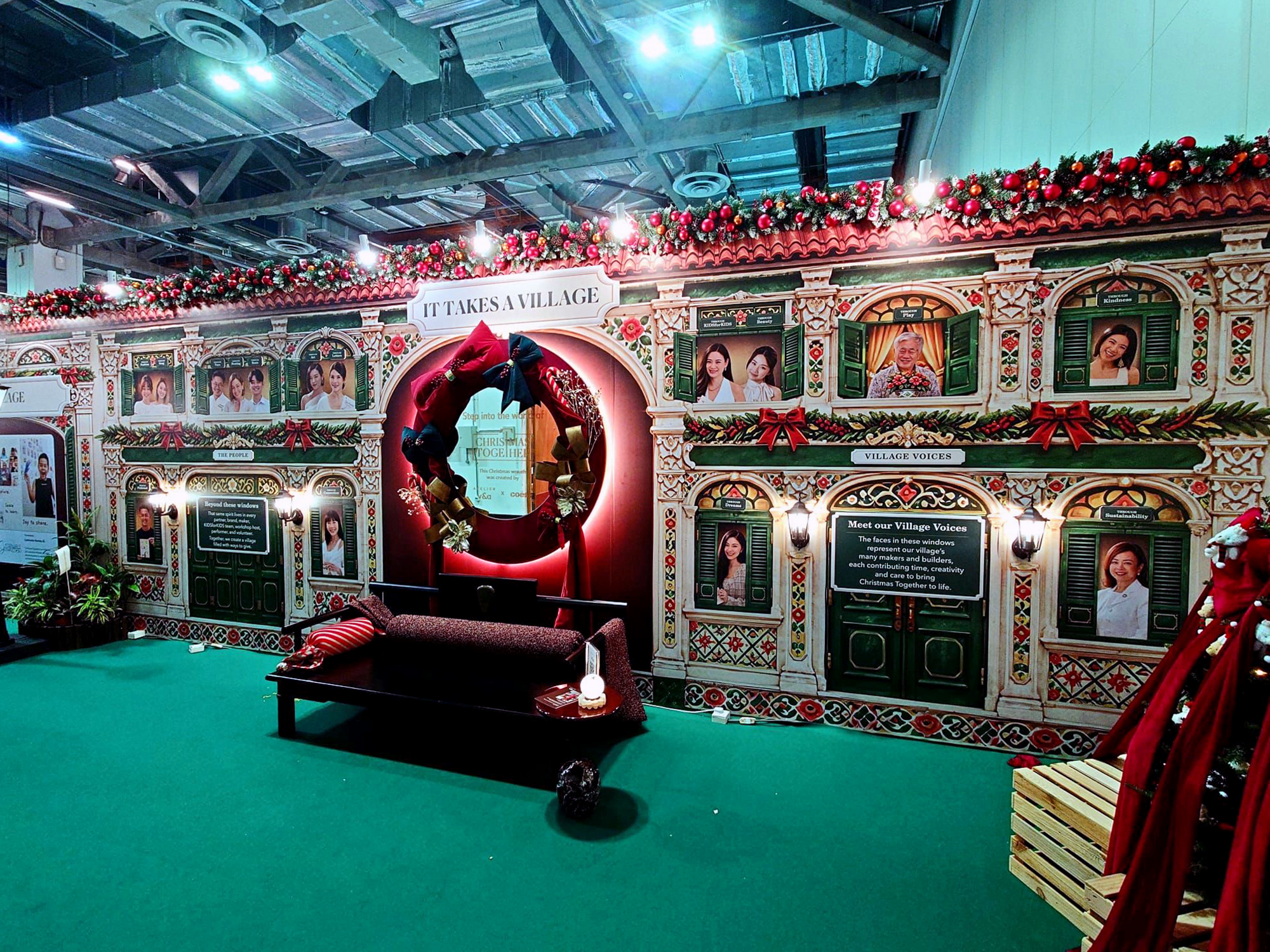
Rremendous cheering went to the “Village Voices”, a cohort of influencers-as-brand ambassadors and self-promoting event vendors that includes familiar faces such as Andrea Chong, Willabelle Ong, Mongchin Yeo, and the host Kelly Latimer, all raising their voices to amplify communities, audiences, and personal brands. As we entered the zero-queue exhibition space proper this afternoon, we were greeted by headshots that could have come from an annual report, yet they introduced “Village Voices” and “The People”. And then we realised this is a public staging of a Singaporean influencer coalition.
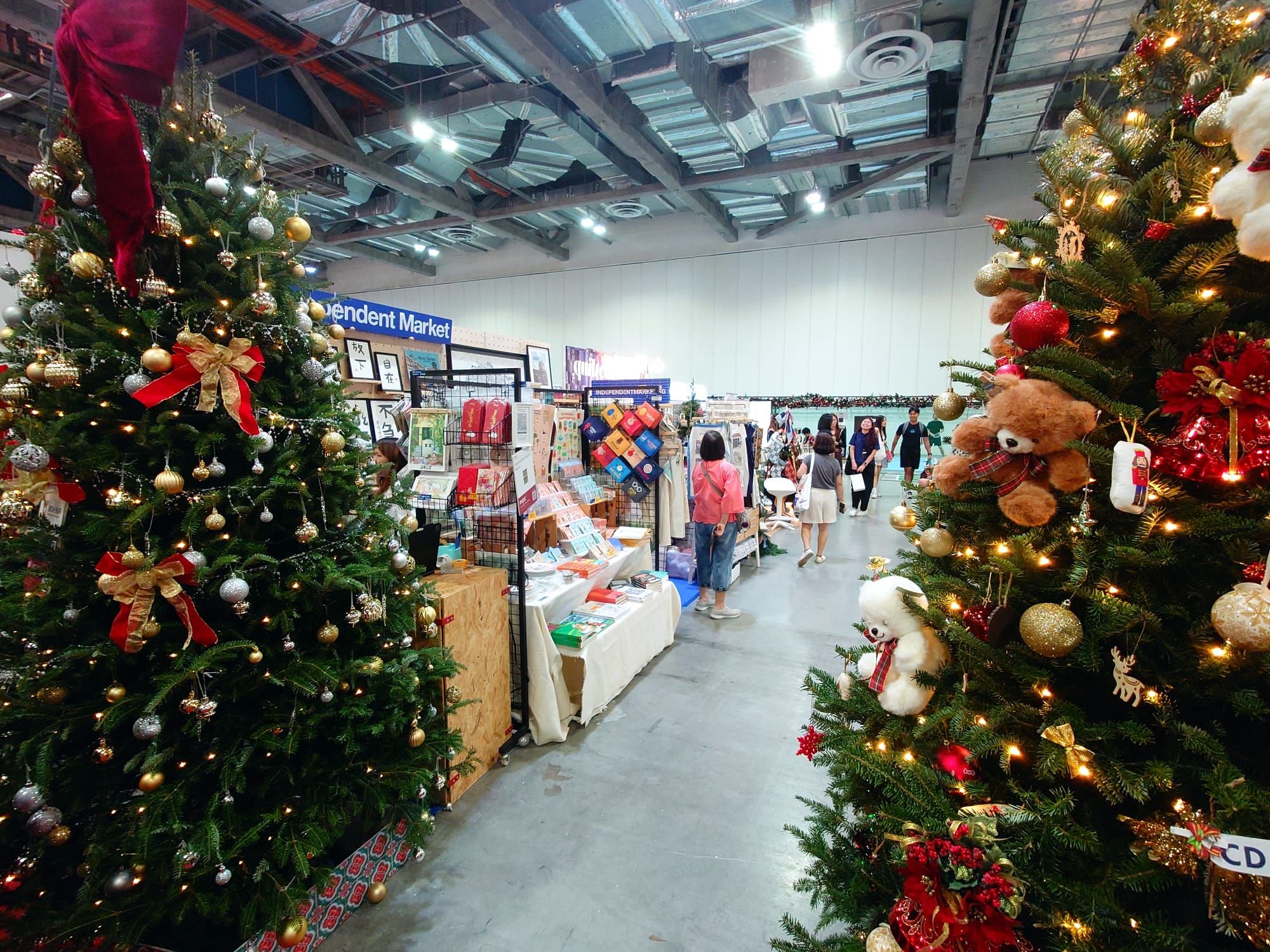
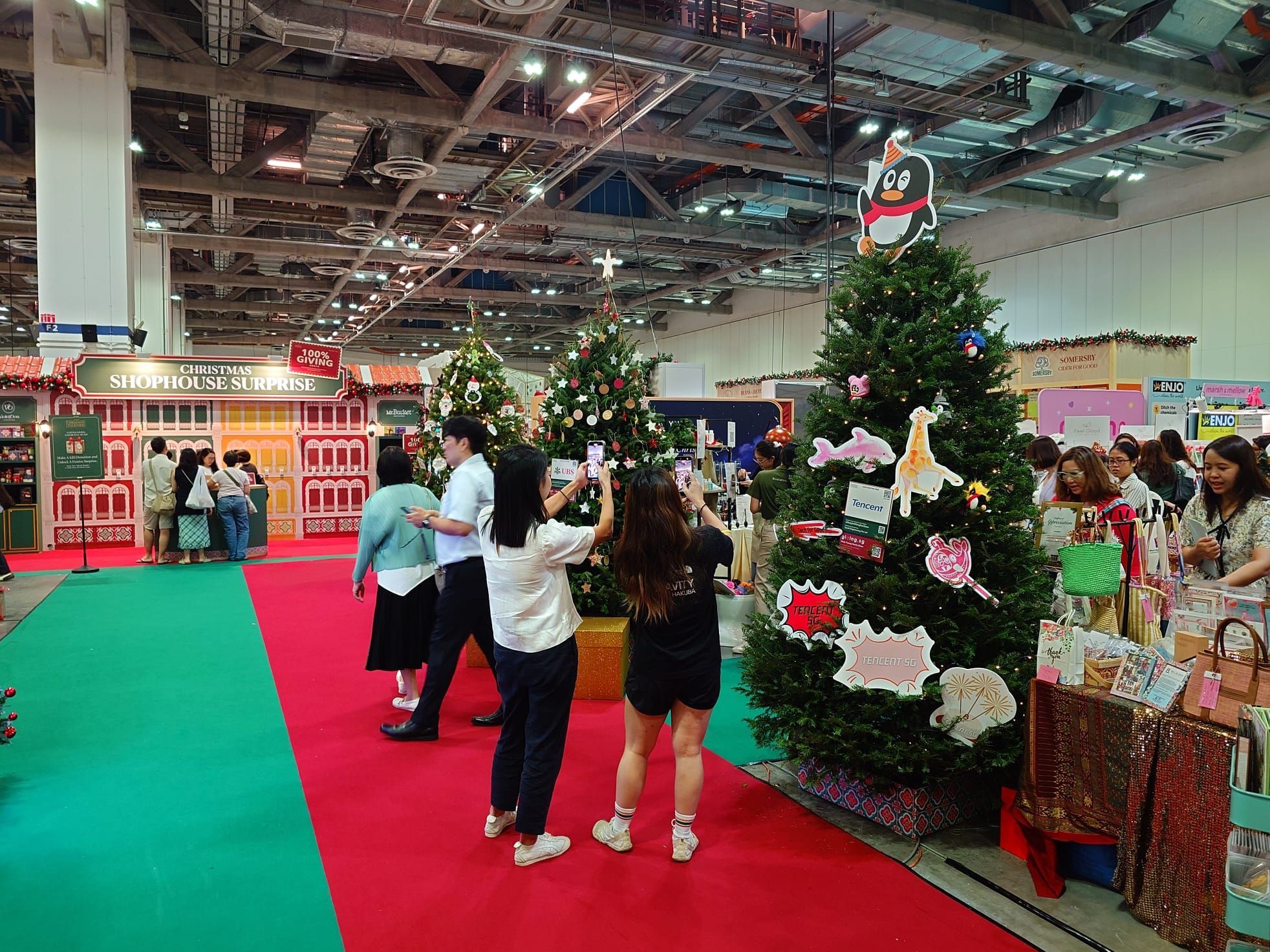
Throughout our time at the CT village, we were struck by how cohesive—and collected—everything appeared, with just a smidgen of seasonal polish to remind you why you came. Nothing felt left to chance, or unbankrolled, with big-name sponsorships on full display. Even the plastic Christmas conifers along the main passageway, grandly named Giving Tree Avenue, were claimed by individual sponsors. Among the prominent names were StarHub (which also operated the Kindness Bear House), Woh Hup, Tencent, and UBS, their logos eye-catchingly affixed to the branches.
We barely gave them a second glance at first, until we overheard one woman in a group excitedly remarked, while admiring a tree: “He spent a lot of time decorating it.” The fruits of that labour were not immediately evident. Most sponsors seemed quite happy to leave their trees lit but naked, and a handful in random corners and towards the rear had clearly failed to ensnare a rich patron at all. The unreal trees are somewhat ironic considering that one of the sponsors is “Official Christmas Tree Partner” Sing See Soon, founded in 1879 and one of Singapore’s oldest and largest plant nurseries. This greenery must be an exercise in restraint.
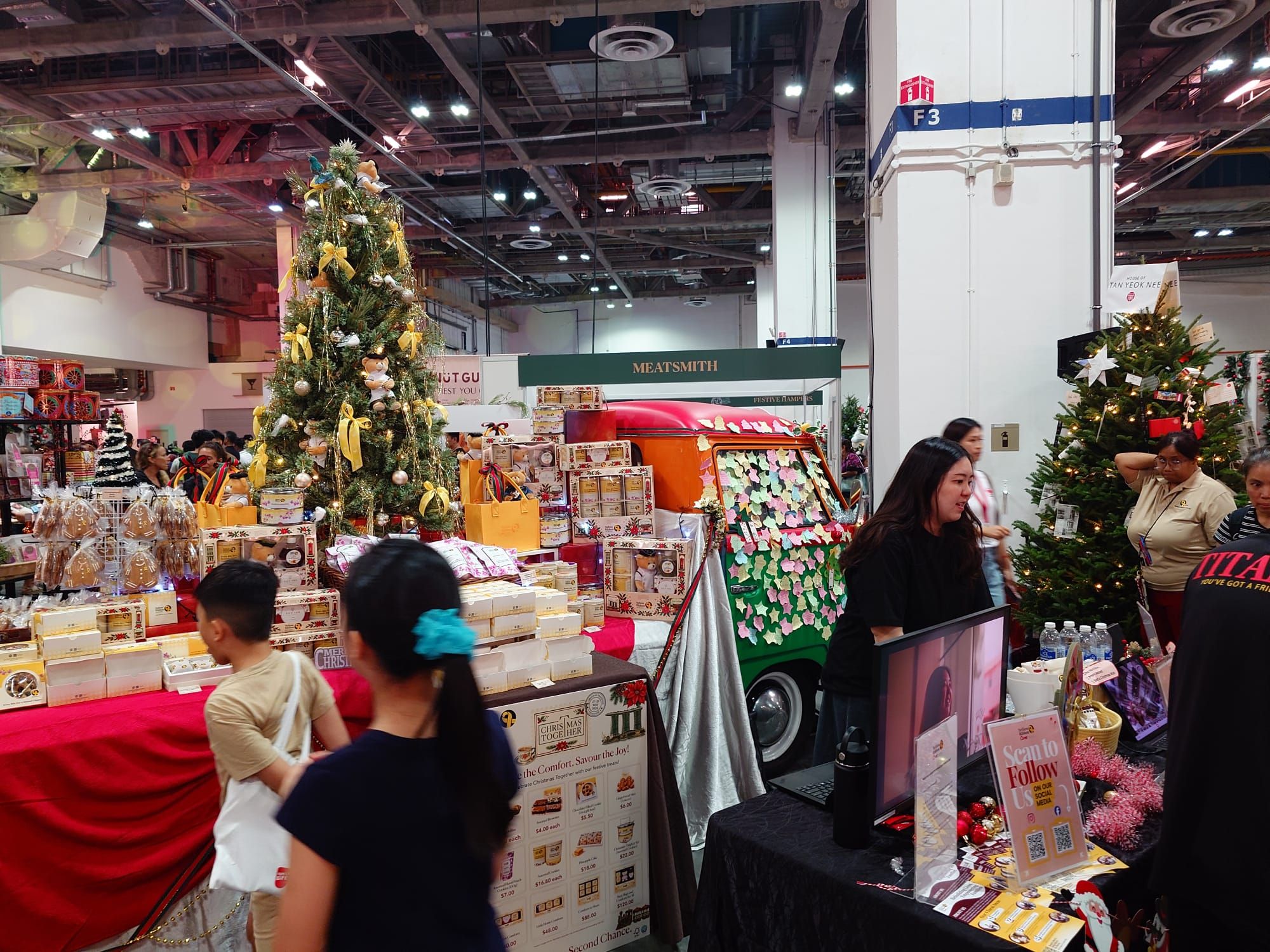
One laid-back but festive tree that caught our eye was sponsored by Millennium—which finally rang a Christmas bell, unheard throughout the time we were there. The familiar logo immediately clicked things into place. Millennium Hotels and Resorts is part of City Developments Limited (CDL), the property-and-hospitality behemoth helmed by the Kwek family, and, significantly, the current corporate habitat of Esther An—a detail that brings us, almost inevitably, to village chief Eunice Yeo.
Officially, Ms Yeo is the founder and creative head of Christmas Together, though her wider reputation rests on her other entities, Sustainable Markets SG, born out of Peace of Art SG. CDL has served as the foundational backer of Ms Yeo’s markets since 2022. Prior to decamping to Marina Bay Sands this year, previous editions of her Sustainable Christmas Market were accommodated squarely within the group’s portfolio—launching at the Grand Copthorne Waterfront Hotel in 2022 and expanding to South Beach in 2023 and 2024. It turns out a village doesn’t really need the grassroots, just commitment corporate connoisseurs.
The wider corporate ecosystem has been equally active: chief sustainability officer Esther An has folded the event into CDL’s CSR calendar—speaking at the Sustainable Seedling Summit and rallying the City Sunshine Club—while pioneer partner funding has been complemented by publicity support from CDL’s internal PR arm. But publicity has also been fast-tracked externally. Ms Yeo is blessed with good friends, in particular Tjin Lee, who is interesting because she sits at a crucial junction in this ecosystem—not property, not philanthropy, not sustainability in the technical sense, but network formation itself.
The CT website describes Ms Lee as head of Gusto Collective SEA (which absorbed And rebranded her own Mercury Integrated in 2023) and the co-founder of CRIB, and frames her role around bringing people together and building communities. That framing is revealing. If Esther An represents institutional sustainability and CDL’s corporate legitimacy, and Eunice Yeo supplies the originating vision and charitable framework, then Tjin Lee’s contribution appears to be something different altogether: social infrastructure.
Ms Lee’s named programme for Christmas Together is explicitly the KIDSforKIDS Market. The woman who once showed Singapore how to dress for the front row is now applying her discerning eye to something arguably harder to style: pre-pubescent entrepreneurial identity. The Tjin Lee of the Singapore Fashion Festival era was fundamentally an event-maker. She who emerges in the CRIB era is a rather different person: a curator of entrepreneurial identity, particularly around women founders, family life, leadership, community-building, and juvenile venture-incubation. That is not a factual claim about her intentions so much as an observation of her public positioning over the years.
It does neatly map onto what CT appears to be selling: not really Christmas, not really shopping, not even really sustainability, but a very particular ideal of aspirational community. The KIDSforKIDS concept said more than the moniker let on. Perfectly wholesome, but it did reflect a very specific worldview that’s characteristic of the founder-entrepreneur ecosystem from which CRIB emerged: start young, make and sell to empower, and that children are both beneficiaries and changemakers. In that sense, KIDSforKIDS seemed less like a Christmas activity than a CRIB philosophy translated into a festive setting.
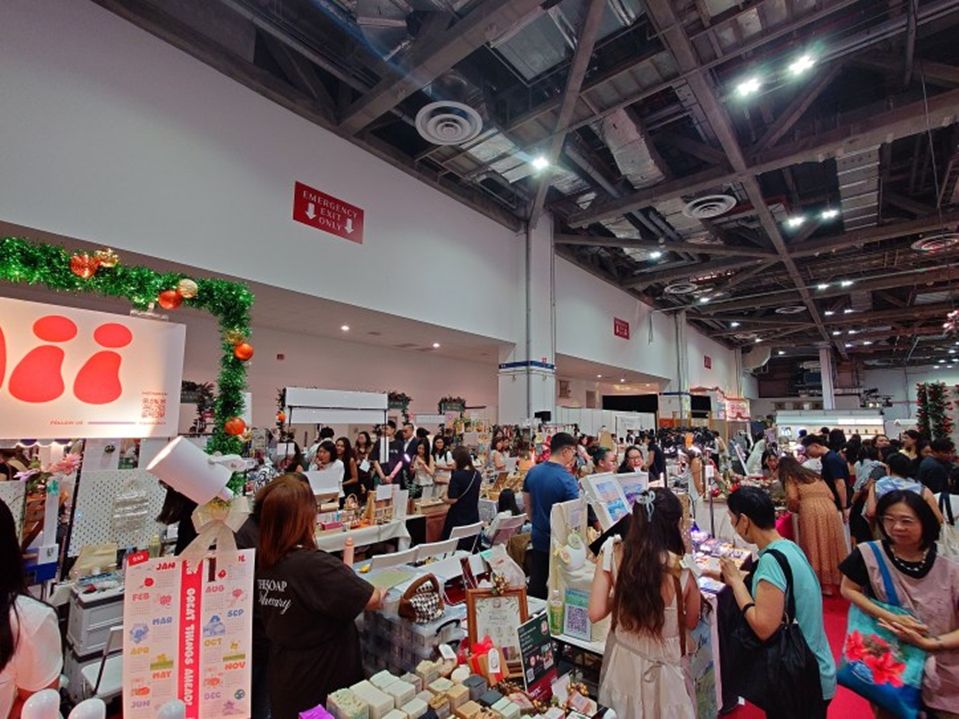
Walking around CT Village (which offers a guide if you need one), we made out a distinctive vendor type and, by extension, visitor type. In older charity bazaars, one would typically find hobbyists, church groups, retirees hawking baked goods, and community bodies. But at Christmas Together, there is a much narrower archetype: attractive founder women, their attractive (and attentive) husbands and their carefully branded families, and other carefully branded families, as well as aesthetically coherent children—all complete with a wellness-conscious lifestyle, an entrepreneurial backstory, and, no doubt, social media fluency. Not necessarily influencers in the formal sense, but people who already look as though they belong on a “day in my life as a founder mum” reel. A group of young men gathered for coffee and one of them was heard saying, “I have never been to a fair that has so many baby strollers.”
Christmas Together is rather less a marketplace than a gathering of people who share a broadly similar worldview. Banded in the Village were influencer couples, sustainability advocates, lifestyle entrepreneurs, and networked philanthropists smelling pure vanilla paste; sipping herbaceous artisanal gin; tasting piquant, not tart, Polish pickles; or relishing Yunnan Pu’er scented like roasted glutinous rice. It’s a unique kind of magic when buying things nobody really needs becomes the primary way we fund things people can’t live without.
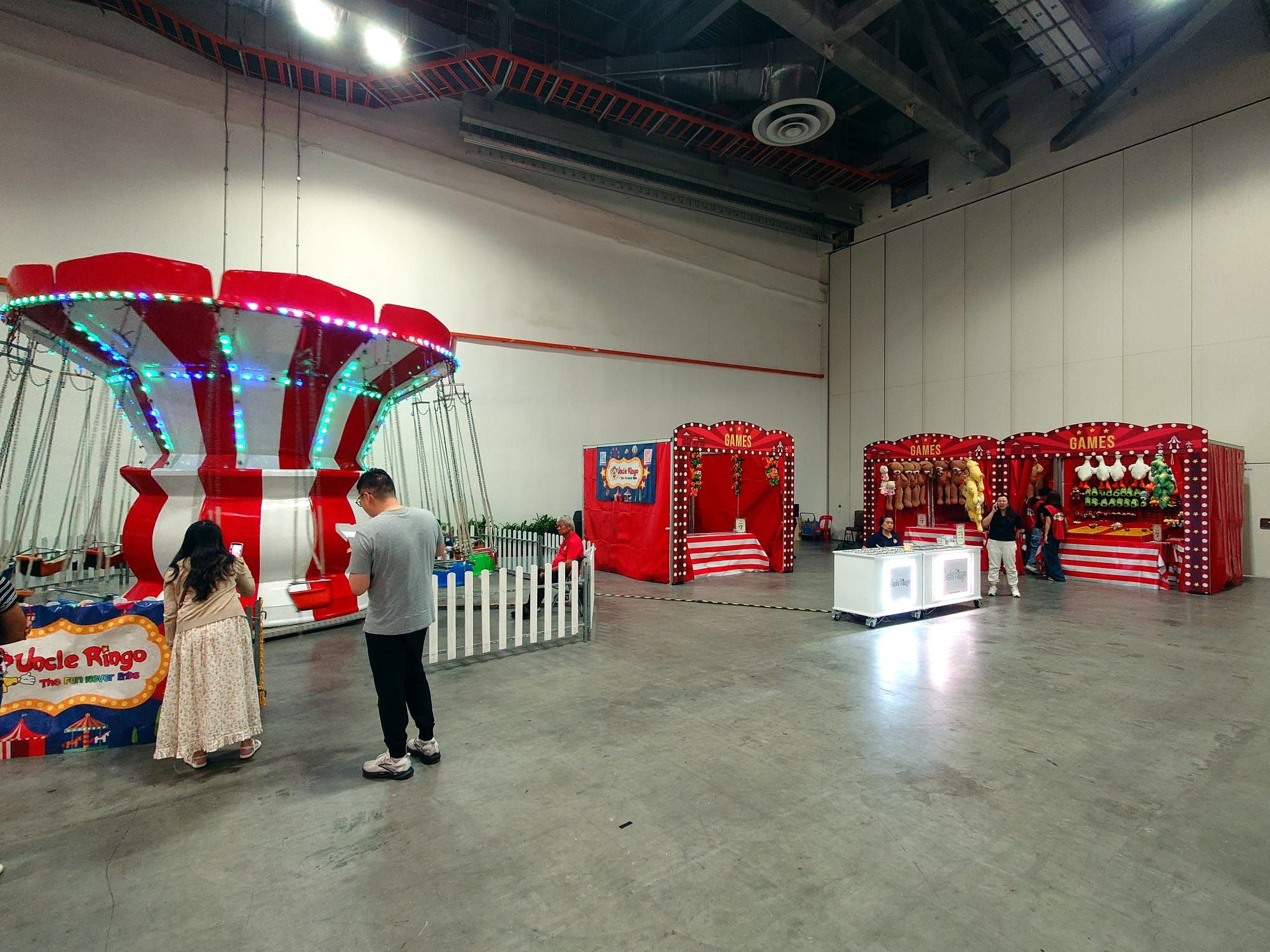
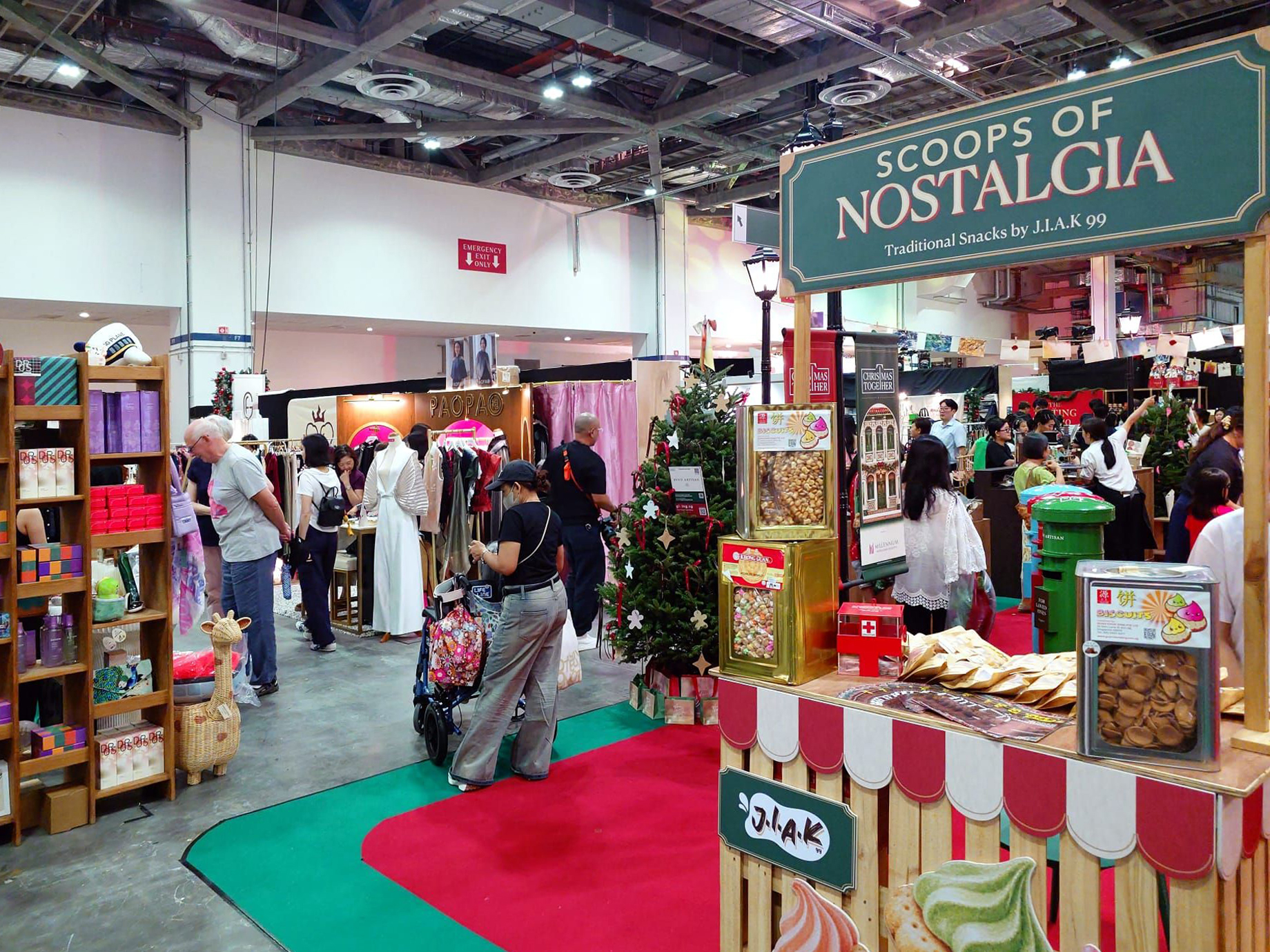
Because CT is anchored in eco-conscious messaging, as its previous form was, and backed by CDL’s Esther An and the NEA, the Village can be a festival of long-lived goodwill, but not short-lived decor (except the Christmas trees?). While some vendors with holiday-retail budgets erected set-like stalls, others were given a blank table and a pair of chairs, notably in the “Artisan Market”—curiously spared the “Village” designation applied elsewhere. The space came across like the event’s forgotten middle child. One seller told us that she brought her own tablecloth and “a bit Christmas ornaments”. Still, some expense was allotted to building a seemingly Peranakan wall and a stage that was an atas getai with shophouses for the backdrop. Both lean into a heritage historically associated with urban merchant wealth, reinforcing the picture of a distinctly polished, upper-tier village rather than a rough-and-ready grassroots gathering.
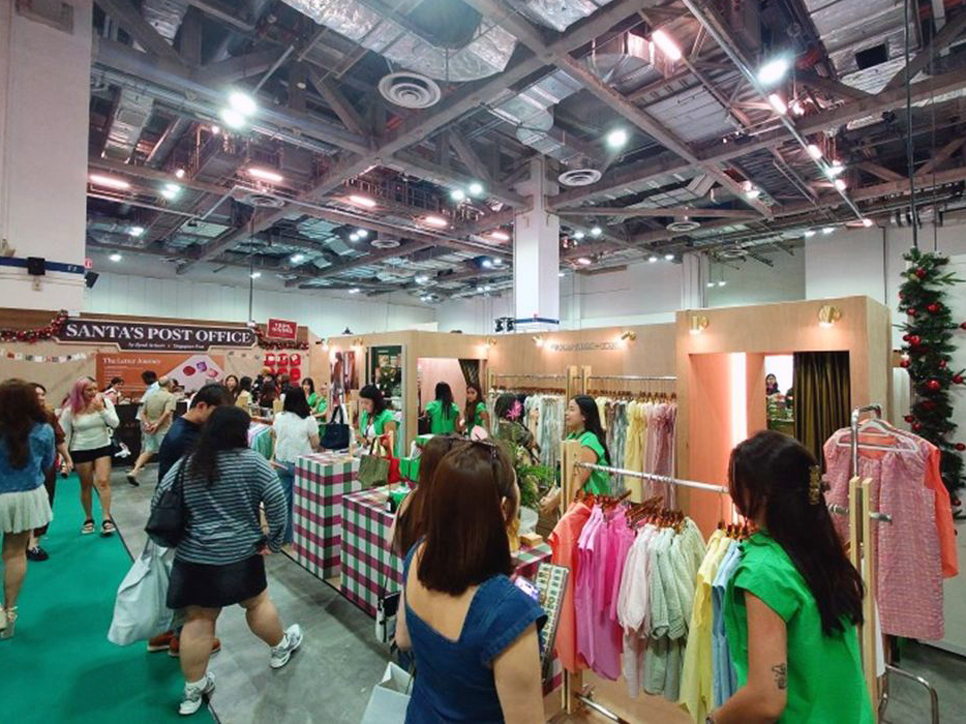
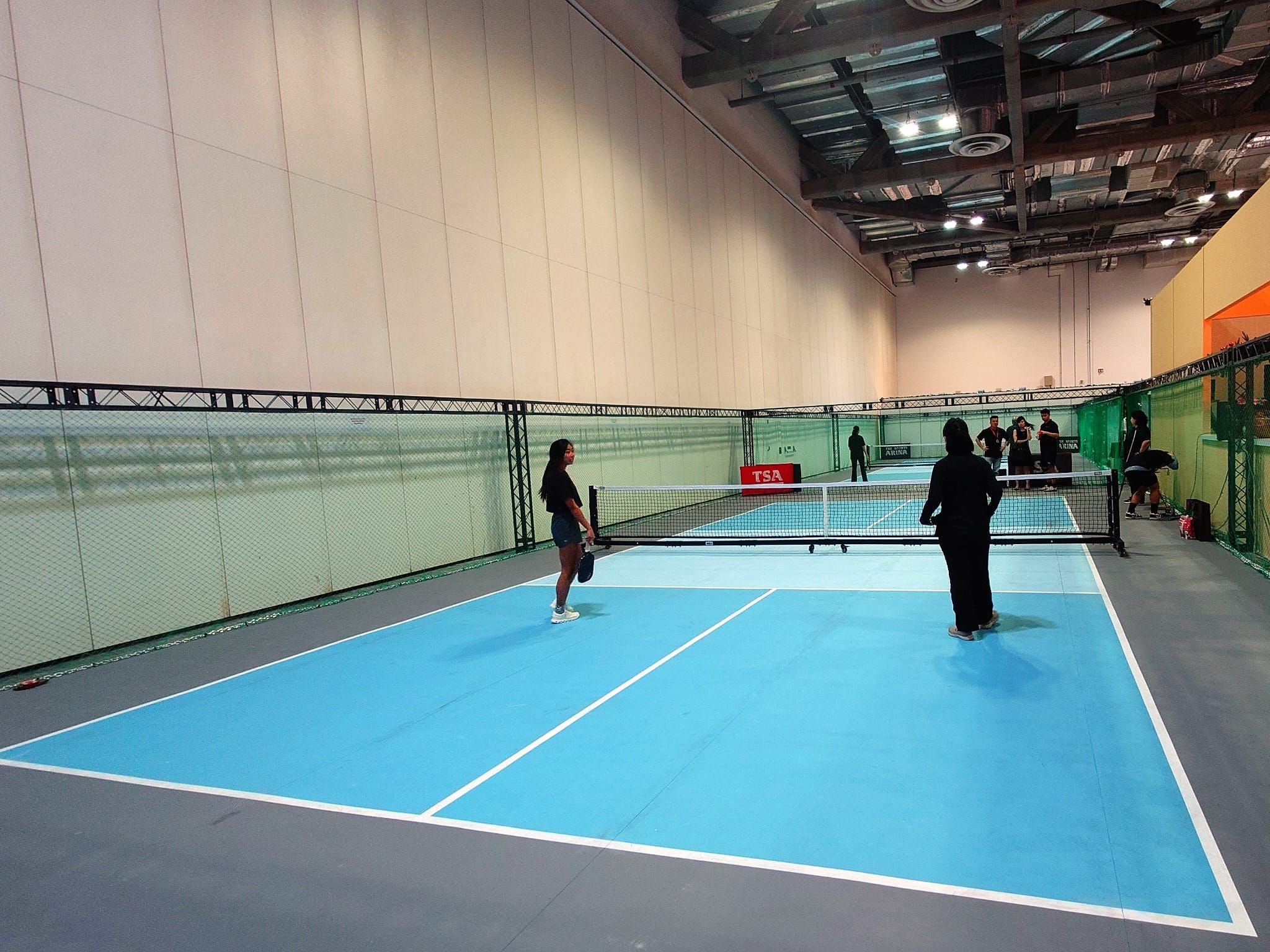
The Village did need the right atmosphere to set up a Santa’s Post Office, to hawk Andrea Chong’s Good Addition, or to sell the festively-packed cookies and teas from Whittard of Chelsea—not to mention pickleball courts. In a city where the piercing crack of a pickleball paddle has become a familiar source of friction among HDB residents living beside open-air courts, the game inside a non-residential village in a convention centre is telling: here, the noise carries no civic consequence, and a contested neighbourhood pastime is effortlessly repackaged as breezy lifestyle leisure.
A typical grassroots fair usually exhibits a certain visual democracy. Sure, some stalls are stronger than others, but everyone is recognisably inhabiting the same ecosystem: folding tables, rented booths, a little improvisation, perhaps a homemade banner. The roughness may become part of the appeal. In the Village, we noticed spaces that were scenographically prominent, and those that were to accommodate vendors. The Village language and heritage sets received aesthetic investment, yet the “Artisan Market” obtained a less romantic category, flat-pack utility, and an unembellished floor plan.
Contrast that to the Peranakan heritage, as popularly marketed in Singapore, which is rarely used to evoke kampung ruggedness. It almost always points to cultivated taste, heritage consumption, old mercantile prosperity, heirloom aesthetics, furniture, porcelain, architecture, preservation, and refinement. Christmas Together was not a village of necessity; it was a one of curation. It didn’t merely sell products; it assembled a recognisable social world. As we left and looked back at their welcome arch, we were not seeing a Singapore in miniature, but a very particular village, temporarily occupying Marina Bay Sands. As it turned out it did take a village—just a remarkably exclusive one.
Photos: Zhao Xiangji

