With its reopened Ion Orchard flagship, In Good Company proves a homegrown mainstay need not trade on nostalgia or predictability to remain Singapore’s sharpest fashion label
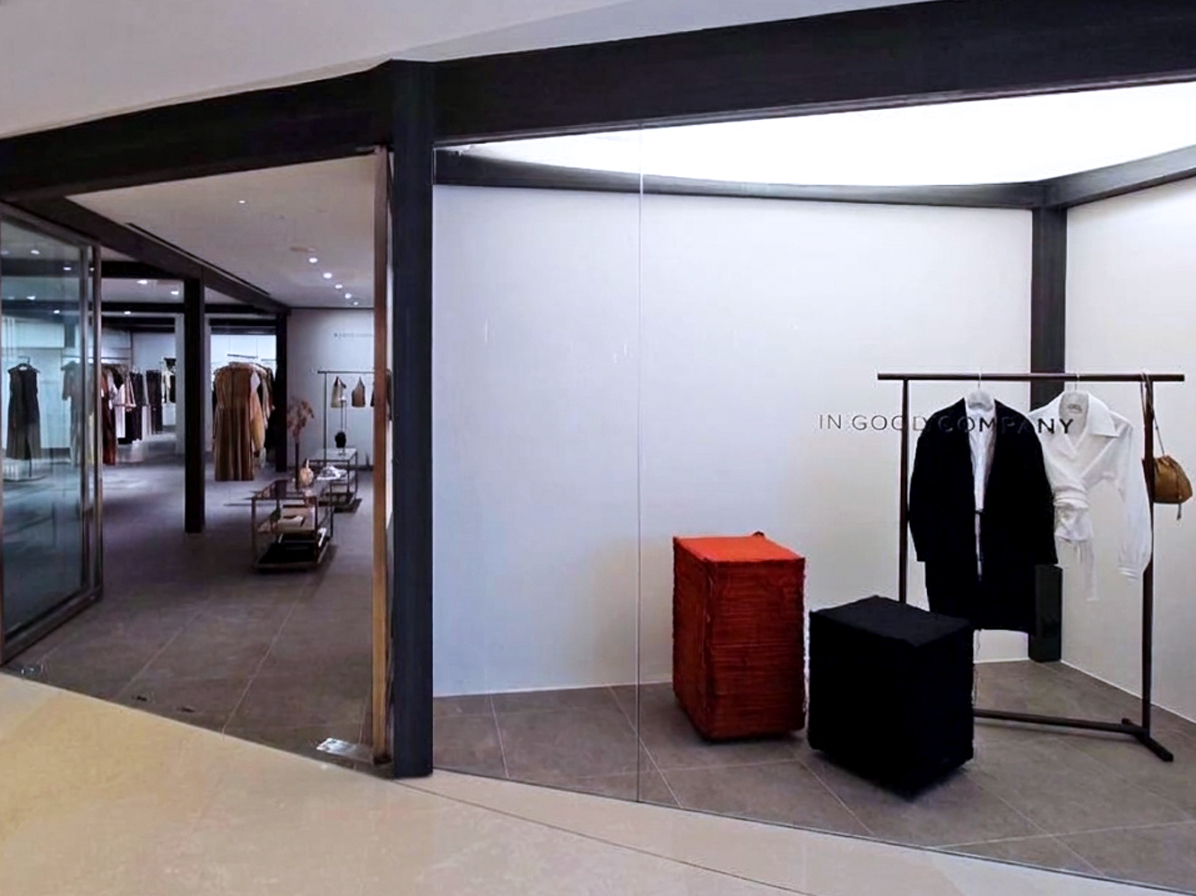
When In Good Company closed its Ion Orchard store last July, we thought that this was the end of an important representation of Singaporean fashion in our most famous shopping belt—or what the Orchard Road Business Association (ORBA) perennially calls “a great street”. A year earlier, they had celebrated a decade at Ion Orchard with an incisive show at the National Gallery. We did not think they would just shut their most definitive showcase to date. As it turns out, we worked ourselves into a full-blown panic for absolutely nothing. IGC, as they are popularly referred to by fans, are back, and at Ion Orchard, just six days ago, and on the same B1 storey, but at the opposite end of where they were first situated. Keeping to the same floor does the quiet work of maintaining brand familiarity—and holding the label squarely on shoppers’ radar. In a retail landscape obsessed with frivolous novelty, that kind of continuity is distinctly true to the house’s ethos of consistency.
Occupying the former Marimekko space, IGC is the polite antidote to all that Finnish exuberance. At first encounter, we thought we had stepped into a select store in Kyoto, set up within a revisualised building of significant heritage. It felt less like a conventional mall boutique—even less so for a B1 store in that indeterminate corner—and more like an assured translation of the brand’s long-standing self-image into architectural form. It is aesthetically hushed, yet expressive in its restraint—allowing composed textures, neutral colours, quiet lighting, and unhurried spatial proportions to speak louder than any signage ever could. This deliberate anti-spectacle feels all the more unexpected in a retail corridor built on visual noise and transactional urgency. For years, IGC occupied an unusual position in Singaporean fashion, assuming it exists. It sold what might be called “intelligent basics”: minimalist, modular clothing that wasn’t aggressively trend-driven. Its new interior space articulates the same quiet register.
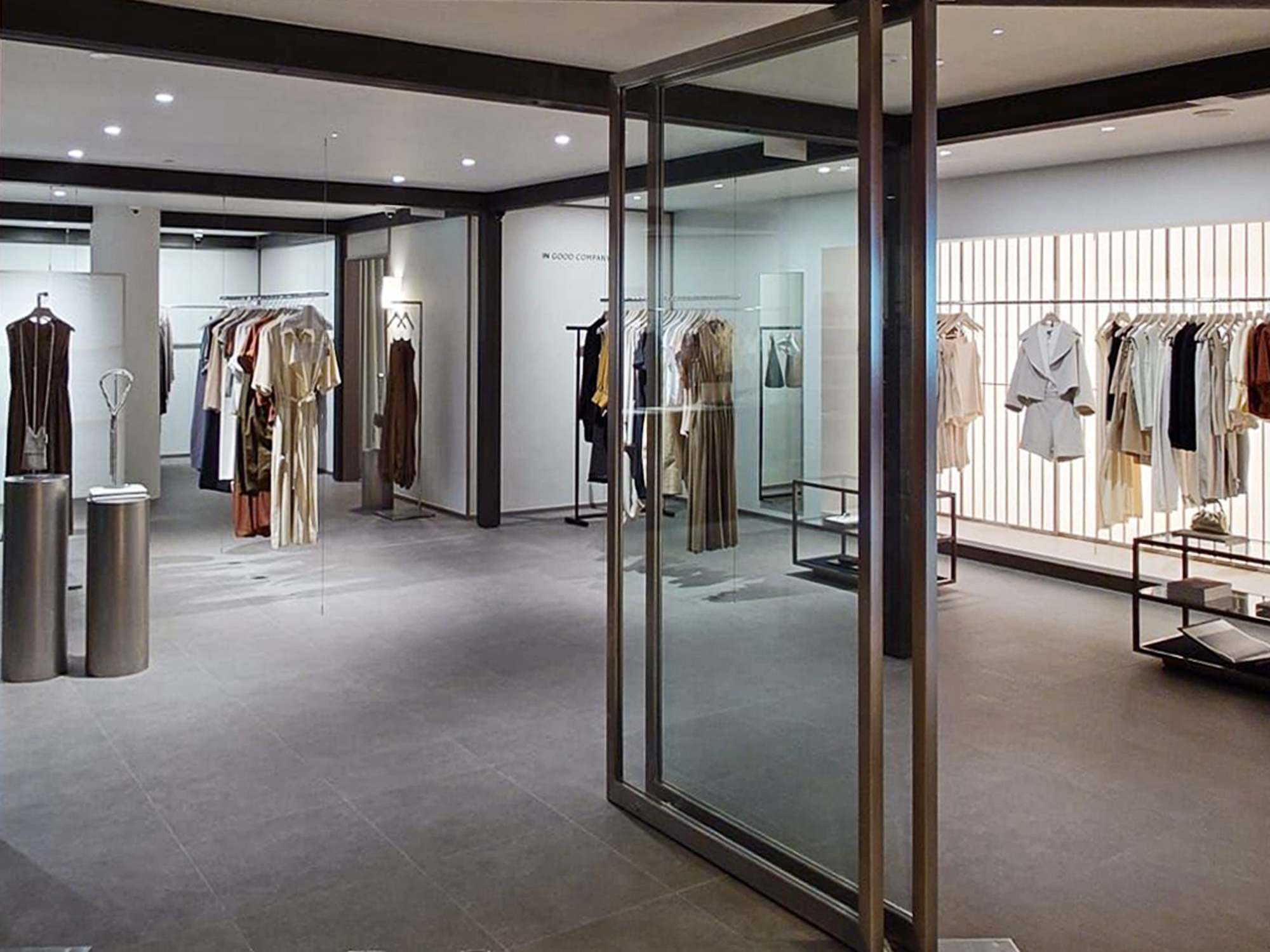
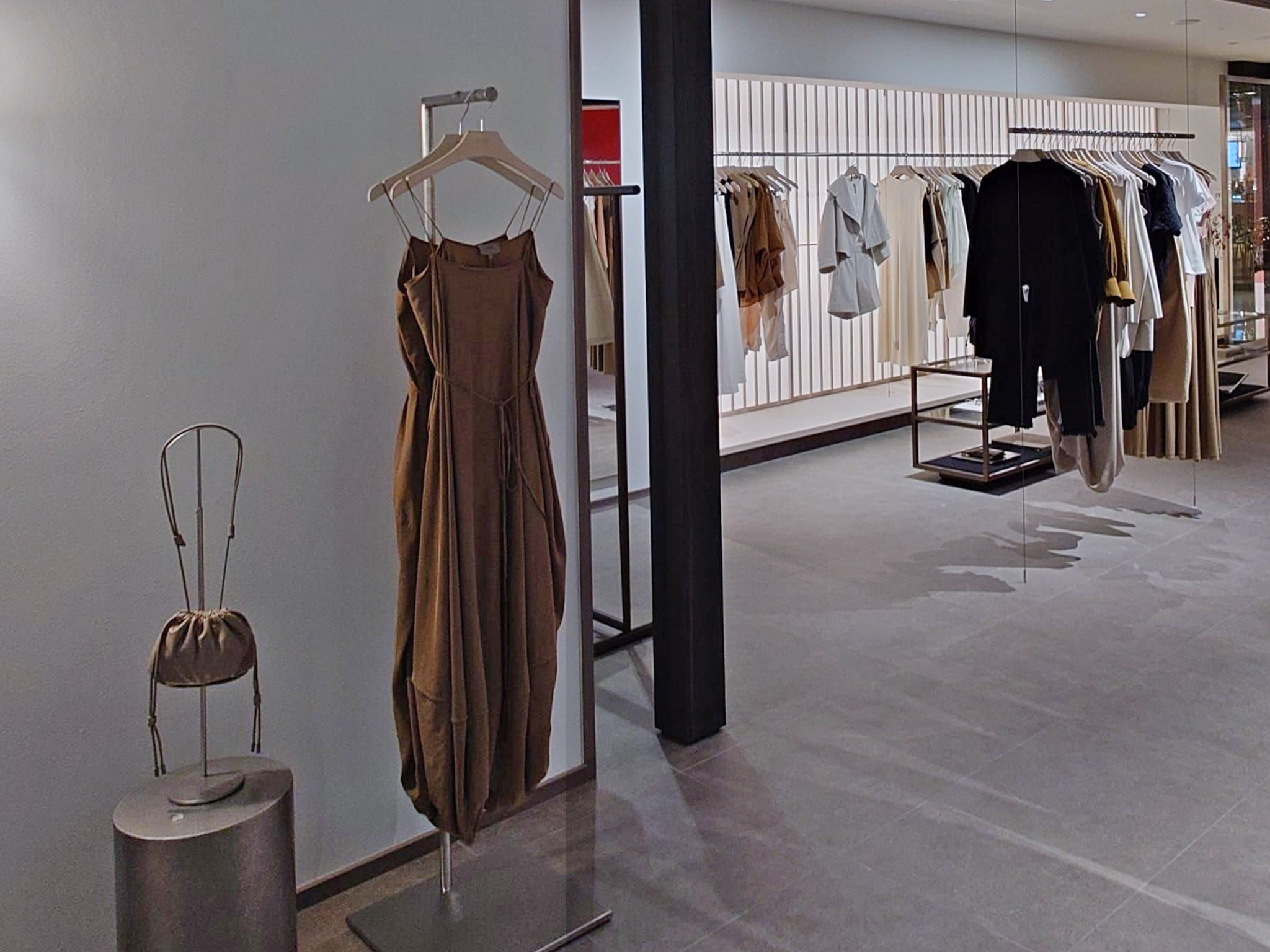
Lean, linear precision anchors the interior, traced through slender door frames, overhead beams (larch, we were told), display-cabinet stiles and rails, and a mix of suspended and freestanding racks. That restraint finds its focal point in a feature wall that could be inspired by the shōji, where a serene kumiko-like lattice, backed by translucent panel resembling washi modulate light and space with quiet discipline. Although we did not plan to visit, we did not hurry through the space; the clean sightlines and gentle glow naturally decelerated our pace, turning an unintended browse into a deliberate, unhurried ritual. We suspected it was the same for other shoppers browsing alongside. At close quarters, it seemed to us that the store isn’t really selling clothes first. To be sure, they are still compelling, perhaps even more so now (and we will come to that), but, to us, it is selling a form of cultural self-recognition. Typical IGC customers are not buying loud fashion signalling. They are purchasing the idea that they are thoughtful, design-aware, allergic to trend hysteria, and capable of appreciating nuance. The store architecture becomes a stage set for that identity. The clothing is only part of the transaction.
Visiting IGC now reminds us why we have been so fascinated by the brand and continue to shop there. The present iteration is effective because it performs a task practically no Singaporean fashion brand does: it makes the customer feel that they have entered a point of view. The interior design does not disappear behind the clothes. Quite the opposite. It seems to establish the interpretive frame through which the clothes will be read. In, say, Zara or even COS, the clothes are the protagonists and the store is, well, just there, barely the supporting cast. In luxury boutiques, the store serves as proof of wealth, not taste. And then there is IGC, saying something quite different. We may be over-reading the spatial design, but IGC seems to tell us that it thinks things through: it does not accumulate, it edits and reduces; it values design literacy and knows its customers do too. It favours quiet understatement over conspicuous display—even its name sits on the storefront, like a footnote, not clamouring for attention. No one will mistake it for Love, Bonito.
Leaving the store and looking back at the frontage, it was clear we were looking at something truly handsome. And yet therein lies the unsettling truth. In a temple of luxury like Ion Orchard, must local labels always be tucked out of sight in a subterranean existence? IGC’s neighbour to its left—if we face the store—is a just-vacated Lululemon (which has, ironically, taken the former IGC unit) and the new tenant is not immediately known. To its right after the exit to the MRT station and ground level, is a yet-to-open Hong Kong “lifeproof” jewellery brand Luah. And next to them, the upcoming Bimba Y Lola and directly across IGC, the existing Venchi chocolates. None of the neighbouring brands are really practising the kind of aesthetic austerity that IGC has. Bimba Y Lola is playful, graphic, extroverted. Venchi is sensory indulgence. And Luah, from what little we know, sells ornaments. Ion Orchard, Singapore’s grand theatre of aspirational consumption, has not articulated a coherent identity for this corner of the mall. This is not a curated cluster and, for some reason, it has not been at all. IGC is not some tentative local-fashion experiment. It is not a pop-up. It is not a fledgling label testing the waters. It is a highly articulated retail environment. And yet, stepping out the door, we immediately see the company it is forced to keep, and wondered why the neighbourhood won’t share the same conviction.
IGC deserves a retail ecosystem, a considered commercial context, a cultural environment. It is for this exact reason that NEWoMan in Shinjuku (rather than the newer Takanawa—it would be predictable) immediately invites comparison. The mall, just across from Shinjuku station, was conceived around carefully selected fashion, food, beauty and lifestyle tenants, with a reputation for “truly fine items”, sophisticated retail environments, and a customer who is expected to browse across categories rather than shop within strict departmental silos. That sounds very close to the IGC customer. More importantly, Shinjuku is not a lifestyle retreat. It is messy and it is dense. It is one of the busiest transport nodes in the world. Like Ion Orchard, NEWoMan Shinjuku sits directly atop that chaos while offering a more refined retail culture. But it is not trying to mirror the city outside. Instead, it is built to provide refuge from it. That sounds very IGC to us. In fact, one reason IGC doesn’t strike us as fashion in the conventional sense is that it seems deeply interested in the reduction of noise. The clothing reduces visual noise. The store reduces spatial noise. And that restraint is not merely appealing—in Orchard Road, it is rare.
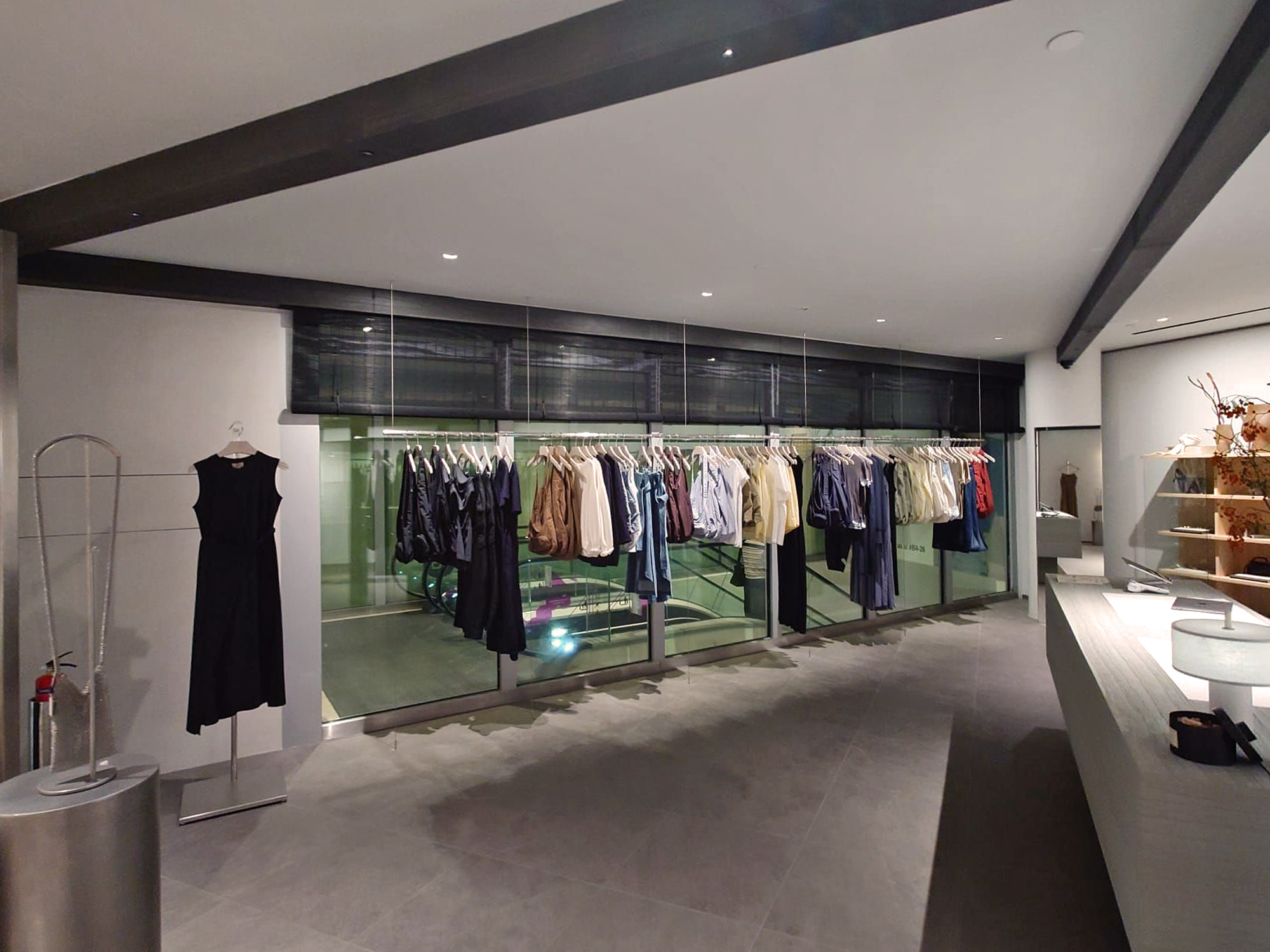
Naturally, an unhurried space means very little if the garments hanging inside it cannot hold their own. IGC’s designs have evolved considerably over time. What is now clear to us is self-assured minimalism. When people hear minimalism, they often imagine subtraction. But we have moved away from the era of Helmut Lang. What IGC is doing today feels more like control. Back in its early days, the approach was tasteful and somewhat design-conscious, but often a tad superfluous in the details, possibly a leftover of the brand founders’ last years of the 14 at Alldressedup (an unfortunate moniker at the onset of extreme casualisation in fashion). It no longer feels as though the brand is trying to prove that it understands good design. That is a subtle but important shift. It is why the lattice wall matters. So too do the beams and the slender framing. Every surviving gesture carries more weight because there are fewer gestures overall. The clothing has undergone the same evolution, best exemplified by a pre-washed, sleeveless cotton top with a notched neckline—called Dideon—that recalls a djellaba yet with a bib front that is lightly quilted. IGC added, but so faintly. Subtlety, no doubt, has its strengths.
IGC occupies a niche that very few Singaporean labels have successfully held for over a decade: not deep luxury, not mass-market, not hyper avant-garde, but what we see as confident, culturally centred minimalism. The clothes are not whispering because they are shy, but because they are not in a decibel match. A timid minimalist garment says, “Notice me as I am tasteful”. The confident one smiles with “I have already decided what I am”. That is not the same. Among all the brands we see at Ion Orchard, both homegrown and international, this confidence is surprisingly rare. Even luxury brands are addicted to reassurance. They continually remind customers of their heritage, status, logos, collaborations, and, overbearingly, celebrity endorsements. To us, IGC operates without those crutches. A loud store can survive anywhere. A confident store needs an environment capable of acknowledging its confidence. In Good Company knows exactly what it wants to be. That little corner in Ion Orchard, however, does not.
Photos: Chin Boh Kay

