Decades after wmarket confusion and wholesale distribution, Porter-Yoshida & Co anchors at ION Orchard. At last
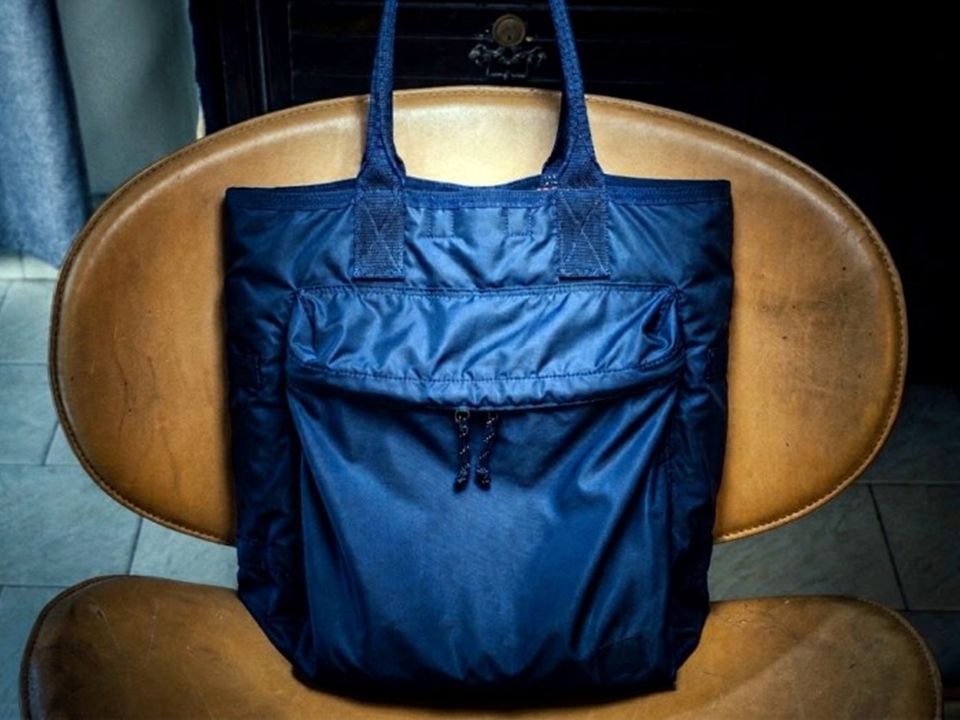
For many years, a phantom brand has haunted consumers: famous, yet somehow fake. Well, not quite a counterfeit, but not the genuine article either—a clever derivative operating in the legal grey zone. Regular visitors to Japan will be familiar with the original master-label, Porter Yoshida & Co, as well as their core retail specialty storefront, Kura Chika. But here, on our fashionable shores, many know Porter International and remember it by its two now-shuttered boutiques at Wisma Atria and VivoCity, marking the end of the brand’s physical presence in Singapore. Yet few realised that the two Porters were not, in fact, one and the same. But with the arrival of Porter-Yoshida’s first flagship in Singapore, the distinction will finally be drawn, and the confusion, cleared.
The Porter Singapore store is situated on level three of Ion Orchard in what was the former Club 21 multi-label/specialty boutique that offered mostly T-shirts and small accessories. The Singaporean retailer is transforming the space, flanked by Tumi to its left and Tiffany’s on the right, into a dedicated brand space for Porter-Yoshida & Co. The store operates, we learned, via a local retail partnership model—managed and brought in by Club21 under the Como Group. In fact, Porter bags have been available at Club 21 stores for a while now, including those conceived in collaboration with Comme des Garçons and Sacai, after their initial availability came to an end, first at Ambush and later at Surrender, both now defunct.
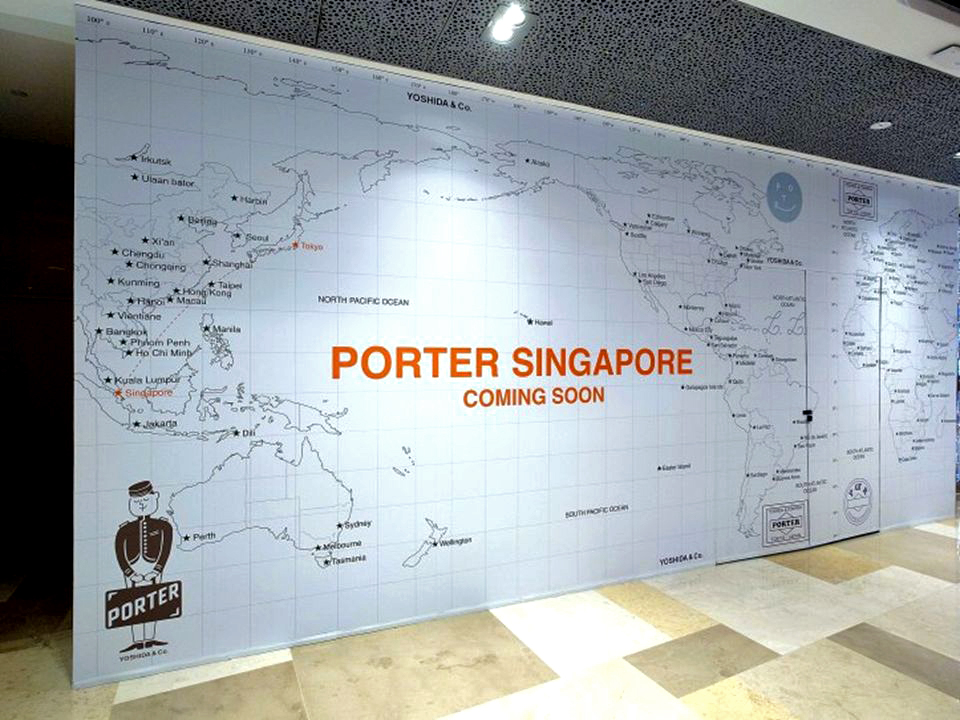
Social media has been abuzz over the opening of the Porter store. The prideful excitement is rather odd. A Porter standalone here feels distinctly belated, particularly when measured against its footprint elsewhere in Southeast Asia. In 2024, Bangkok unveiled its first Porter flagship at Central Embassy through kindred distributor Central Marketing Group, ending a prolonged cycle of pop-ups at Siam Discovery and EmQuartier. But earlier still was the dedicated Porter space in Kuala Lumpur’s Isetan after their rebranding exercise in 2016 that became Isetan The Japan Store, co-funded and curated in partnership with the Japanese government’s Cool Japan Fund. The corner was set up as Head Porter, a private brand and retail concept conceived by Hiroshi Fujiwara and Porter-Yoshida & Co as OEM partner. In the beginning of this year, KL’s favourite multi-label store Crossover officially partnered with Yoshida & Co to carry extensive lineups.
A Porter store opening here now hardly places it at the retail vanguard. If anything, it shows how late we are to certain forms of Japanese specialist retail. We often exhibits what has been called a “luxury-first lag”. Global luxury houses arrive early because our city’s economics are obvious. Specialist brands frequently arrive later because they require an audience educated in product culture rather than status signalling. Porter occupies that middle category: Its appeal is neither fully luxury nor fully streetwear. It requires consumers to care about ballistic nylon, hardware, production lineage, Yoshida’s manufacturing philosophy, and the distinction between a bag that is expensive and a bag that is valuable. That audience unquestionably exists in Singapore, but retailers, who consider Beyond the Vines the city ’s ultimate nylon bag brand, have historically treated it as relatively niche.
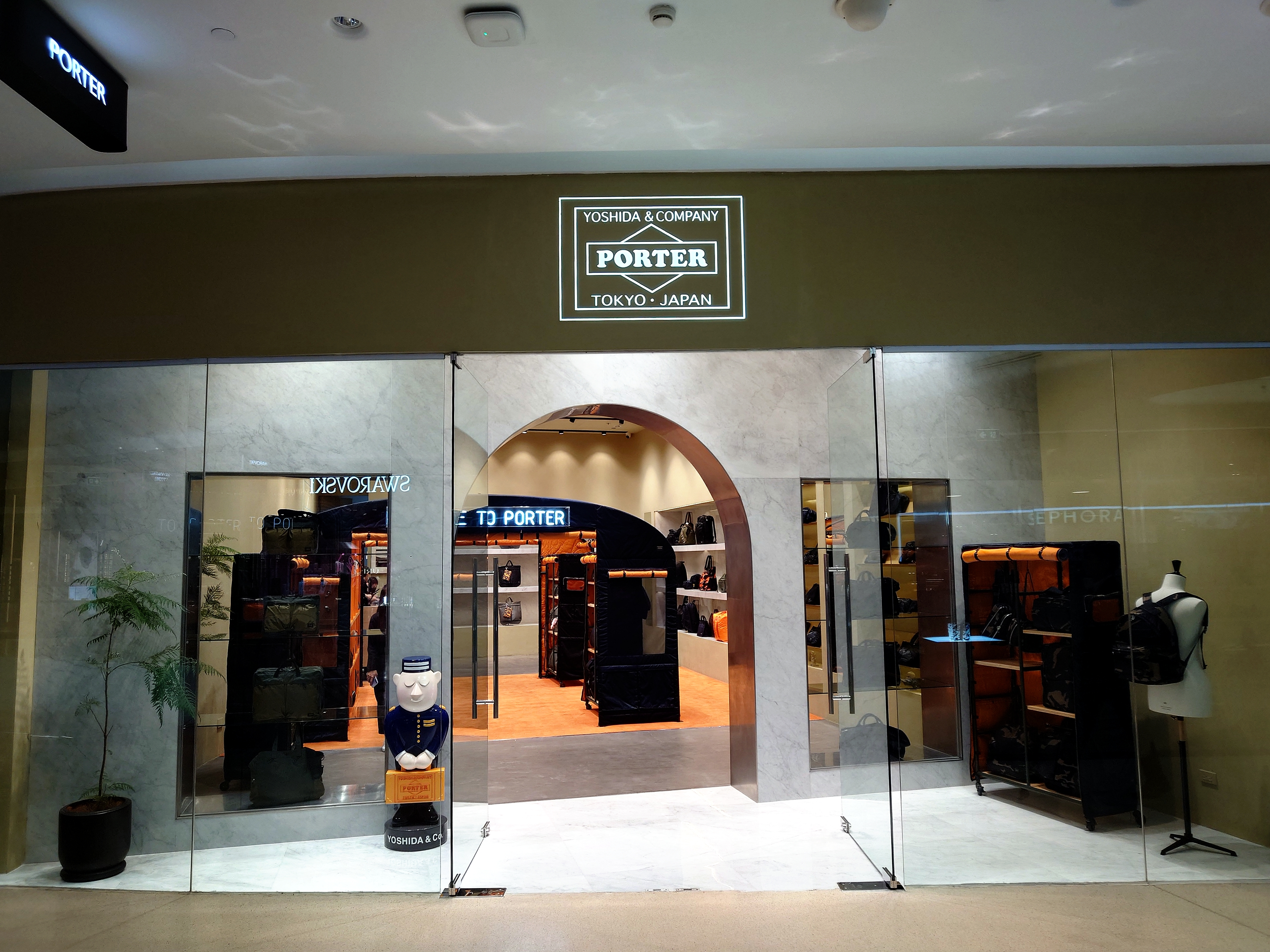
Southeast Asia’s first standalone Porter store in Bangkok. File photo: Jagkrit Suwanmethanon for SOTD
There is also a very Singaporean tendency to mistake retail arrival for cultural arrival. The market has periodically celebrated openings that elsewhere would be regarded as routine commercial expansion. Sure, we finally got it, but the existence of enthusiastic local Porter customers was never really in doubt. The question was why the dedicated store took so long to materialise. Its arrival, therefore, reads less as a triumph of retail progress than as a correction of a surprisingly protracted omission. That raises uncomfortable questions about Orchard Road itself. For years, landlords, leasing managers, and retailers appeared far more interested in standardised luxury propositions than in specialist brands with strong subcultural capital. Porter’s opening may indicate that the economics of Orchard Road are shifting enough to accommodate a different type of consumer: one seeking expertise, provenance, and product literacy rather than spectacle alone.
With the plywood hoarding still up at Ion Orchard, it was not possible to preview what the space might look like. A true Porter store imported from Japan often treats merchandise almost like industrial objects—evoking a feeling halfway between gallery and supply depot. It is still unclear which incarnation of Porter-Yoshida & Co we will get—Kura Chika (specialty and partner stores, also in Hong Kong, Macau, and Taiwan), Porter flagships (such as the two-storey Jingumae store), Porter Stand (high-density micro-unit, entirely plausible given the compact ION footprint), or POTR (its newer, dynamic retail sub-label). If the ION standalone reproduces the specific Porter atmosphere, it could become one of the more compelling retail environments on Orchard Road. If it’s merely another Club 21 boutique fit-out with bags on shelves, much of the brand’s cultural texture gets lost. That would be a true pity.
The opening date of the Porter store is not announced. Watch this space for details. Photos: Zhao Xiangji

