Balenciaga’s appointment of Martine Rose to replace Pierpaolo Piccioli grafts London subcultural specimens onto the parterre that is 109 Avenue George V. What will she propagate?
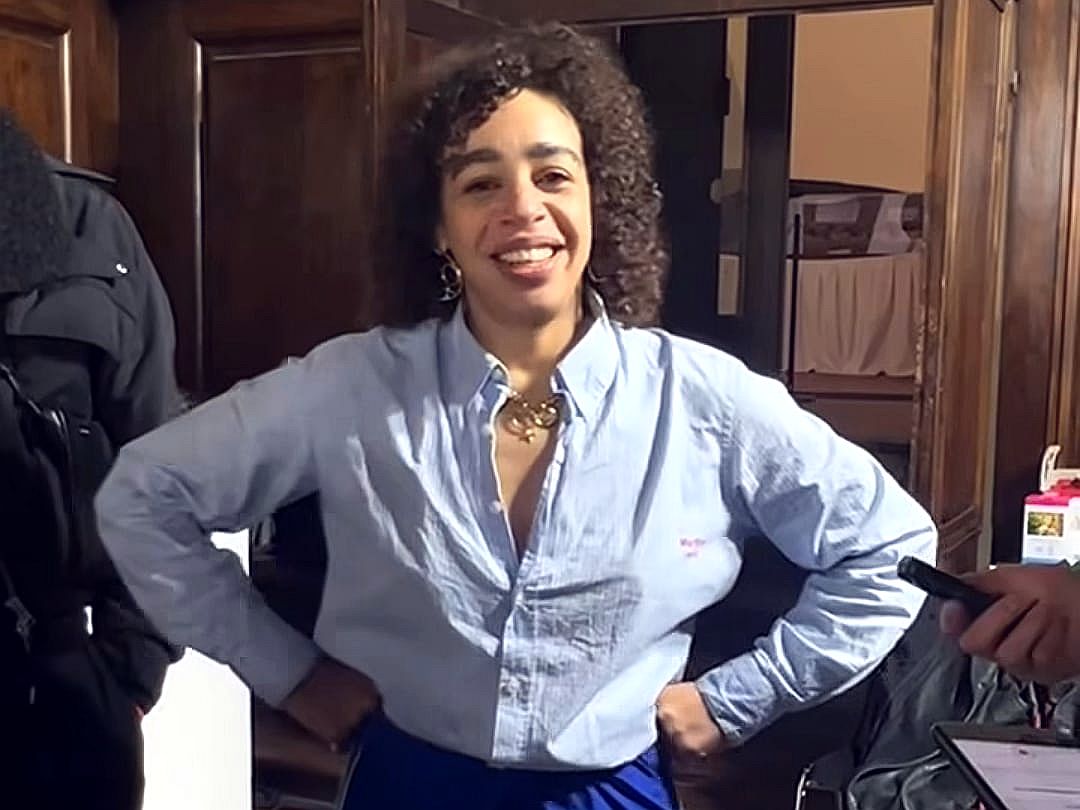
Balenciaga’s new hire Martine Rose. Screen shot: federicasalto/Instagram
In fashion, a rumour is just a fact waiting for its first fitting. Whisper twice and yell it once, and by nightfall it’s absolute truth. With Martine Rose, that couldn’t be truer. Word had been spreading since October, when it was “leaked” that Pierpaolo Piccioli was set to exit Balenciaga, singling out Ms Rose as his successor. True to form, social media was just waiting for the press release to catch up. On Friday morning (Paris time), Balenciaga announced that the British-Jamaican designer of the eponymous label will be the new creative director of the house. This came less than 24 hours after Kering’s official confirmation that Mr Piccioli has stepped down. Ms Rose will assume her new role in Paris ten days later. This inevitably creates the impression that the succession was effectively settled long before the public was informed. The compressed timing subtly undermines the idea that Mr Piccioli represented a serious long-term strategic pillar. We don’t need to believe there was some conspiracy. Optically, it simply suggests that Balenciaga was already moving on. A creative director appointment is not “Hi, Martine. Are you free next week?”
But what is Balenciaga ready to move on to? In the official statement released by Kering, one line stood out to us: “Martine Rose brings a deep understanding of the House’s creative identity to her own singular vision of contemporary culture”. It is a very carefully constructed sentence. Truly revealing to us is what it does not say. The emphasis is on “creative identity” and, crucially, “contemporary culture”. It does not mention couture, craftsmanship, or dressmaking. The announcement repeatedly returned to “culture”. Kering’s Group CEO Luca De Meo enthused: “Her connection to the new generation and her instinctive understanding of culture bring a new dimension to the House. Her appointment reflects our ambition to keep Balenciaga at the forefront of innovation, creativity and culture.” That reads to us: “We hired someone who understands the Balenciaga brand as it currently exists and can continue interpreting contemporary cultural currents”. There is no talk about the identity of Balenciaga. It treats the Balenciaga identity as a settled fact when the entire debate is whether the identity is even settled at all. The appointment sounds less like a rupture and more like continuity.
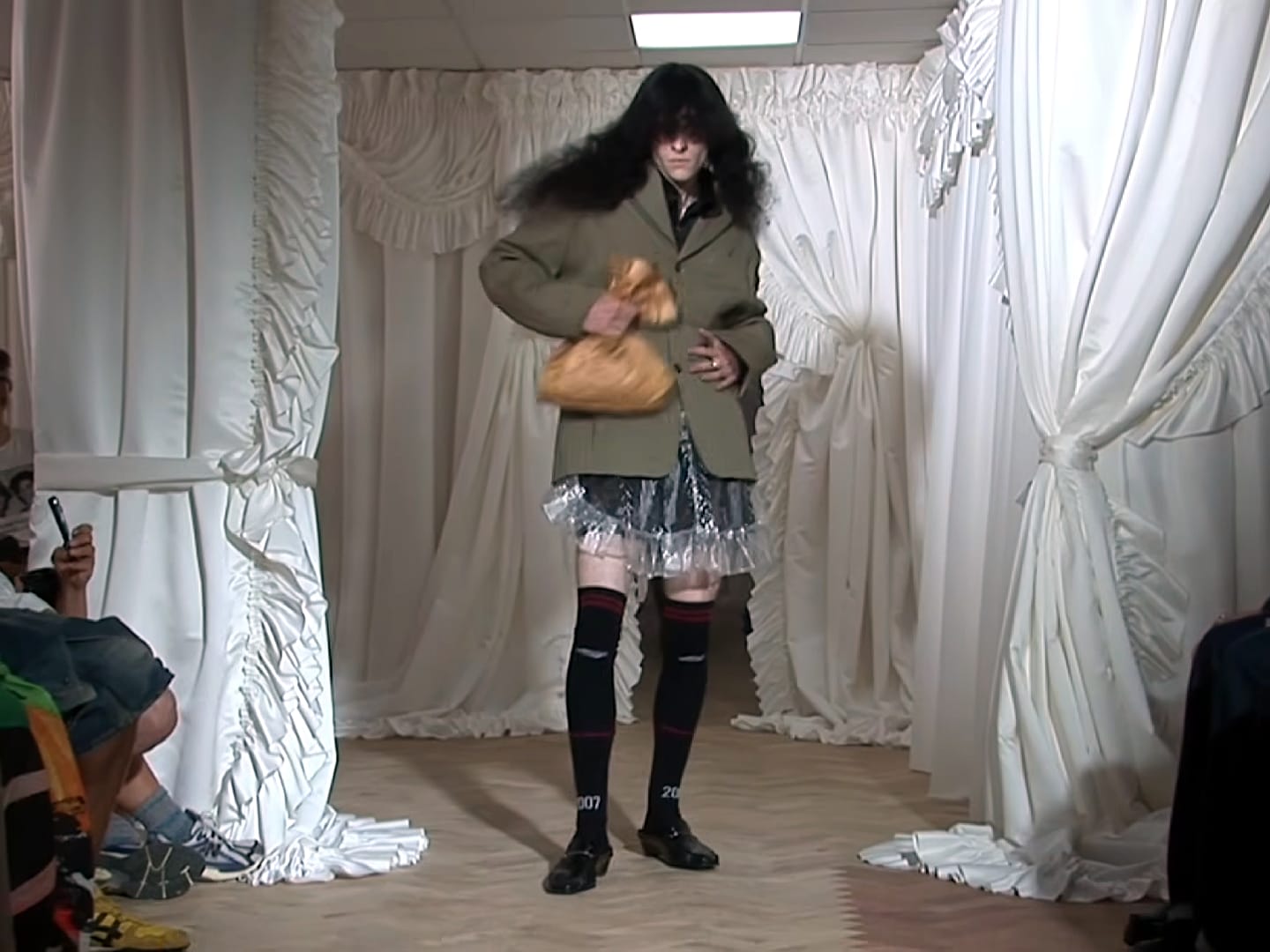
Martine Rose spring/summer 2026 show. Screen shot: martinerose/YouTube
As someone who previously consulted on Balenciaga menswear under Demna Gvasalia’s reign, Ms Rose is not an outsider parachuting in, but an abettor already connected to the maison’s recent visual language. Her role signals a swing back towards subculture, oddness (of fit too), exuberance of youth, and anti-fashion (until it isn’t) instincts. Her strengths may be precisely what make the appointment dangerous. She works best as an outsider observing social codes. Her flair has been mostly forensic rather than imperial. She examines football casuals, London nightlife, awkward (even goofball) masculinity, unfashionable people, and strange proportions. Her collections read less like fashion and more like an anthropological report with armholes that someone accidentally sent down a runway. By accidentally, we really mean calculated provocation, made to look insouciant and inspired. Balenciaga, meanwhile, is a global luxury corporation expected to generate enormous revenue. Balenciaga has become addicted to spectacle. Mr Gvasalia could transform a trench of mud or a blizzard into a viral global spectacle. Ms Rose, whose finest moments have been staged in primary school halls and community climbing gyms, has never operated on that industrial scale.
It is apparent that Balenciaga no longer wishes to be evaluated as a historic couture house. To be relevant, it wants to be a brand-asset machine that can capture youth attention and social currency. So what does it really want to sell? Looking back at the “Demna era”, as it is now known, we have already seen what we think Ms Rose will bring to the draughting table: oversized hoodies, football references, skewed corporate uniforms, distressed luxury (to the point of destruction), and normcore elevated to luxury spectacle (just in time for the Met’s next fashion exhibition “extraORDINARY”). People are saying that “Martine Rose understands street culture”. Let’s say she does. But how much more street culture must Balenciaga extract? The irony is that Ms Rose’s work appealed partly because it existed outside the luxury machine. Her football dads, suburban oddballs, market-stall masculinity, and London social types felt observed rather than commodified. Balenciaga under Mr Gvasalia already converted many of those observations into products. What’s next?
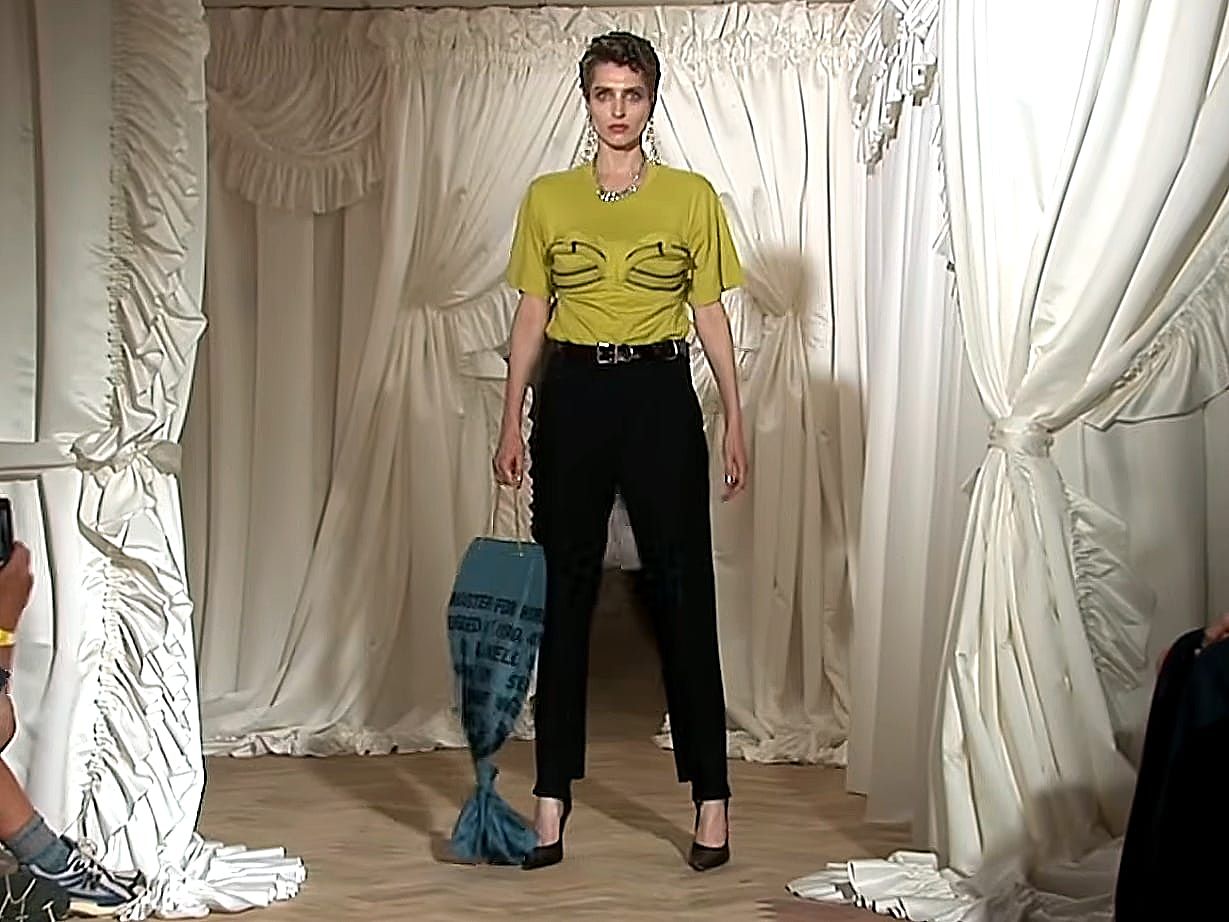
Martine Rose spring/summer 2026 show. Screen shot: martinerose/YouTube
Whether or not one likes Pierpaolo Piccioli, he at least represented a genuine alternative direction—somewhere other than the same exhausted street-luxury-industrial complex. But Balenciaga now seems to be saying let’s go back to selling hoodies, weird proportions, and cultural irony; let’s just stay in that ’hood. Which may explain why Ms Rose’s joining Balenciaga is so lauded. Harper’s Bazaar calls it “an appointment the fashion world is eager to celebrate”. Which “fashion world”? Editors, stylists (and that one image architect), or buyers? Does it include luxury clients in Seoul, handbag collectors in Shanghai, or couture clients in Paris? To us, the “fashion world” often turns out to mean a relatively small professional ecosystem concentrated around media, luxury groups, showgoers, influencers, and industry insiders. And that ecosystem has historically been far better at recognising talent than predicting outcomes. The industry’s taste-makers have come to a swift consensus, but fashion history is full of moments when that precise consensus later looked pitifully premature.
The way we see it, when a designer is brought in to execute the exact language they previously fed into a system informally, the result is rarely forward-looking. Ms Rose was already influencing the luxury ecosystem. Long before this appointment, you could see her fingerprints all over the fashion conversation: the rehabilitation of awkwardness, football as a cultural signifier, suburban masculinity, and those ‘wrong’ proportions. Demna Gvasalia’s Balenciaga operated in adjacent territory for years. Not identical territory, but of significant proximity. If Ms Rose’s ideas have already been absorbed into the Balenciaga system, what exactly is being introduced? So many Instagrammers and podcasters receive her appointment with intense rapture, declaring that “it’s about time we give Martine Rose a major house”. That may well be true. But for us, the bigger question is, what aesthetic future does Balenciaga need? Suddenly, Alexander Wang comes to mind. Not because Mr Wang and Ms Rose are similar designers, but because both show that fashion is littered, like a sample room floor, with appointments that make perfect sense in the present tense.

