Pierpaolo Piccioli’s predictable exit from Balenciaga leaves no room for sentiment—only the grim reality of a house built for hype
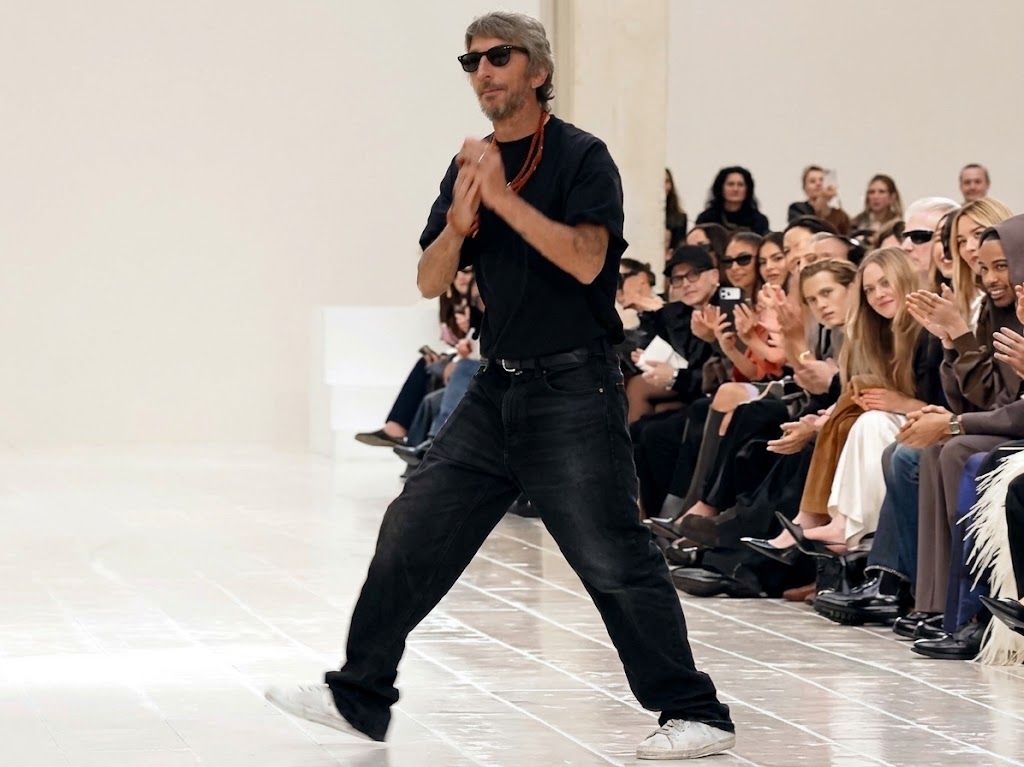
Pierpaolo Piccioli at his final show for Balenciaga
Whispers in early 2025 placed Pierpaolo Piccioli at Balenciaga—it was a pairing about as natural as teaming dupioni silk with riot gear. By the time his name was floated for Balenciaga, the house had already ceased to be anything a fashion purist would recognise, or want. Mr Piccioli arrived as an independent romantic at a maison no longer tagged to the sentimental interest in its own past or even what subsequent designers had made it to be. From his debut Spring/Summer 2026 collection, the garments felt less like a new vocabulary for Balenciaga and more like an uneasy translation of his Roman atelier signature. His recently announced departure is, therefore, not shocking because it was almost the logical conclusion of a contradiction that never really got resolved. The industry narrative then was: “Piccioli will bring Balenciaga back to Cristóbal.” The concurrent problem is that Balenciaga wasn’t actually waiting to be rescued from Demna Gvasalia, who had his own, real rescuing to do—at Gucci.
If the mismatch was sensed back then, it is unlikely that parent company Kering did not feel it too. The company knew that modern luxury rewards symbolic power more than technical excellence—not that the latter does not matter. The reality is that Cristóbal Balenciaga would have appreciated Mr Piccioli. But the house of Balenciaga is not the same place now. It feeds a different market. And this market preferred Demna Gvasalia. That is a noticeable distinction, even if an uncomfortable one. The CEO of Kering, Luca de Meo, whose watch is now seeing the third departure of a creative director under the Group, said: “Our ambition is to build on Balenciaga’s avant-garde spirit, honor its remarkable heritage and continue to push creative boundaries, further establishing the house as a powerful and relevant voice.” Avant-garde is a telling phrase. That suggests Kering increasingly sees Balenciaga as a disruption label, not primarily a couture brand. The commercial objective is clear: couture only matters if it can be used to effect cultural might.
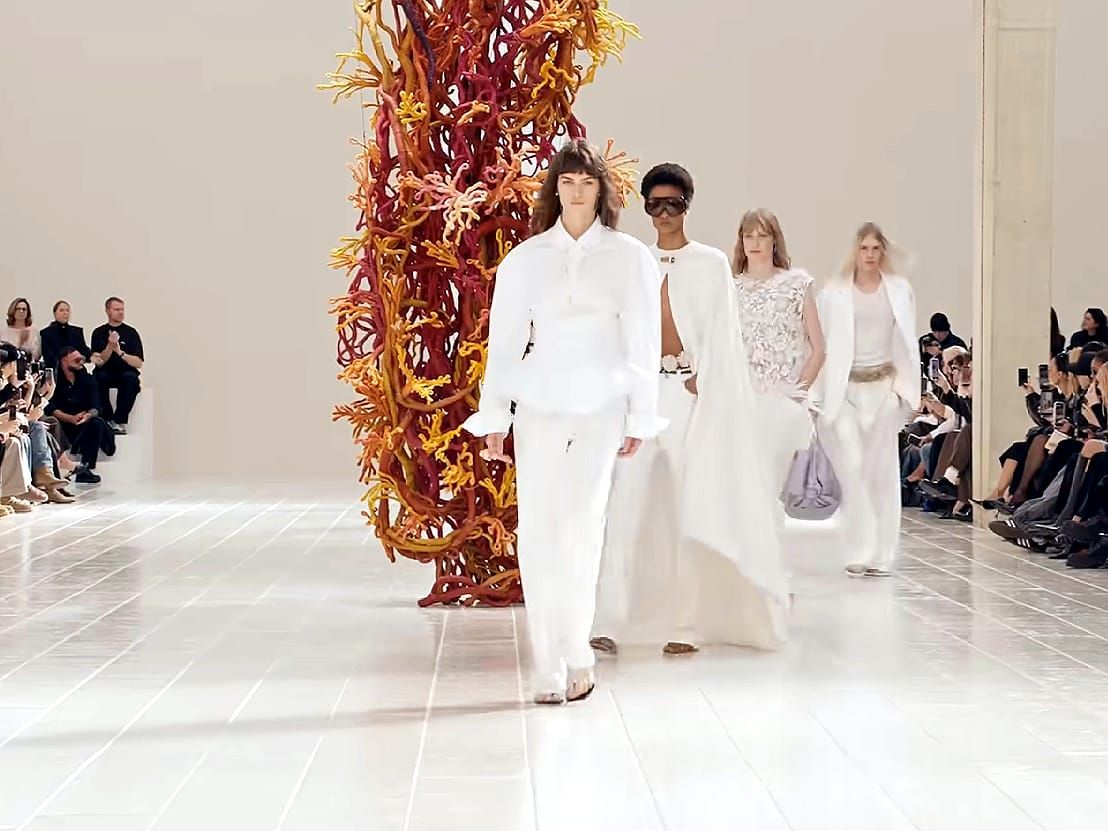
Pierpaolo Piccioli’s final Balenciaga ready-to-wear collection
The reality is that Mr Piccioli approached Balenciaga with the belief that there was an authentic essence waiting to be re-discovered and applied. The fashion media was in a similar cheerleading mood. But increasingly, brands are accumulations of histories. Balenciaga in 2026 is simultaneously the founder’s distinctive architecture, Nicolas Ghesquière’s youthfulness and futurism, and Mr Gvasalia’s social satire. Those layers coexist*. While Mr Piccioli did try to reflect that, he did it with couture élan but without the editorial flair. He played up the couture layer, but the many who still cling to their 2017 Triple S sneakers keep remembering the Gvasalia layer. In the end, Mr Piccioli’s tenure is likely to be remembered as an experiment, even a dare of whether luxury audiences genuinely wanted a post-Demna Balenciaga. The answer appears to have been: they wanted post-Demna, but not anti-Demna.
Fashion, as in politics, is divisive. Whether you believe Demna Gvasalia destroyed Balenciaga or saved it, one thing is clear—he transformed it into something much closer to a hype machine. The merchandise is secondary, but the discourse mattered more. A Triple S sneaker was not just a sneaker. A DHL T-shirt was not just a T-shirt. The Ikea bag dupe was not just a bag. They were conversational devices. Owning any one of the products signaled participation in an ongoing argument, or a welcome to the tribe. It is hypebeast logic. Ironically, luxury houses had spent decades teaching customers to appreciate craftsmanship. Demna taught customers to appreciate the joke: a woman or a bag taped, a towel as a skirt, sneakers completely battered. What he built was less a fashion house than a cultural attention engine, which allowed Kering the last laugh, all the way to the bank.
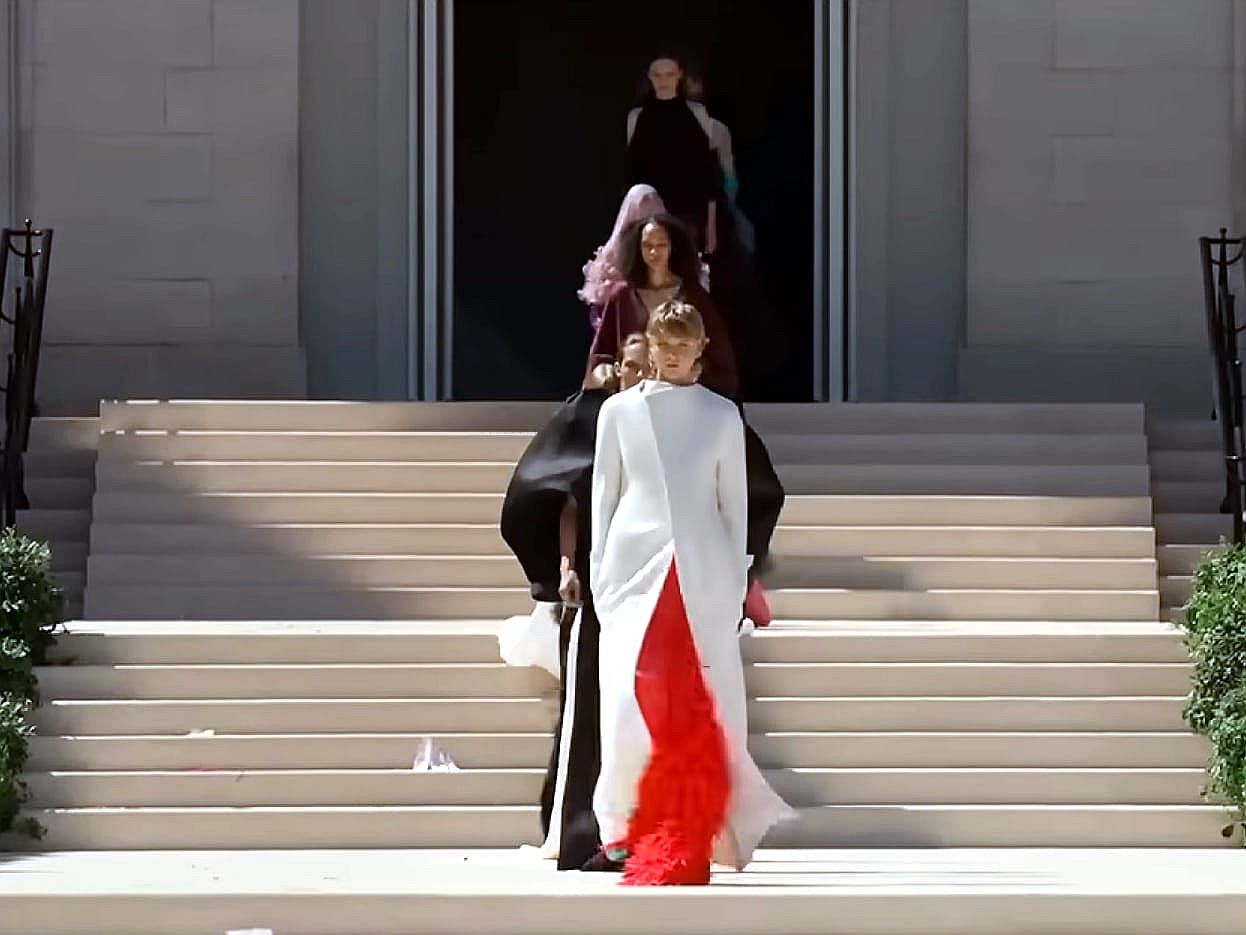
His last couture collection for Balenciaga
The challenges Mr Piccioli faced were somewhat underestimated. He did not inherit a couture house as he did at Valentino. When he came on board, he took over a media platform disguised as a couture house. The problem became obvious when we look at the fans of Balenciaga under Mr Gvasalia’s watch (in fact, we loved looking at them more than the clothes whenever we visited the stores). They were not obsessing over the cut of the sleeves, the drop of the shoulders, the specific wash of the fabrics, and least of all, Cristóbal Balenciaga’s experiments with volume. Instead, they were consumed by what was trending, what would be perfect for TikTok posts, or what looked transgressive, no matter how tiresome it eventually became. Or, better still, indicative of the fashion tribe they belonged to (the Michelle Yeoh groupie perhaps?). Once a brand has trained its audience to seek those rewards, it is very difficult to pivot back towards quieter values.
For Mr Piccioli’s last Balenciaga couture show, the finale was soundtracked by Labrinth’s Beneath Your Beautiful. One line in the track stood out: “You’ve built your wall so high that no one could climb it”. Perhaps it was Mr Piccioli’s admission of how forbidding remaking the house was. Looking at the hire now, we sense cruelty, but not for the usual reason. It was cruel because Kering chose him for what he symbolised, then judged him according to needs that contradicted that symbolism. Why hire a man because he embodies restoration and then become impatient when restoration does not generate the same attention economy as spectacle? Therein lies the cruelty. It appeared that Mr Piccioli functioned as a transitional figure. The interim creative director is a nasty appointment, judged against the output of the machine that others built. Pierpaolo Piccioli probably knew he was not succeeding Demna Gvasalia the designer, but the attention broker. And that is a position much harder to fill.
Screen shots: balenciaga/YouTube

