Fan reaction to Jisoo’s new single Addicted is understandable, but why mistake a puddle for the Pacific?
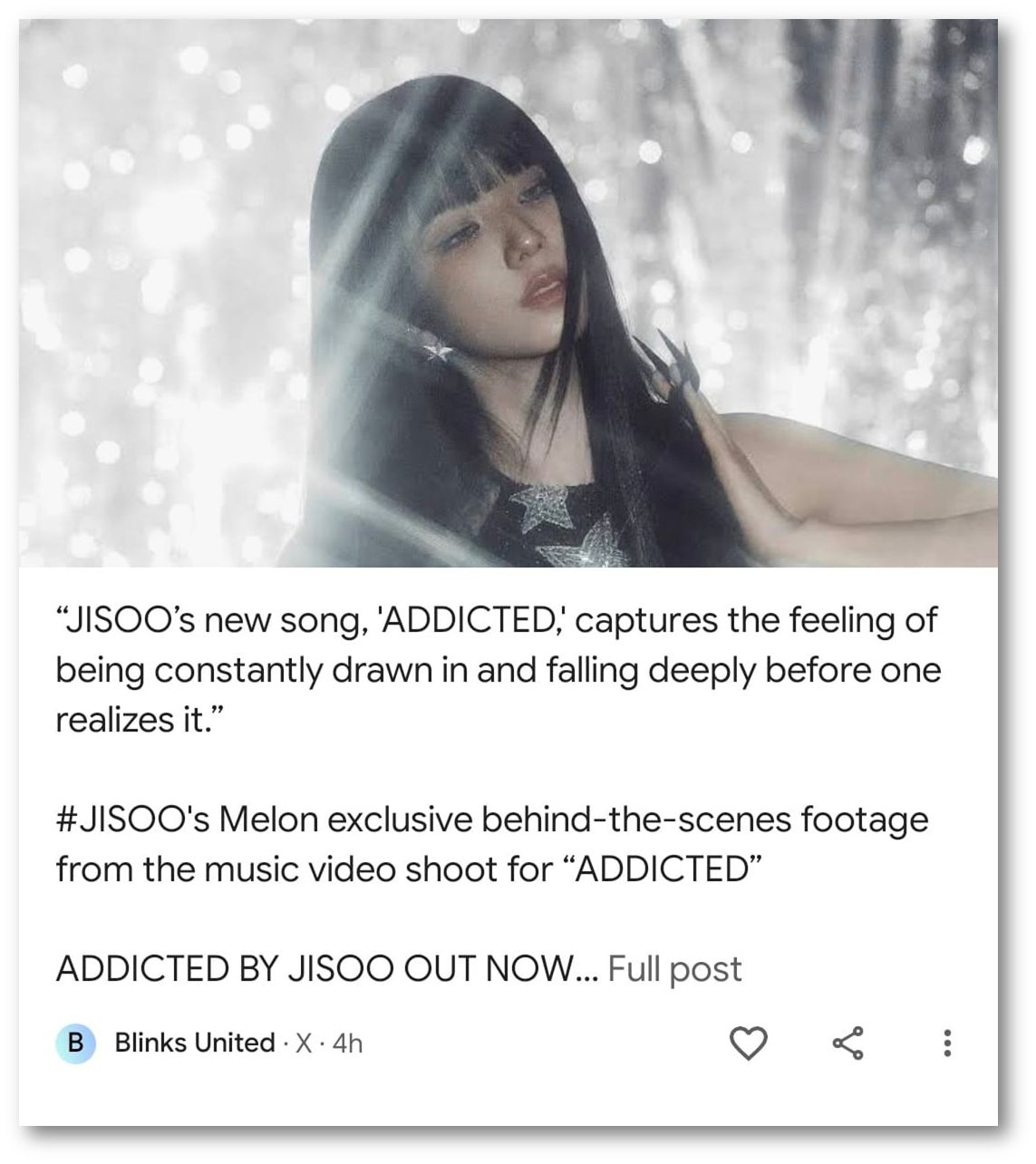
If the almighty works in mysterious ways, so do algorithms, only more terrifyingly. According to its deep analysis of our psychological profile, we needed to see this today: a shout-out from a fan site baying at its chosen moon. The entity in question: Blinks United. In that self-promotion, we were told that “JISOO’s new song, ‘ADDICTED,’ captures the feeling of being constantly drawn in and falling deeply before one realises it.” In the world of K-pop, it is impossible to tell where corporate marketing ends and fan hallucination begins. Still, describing this as a psychological study is an impressive feat of mental gymnastics.
Pouring real devotion into a highly polished, one-way mirror is, after all, how the machinery is meant to work. But we wanted to really understand this promise of psychological depth, so we pressed play once more, this time with the lyrics in front of us, courtesy of Genius. We needed to keep a clean ear to keep the gutter out of the lyrics. The song kicks off provocatively, followed by vocal production so strategic it’s hard to tell if it’s celebrating Jisoo’s pronunciation or attempting damage control. In the first verse, she opens with “Every kiss a hit, every touch a trip”. This is not at all a description of pleasure. They’re both dependence and intoxication vocabulary. Before we even meet the subject of desire, we learn that the singer has a self-control issue.
The song kicks off provocatively, followed by vocal production so strategic it’s hard to tell if it’s celebrating Jisoo’s pronunciation or attempting damage control
We are then immediately told: “You’re so hot, I’m melting in my shoes”. Here is where we were stumped. At first hearing, it sounded to us like she sang “bouncing”. YouTube closed captioning concurred. We had initially wondered why a grown woman is bouncing in her shoes, but “melting” is even worse. That could be a chocolate bar on a dashboard of a car parked under the noonday sun. And then it becomes feral, “put, put your body right on top of mine”—the man the initiator, the dominant, the subjugator. In fact, the lines read like homage to mid-1990s pop clichés. And then the most beautiful: “Hate the goodbyes, crave a good time.” Customer feedback for a cruise operator? The narcotics metaphor leading to a habit she is powerless to break? Or just another Tinder bio written by a serial dater who fancies herself as flavoured vapes?
It is hard to imagine any woman telling a man “you’re my ecstasy, perfect fantasy” without instantly wondering if she’s gone off her rocker. These are not actual words to be read or heard. They are pop songwriting’s very own lorem ipsum. They fill space on a lyric sheet, and are not required to communicate anything. They are verbal spackle that say nothing about felt experiences, drawn from a generic template of girly desire. The comedy of the song is that it keeps announcing emotional depth or what Blinks United calls “the feeling of being constantly drawn in” while refusing to provide evidence. The Blinks make it sound as though they did somehow receive a nuanced psychological portrait. But the words specify no texture, no weight, no friction, and no temperature.
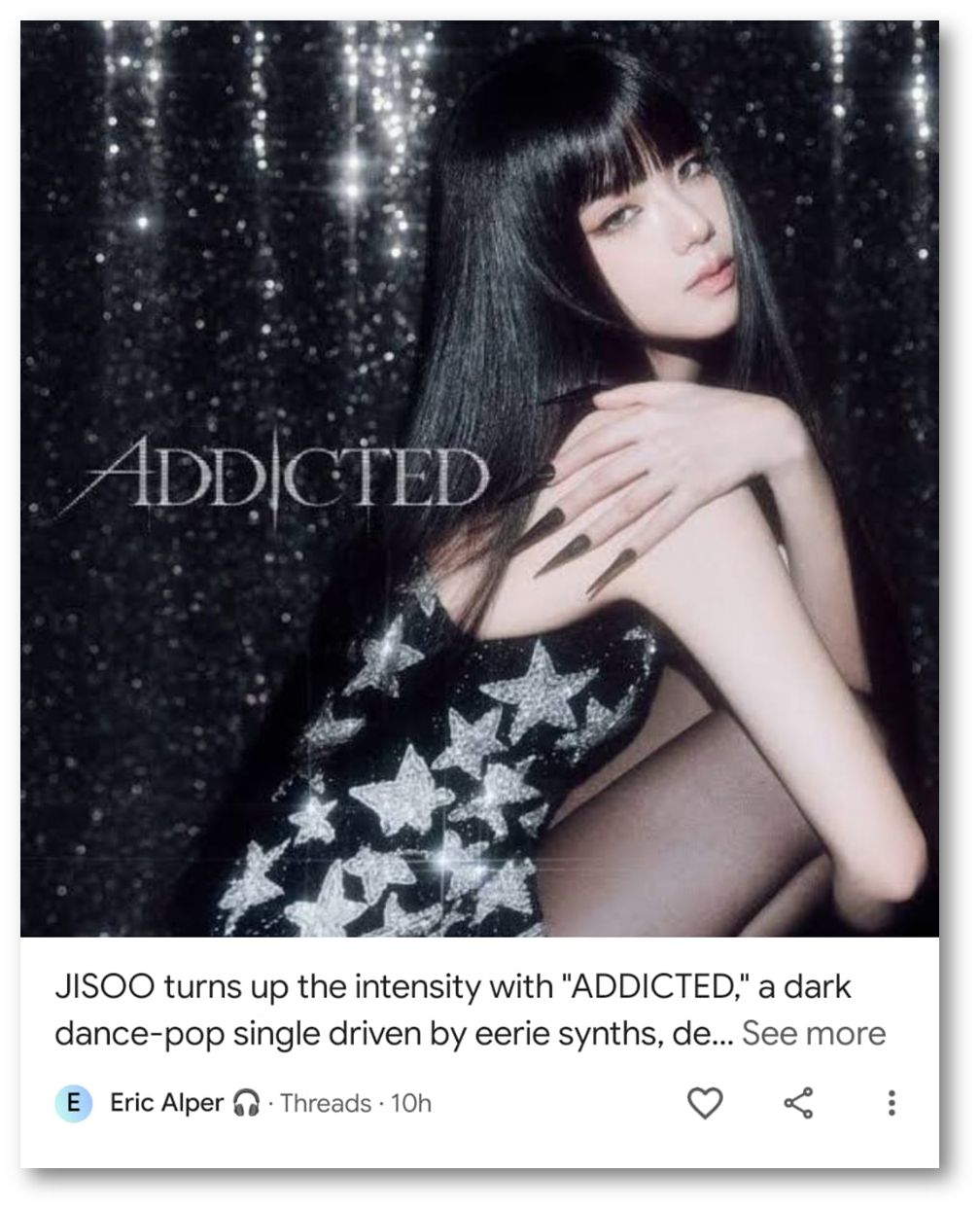
“Put, put the money on you, you and I”, she also sang. By now, we couldn’t help but think of vices. First the addiction, then the sex, and now the money. Or is that betting—gambling? It is hard not to see that the song is about vice, at this stage delivered with all the fiscal gravity of a late-night slot machine enthusiast down to their last token. The rhetoric shifts seamlessly from clinical dependency to high-stakes speculation. To back a product already self-styled as a “perfect fantasy” is to buy into an asset with no upside. And yet she does. The lyric never develops, never revealing what or who is the source of her “ecstasy”. The sentiment simply saunters through the song, poses, and leaves. And then, after all these declarations, we get: “I don’t understand it…”. Frankly, neither did we.
The funniest moment is really left for the structure of the chorus. Addicted seems terrified that we may forget the title. It does not merely tell us she is addicted, but also another 16 times: “got me so addicted” and four times more: “now I am addicted to ya”. When writing is this repetitive, it is hardly surprising that listeners begin focusing on the sound of the words. We certainly did. What else is there to look out for? Closed captioning, but mostly the exit signs. The central experience in Addicted is “addicted, addicted, addicted”, which, frankly, led us listening to nothing except her pronunciation. The thing that became addictive isn’t the emotional narrative. It is the mystery of where the missing syllables went.
Screen shots: X and Threads respectively

