At the recent Jakarta Fashion Week, the Singapore Fashion Council presented its road-show Singapore Selects to the Indonesians. The question is: if these were selected, what were rejected?
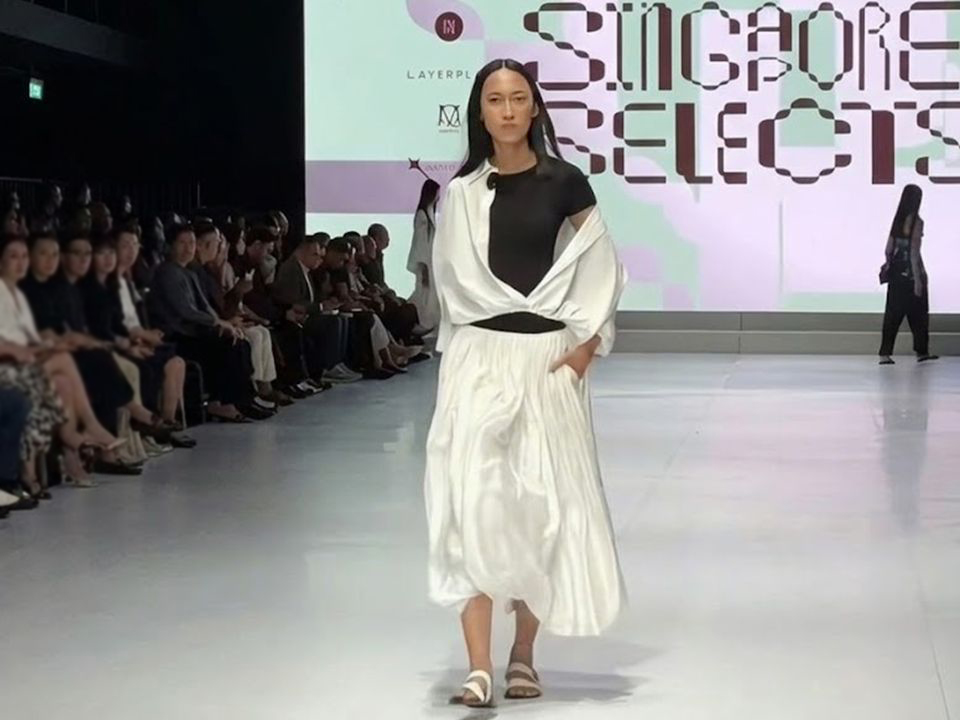
In the absence of a proper Singapore fashion week, local appetites outpace the calendar—and the collections. For Singaporean designers, the predicament is starker still: any runway begins to look like salvation. So they participate in those staged abroad. Revered couturier Frederick Lee, for example, is mostly associated with fashion weeks in Vietnam and Harbin. Those with grander regional ambitions simply invent their own. Hayden Ng did, admirably, in the form of ASEAN International Digital Fashion Week 2021. Two years later, ‘Digital’ was dropped for a physical show at the ArtScience Museum. And then it subsequently morphed into a cross-border takeover, first as Fashion Week Asia and then Silk Road International Fashion Week. The question often asked: is Mr Ng a designer or a fashion week producer or the latter giving himself the platform to validate the former?
The need for designers here to seek affirmation in regional circuits is, perhaps, understandable. There are those who design to show. But there is, it appears, an institutional alternative: be chosen by the Singapore Design Council (SFC) through its initiative Singapore Selects. The showcase made its debut last month, during Seoul Fashion Week. It was a four-day pop-up hosted at the ZZON event space in the Seongsu district of the city. In less than two months, the showcase reappeared, this time in Jakarta, during the city’s own fashion week. “Curated” by DORS, Singapore Selects cleverly disguised an export strategy as a fashion event. This appeared to place Singaporean brands directly into Indonesia’s mass market through another pop-up during Jakarta Fashion Week (JFW). There is no pretense here, not even in Seoul. Rather than say Singapore is ready for, say, Paris Fashion Week, SFC relies on a side-event footprint to announce that we do, in fact, have our own clothing brands.
“Curated” by DORS, Singapore Selects cleverly disguised an export strategy as a fashion event
There is no shame in selling clothes via a pop-up, but once they are worn by models and shown on a catwalk, those clothes have a serious duty to fulfill. In Jakarta, Singapore Selects showed that some clothes have no reason to be on a runway. A pop-up and a fashion show operate under completely different standards of justification. A pop-up asks, would someone buy this? A runway demands something else—why am I looking at this? The moment an outfit enters a catwalk presentation, it ceases to be merely merchandise that would be later laundered, and put out to be sold. It is essentially communication. It has to justify its presence to the audience. If the garments and their sum say nothing more than you can buy this later, the runway becomes brutally exposing. In fact, it is nearly always cruel to commercial—even if competent—clothes. Regrettably, the Singapore Selects show was blissfully untroubled by this consideration.
Then another question immediately arises: why do we need to hard sell competent clothes to Jakarta? The audience has access to those too. More than access—they have a deeper fashion eco-system. So the justification cannot really be that Singapore is arriving to enlighten an underserved market. According to SFC’s chief executive, Zhang Ting-Ting, who told The Straits Times: “Singapore fashion is entering a new chapter, with a new generation of brands that are confident in their identities and are eager to share. At Singapore Fashion Council, the ambition is to propel this momentum beyond Singapore.” Momentum! It is one of those institutional words that sounds measurable, but often isn’t. Eight Singaporean brands represent the nation in Jakarta. We have not heard of any of them. When we asked around among industry veterans, the reply is unanimous: “who?” These brands may possess a vestige of visible momentum among a very narrow band of consumers, but it would be a stretch to say they are household names, let alone recognisable brands.
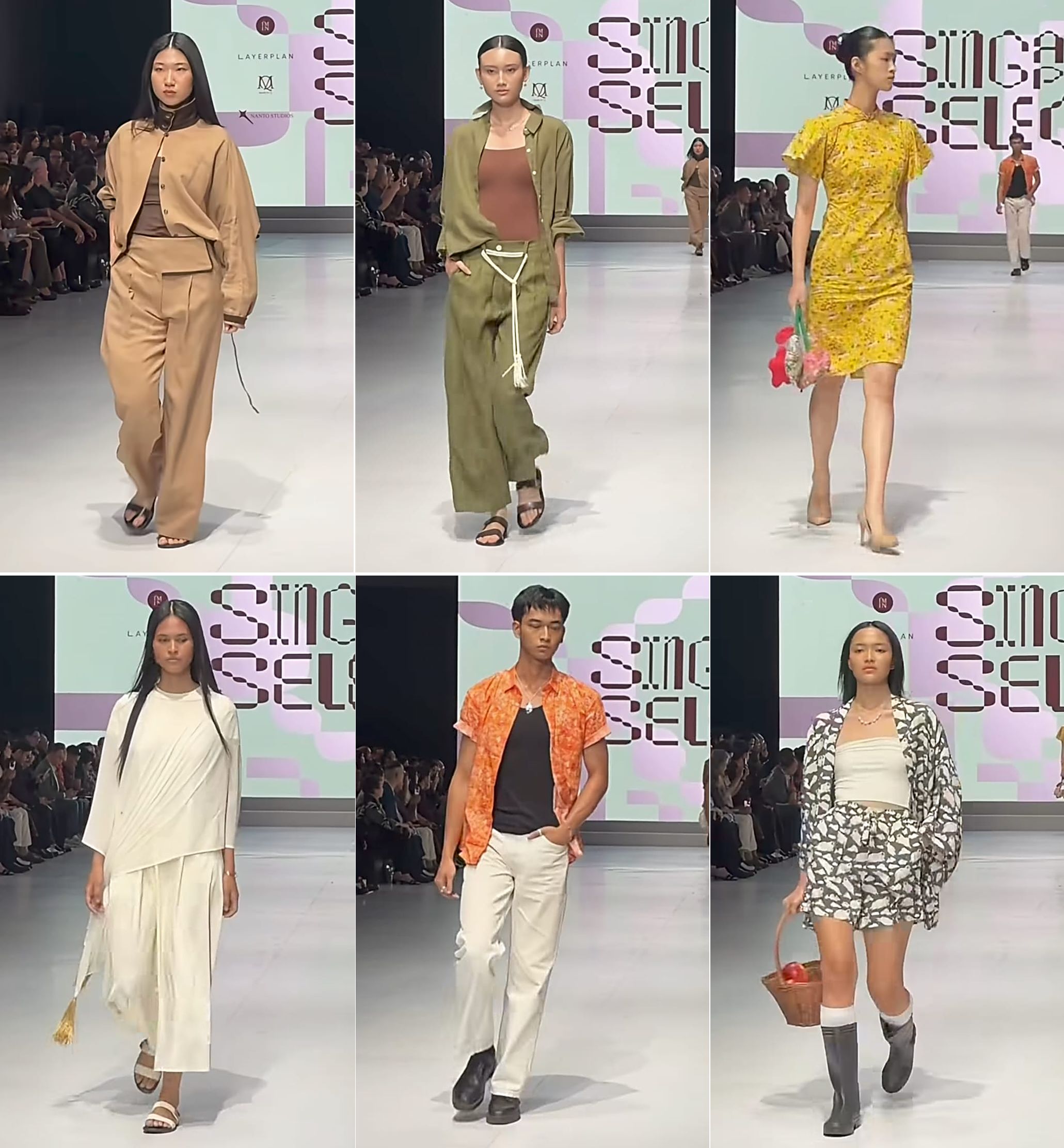
To be sure, having not attended JFW, we did not see the Singapore Selects presentation firsthand. But social media provided enough evidence: these were not clothes that even the Ang Mo Kio community club would build a runway for. The pieces do not appear to justify the rhetoric surrounding them. Our scepticism is not just about whether a dress is attractive. More glaring to us is the mismatch between the language of institutional promotion and the creative weight of the work being promoted. When it is announced that “Singapore fashion is entering a new chapter” and a “momentum” is discernible, we naturally expected to see a significant, if not generational, shift. Or, at least some sign that these brands have generated excitement, recognition, conversation, influence, cult followings, waiting lists, celebrity adoption, editorial attention, or identifiable aesthetic territory. Instead, we got what we got at JFW. The rhetoric sagged under its own weight. To be fair, fashion councils everywhere suffer from this tendency. There is a bureaucratic inability to simply say, “we hope to sell to the Indonesians”.
Borrowing the prestige of other fashion weeks is not new. We have done it in Bangkok (2012 comes to mind) and other cities. Singapore Selects is, therefore, not inventing a new model of propelling anything. So rather than announce Singaporean fashion matters on our own shores, we piggyback on Seoul Fashion Week, Jakarta Fashion Week, or any other event that already has traffic. Singapore gets to say our brands showed in Jakarta. But the Indonesian capital does not become more prestigious because Singapore brands appeared there. The deeper question is whether this actually builds a national fashion identity. If we look at this historically, we are not convinced it does. Singapore has been attempting various versions of this strategy for years: trade missions and designer showcases, and crucially now DORS and its “Cross-Border Exchange”, which allows not just those eight labels to show in Jakarta, but also Indonesian labels to be showcased at DORS. A fashion ecosystem becomes memorable when outsiders can describe it in a single sentence. Antwerp has the Antwerp Six (now an image for DSMG merchandise). What do we have? The Magnificent Seven? Who even remembers?

