Transboundary, they call it. The region’s annual haze has cleared passport control without a visa; a lovely vision of airy particulate matter, and the sky its private runway
Our engagement with TikTok feeds has shifted entirely from idle pastime to civil protection duty. Reels showing the air quality in Central Kalimantan and Southern Sumatra revealed their udara in a disturbing orange that Hermès might consider infringement of intellectual property. The locals, shocked by what they saw when front doors were opened, wondered aloud what heaven had done. It looked like a translucent veil of chiffon had been draped over their entire world, muting all the details and filtering everything into an eerie, glowing monochrome. While Kalimantan appeared as though it might have been swathed by Giambattista Valli clementine, on our shores, we saw mostly diaphanous Dior Grey. One sky, two different colours. Even the atmosphere is partial.
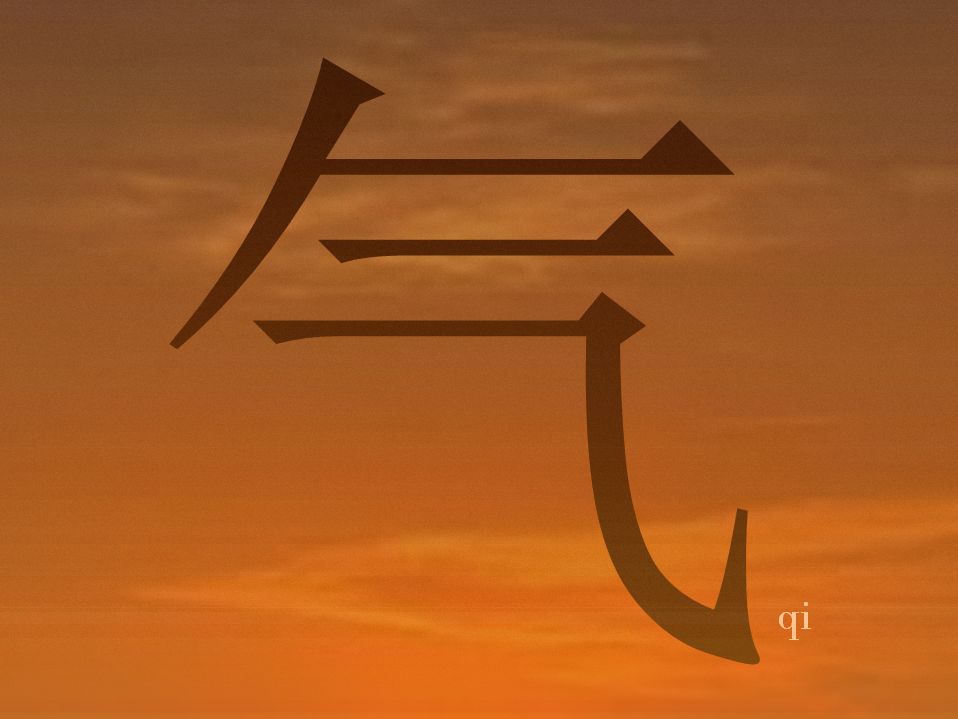
As these images flashed before us, we kept thinking of one Chinese phrase: 通天下, 一气耳 (tongtianxia yiqier). Literally, it means ‘for all things under heaven, there is but one breath’ (or, to the modern reader, air). Written by Zhuang Zhou (莊周), commonly known as Zhuangzi (莊子), an influential philosopher from the Warring States period, the phrase from his original Daoist (道家) text points to a rather fundamental metaphysical reality: Humanity loves a good boundary, but the globe operates on a single air supply. Everything is connected by the same fundamental 气 (qi)—you cannot break one piece of the sky without affecting the rest. Nature, regrettably for us, admits no internal partitions. But if we are to believe recent orations in Indonesia, the medium through which life breathes does perform compartmentalisation, no matter how tidy the corporate spreadsheets. And don’t forget who provides the oxygen.
Humanity loves a good boundary, but the globe operates on a single air supply
Delightfully, the president of Indonesia revealed during a recent cabinet meeting in Jakarta: “for certain countries that enjoy insulting Indonesia, we will eventually expose their companies.” Presumably, nothing cleans up toxic air quite like a well-timed list of corporate receipts. And it’s truly impressive when empirical reality is rebranded as bad manners. Or, when pointing out the visible, choking clouds of atmospheric proof turns to hurt feelings. The threat is fascinating. Toxic haze is a physical phenomenon. “Insult” (or “hina”, the Indonesian word used, according to Kompas) is a political interpretation. One is measurable in AQI readings; the other, in bruised pride. Taken as a loose thread rather than a standalone outfit, it says something unsettling about how political systems respond to climate crises.
The exact nuance of Zhuangzi’s philosophical musing is debated with similar keenness as the current discourse on whether Pierpaolo Piccioli is right for Balenciaga, but the image is clear: distinctions that humans obsess over, state, tribe, status, reputation, are secondary to a deeper continuity. What makes the haze such a grimly literal illustration of this is that daily bodily misery now comes with hourly PSI readings. The haze belongs to an elegant world of 一气. A child in Pekanbaru, a retiree in Clementi, an office worker in Johor Bahru, and an orangutan in Kalimantan are all breathing from the same atmospheric reservoir. The smoke is a reminder that the air was never seamed according to passports. Air—and haze—do not recognise Indonesia, Singapore, or Malaysia. Nor are they conscious of national pride or hurt. To put it in a manner that the Zhuangzi reader may appreciate, 地有界, 气无限 (diyoujie qiwucian). Earth may have boundaries, qi does not. Foreign countries aren’t insulting Indonesia. The problem is, the smoke is ignoring them, and cloaking everybody.
Illustration: Just So

