Katie Zacharia’s White House tenure dissolved the moment she took the podium—and tried to defend years of calling herself a “lawyer”. Now, she is out
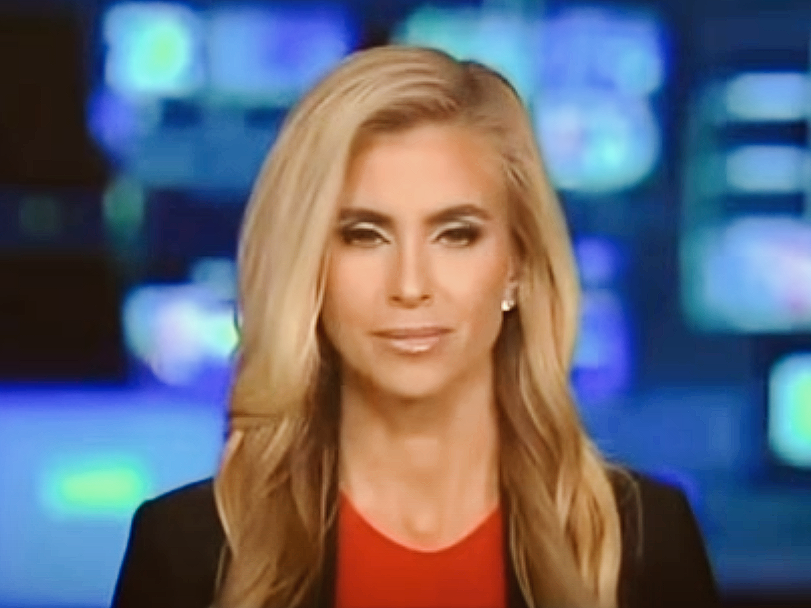
Katie Zacharia on Fox News. Screen shot: foxnews/YouTube
Things move very quickly in Washington, but this quickly? We woke up this morning to learn, not that haze season is over, nor that the war in Iran or Ukraine has ended, but that Katie Zacharia’s career as press secretary has been terminated, faster than she could even say ‘the Mooch’. It lasted a grand five days: less than half of Anthony Scaramucci’s infamous eleven as communications director in 2017. In Donald Trump’s White House, professional entries and exits take place equal velocity. The “revolving door” is the hallmark of his administration, not any big beautiful ballroom. It consistently achieves unprecedented political low points, powered by an unwavering commitment to sycophancy, camera readiness, and whatever delivers a temporary win before lunch.
On the South Lawn, Mr Trump told reporters: “I said to Katie just two minutes ago, I said, ‘Katie, you know, you don’t have to do this if you don’t want’… I said to her honestly, ‘If I were you, I’d reconsider… think about it. But I would reconsider.” That was magnanimous of him, but it does not require a law degree to know that “reconsider” pointed to the door. Ms Zacharia is not going to return to the president with “I’ve reconsidered and decided to stay.” Mr Trump did not offer her advice; he issued a directive. By then, the briefing room podium was already wiped clean of any trace of her DNA. It is unfortunate that the story has become so extraordinary because it repeatedly seemed to involve failures to recognise signals and distinctions that many people would regard as fairly obvious. You are either good at the job or you are not; you are either a licensed lawyer or you are not.
It is unfortunate that the the story has become so extraordinary because it repeatedly seemed to involve failures to recognise signals and distinctions that many people would regard as fairly obvious
The bar exam issue is one lamentable example. What we’re criticising, however, is not legal knowledge—to be sure, we are not lawyers here—but social and instructions literacy. After her debut, record-setting, and truncated press briefing on Tuesday, where she ended the session seemingly more eager to join the president on a flight to Alaska than to be in the press room, reporters (more than one was definitely heard) asked on the tarmac which state bar she had passed. Mr Trump himself turned to her and echoed the question: “Which state?” She could not ignore the president asking her. On-camera, she responded, “When I moved to China.” Later, she tried to clean it up by telling The New York Times that she had misheard the question over the roar of the helicopter, thinking they wanted to know where she was after law school. Mr Trump clearly asked “which state”, not which country. She might have missed the original question, but did she miss or misunderstood the president’s two-word follow-up? Perhaps, they don’t teach listening comprehension in school anymore?
To get ahead of reports that she failed the 2011 California bar exam, she spoke to Jack Posobiec on Real America’s Voice two days later, and sidestepped the indignity of an honest confession, opting instead to repackage the bar exam failure as a deliberate lifestyle choice. She explained that she took the exam while “distracted and overwhelmed” by her upcoming marriage and international move. And then asserting nonchalantly that her failure was “somewhat inconsequential because I knew I wouldn’t need the bar in China.” She argued she could still call herself a “lawyer” because she held a Juris Doctor (JD) degree. The final punch landed that night when she took the narrative to Sean Hannity’s prime-time show. Instead of finding a friendly audience, she faced a host who cornered her on her own semantics. She reasserted the “inconsequential” stance, but Mr Hannity pressed her on why she didn’t just tell the president she hadn’t passed, even dragging out 15 social media posts where she directly referred to herself as, or engaged with the title of, an “attorney”.
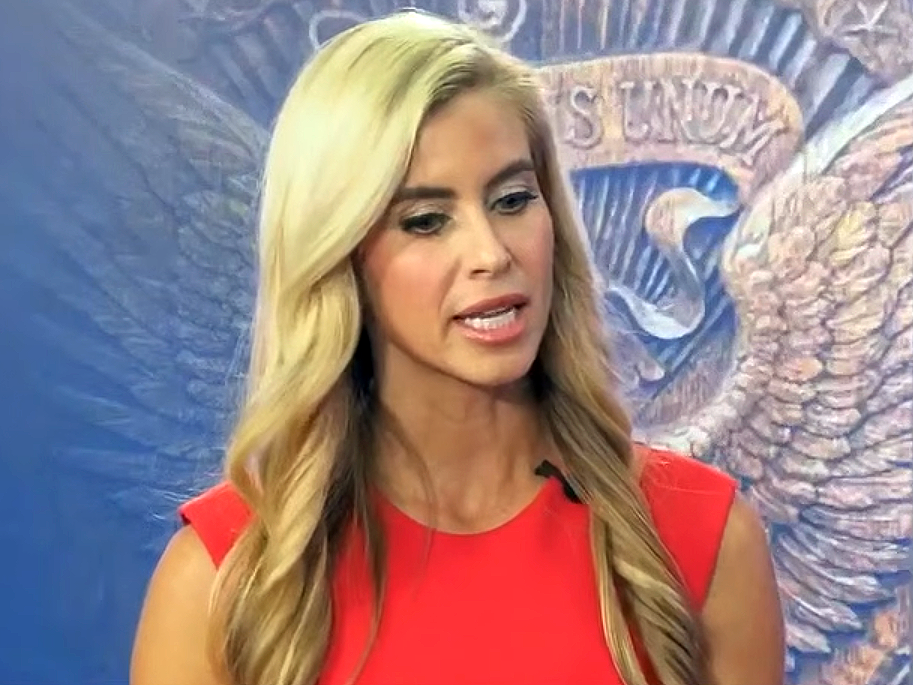
In the interview on Real America’s Voice. Screen shot: realamericasvoice/YouTube
The Trump administration loves to blame any negative reporting to a hostile press corps, routinely uses the “fake news” or “alternative facts” narrative to deflect from scandals. Ms Zacharia downfall, however, was entirely scripted by her. We are used to “the press distorted what was said” or “the press took comments out of context”, or “the press manufactured a controversy”. In contrast, the raw material pertaining to Ms Zacharia was self-generated. The key facts that fueled the story and accelerated her dismissal were her own words, heard in interviews and on video. No one in the administration leaked memos. There were no anonymous sources. The media did not have to construct a narrative—it emerged from a sequence of public responses. Those audio or video clips could be replayed. And you would still hear “inconsequential” loud and clear. Even the receptionist in any office, not law alone, knows that “inconsequential” is an unfortunate way to describe a professional licensing examination There is nothing “insane, hostile, left-wing media” about holding someone to their own words.
Katie Zacharia’s very brief White House career is not due to how journalists frame the story. She offered the public—not just in America, but across the world—statements that were plain weak, unconvincing, and just poorly reasoned. Her public explanations displayed the same weaknesses that might have contributed to failing the bar exam in the first place. The pattern that frustrated us watching her was not the original failure. It was a series of explanations that compounded the problem. It created an impression of weak judgment, poor calibration, and an inability to anticipate how an audience would receive an argument. Additionally, if “lawyer” and “attorney” or “analysis” and “advice” are just semantics to her, how was she going to deliver the policy information directly without distorting it through her own wonky lens? A press secretary is not primarily hired for subject-matter expertise. They’re hired for precision. The job is essentially the public transmission belt for government information, not a platform for personal damage control. In communications, there is an old reality: sometimes the press is the story. Mostly, the source is the headline.

