Luxury fashion’s executive turnover is no longer a seasonal carousel; it is a calculated corporate gamble. The industry has stopped inspecting the clothes, content instead to wager on which temporary occupant can extract maximum retail yield before the seat is pulled away, again
Shortly after we ran the story on the double end of the tenures of Veronica Leoni and Seán McGirr, an SOTD reader sent us a screen shot of a post, unaware it was created by AI. The headline is very arousing: “Boris Bidjan Saberi appointed Creative Director at Saint Laurent”. It is designed to look like a Kering social media post, but it is not. The snap shows a real photograph of German designer Boris Bidjan Saberi taking a bow during a past fashion show. This photo has been placed into a simulated layout designed to look like a press release from the official Kering website, which, as of now, has no similar headline. When we looked into it further, we discovered that the rumour-post was shared by the Instagram account @pairofkingspod, a New York-based independent menswear, fashion, and culture podcast hosted by Sol Thompson and Michael Smith. Last month, they announced that Mr Saberi “is the New Creative Director of Balenciaga”. It is the hantam-and-see-what-hits approach that social media loves. Even Boring Not Com isn’t so audacious.
The rumour is nearly believable because it has a certain logic. Last year, Boris Bidjan Saberi announced the closure of his eponymous label, which instantly creates a vacuum that fashion people are programmed to fill with succession fantasies. A designer becomes available and the industry’s collective brain immediately starts playing transfer-market bingo. Mr Thompson and Mr Smith tapped into that. What’s funny is that Mr Saberi is precisely the kind of designer who attracts these projections because he occupies the opposite end of the spectrum from the luxury conglomerate system. His work has always felt intensely personal, idiosyncratic, almost stubbornly resistant to the mechanisms of a major luxury house. Were he to join Saint Laurent, there would be things to see. Fashion loves a good succession story because it turns uncertainty into plot. No one bothers to process one departure before the speculation moves to the next appointment. The vacancy becomes more exciting than the designer’s actual body of work.
A designer becomes available and the industry’s collective brain immediately starts playing transfer-market bingo
It is one of the most important shifts in contemporary fashion, because it changes what fashion news is actually about. Fashion itself has become boring—pattern-room-floor dull. To be sure, fashion is not dead. There is no dearth of good designers. But the collections themselves have become less compelling than the institutional drama around them. If the clothes were truly electrifying, nobody would spend so much time discussing organisational charts. We are not pining for the past, but let’s think about earlier eras. People obsessed over John Galliano because of the Dior collections. They obsessed over Alexander McQueen because of the McQueen collections. They obsessed over Phoebe Philo because of the Céline collections. Sure, the appointments mattered, but only because they led to something tangible. Today, much of the discourse feels inverted: Who’s leaving, who’s joining? The clothes are mostly an afterthought. That’s partly because luxury fashion has become extremely risk-averse. Most major houses now operate within tightly managed parameters. A billion-dollar handbag business doesn’t necessarily want creative volatility. But it needs excitement and that has to come from somewhere.
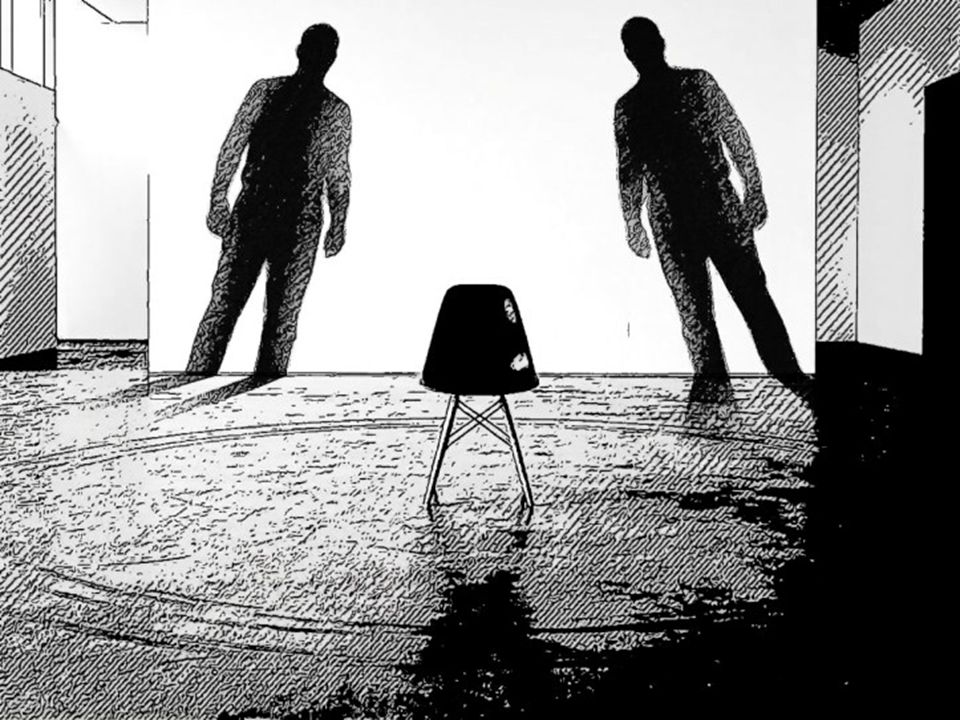
The comparison of creative director appointments to a game of “musical chairs” entered fashion commentary during the mid-to-late ’90s. The metaphor gained widespread currency around 1996–1997, sparked by a rapid sequence of high-profile appointments engineered by LVMH: Mr Galliano, first at Givenchy and then quickly at Dior, with Mr McQueen replacing the former at Givenchy. When Parisian fashion houses started swapping creative directors faster than outfit changes, fashion journalists dubbed it “designer musical chairs”. Today, it’s standard shorthand for luxury fashion’s endless cycle of rapid hiring, firing, and brand-hopping—where the music never really stops, but is never heard. We think the metaphor fails because it is inaccurate. We assume the game is worth watching because it is playful, exciting, and cyclical. Musical chairs implies there is another chair to be taken. Fashion’s reality is much darker. When one designer leaves the chair, entire creative structures are destabilised. Fashion CEOs leave and are replaced as frequently, but no one says what fun or who’s next. Yet, fashion journalism often adopts exactly that tone. Have we become addicted to suspense? A vacancy creates a story; it is easier content. A collection requires judgment. And judgment is really much harder.
Illustration: Just So

