Fashion’s double whammy: Seán McGirr is out from McQueen and Veronica Leoni is out from Calvin Klein. In quick succession
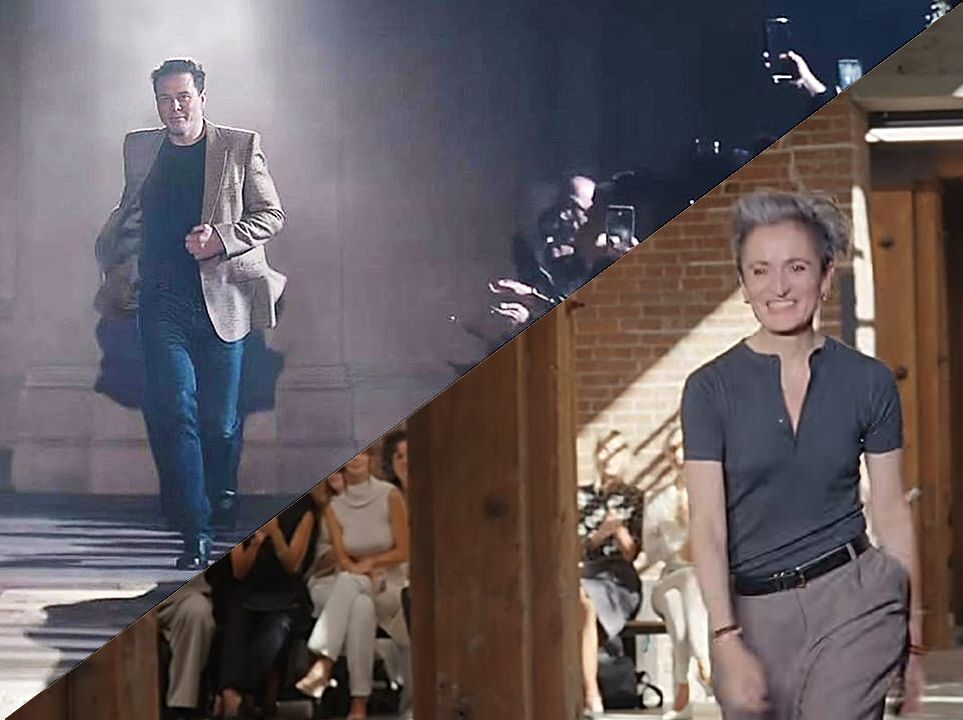
Left, Seán McGirr and right, Veronica Leoni, both at their respective spring/summer 2027 runway shows
The fatigue surrounding both tenures was palpable almost from the outset, so the first report by Fashionista that Veronica Leoni would be leaving Calvin Klein Collection and then Seán McGirr to depart McQueen, explicitly noting that it came “not even an hour after Calvin Klein confirmed Ms Leoni’s exit”, astonished few. Only the back-to-back nature of the announcement, which landed 39 minutes apart. From a news-cycle perspective, that is probably why they instantly fused into a single narrative. By lunchtime in New York, while we were in bed here, the industry had absorbed: Anthony Vaccarello out at Saint Laurent just a week ago, followed by Ms Leoni at Calvin Klein and Mr McGirr at McQueen. Were the latter two fired? The careful answer is: we don’t actually know in the explicit sense. PVH stated that the group and Ms Leoni would “part ways at the end of her current contract”. Kering’s announcement was that Mr McGirr would be “leaving his role as creative director”. We know fashion is almost allergic to using the word fired.
McGirr at McQueen always had a nice ring to it. The alliteration helped. The Irishness helped. The idea of a young designer inheriting a fiercely British house had a nice symmetry to it. The appointment read well and it made sense. But, the collections never quite generated the same inevitability. Mr McGirr was haunted by several ghosts, at least three: the ghost of Lee McQueen, the ghost of Sarah Burton, and, more eerily, the ghost of what commentators imagine McQueen to be. The house itself has a peculiar burden. At many brands, heritage is an asset. At McQueen, heritage became a haunting. Sarah Burton was definitely haunted, but she was not possessed; she failed to maintain the McQueen momentum. When we look back at Mr McGirr’s tenure now, we really don’t recall anything he did. We have vague visions of him trying to reprise some old McQueen, but that’s it: superficial archival pulls. McQueen’s legacy is so visually potent that any attempt to engage with it risks looking derivative. So you ended up with flashes that felt familiar. It just looking derivative, not even inspired by. At SOTD , we have never reviewed his collections.
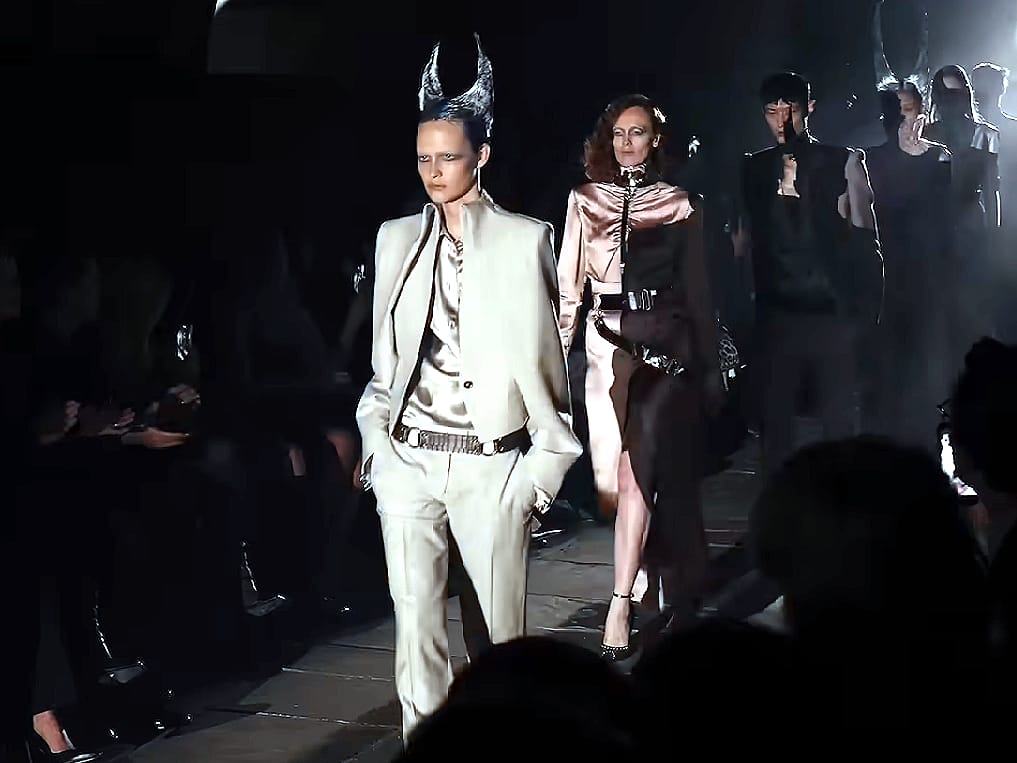
Seán McGirr’s final collection for McQueen—spring/summer 2027
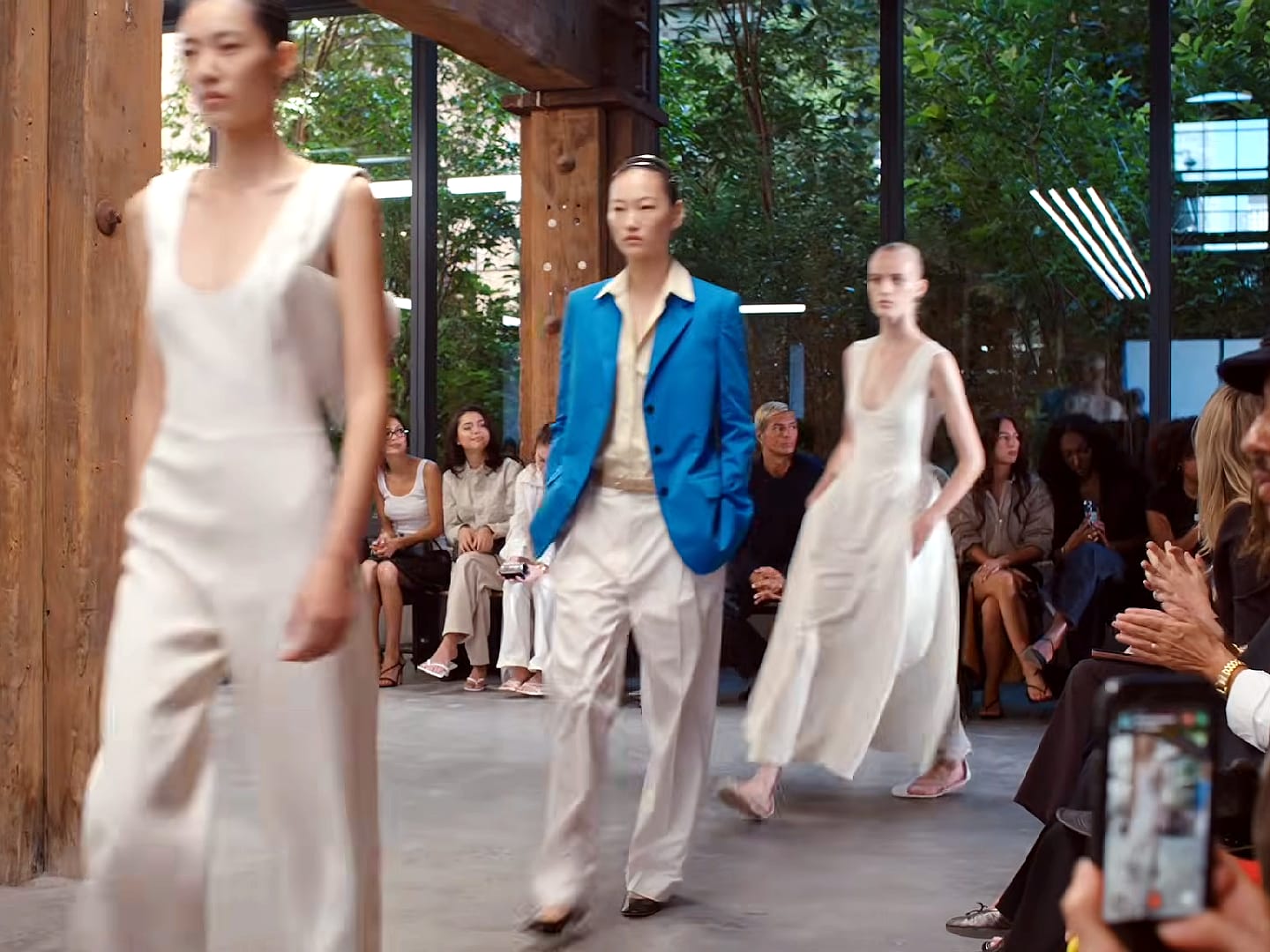
Swan song: Veronica Leoni’s spring/summer 2027 Calvin Klein collection
The decline of McQueen’s cultural relevance and commercial sharpness didn’t start with Seán McGirr—it was a long-simmering burn that began well into Sarah Burton’s tenure. Stepping into the creative directorship in 2010 amid tragic circumstances, her initial years—perhaps about five—were lauded across the industry, including Kate Middleton’s royal bridal gown that her sister-in-law Meghan Markle’s Clare Waight Keller-designed Givenchy dress utterly failed to rival. Over time, the brand’s creative trajectory began to plateau. The house’s craftsmanship remained impeccable, but the designs themselves sided with store buyers and abided by a carefully managed notion of feminine strength. Mr McGirr inherited what she left behind: an over-extended aesthetic plateau. McQueen’s dark romanticism and, more importantly, the visual contrasts—attraction and repulsion, historical and futuristic—that generated cognitive dissonance was watered down to polite wearables. Perhaps, more tragically, Mr McGirr was left with a house that was aesthetically exhausted while remaining commercially recognisable. He probably saw the problem, but could not solve it.
Veronica Leoni also had the same difficulty at Calvin Klein. She recognised it, over-corrected it, but in a totally different direction. With Raf Simons, Calvin Klein briefly had something that it had not possessed in decades: intellectual ambition. The collections were trying to answer a bigger question than “What should Americans wear next season?” Mr Simons was asking, “What does America mean?” The problem is, Calvin Klein is not Prada. Prada customers enjoy being challenged. Calvin Klein customers prefer to be fed the brutally legible. When Leoni came onboard, she seemed to prefer not to intellectualise. Strip away the conceptual layers and make the clothes accessible. To court Gwyneth Paltrow again? Calvin Klein’s historical strength wasn’t simplicity alone. It was charged with tension. They were the first to tell you to show the elasticated waistband of your underpants, suggestion that American normality concealed something more provocative underneath. When we look at her four-season output, we are still muddled. Is Calvin Klein a mass American lifestyle brand that occasionally does fashion? Or, is it a fashion house that happens to sell a lot of underwear. Raf Simons answered emphatically: fashion house. Veronica Leoni gave an answer that was decidedly not Simone Bellotti’s Jil Sander.

