An e-flyer that promised a “fashion and lifestyle exhibition”, but delivered a festive bazaar. How did a curated vision curdle into a pasar malam in a hotel function room? And do we really swallow it?
True to form, the notifications for things requiring an audience and attendance always roll in right at the moment you’ve successfully achieved peak avoidance. The algorithm just knows us probably better than we know us. So when one e-flyer appeared as a feed recommendation, our interest was ignited. The main image was a woman in an ungainly pose, wearing a black dress with wide wrist-length sleeves that sported serrated hems. But what caught our eye was the text at the top-left. It said that the recipient was “invited to experience our new drop Tokyo”. Under that short announcement split into four lines were three adjectives “Raw. Minimal. Bold”, all separated by the periods. The image did not communicate those three attributes, but we assumed somebody had chosen those stark buzzwords because they would help us understand what we were to see. We were thoroughly courted.
What really clinched it, though, was further south: “Fashion and Lifestyle Exhibition”. This really intrigued us. And there began the problem. We should have read it less literally than we did, but more skeptically than the organisers wanted us to. “Lifestyle” was a clear red flag. Not that the word lifestyle is inherently meaningless, but because it has become one of the most abused terms in marketing. These days, a flea market is a “vintage lifestyle exhibition”. Even so, our equanimity remained entirely undisturbed. All the more because on the top right, we also took in “a one-day exit for a bolder wardrobe”. Again, despite another red flag, the overuse of bold to include the comparative adjective, all within the same breadth. But now the unearthed escalation should sound flat and uninspired, yet we did not let it all sink in. There was another trap. The venue of the event was given—it took place in an Orchard Road hotel—but the exact location was not identified. And then we took the hotel escalator and were received by tables of South Asian traditional jewellery.
“Fashion and Lifestyle Exhibition”. This really intrigued us. And there began the problem.
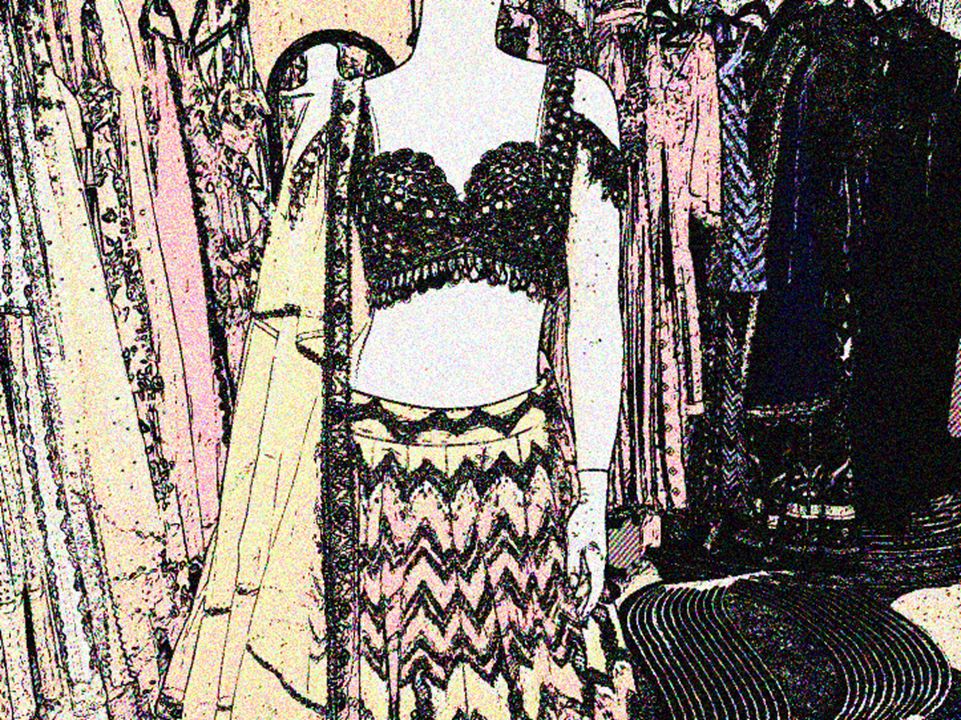
As the event identified a “brand” (that no one has heard of when we checked) and two organisers, we thought it would be properly set up, assuming that it would take place in the shopping arcade of the hotel, possibly in a vacant retail unit. There was no signage at the entrance or the lobby, or anywhere in the public areas that indicated where the “exhibition” was situated. We eventually checked the “Events of the Day” directory and found the show—identified by the organisers on the notice board—to be in a function room above the arcade. We rode the escalator back up and true enough the event was there, right in the breakout foyer, in full, glittery glory. But we were sure it was a clothing event rather than jewellery. So we walked past the bangles and such, and went straight into the function room. The reception already surprised us, but what we saw inside was a total shocker. There were racks after racks, packed with cholis, saris, lehengas, and ghagras. The “Tokyo drop” was raised nowhere. We remembered at that very moment of stupor, as we took in the glorious sea of fabrics, that Deepavali is near.
But we did not come for a Deepavali bazaar. To be sure, there is nothing wrong with ethnic festive fair when DORS themselves stage such convincing ones. Our feet sunk to the gaudy carpet as we re-checked the e-flyer to see if we missed any text, but the discrepancy between what appeared on our phone screen and what we were seeing in that hotel function room was impossible to ignore. We did not think that reading the marketing material so literally was such a bad thing. These days, people can attach “fashion” to almost anything, including—or especially—algorithmic marketing. It reduces design nomenclature to a catch-all term for whatever happens to be passing through a commercial pipeline. Marketing people often defend themselves by saying it’s “aspirational”, “evocative”, and “a vibe”. But as consumers, we do not encounter marketing as poetry. We approach it as information. When we saw “Fashion and Lifestyle Exhibition”, we immediately asked ourselves: What will we see there? That is a perfectly reasonable question.

When we checked that e-flyer that last time in the hotel function room, we decided then that we did not read it hyper-literally. Rather, we inferred categories from the descriptions. When an event organiser put together an Art and Design Fair, and we arrive to find ten stalls selling phone cases with Mofusand cats on them, we would feel similarly misled even if art was present. Likewise “Fashion and Lifestyle Exhibition” created expectations of a variety of clothing, even if they were not going to be of Tokyo lineage. Finding an overwhelmingly ethnic-fashion-focus retail event is not a violation of the definition of fashion. It is an abuse of the word and anomalous to the expectation created by it. We treat words as carriers of information, not of atmosphere. The collision left us standing in that selling space, wondering where Tokyo went. And we have to admit that we took the promotional language seriously enough to test it against reality. The organiser probably did not think we would.
Increasingly, “lifestyle” no longer means a lifestyle category. The Boutiques Fair is a prime example. It is really the retail of miscellany. But when we left that hotel, the depressing part became truly palpable: that we needed to decode any commercial event at all. That was, unfortunately, the prerequisite for participation. A commercial flyer should be the simplest form of communication available to marketers, yet it is often not. It should demand less cognitive load than a passing glance. Its existence assumes that people have three to five seconds before deciding whether to be interested in what’s sold or not. The problem with that e-flyer we encountered was that it took advantage of a very real situation: On our island, we are starved of fashion-centric events. And the hunger breeds this kind of opportunistic, disguised staging. Which explains why the ostensible institutional theatre of this year’s debut Orchard Road Fashion Week in August wasn’t able to clearly state what it truly was. A flyer, whether in physical or digital form, isn’t a luxury campaign where ambiguity is part of the performance. The job is fundamentally utilitarian. It does not produce the result of one asking, WTF is this thing?
Illustrations: Just So

