The John Galliano x Zara venture is almost strictly an online affair. Don’t bother going to the Ion Orchard Zara flagship. No one is queuing anyway
Before the start of the work day, an SOTD reader texted us in desperation to say that he was unable to find the John Galliano for Zara collection, Re{form} (Vol. 1), on the Zara website. Ten minutes past 11am, a make-up artist told us that there was not a crowd at Zara Ion Orchard and that no one there knew anything about Re{form}. We checked the Zara SG market website and there was no mention of the collection at all. When we tried the search function, we came up nought. It does not respond to “Re{form}” or “John Galliano”. We even tried “frock coat” and they threw us a “relaxed fit wool blend frock coat” that looked more car than frock. Digital media started revealing the launch of Re{form} yesterday, but the details were skinny, other than that the collection will be available to buy on 1 October. Some reports state that Re{form} will be sold in “flagships in London and Madrid”. That was all. It has turned out to be a ghost hunt.
A short text message to a contact in London came back with a reveal: there is a Zara micro-site for the collection. Prices seemed accessible. A baby blue shirt with white collar was listed for £119 (or about S$202) and a lace cap for £79.99. The website does not say anything about international shipping, only delivery charges within the UK. Nor does Zara list all physical stockists worldwide. Social media also coughed up an address: 70, Rue des Archives in the heart of the Marais district, Paris. It is apparently a pop-up store, but will open by appointment only. Online chatter suggests that the Paris venue seems to have been conceived less as a store and more as a Galliano installation. It is seemingly not a global rollout in the sense that we are familiar with. This is rather rare for Zara. Historically, their high-profile designer collaborations, such as those with Studio Nicholson or Stefano Pilati, are treated as massive global events rolled out to hundreds of flagship stores worldwide. But this time, elusive is the word.
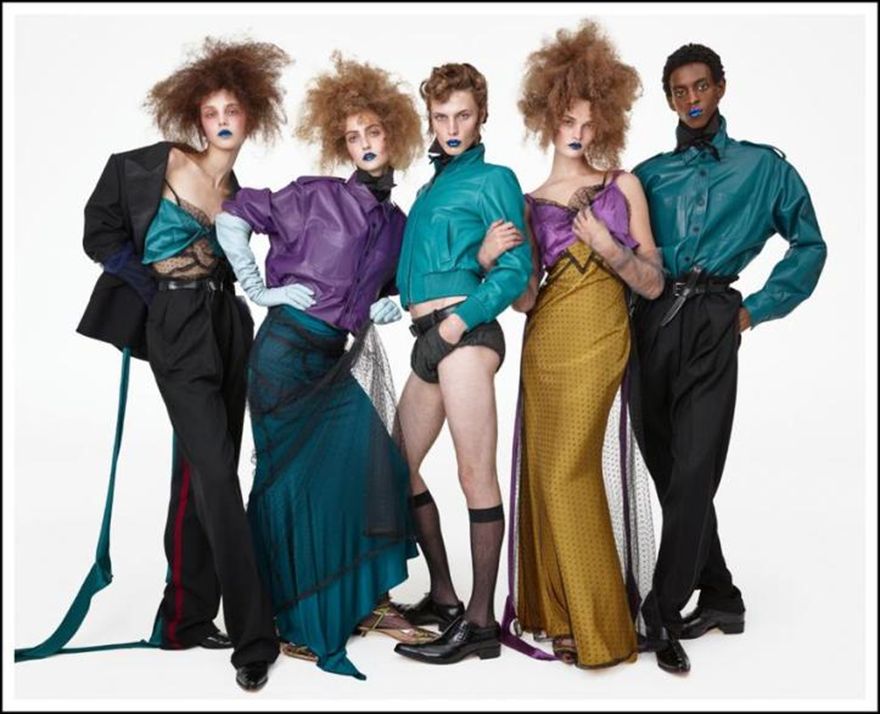
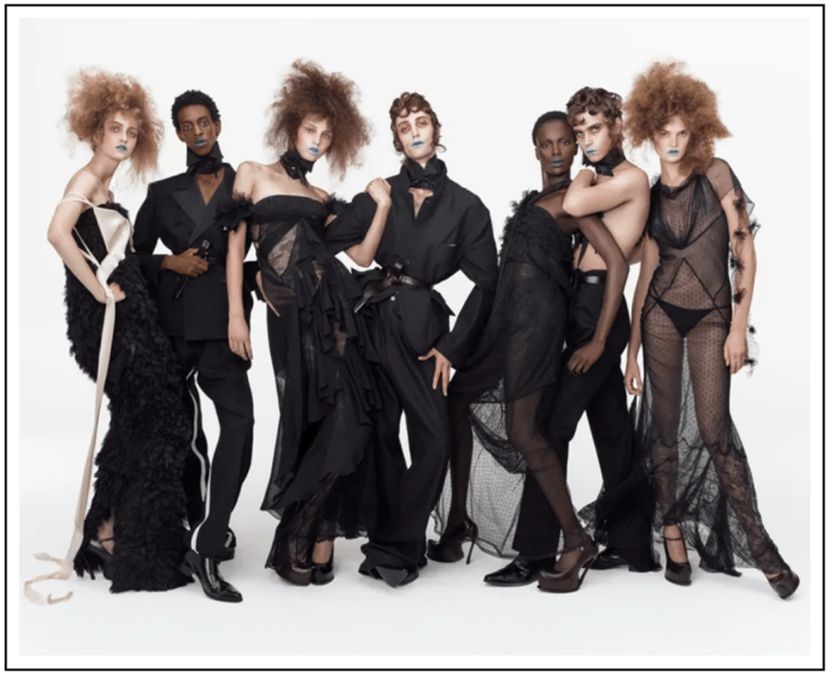
The reaction to the collection has been massively positive. But from the images we have seen, Re{form} is John Galliano doing John Galliano. Not exactly a surprise. This was him bringing his dead eponymous label back to life without having to use the moniker, still owned by LVMH. But the clever part about this reincarnation is that the project is paid by Zara. What strikes us is that almost none of the praise is saying “Look at what Galliano is doing to Zara”. Instead, it is marvelling: “Look at Galliano”. These are very different compliments. From the images Zara released on that micro-site, the Galliano signatures are unmistakably of revolutionary-era zeal: the layering and mismatched historical references, distorted proportions, bias cuts, characters rather than ‘looks‘, a fascination with transforming one garment into another, and, yes, those frock coats. That’s not Zara learning to speak Galliano. That’s Galliano speaking Galliano fluently after decades of refinement. We can’t quite make it out. Is the media’s and industry’s reaction actually enthusiasm for Re{form}, or is it excitement that John Galliano, stripped of his retrospective at The Met, is visibly creating in his own voice again?
Talking about images, we noticed that Vogue gets to publish a set, which means they have early access. Even the New York Times had to use Zara-issued photos. As far as we could tell, there is actually two parallel image systems operating around Re{form}: the Vogue editorial share with their international editions that is shot by Rafael Pavarotti and styled by Olivier Rizzo and the official Zara campaign lensed by Steven Meisel. And both sets of photographs show exactly the sort of things one associates with the Galliano mythology. What is curious to us is why spend Meisel-level image capital on things that are so hard to tracked down and just as hard to buy? Normally, Zara images serve distribution. You see the product, you like it, you want it, you take the train to the nearest mall and buy it. But with Re{form}, the ratio appears inverted. Scores of people have seen the imagery. Many are lusting for the pieces, but few will ever touch the garments. This sounds suspiciously close to how couture functions. Re{form} is not a Zara collection. It’s actually the old Vogue Italia couture editorials where the photography themselves became cultural objects. For Zara, the clothes existed partly to generate the image. The images then generated prestige. The campaign and editorials are the real venue. The stores are the afterthought.
Photos: Zara

