The inaugural Orchard Road Fashion Week has successfully confirmed what we already suspect: subjecting this island to yet another exercise in fashion tragedy is a form of collective punishment no equatorial climate can excuse
Fashion weeks across the world are generally named after cities—the top four certainly are. There was, briefly, an anomaly in New York between 1993 and 2001, when their national showcase was named the oddly numerical 7th on Sixth (referring to the old garment district on the high-end shopping belt). First organised by the Council of Fashion Designers of America (CFDA), the event was eventually acquired by the sports and entertainment giant IMG and rebranded to accommodate marquee corporate sponsors, such as Mercedes-Benz. As far as we can determine, fashion weeks named after a single thoroughfare remain an exceptionally rare breed. New York provided the precedent; Singapore accounts for the rest—first with the short-lived Orchard Fashion Runway (which ran as part of the precinct marketing Fashion Steps Out @ Orchard from 2014 to 2016), and now with the newly minted Orchard Road Fashion Week (ORFW). To truly lean into this hyper-localism, perhaps the next iteration could simply be Ang Mo Kio Fashion Week?
Calling an event by the name of a street rebrands nothing; it just recycles an old marketing tag. Even ORBA (Orchard Road Business Association), who dubbed the thoroughfare “The Great Street”, has never possessed the unbridled delusion required to actually organise The Great Street Fashion Week. ORFW is christened after the Instagram page Orchard Road Fashion (a street-style blog), allowing the gutsy organizers to achieve a rare feat of literal accuracy: a “week” for the fashions seen on Orchard Road that would be worthy of their IG grid. So starved are we for a legitimate fashion week that the mere assembly of local street chaos is being lauded as high culture—the sartorial equivalent of tossing rojak in a bowl and waiting for a Michelin star. The last of a semblance of fashion week on our island was the Singapore Fashion Week (SGFW) in 2017, after a three-year appearance. Reincarnated from Audi Fashion Festival (AFF) that ended its short 6-year span in 2014, SGFW was privately organised by Mercury Marketing and Communications, but even its founder, the mighty Tjin Lee, could not keep its gruelling economy afloat.
King Amir Studio
Fashion weeks in Singapore has been an intermittent affair since the ’80s. While our northern neighbour’s Kuala Lumpur Fashion Week (KLFW) goes from strength to strength, spectacle to spectacle, year after year, Singapore’s fashion event landscape has continually pivoted to survive. Or now, as a radically reworked playbook. Where Mercury sought international trade alignment and corporate underwriting, ORFW operates on the mechanics of a pay-to-play consumer entertainment, with some corporate support. To fill twenty-five tight time slots across five days at *SCAPE, the organisers assembled a chaotic roster of forty-two brands—a scattershot mix of direct-to-consumer Instagram/TikTok labels, novelty accessory lines, and a single Finnish print house, Marimekko, enlisted to provide a veneer of commercial legitimacy. In a feature in The Straits Times, ORFW was compared to the globe’s big four and was described as “a ground-up, local answer to the blockbuster fashion weeks held biannually in the world’s fashion capitals”—a view that suffers from a remarkable shortage of institutional experience.
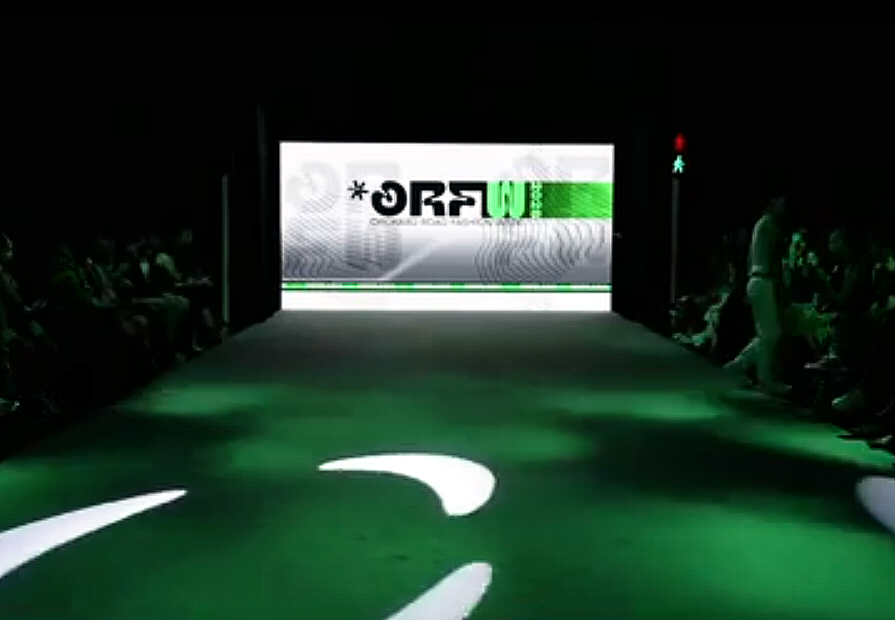
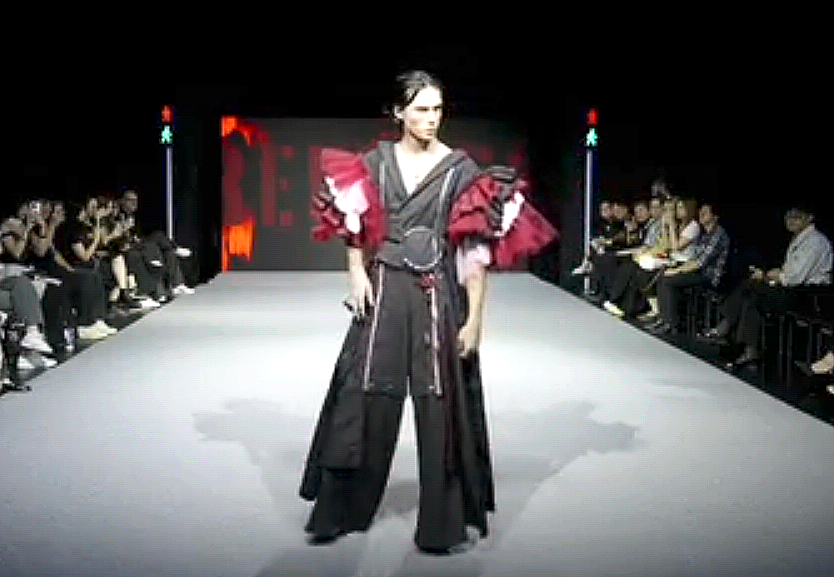
In Paris and Milan (two cities mentioned in the ST story) and other cities, fashion weeks are embedded in centuries of couture infrastructure, technical mastery, editorial authority, and buyer networks. ORFW was a five‑day influencer festival staged in a youth theatre, even when, as ST helpfully pointed out, “each brand will work with a full set of models, who will walk one by one before walking together at the end as the designer takes a bow.” A crucial detail, lest attendees confuse the shows with a fire drill. Sure, the brands were not restricted to a mere fraction of a cast, but the one-by-one walk and the bow (which is slowly becoming unimportant) mimics the form of fashion week without the function—no buyers, no critics, no commerce. Even more curious was calling it a “ground up” affair. ORFW was born from a viral Instagram page, not from industry development. It inherited all the vanity of a social media algorithm, without any of the structural rigour required to build a runway, which, alarmingly, was an unraised floor with a low back-wall for a backdrop, flanked by Pelican crossing lights. You can’t get more pedestrian than that. Guests had the very real-time option to obey the green man and walk out.

Thingamajigs
To excuse this lack of curatorial flair and a compelling reason to stage the shows, ORFW’s executive and creative director Sky Alfonso offered a curious rationale, telling ST: “You’ll notice that each show features a diverse mix of styles because we didn’t want to follow the traditional seasonal fashion week format.” Hard to say if he was taking a stand or just running out of room to squirm. “Diverse mix of styles” is not a structural innovation; it’s just a grab‑bag. And, to our misfortune, Singapore’s sourcing schedule is essentially non-existent—no wholesale cycle, no buyer calendar, no real rhythm. So unsurprisingly, they took the absence of discernible structure and marketed it as curated freedom. Mr Alfonso added: “Singapore is multicultural and doesn’t experience four distinct seasons, so we wanted the collections to reflect that diversity.” This is a clever reframing of the absence of seasonal structure as multicultural virtue. In reality, it’s just a patchwork of shows amid the rhythm of Orchard Road. Spectacle can truly pose as philosophy. Paris and Milan are also multicultural in their own ways; what matters is industry scaffolding, not diversity rhetoric.
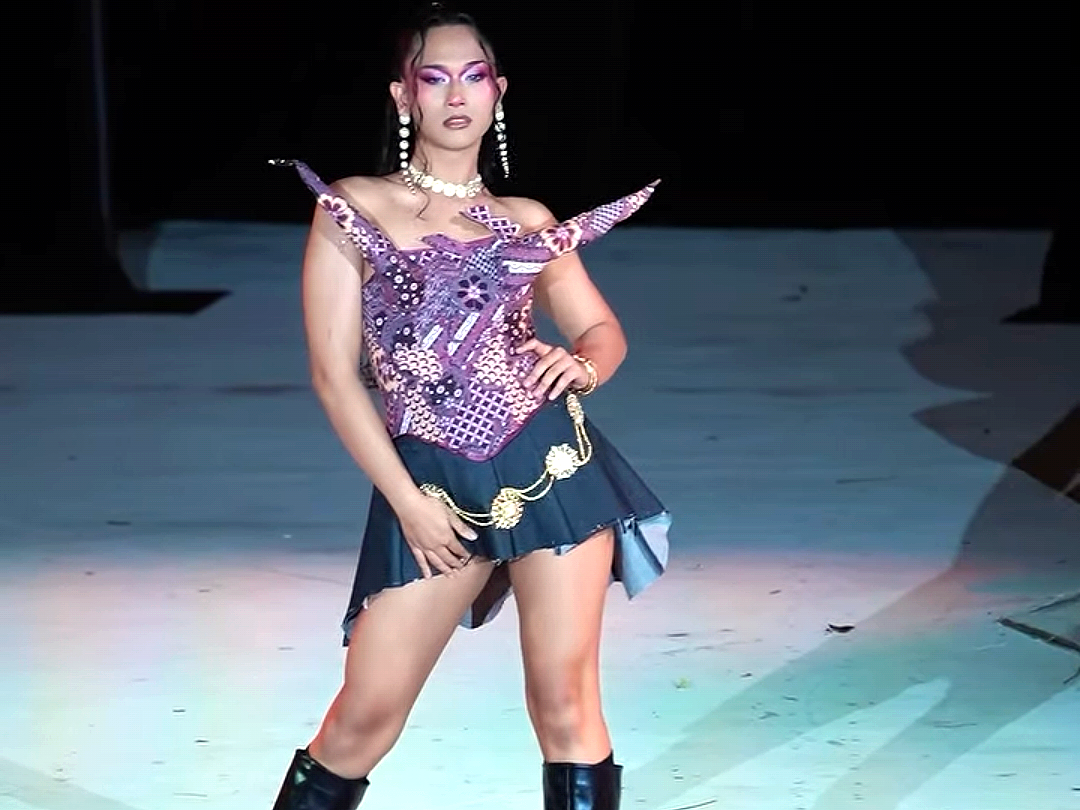
But, perhaps, diversity is crucial—even when Mr Alfonso conflated equatorial humidity with cultural diversity—because the “co-chair” is the drag act, Opera Tang. She built Instagram presence on a solid foundation of handmade costumes, home-sew level of tailoring assistance from her actual grandmother, and a knack for making Singaporean motifs and traditional Chinese opera look suspiciously credible in 15-second vertical videos. When you bring a content creator and a drag artist together, you get spectacle rather than dressmaking. ORFW appeared to borrow the glamour of queer performance culture to mask its lack of fashion legitimacy. The main character driving its publicity materials was a drag performer too. Nothing, it seemed, said “give me your engagement” quite like outsourcing your marketing to someone who actually knows how to strut in a costume. And the event has been enthusiastically supported by the drag community, such as the HouseofHauteMess. Diversity here is not about broadening the designer base or buyer networks. Rather, it’s about staging a visible symbol that can be photographed, hashtagged, and circulated. Content mattered more than commerce.
Solyu
Neither Sky Alfonso nor Opera Tang comes from traditional, institutional fashion backgrounds. Opera Tang has his family member make his costumes. Sometimes he sews his own. But these outputs do not amount to commercial dressmaking. He has never produced a collection in his entire life, yet suddenly he was co-chairing a fashion week. Opera Tang’s backstory—learning to sew at home alongside her nonagenarian grandmother (a former tailor to ministers and their wives)—is a heart-warming narrative for a human-interest profile. Or a TED talk. But sentimental craft is not technical rigour. Mr Alfonso, as a photographer and content creator, is, like Opera Tang, is outside fashion’s institutional ecosystem. What he has put together is not innovation; it’s improvisation. We are not talking about Nick Knight here or his influential digital platform and media project SHOWstudio. ORFW did reveal how Singapore’s fashion week has become a festival of optics, run by content creators and performers rather than industry figures. The clothes are optional, but the follower count is mandatory.
We have been politely badgered for days about whether SOTD intended to review the shows of ORFW. But a review implies the presence of something to evaluate. Why voluntarily pay (it was a ticketed event) to have our intelligence condescended to by amateurs? They’ve posted quite enough online to save us the trouble of confirming what we already, regretfully, suspected. In the end, Orchard Road Fashion Week offered neither definition nor design. It provided a five-day community stage where social media metrics attempted to pass off as fashion intellect, and where unvetted DIY costuming was sold to paying spectators as the future of local and regional fashion. Singapore can and should have a legitimate fashion platform—one built on technical expertise, textile research, commercial viability, and rigorous curation. If this regrettable spectacle at *SCAPE is truly the best our island can summon for “defining the now, designing the next”—as an ORFW tagline proudly touted—then perhaps the most stylish thing we could do was to wish it good luck. Until we stop confusing an influencer’s monetised side project for a national milestone, our fashion ecosystem, however small, will remain exactly like those blink-simultaneously pedestrian lights at The Ground Theatre of *SCAPE: if you don’t know when to stop or go, the rest of the world walks way ahead of you.
Screen shots: orchardroadfashionweek/Instagram

