Sabato de Sarno, whose career was frozen after his disastrous tenure with Gucci, has joined the hot Chinese fashion label named after hanging, tapered ice
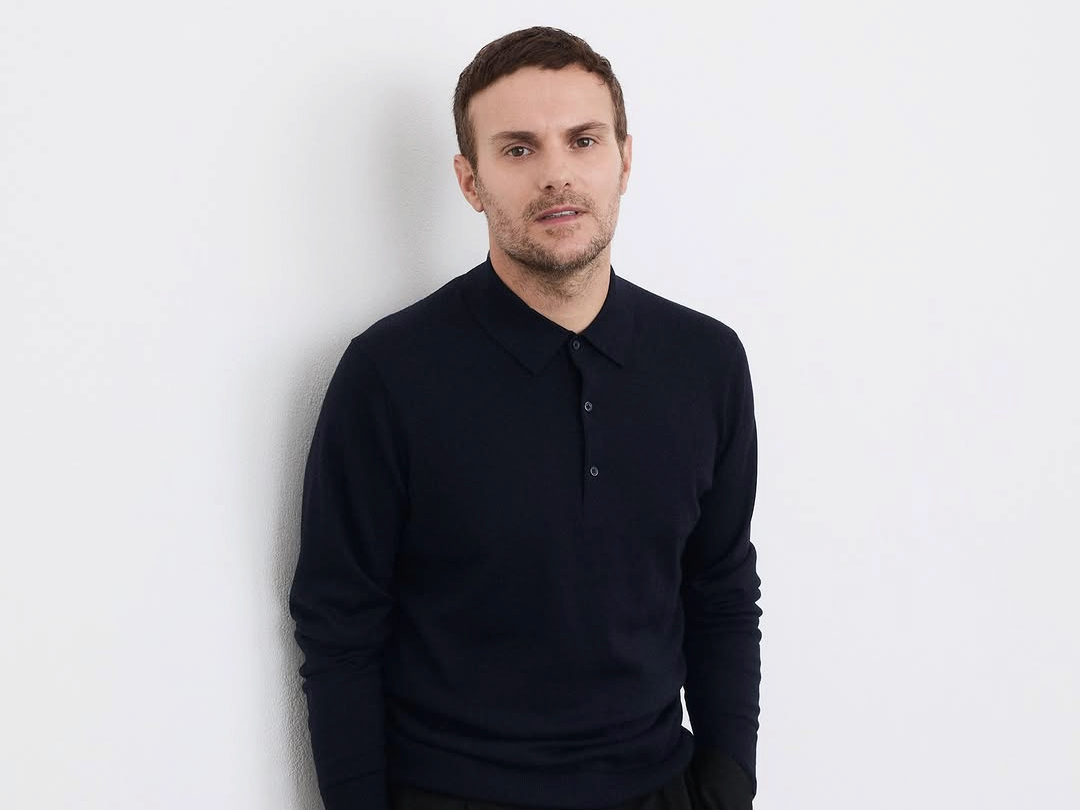
Sabato de Sarno. Photo: sabatodesarno/Instagram
By now, the secret is out, even the Eiffel is talking. The Chinese brand Icicle has appointed Sabato de Sarno as the brand’s creative director. In a statement shared online, the company said that Mr Sarno “will oversee the creative direction of Icicle across women’s and men’s ready-to-wear, accessories and eyewear”. His collection will debut during the autumn/winter 2027 season early next year. A designer who was not good enough for Gucci is now heading a bona fide mainland eco-conscious darling. Mr Sarno exited Gucci last year after a short and divisive tenure, The irony is sharp. Gucci demanded spectacle and cultural dominance; Icicle thrives on restraint, material purity, and eco‑ethics. De Sarno’s product‑driven clarity, derided at Gucci, may be precisely what Icicle needs to scale globally without needing a DNA transplant. We saw what happened to Gucci when it suffered the same genomic meltdown.
What indeed is Icicle’s DNA? A closely guarded secret shared exclusively between Shanghai headquarters and nobody else? Available mainly in China, where they now have over 200 stores. Birthed in the city of The Bund in 1997 by the husband-and-wife duo Ye Shouzeng (叶寿增) and Shawna Tao Xiaoma (陶晓马). Both graduates of Donghua University’s esteemed College of Fashion and Design (formerly China Textile University) in Shanghai, they wanted to cater to China’s rapidly growing, urban middle class. Chinese consumers value Icicle’s quality, driven by complete production control through the factories owned by the founders and their sensitivity towards natural fabrics. The brand was built from the yarn up. South China Morning Post described Icicle as a “sustainable luxury women’s wear label” (in the mid-2000s, menswear was introduced). A closer examination of the brand’s polished lookbook of the last seasons revealed a nimble blend of Max Mara and Gerard Darel, with a touch of Cos thrown in for good measure. It is a formula that works, but could do with a dapple of surprise.
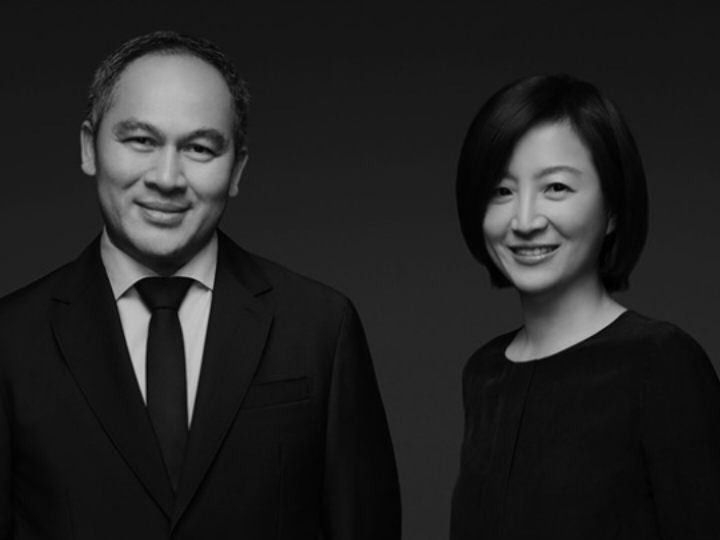
Icicle founders, Ye Shouzeng and Shawna Tao Xiaoma. Photo: ICCF
Long before Mr Sarno came into the pristine picture of Icicle, the brand was already dabbling in a French romance, though it was still navigating the conjugations. In 2013, Icicle established a creative centre in Paris with a studio described by insiders as “couture-level”. It was here that the menswear was developed to align with European minimalist aesthetics. Six years later, Icicle opened its first flagship store in the French capital, establishing that its quiet dalliance with Parisian elegance was more than just a passing phase. But far more aggressive moves laid ahead. In 2019, Icicle acquire Carven (a year earlier, the brand was nearly bankrupt), and began operating as a group: ICCF, a neat abbreviation for Icicle, Carven, China, France, cementing their Sino‑French positioning. For over two decades, Icicle grew as an independent eco‑lux house, building factories, retail networks, and its Paris design hub. ICCF had the foresight to hire Louis Trotter, who decamped for Bottega Veneta barely two years later, and Carven’s revival is essentially the French ballast to Icicle’s eco‑minimalist modernity—the heritage anchor that legitimises Icicle’s Paris ambitions under the bicultural corporate structure.
The fondant on the cashmere is that in April this year, Kering acquired a minority stake in ICCF through their new House of Wonders initiative, which selectively supports emerging luxury houses with strong cultural resonance. It is hard to ignore the possibility that Sabato de Sarno’s hire is the result of investor influence. But the appointment of Mr de Sarno at Icicle does echo the Fast Retailing playbook. Uniqlo was one of the earliest Asian brands to align with the European creative directors even when they always had totally capable designers on home soil. Perhaps locally-sourced did not quite strike a resonant ring. One of the most successful was with a maison-less Jill Sander and their most impactful, Christophe Lemaire, who recently announced that he is stepping down after ten years overseeing Uniqlo U, also at a Paris creative centre. Mr De Sarno’s appointment could be a ride on a wave of nostalgia for Continental sensibility that can be easily sold back to the Europeans. His pared‑back aesthetic, derided at Gucci, aligns with Icicle’s eco‑minimalist philosophy. As we know, quiet luxury works best when the noise is finally turned off.

