Prince Harry and Meghan Markle have barely unpacked their moving boxes in the UK before resuming their tireless pursuit of crisis
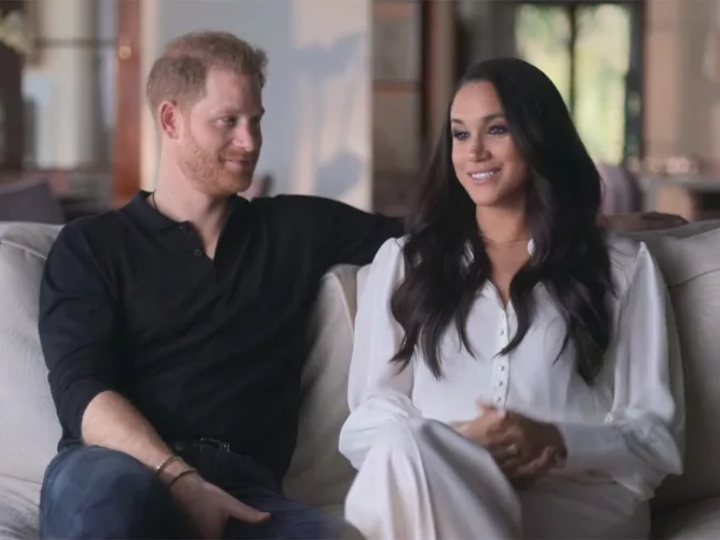
The Sussexes on the the Netflix series, Harry and Meghan. Photo: Netflix
Just thirteen days, but truly, an eternity of silent suffering for people who treat emotional endurance like an extreme sport. One has to admire the discipline it takes to wait nearly two whole weeks before remembering that everyone in the UK owes them an “advanced” notice for what is universally known. According to BBC reporting two hours ago, “Harry and Meghan [were] ‘surprised’ by King’s letter making clear they remain non-working royals.” It also stated that a spokesperson claimed the couple “were a little surprised not to have been told about this in advance”. If it was that scant, it requires no stating. We were taken aback too. They stepped back in January 2020, formalised the exit in February 2021, and have totally lived outside the royal apparatus for over six years. And now they are surprised? It is admirable how their unwavering commitment to being professional victims of a firm they fled over half a decade ago proves once again that you can take the royals out of the institution, but you can never take the institution out of an extended, profitable grievance tour.
We know, of course, that this has nothing to do with anything other than optics. The Sussexes have consistently tried to keep the royal door ajar—not, mind you, for duties, but for symbolic association. They retain titles, have used royal branding in subtle ways, and occasionally invoke their status when it suits their fly-by-night projects. A letter from the King to government departments, military brass, and Lord Lieutenants is not about reminding them of facts; it’s about re‑asserting boundaries at a moment when the Sussexes’ UK return clearly risks blurring lines. The King’s move is a formal restatement, ensuring those who shall interface with the Sussexes see no ambiguity. The absurdity of the surprise is not in the substance (they already know they’re not working royals), but about the protocol of notification. If they simply said, “Yes, we know we’re non‑working royals,” the story dies. By saying, “We weren’t told,” they manufacture a fresh angle of indignation. The Sussexes’ displeasure just sells.
A letter from the King to government departments, military brass, and Lord Lieutenants is not about reminding them of facts; it’s about re‑asserting boundaries at a moment when the Sussexes’ UK return clearly risks blurring lines
In all likelihood, they took exclusion as discourtesy. By saying they weren’t told, they imply the palace acted rudely, not just firmly. And not as a family too, especially when Ms Markle is desperate for her children to meet their monarch-grandfather. The King’s action is, therefore, seen as cold and procedural rather than warm and familial. It is equally plausible that the manoeuvre was designed to drag the spotlight back where they prefer it: squarely on themselves. Today was Prince George’s first day in secondary school at Eton College. Royal spectacle is a zero‑sum game: only one storyline can dominate the tabloids at a time. Prince George’s first day at Eton is a carefully choreographed rite of passage, meant to project continuity and stability—his father Prince William went to Eton too. While the heir’s son is stepping into tradition, the spare’s family is being excluded. The Sussexes needed a counter‑narrative. The King’s letter was sent out just in time. You can’t help but admire Prince Harry and Meghan Markle for who they are: truly champions of the quiet life.
Some media commentators called the letter “heavy-handed”. That might have been a polite way of saying it was written with a sledgehammer. To be sure, the letter itself was not a policy innovation; it simply reiterated what has been true since 2020: working royals the Sussexes are not. To describe that as “heavy‑handed” is really to dramatise a restatement of fact as a wilful act of aggression. The palace seeks to remove ambiguity, but the move is seen as punitive—suggesting the monarchy is exerting power unnecessarily. The King-as-father asserts boundaries, but they are reframed as blows. A reminder of status is plainly not a crackdown. If the Sussexes could be trusted not to blur the line between private ventures and royal identity, the letter would be unnecessary. But the palace understands all too well that if left unaddressed, the errant duo will happily squat in the profitable purgatory between royal mystique and tacky celebrity hustle, monetising a crown they abandoned while demanding the deference they renounced. One thing the Sussexes have consistently lacked—discipline, and it keeps the palace drawing the line in permanent ink.

