In Milan, one museum has the cheek to show in an upcoming exhibition the works of flawed human beings, including Dali and Chanel. How marvelous
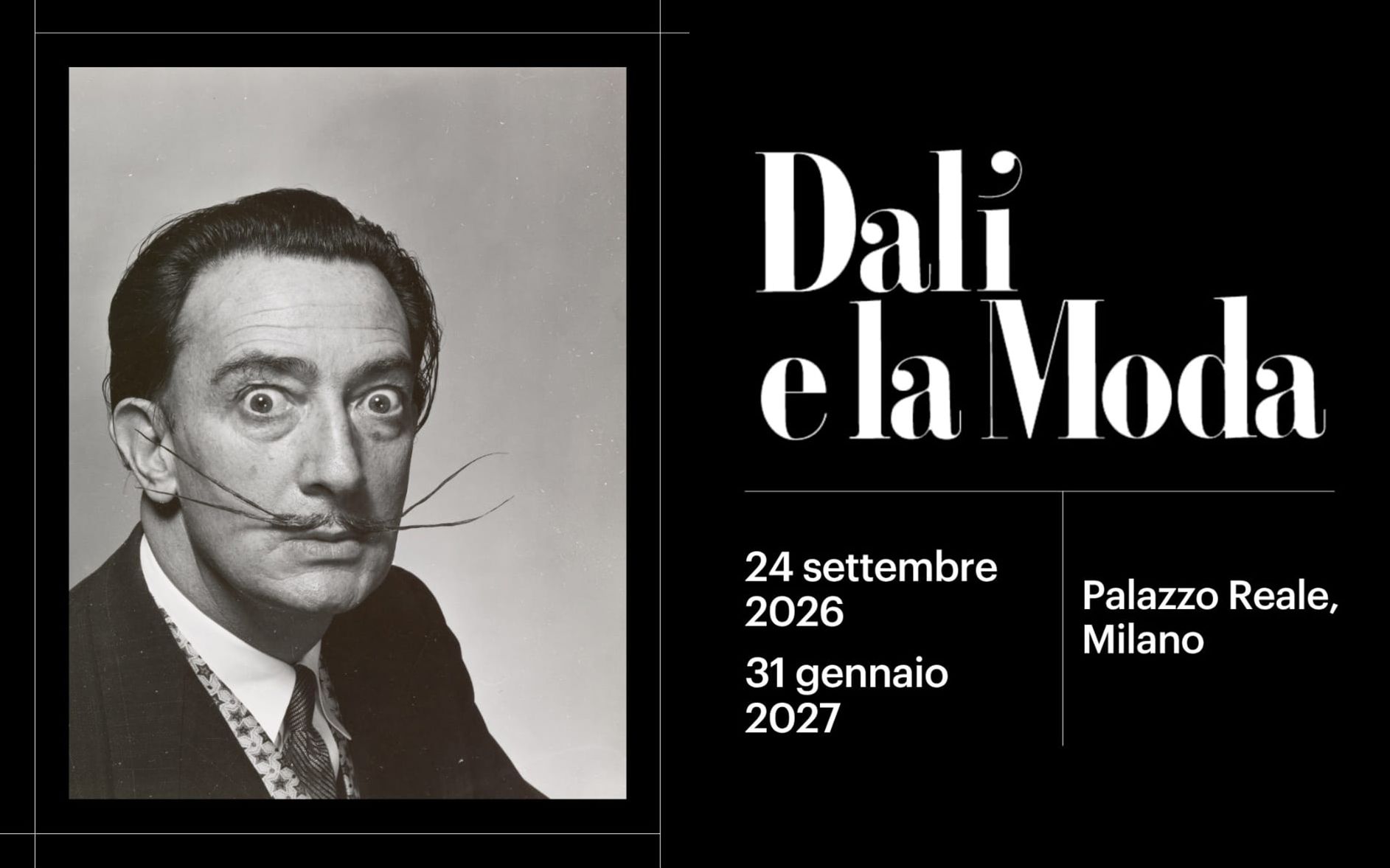
Upcoming Dali and Fashion in Milan. Photos: palazzorealemilano/InstagramUrope and
Europe and America may be separated by an ocean, but they’re both united in the art of being deeply divided from themselves. Where America’s self-appointed moral arbiters treat institutional demolition as a spectator sport, Europe prefers a more traditional approach: letting institutions keep talking, no matter how dissonant the chorus of opposition. While New York folded at the mere whisper of moral panic and scrapped its exhibition John Galliano: Horizons, Milan simply hands a controversial maestro the spotlight—and somehow survives the ordeal without virulent public hysteria. In two weeks, Milan’s Palazzo Reale will open Dalí a la Mode (Dalí and Fashion), seemingly unfazed by a moral ledger that features a bizarre public declaration of affection for Adolf Hitler—the very dictator Mr Galliano once famously claimed to “love”. But then, European instructions tend to prefer their historical baggage unfiltered, leaving the Americans to hyperventilate over past sins while clutching their monogrammed handbags—oh, ‘purses’.
When you are safely dead, you get “the first major international exhibition devoted to the relationship between Dalí and fashion”, as Palazzo Reale describes it. But when you are not dead enough, you are permanently excommunicated. Dalí e la Mode is, therefore, a delectable counterpoint, celebrating one of the most morally dubious surrealists of the modern era, and it will do so by foregrounding his collaborations with his pernicious partner Gala “at the heart of the exhibition”. And, of course, Coco Chanel—herself a “proven” antisemite and opportunist. A split-screen of handling culpable pasts. Mr Galliano gets the umpteenth round of being banished to eternal damnation. What floats the culture boat today can only sink the observer: who gets condemned, who gets canonised, and how institutions decide which sins can be aestheticised into history. While the museum gift shops stay open in the lobby.
What floats the culture boat today can only sink the observer: who gets condemned, who gets canonised, and how institutions decide which sins can be aestheticised into history
For fans of surrealism, Salvador Dalí’s creative output was nothing short of dazzling. In addition, much like Mr Galliano, he was well-loved by the fashion establishment. Mr Dalí was, however, only ever an occasional designer and costumer. His dabbling with fashion was episodic—notably his collaborations with Elsa Schiaparelli, theatrical costumes, jewellery design—rather than a sustained career in the industry. Although the Palazzo Reale placed fashion the central theme of the exhibition, Mr Dalí was really a visitor to fashion, just as he was to Coco Chanel’s social circle. His incursions into fashion were what most people would call spectacular today, but they didn’t shape the daily rhythm of couture the way Mr Galliano’s collections did. Yet many will resist that framing because Dalí’s collaborations—especially with Schiaparelli—were so visually iconic that they’ve been so mythologised in fashion history (the Schiaparelli lobster dress, for example) that they require their own pantheon.
The difference is stark: Mr Dalí did not make a scene out in the open. The scandals surrounding him were ideological and reputational. His fascist flirtations, his admiration for authoritarian figures such as Adolf Hitler (and Francisco Franco), his opportunism—these were letters, statements, affiliations, things that could be metabolized later into ambiguity. They weren’t a drunken tirade in a public space, captured and replayed endlessly. His fascination—sone say adoration—with Hitler was real, provocative, and deeply controversial—but it was more about surrealist obsession and shock than straightforward political endorsement. His ambiguous comments and artworks led to his expulsion from the Surrealist group in 1939, especially after the disturbing painting The Enigma of Hitler. The Surrealists, already uneasy with Dalí’s “Hitlerian fantasies,” saw this work as proof of his dangerous ambiguity. André Breton accused him of “glorifying fascism” and expelled him from the group later that year. But the expulsion did not deter him and he continued with more, including the deliberately obscene and shocking a self-gratifying Der Führer, Hitler Masturbating.
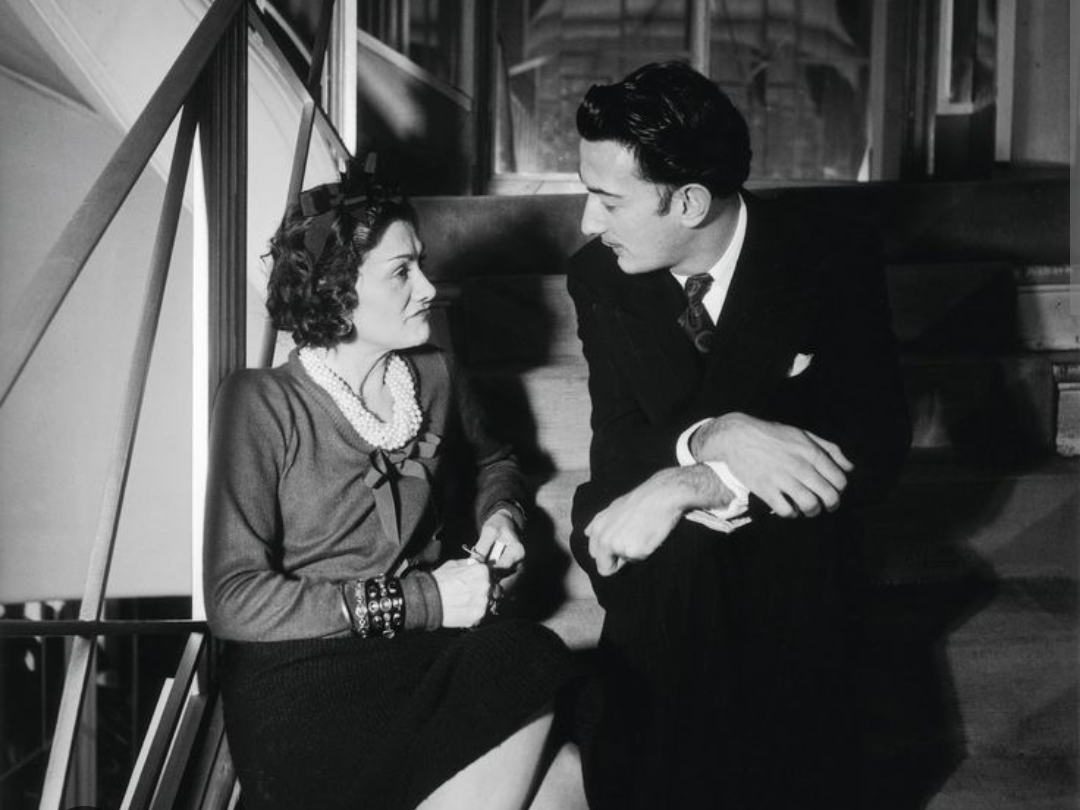
Coco Chanel and Salvador Dalí at La Pausa in 1938, photographed by Roger Schall. Photo: Pinterest
In a late-career pivot, Mr Dalí sought to eclipse his earlier Hitler fixation with the Aliyah series (1967–68). Commissioned by an American, the New York publisher Samuel Shore, and introduced with a letter by David Ben-Gurion, to mark Israel’s 20th anniversary, the portfolio took its title from the Hebrew word for ‘ascent’ or ‘going up’. The artist produced a set of 25 lithographs celebrating Jewish resilience, biblical imagery, and Zionist themes. These works were explicitly celebratory of Israel and Jewish identity. It’s hard to imagine a more pendulous swing: from Hitler as taboo obsession to Israel as redemptive subject. It was, characteristically, an American enterprise that helped effect the reputational switch. In a span of about thirty years, Mr Dalí could go from sketching his private dictator to obligingly stamping out commemorative gouaches for the Israeli state. He never resolved the moral vertigo; he simply monetised the whiplash, secure in the knowledge that art historians would eventually file his ideological tourism under the reassuring screen of “complex genius”. It’s not moral resolution; it’s spectacle management. And that’s fine.
That swing from Hitler obsession to Israeli homage is already dizzying, but factoring in his closeness to Coco Chanel, it becomes almost grotesque. The designer met the artist in the late 1920s, and their friendship culminated in 1938 when Chanel invited him to stay at her villa, La Pausa, on the French Riviera, where he worked for several months and even described himself as holding an “artistic presidency” there. This period coincided with the infamous Munich Crisis; Mr Dalí recalled listening to the radio with Ms Chanel during the tense negotiations as Hitler’s shadow lengthened across Europe. Behind her tweed suits, she was later revealed to be working with German intelligence during WWII, leveraging her connections for personal gain. Around the same time, Dalí was producing works like The Enigma of Hitler and Hitler Masturbating. The Surrealist movement, built on defying logic, had to ultimately draw the line somewhere: Salvador Dalí’s relentless commercialism and fascist posturing.
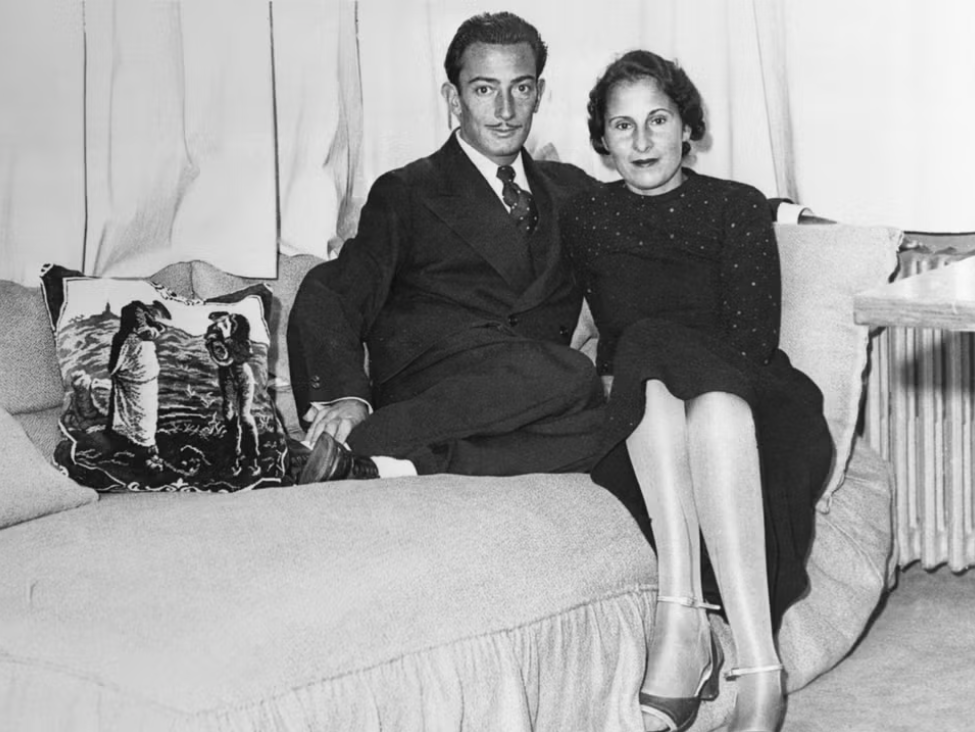
Salvador Dalí and his wife Gala in his Paris studio, photographed by André Caillet. Photo: Bettmann Archive
Coco Chanel did not invite just Salvador Dalí to La Pausa in 1938; she included Gala (born Elena Diakonova), the artist’s infamous wife. Many now say that her presence was integral—the socially-abhorred partner was the one who managed his relationships and, at La Pausa, ensured he capitalised on their host’s generosity, amid Nazi intelligence assets. People who spoke of Mrs Dalí referred to her as a “list of sins”. She operated as an intensely fierce, calculating force in the avant-garde art world, wielding absolute psychological and financial control over Mr Dalí. Beyond serving as his primary muse and model, and co-architect of his fame, she ruled their lives with a ruthless, sharp-tempered authority. She demanded total financial management, ruthlessly managed his career, and cut a formidable, unapologetic path through the surrealist circle that found her unlikeable. So horrible she was that her biography by Tim McGirk was titled Wicked Lady. Although, her husband was obsessed with her (even saying he’ll wait for her written invitations before visiting her at the villa her bought for her), she had numerous affairs with younger men, sometimes artists, whom she allegedly used for inspiration and then dumped. Years later, she required him to secure her formal written permission even to visit her at Púbol Castle that he bought for her.
The nature of Coco Chanel and Gala Dalí’s relationship is not quite clear. By most accounts, it was pragmatic, not affectionate; transactional, not intimate. They intersected through Salvador Dalí, and what bound them was mutual utility rather than sisterly closeness. Ms Chanel gained cultural cachet by hosting the couple—it was avant‑garde glamour at her villa. Mrs Dalí gained access to her famous host’s social circle, which she could greedily leverage for her husband’s career. It was not noted if she ever wore Chanel couture, but she was photographed in the Schiaparelli shoe-hat and lobster dresses. It would have been canvases to broadcast her spouse’s genius. Salvador Dalí’s flamboyance made him seem autonomous, but in reality, he was often curated by powerful women who saw him as useful—a spectacle to be deployed. It is a striking Dalí-esque irony: he cultivated the image of absolute eccentric freedom, but was, in fact, bound tightly by the manipulations of Gala and the patronage of Chanel. The declared focus of Dalí e la Moda is “Gala at the heart of the exhibition—muse, model and strategist of image-making”. Hopefully, with warts and all.
—too alive to be forgotten, too condemned to be rehabilitated.

