How elite patronage drew the line at The Met and dramatically cancelled John Galliano’s return
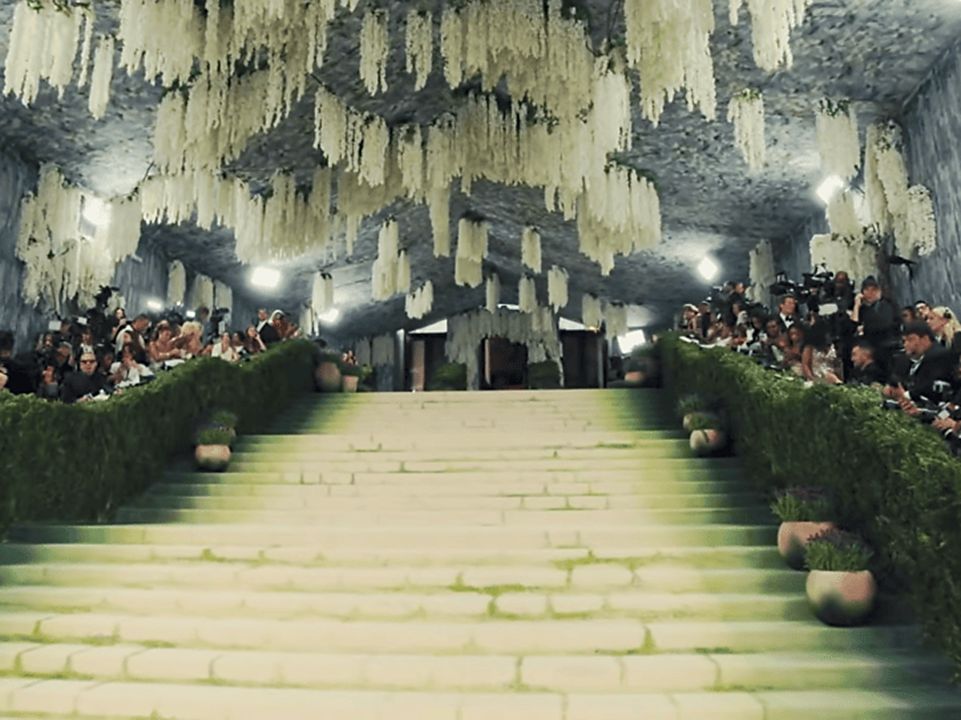
The famous ‘Met Steps’ of the museum that requires assistance for female guests wearing ungainly gowns
There is the typical believe that museums are cultural palaces that exists solely in the service of historical preservation and aesthetic wonder. The 156-year-old Metropolitan Museum of Art, just 30-odd years younger than Central Park in which it sits, is one. But, unlike the Louvre in Paris, The Met, as it is now mostly known, is not once a palace. It was purpose-built to house a museum. There is a comforting, almost pastoral calm to the galleries of The Met. The air is meticulously conditioned, the lighting is calibrated to flatter centuries of human endeavor, and the visitor is encouraged to believe that they are standing inside an uncorrupted temple of culture—a space where history is weighed solely on its artistic merits, far removed from the crude calculations of the marketplace. The institutional machinery croons along with such seamless, polished grace as Frank Sinatra that it is remarkably easy to forget who actually keeps the illumination flattering. For decades, this has been the grand pitch of the modern museum: an ivory tower funded by anonymous benevolence, dedicated entirely to the elevation of the public soul. Until now.
The statement issued by The Met two days ago reveal more than a mere cancellation of a fashion exhibition. On the surface, the museum’s annual “blockbuster” exhibition is the glamorous, high-camp (or nearly) Met Gala—a procession that, for anyone outside the U.S. who skips the actual scholarship inside, easily registers as a multi-million-dollar fashion circus. But this year’s cancellation of the slated John Galliano: Horizons showed more than the striking out of a red carpet farce. When the retrospective was announced a month ago, it was framed as one of those rare canonizing gestures—placing a living designer into the pantheon alongside Yves Saint Laurent and Rei Kawakubo. Its cancellation therefore isn’t just about losing a party; it’s about the museum’s authority faltering in its attempt to dictate cultural memory. In that press statement, seemingly hastily assembled, Max Hollein, director and CEO of The Met offered a strikingly terse note: “Following thoughtful discussions with John Galliano, we have together decided not to proceed with the exhibition”. This is remarkable for what it does not say. The sixteen words read less like a curatorial rationale than a damage‑control memo, sent via text message. It averts the language of cancellation, avoids naming the controversy, and dodges any acknowledgment of institutional failure. By framing the decision as mutual—“we have together decided”—the statement diffuses responsibility. It suggests Galliano withdrew, but also that The Met agreed, leaving accountability as a ghost story everyone whispers but nobody has seen..
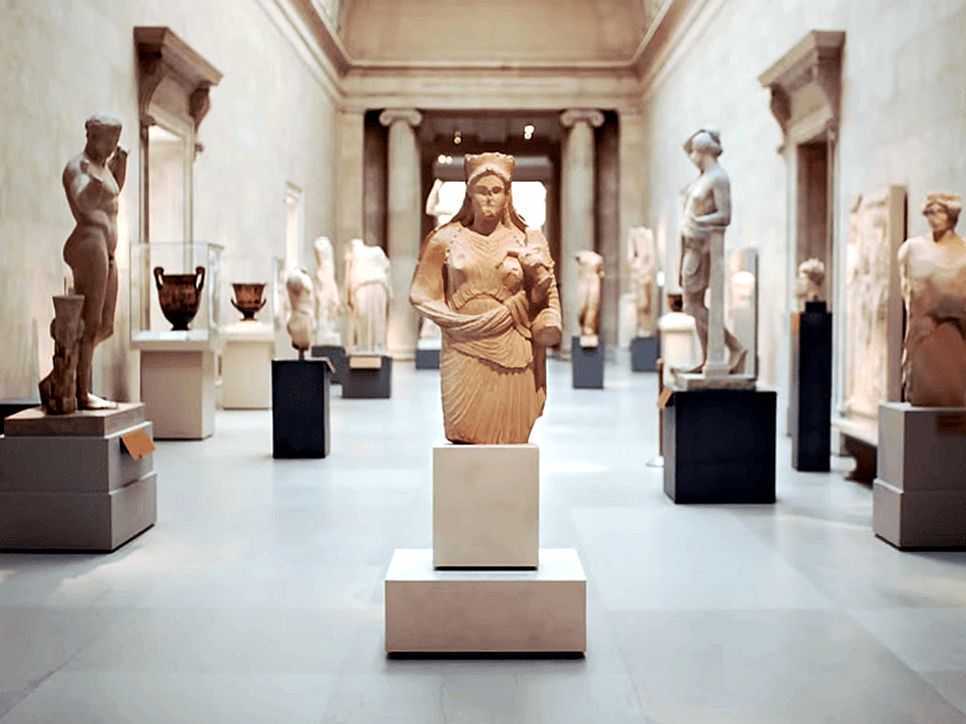
The Mary and Michael Jaharis Gallery for Greek art at The Met
In the normal course of high-fashion governance, scandals are treated much like minor structural repairs: given enough time, polite distance, and a well-curated retrospective, the cracks can always be plastered over. The luxury industry operates on a comforting belief in its own moral elasticity, assuming that aesthetic brilliance functions as a universal solvent. For years, the path toward rehabilitating a fallen designer has followed a predictable, placid arc of quiet rehabilitation, private dinners, and eventual institutional re-entry. But this time, that loophole has been formally closed by management. And we are, with crushing predictability, reminded that the Met Gala and the exhibition it fronts are paid for by corporate sponsorship, even if it pretends to be a pure act of art-historical preservation. Anna Wintour might orchestrate the most “amazing night”—as attendees inevitably say—of the New York fashion calendar, the event is really the choreography of capital. Mr Hollein’s statement is not the voice of a curator defending scholarship; it is the voice of an institution beholden to its funders. Donors decide.
The summer blockbuster exhibition at The Met serves a dual purpose: an ostentatious display of the Costume Institute’s holdings, and a rather necessary exercise in philanthropic solicitation. As a formal curatorial department of the museum, the Costume Institute is 67 years old. Despite its formidable global standing, the Institute is hardly sustained by the Met’s largesse. The latter provides neither general operating funds nor regular endowments to underwrite such mundane expenditures. While it is organisationally housed within the Met—meaning it pays no rent and shares administrative overhead, physical space, and institutional backing—financially, it operates as a separate entity expected to pay its own way, primarily through fundraising events and dedicated donations. This is precisely why the Met Gala exists: it was conceived as a high-profile annual benefit specifically to generate the operating budget needed to keep the Costume Institute on life support while the rest of the museum maintains a dignified silence regarding its upkeep.
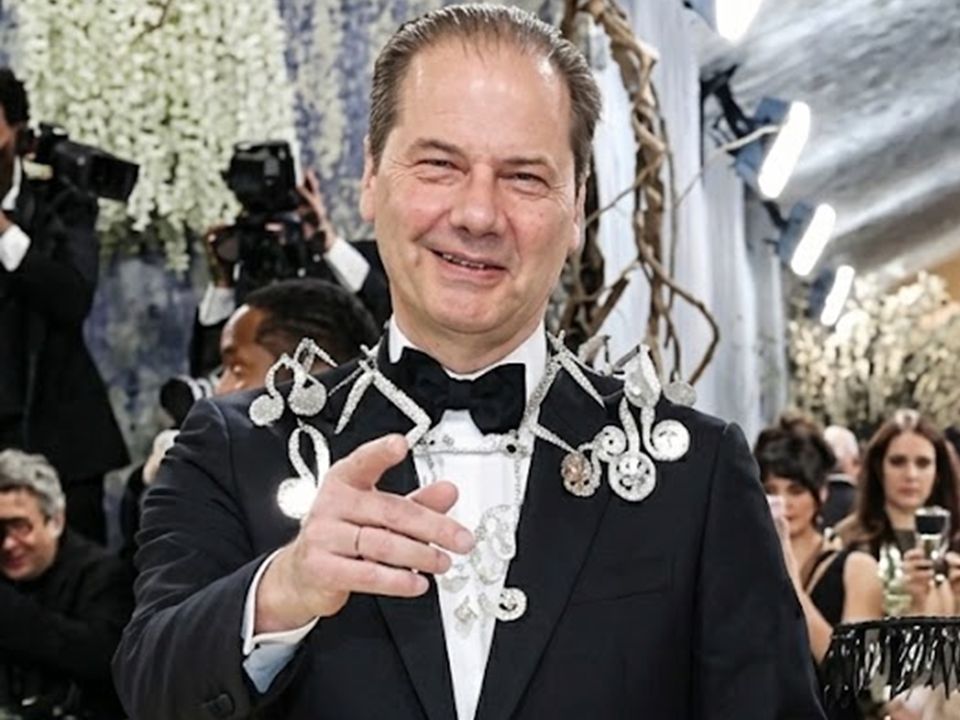
Max Hollein at the Met Gala in May this year. Photo: Getty Images
Three days ago, The New York Times published an article breaking down donor and community power, finally giving everyone the necessary bits to understand why the people writing the checks and those making the noise can command such absolute compliance. It gave voice to the opponents while muting the chorus of the supporters. Philanthropy, as we are increasingly seeing, is often a thinly veiled exercise in purchasing leverage. When money talks, you listen. And The Met acquiesced. According to NYT, a couple of letters closed the loop: one from prominent billionaire donor Alice Tisch, who wrote to Mr Hollein to condemn the show as a “whitewash” and a breakdown of governance, and another, New York City Council Speaker Julie Menin, who labelled the exhibition a “gut punch” to the community. If those letters were insufficient, art-world titan, Pace Gallery founder Arne Glimcher, warned Mr Hollein and the curator David Breslin: “I don’t think you have considered the cost of this action and its reverberations to come”, clearly stating that he and his wife might alter their plans to bequest works from their personal collection to the museum. These are not phantom threats.
The timeline leading up to the 31 August capitulation reveals the raw architecture of donor leverage—with one common thread emerging. The three mentioned in the NYT article are “prominent” Jewish voices: Ms Tisch is the co-chairman, Jewish Board of Family & Children’s services and Ms Menin is the first Jewish person to serve as Council Speaker. And Mr Glimcher is not just a gallerist, but a high-profile Jewish “cultural figure”. It is hardly a sociological accident that the most effective resistance coalesced around those from the city’s prominent Jewish philanthropic networks. This is a structural reality of how the city’s elite institutions were built and how they are sustained. When The Met backed down, it was a concession to a highly coordinated counter-elite—a dense, interconnected network where cultural prestige, immense wealth, intergenerational memory, and political leverage overlap seamlessly. What makes the John Galliano exhibition unique in the Met’s modern timeline isn’t that a show faced friction, but the speed and finality of the cancellation. Usually, The Met handles controversy by delaying a show, restructuring the curatorial layout, or quietly swapping the theme a year in advance (which they actually did when they quietly replaced Galliano’s rumored 2024 slot with Sleeping Beauties). This time, there was no quiet pivot; they simply folded. For the victors, forgiveness was never intended.
Screen shots: Vogue/YouTube

