In a smart rebuke to the new “Asian Pop” category, BTS won’t be submitting music to the 2027 Grammys. Good
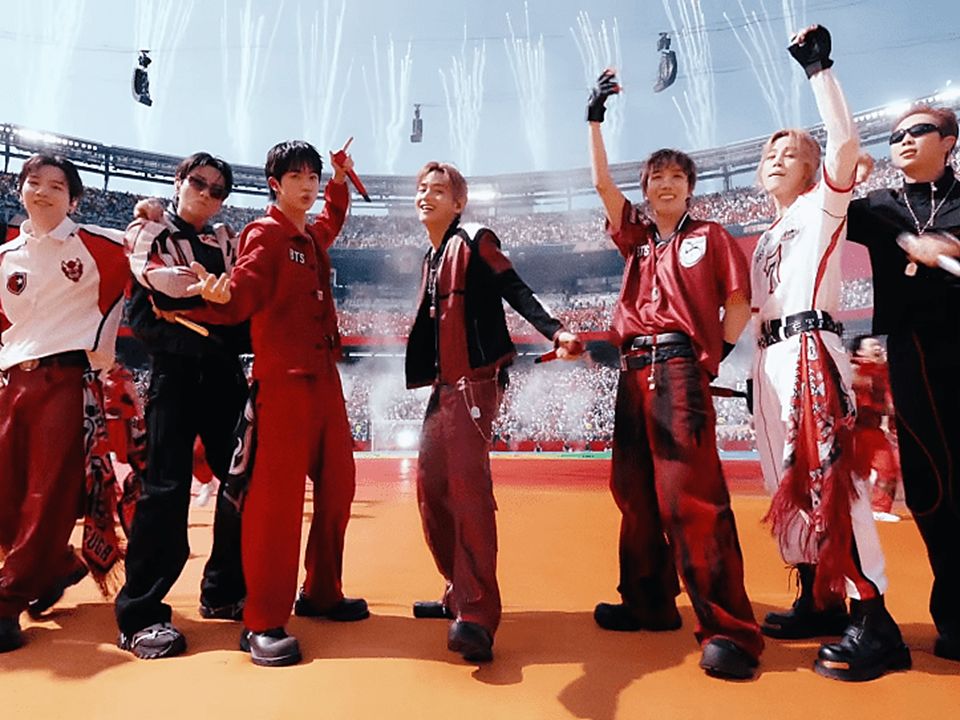
BTS performing during the World Cup halftime show. Screen shots: fifa/YouTube
It is even clearer now why they are the world’s greatest pop group. BTS has officially pulled a classic power move, delivering an exquisitely articulated “thanks, but no thanks” to the Recording Academy by opting out of the 2027 Grammy submissions. On 16 June, the Recording Academy formally introduced five new categories—including Best Asian Pop Music Performance—for the 2027 Grammy Awards. Yesterday, all seven members of BTS posted identical statements on their socials opting out of the 2027 Grammys. It seems the global icons have decided that they no longer need a golden gramophone to validate the seismic impact they’ve already made on the industry. According to Complex, the new category’s eligibility requirements stipulate that “the work must originate from or be widely recognised within Asian markets, and it must feature meaningful use of one or more Asian languages.” It is hard to know if the Grammys is curating songwriting or filing ICE-endorsed immigration paperwork.
BTS’s response was beautifully blunt and unified. All seven members posted the same statement on Instagram: “We hope music can be heard and loved for what it is, rather than being divided by region or language.” Although we prefer our pop culture without the acronym, we find ourselves applauding the handsome negation of the Recording Academy’s wonky assertion. The CEO of the Academy, Harvey Mason Jr., quickly issued a statement to the media: “I am saddened to hear that BTS has chosen not to participate in the Grammy Awards process this year, but as a music creator, I understand and respect their decision.” He added, “The Asian Pop category was created to celebrate the depth, diversity and extraordinary growth of pop artistry coming out of Asia. The spirit of this new category is to shine a dedicated spotlight on these important artists.”
BTS’s response was beautifully blunt and unified. All seven members posted the same statement on Instagram
But “spirit”—Mr Mason Jr. is woefully unaware—is not a monolith, especially when speaking of Asia. If his intent is on showcasing the artists, do at least try to ensure that they aren’t only in the spotlight, but also in the main light. His bottled spirit of Asia is really just shrink‑wrapping a continent for the inclusive Grammys gift shop. Our region’s pop cultures thrive precisely because they resist being boxed into a single essence. They are not a static exhibit for the Western gaze; they are a budae-jjigae (army stew)—a chaotic, simmering mess where every ingredient fights for dominance, and you never quite know what’s going to bite back. BTS’s counter‑argument is not about definitions, but a demonstration—through artistry, solidarity, or sheer cultural force—that the work transcends categories altogether. It’s laudable because it doesn’t stoop to the same bureaucratic logic; it asserts that lived experience, creativity, and cultural truth outweigh institutional gatekeeping. The most triumphant statement BTS can make is simply choosing not to play the American game, at all.
Mr Mason Jr.’s rhetoric lands at a moment when America is trying to project cultural magnanimity, exporting gestures that look like understanding of the wider world. Christopher Nolan’s The Odyssey is a monumental contribution—a retelling Homer for the modern world! And the underlying logic is the same—we must see it their way. America wants to be thought as worldly, yet the Grammys’ move, like so many things coming out of the U.S. these days, reveals a truly provincial reflex—we’ll take note of you, but only on our terms, in our box, under our spotlight. Whether about ancient Ithaca or present-day Seoul, we are expected to inhabit their narrow headspace, as if their singular, tired perspective were the only one authorised for global consumption. Where once American cultural exports carried a persuasive glamour—jazz diplomacy, Hollywood’s golden age, MTV’s global rollout—now they arrive as self‑validated gestures, demanding applause rather than earning it. Persuasive power has given way to spectacle power.
Whether, ancient Ithaca or present-day Seoul, we are expected to inhabit their narrow headspace, as if their singular, tired perspective were the only one authorised for global consumption
Asia doesn’t need to keep orbiting America’s self-operated spotlight. The Grammys’ “Asian Pop” category is a perfect example of how U.S. institutions still try to script the narrative, still operating under America’s shadow, ignorant that the shadow is cast by cultural gatekeeping, not genuine engagement. U.S. institutions often mistake the global consumption of American media and academic output for universal consensus. They assume U.S. democratic, economic, and social models are the default settings for human progress. Any deviation is framed as a failure of development rather than a legitimate alternative. When you mistake your own echo for a universal mandate, you forfeit the right to be surprised when the world calls it by its true name: arrogance. The reality is that Asia’s pop cultures already dominate globally without needing U.S. validation. K‑pop fills stadiums in Latin America, Bollywood soundtracks trend on TikTok worldwide, Japanese city pop resurfaces in European clubs. These aren’t shadows; they’re independent suns. We are already the stage, not the sideshow.
BTS was not only responding for themselves; they were responding for Asia. We don’t need to bow to America seemingly doing good for the world when, in fact, they don’t understand what the world really means today. We hope that other Asian artists will take BTS’s lead. However, the very real tension in the current cultural landscape is the persistent, disproportionate value placed on American institutional endorsement, and what happens when that endorsement becomes a commodity for those outside the music industry. For many Asian creatives, whether they are musicians, actors, or influencers, there is a long-standing perception that “making it” in the West is the ultimate career boost, even milestone. We can’t help but think of Christinna Kuan (关丽婷 or Guan Liting). She attended the Grammys in February this year as a singer who vociferates Chinese New Year songs. It was social capital she could never gain modeling for Behati. If the biggest names in Asian entertainment begin to collectively reject the Grammys, it could diminish the ceremony’s power as a tool for validation, making it less of a “must-attend” for non-musicians and influencers seeking to elevate their dubious profiles. BTS didn’t just walk away from the Grammys; they walked Asia out of America’s holding room.
 Style on the Dot