Christopher Nolan’s The Odyssey is a grand, high-budget blockbuster where the myth is left to drown
Notice: possible spoilers ahead
Myths are really historical clay; in every set of hands, they end up looking more like a portrait of the shaper than the original teller. Before stepping into the cinema, we were aware that Christopher Nolan’s The Odyssey won’t be a journey of finding what is there, but a concerted effort to manifest what one director own singular will. This was not going to be a history lesson—that much we knew. Or an intro to Homer and what has been considered the “foundation” of Western literature. The discourse, online and off, prior to the film’s release ensured that we knew that. So it really is less about entering the cinema with preconceived ideas and more about it being violently rearranged, and we leaving mentally and physically distraught. And, quite frankly, bewildered. We were not entertained. And that, of course, entirely misses the point of cinema—unless, of course, the point was to prove that a captive audience can, in fact, be held hostage, for three whole hours.
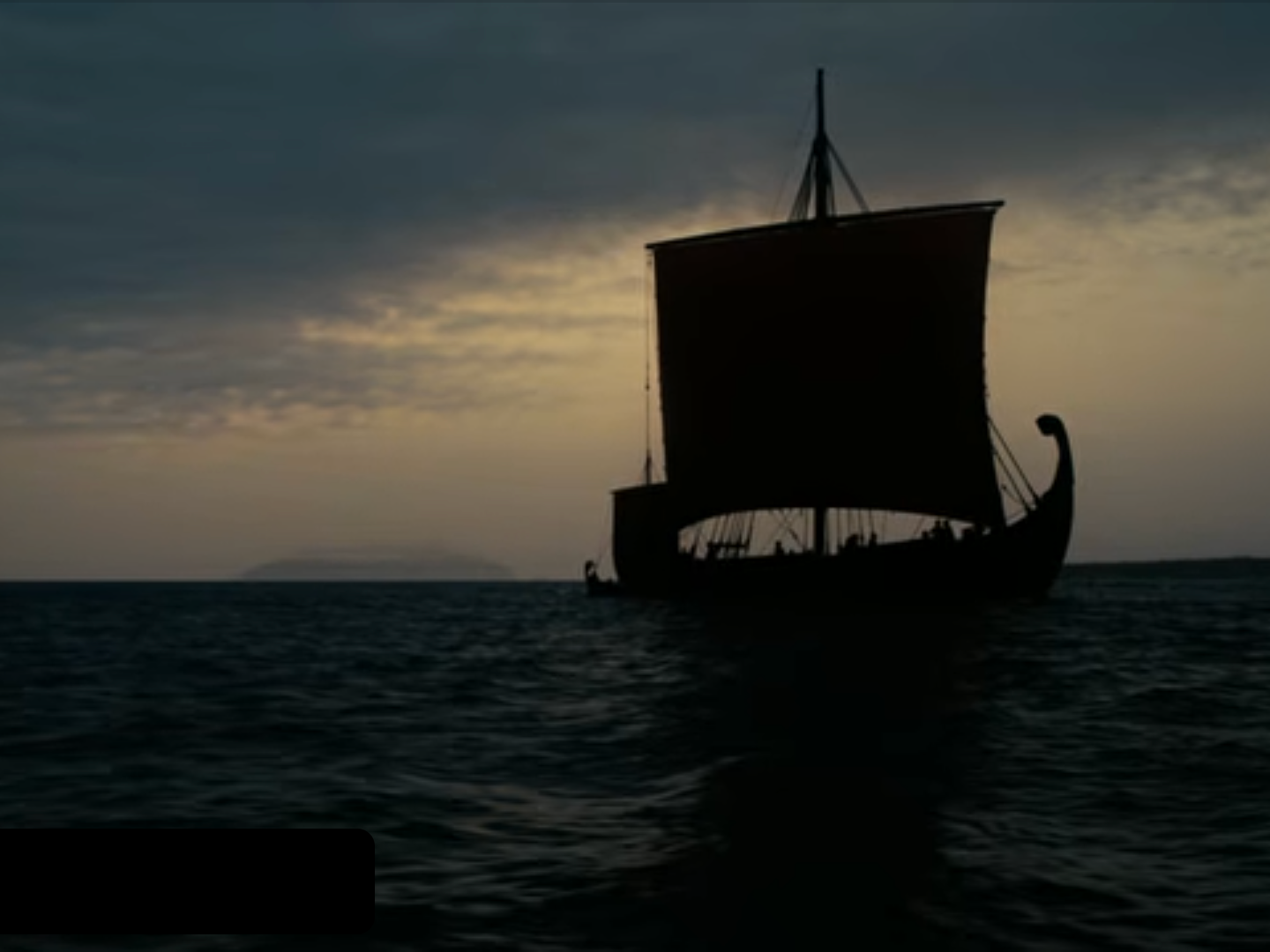
Mr Nolan’s narcissistic imposition ensures that beyond watching familiar segments get butchered, we are forced to endure a story delineated through a jarringly modern lens. And in the visuals too. The film opens with a reference to the “trick” and there it is—the Trojan Horse, an equine symbol of deception and the fall of a great nation, not to arms but trickery. Homer’s Odyssey is emphatically post‑Troy (that, according to legend, is a wealthy city): the war is finished, the Horse is a memory, and the epic is about the long, fractured return. By contrast, Mr Nolan drags Troy back into the centre of the narrative. It’s a spectacle that exists only as a memory in the original text and elevating it to the visual anchor of his adaptation. Does the director not trust the Odyssey to stand on its own that he has to borrow the adrenaline of the Iliad to jumpstart his own narrative, making the Horse the opening spectacle and the war’s destruction the emotional hinge. It marks the film’s visual anchor, a flashy testament to the belief that a summer blockbuster’s true purpose is to be as fiscally indulgent as its narrative is exhausting. It is truly a marvel: a cinematic assault so expensive that it practically demands the audience confuse sensory overload with intellectual rigour.
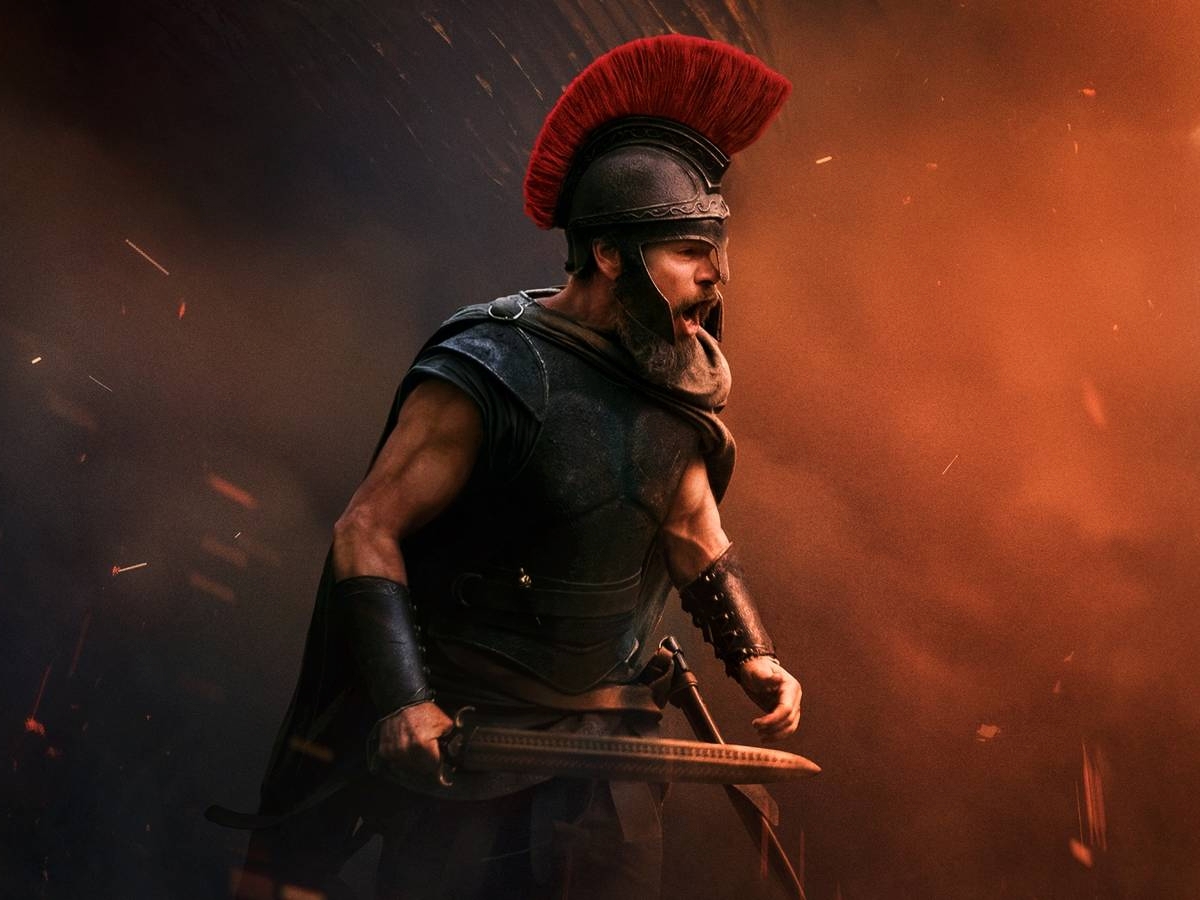
Despite the astronomical spectacle, the film’s lighting is so frequently dim that we could have paid blockbuster price to listen to a radio play. The Odyssey is dark on dry land, it’s dark on the high seas. Just as we’ve adjusted to the dimness, we get scenes of extreme brightness, and then we are plunged into darkness again. We were not, to be clear, willingly participating in a clinical trial to determine the breaking point of the human optic nerve. Beyond the brain tax of navigating new complex themes like war-time trauma, psychological grief, and unreliable narration, the film exacts a visual tax that serves as a literal endurance test for the eyes. We later learned that because Mr Nolan shot this movie as the first-ever narrative feature entirely on 70mm IMAX film cameras, standard digital theater projectors literally lack the physical capability to display the movie the way it was engineered. At a regular Golden Village hall, we were unaware that we sat through glorious technological vanity at the expense of human accessibility.
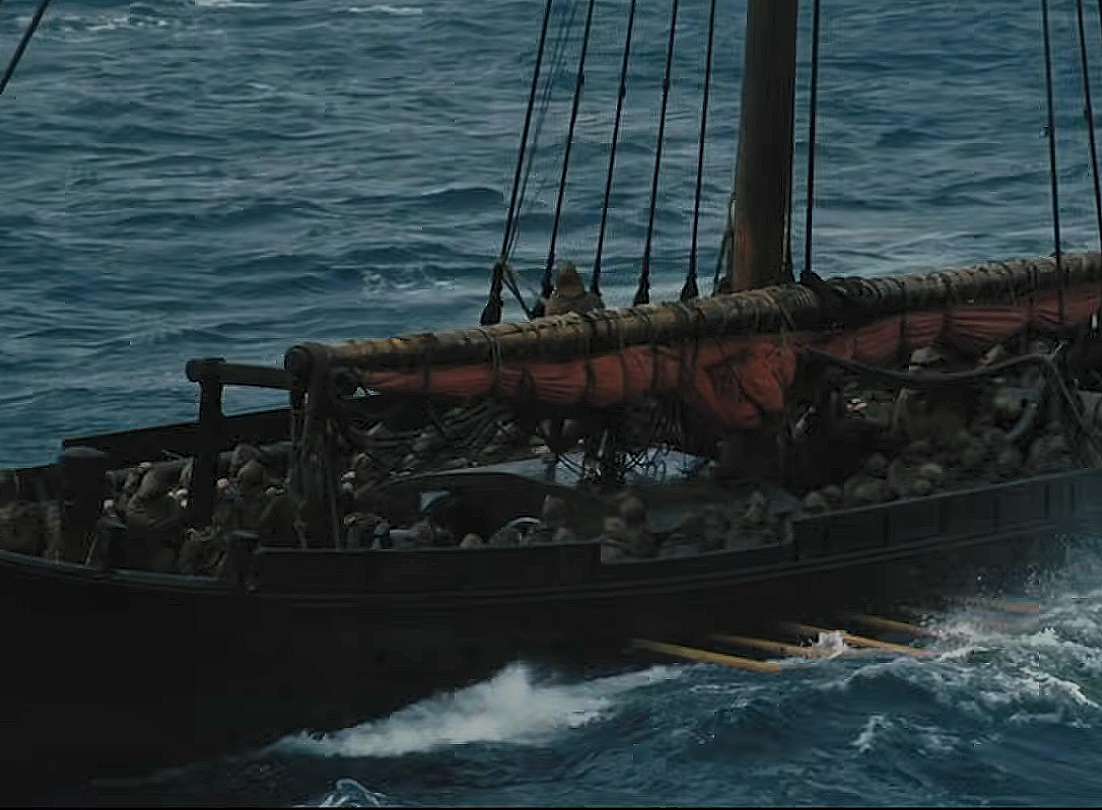
The result is a film that feels tenebrous—not the radiant Mediterranean epic of Homer, but a descent into the psychological turmoil of the hero, Odysseus (Matt Damon). The journey home to Ithaca became a deep ordeal, not plucky adventure. We saw a very dark cave of the Cyclops, Polyphemus; very gloomy, storm-tossed action; shadowy Circe’s home where she practices the dark arts; the necessarily black underworld where Odysseus meets a very black Teiresias and performs an equally dim blood rite, and, for most of the palace scenes in Ithaca, doom-like dimness. And then we were thrown into the bright scenes of the sea nymph Calypso’s love nest on a strangely barren beach of the island of Ogygia or the shores of Aeacea, on which the ramshackle home of the “witch” Circe stands. The shadowed interiors are coded as psychological weight, while the sudden glare of the coastal shots under Mediterranean sun isn’t pastoral; it’s aggressive. By swinging between extremes, Mr Nolan denies the viewer visual ease. Discomfort is sold as a badge of seriousness. If the audience suffers, the film must be profound.
Mr Nolan’s aesthetics of trauma forensics suppose that many of us go to the cinema with our therapist (or even that we have one). Not only did the visual extracted a physical toll on us, the audio too. We sat through 180 minutes of what frequently felt like the inside of an MRI scanner during an active brain scan. Reportedly, Mr Nolan had insisted that there is to be no orchestral music for The Odyssey. So film composer, Ludwig Göransson, leans heavily on bass drones and subsonic pulses. This could have been his personal campaign to make sure the ‘vibrate’ setting on our smartphone feels completely redundant for the duration of the film. Waves, storms, and battle sounds are mixed at levels that blur into grating noise. It roars like Mr Nolan wants the sea to sound hostile, not lyrical. Just as the visuals swing from shadow to blinding sun, the audio jumps from overwhelming crashes to near‑silence. In the important song of the Sirens scene, there were no Sirens, nor song. Odysseus’s audio torture, rather than pleasure, was accompanied by noise that was not decipherable. Presumably, we are placed in Odysseus’s position: bound, unable to escape, enduring noise that cannot be processed. It’s less mythic wonder than clinical ordeal.
In a talking picture, speech is more than just a component of the sound; it is the vital element that elevates the total soundscape beyond the mere sum of audible action and and evocative soundtrack. Odysseus told his wife Penelope: “We live in a world of palaces and trade. And language… blind to its beauty, until we broke it.” It is an entirely modern piece of dialogue—completely absent from Homer’s epic—designed to reframe the entire Trojan War as a tragic, self-inflicted downfall of an entire civilisation. It is incredibly jarring and ironic for Odysseus to wax poetic about the “beauty” of language when the actual script drops you straight into a 21st-century American living room. Much has been said about Telemachus (Tom Holland) calling Odysseus “dad”, but he calls his mother “mom”, and in the duration of the film “fuck” and “fucking” was used with natural glee. We do not begrudge Christopher Nolan helping us ‘see’ and sense The Odyssey since it is essentially a poem, and a rather long one—that would one reads or be read to. But F-bombs completely shatters the illusion of the ancient setting. It is linguistic laziness just as it is auditory anomaly. If decompression were a luxury commodity, we would have liquidated our assets just to be granted an early release before the credits rolled.
Stay tuned for the second part of this review. Screen stills: Universal Pictures

