Chanel is blooming. And Matthieu Blazy won’t let you miss that as he cunningly cultivates the commercial
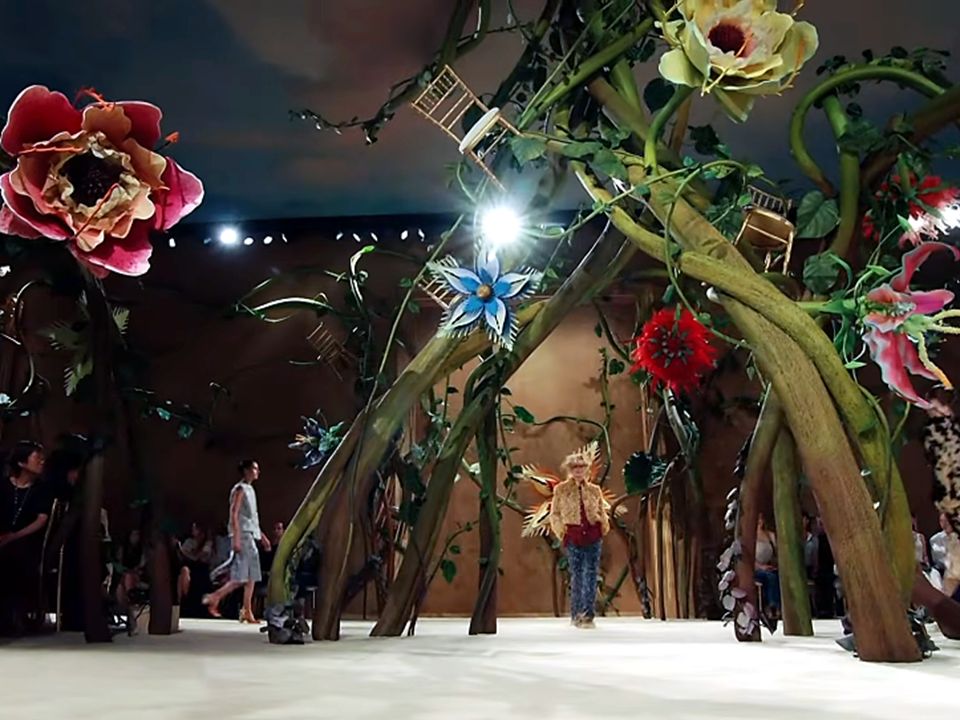
Chanel, it appeared, was still operating in full fantasy mode. At the autumn/winter 2026 presentation yesterday, they did not look quite ready to break their lease on the enchanted forest. After last spring/summer season’s Disney-fied giant toadstools, they took a turn for a more Grimm setting, with flowers that looked more carnivorous than cute, which may explain a conspicuous absence of woodland creatures. Plants are central to the theme this season as the collection was called Gaby and the Beanstalk, a reimagining of one folk tale that researchers have traced to the Bronze Age, but now, Chanel gave a woman the lead. These were not, however, the beanstalks of the morally ambiguous Jack. Twinning above the guests in Chanel’s runway home, the Grand Palais, the thick vines seemed more like mean stalks. The show opened with Howard Shore’s Bag End, the bucolic and recognisable leitmotif from The Lord of the Ring, but the set did not resemble anything like The Shire or Rivendell. Rather, it could have been Alice in Wonderland’s The Garden of Live Flowers, but more than eager to sing, the blooms desired to devour.
The maison’s post-show publicity informs: “Fairy tales meet Chanel Haute Couture.” There is more than one story. Apparently, even Goldilocks and the Three Bears, and Puss in Boots were woven into the narrative, but we didn’t see it As was reported, Matthieu Blazy discovered a vintage volume of Les Fées (The Fairies) in Gabrielle Chanel’s personal library. How that included a mortal who sold a cow for five beans was not clear. Or how that became a metaphor for the success of Coco—or Chanel’s not-historical, possibly algorithm-friendly diminutive, “Gaby”. We suppose Mr Blazy meant the beanstalk as a parallel for climbing out of poverty, but Ms Chanel was not a thief who broke into someone’s home and stole to become rich. She built an entirely new industry from the ground up. Her ‘gold’ was her own visionary creativity. However, she and Jack shared the singular distinction of arriving into this world entirely unburdened by family wealth. The difference, of course, was that while Jack merely had to endure poverty, she had the added distinction of being orphaned after her mother died and his father abandoned her and her siblings, leaving her deeply ashamed of this grim reality. She spent much of her life inventing elaborate, glamorous lies for journalists so as to cover up the fact that destitution killed her mother and drove her father to dump her.
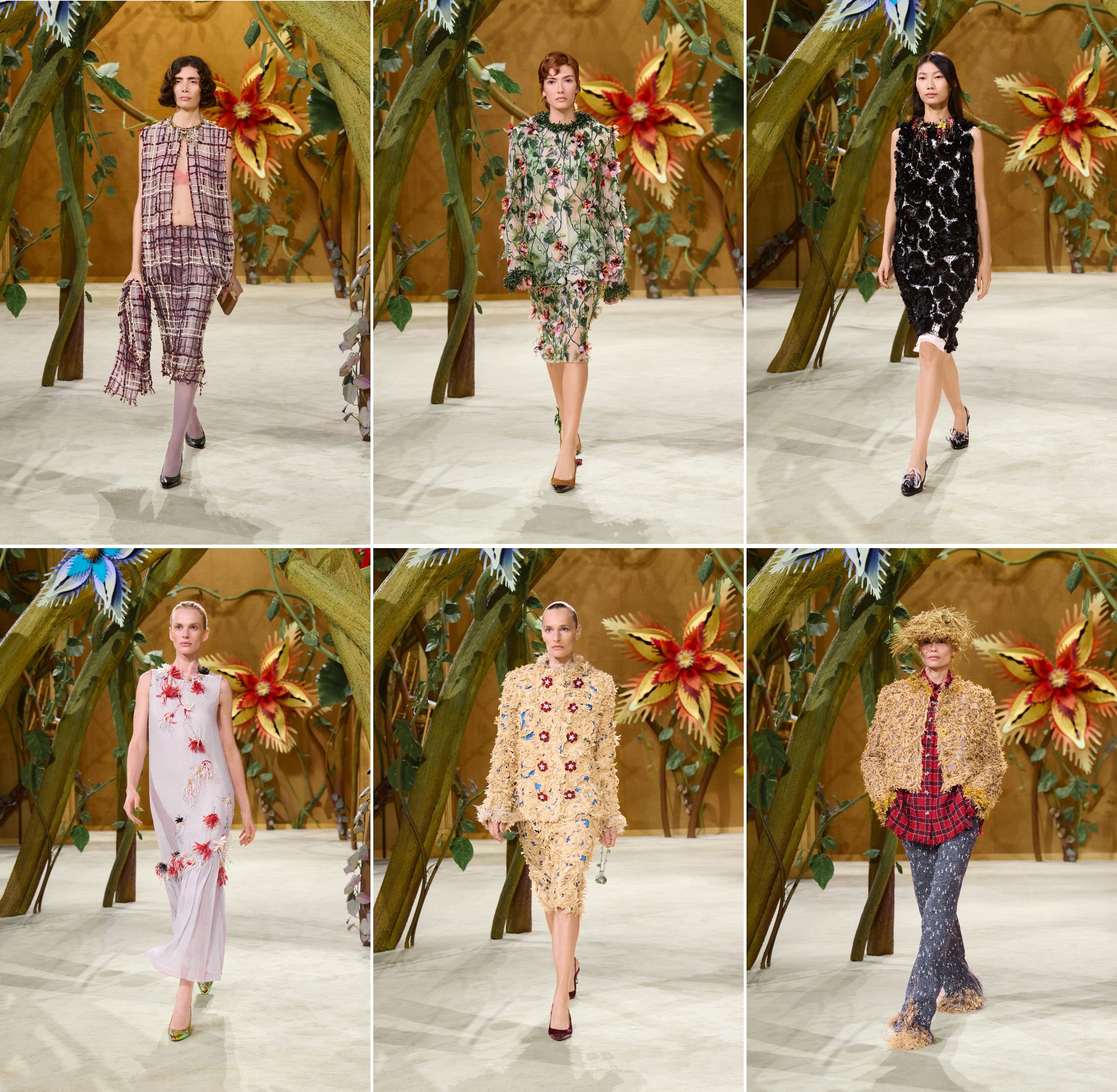
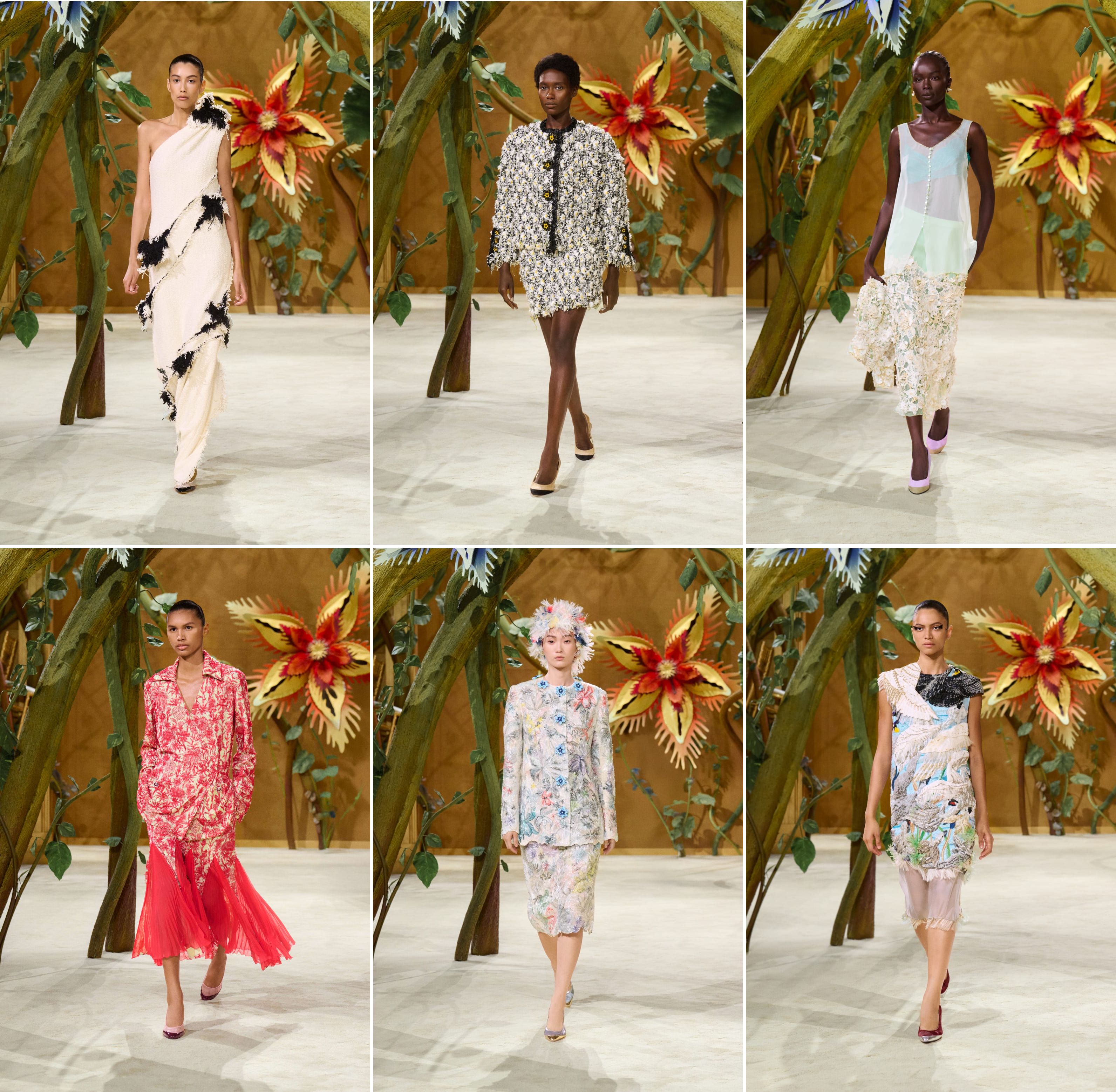
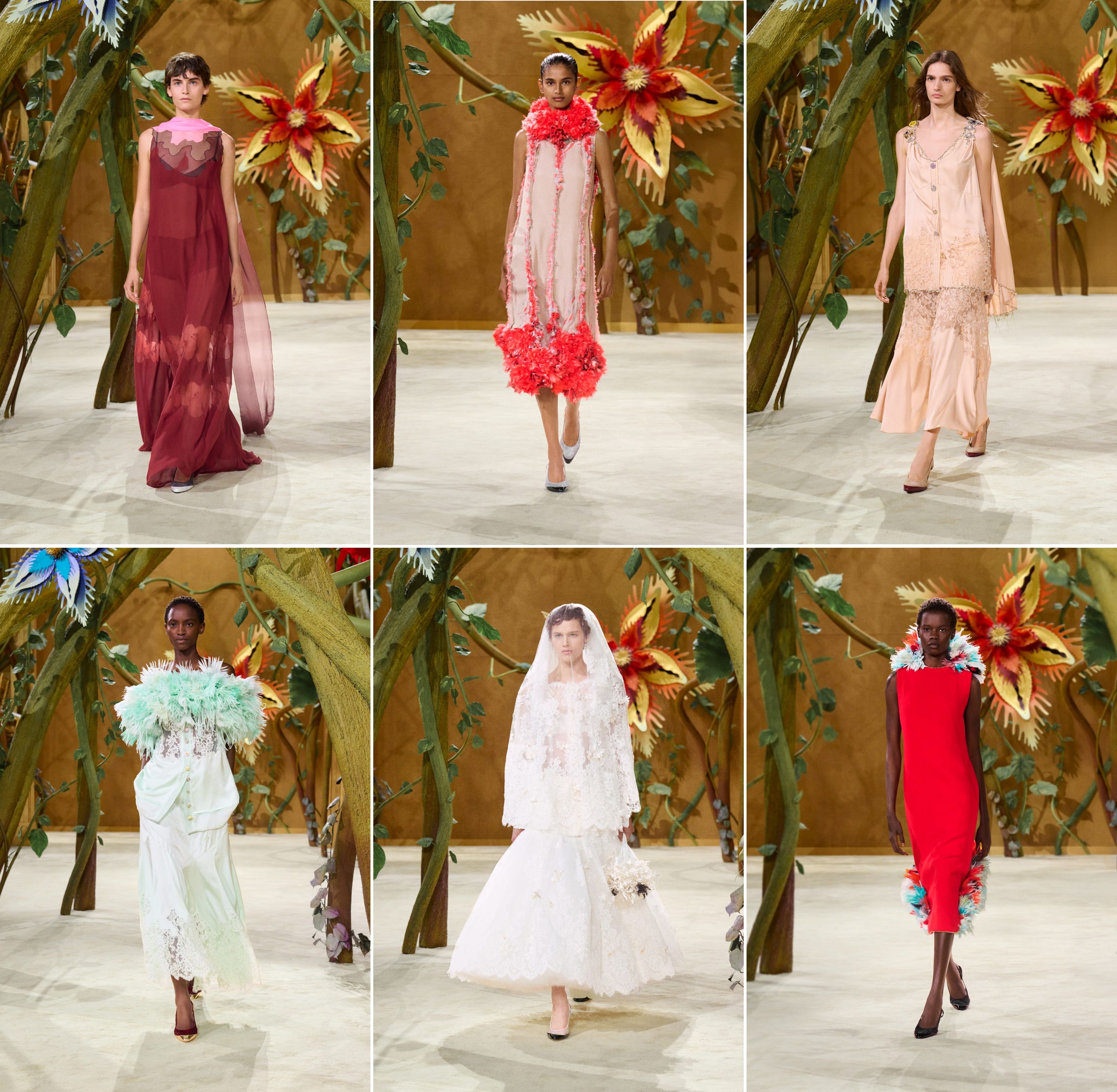
The only thing in the clothes that could have suggested Gabrielle Chanel’s less than modest means during her childhood years were the frayed edges of the open-weave, boucle pieces, but because the yarns were so artfully ravelled by hand, they were stripped of the suggestion of financial hardship. If the raw edges also came with X man hours of work, it could even cover up Ms Chanel’s less-than-plenty past. There was even a hint of farm life in the coat of tufted—reportedly organic—raffia, as if repurposed stuffing of a scarecrow (Alice in Wonderland, too?), including one jacket worn over a plaid shirt. They could pass off as 蓑衣 (suoyi), ancient woven rush raincoats of China. In fact, much of the 63-piece collection seemed to totally obliterate her substantial history of a convent life and, later, 卖唱 (maichang) or singing for a living in a café. Rather, Mr Blazy grounded the folktale theme in the reality of the wealthy, ensuring the couture included pieces that women could actually wear, such as off-the-shoulder dresses, black suiting, and denim-effect sequins. The silhouette kept to what his debut proposed: loose, light, relaxed, and somewhat bulky, almost cocoon-like in their protectiveness, with many of the suits bordering on the frumpy. Jack’s mother, with her son’s ill-found wealth, would have loved them.
Despite the predatory setting that could have been Hansel and Gretel’s journey to the gingerbread house, the clothes were still ethereal and louche, and languid. There was also the continued girlification of the maison that was already witnessed in the spring/summer 2026 collection. The Chanel rebrand under Karl Largefield was built on a very specific type of adult femininity—structured, authoritative, and fiercely independent. Mr Blazy has not only weakened all that, he has added girly touches to the clothes. Apart from the sweet colours, there the speckling of pieces with dainty flowers or the adding of narrow ruffs for neckline of coats. They were not part of a structural aggressiveness, but to further soften a toughness that had never really been the Chanel aesthetic. Coco Chanel herself was not the embodiment of girlhood. In fact, she was the total opposite. While Mr Lagerfeld’s Chanel skewed young, it was more an indeterminate muse than an everyday girl. Matthieu Blazy’s retreat into fairy tales, into a tenderness often mentioned in reviews felt like a fundamental departure from the defiant adulthood that defined both his predecessors (not, however Virginie Viard). But Chanel cleverly steered clear of the Little Match Girl’s frosty fate, proving that a little organic raffia is far more warming than a box of cheap sulfur sticks.
Screen shot (top): chanel/YouTube. Photos: Chanel

