At Pierpaolo Piccioli’s debut Balenciaga couture show, the setting was a university, but the models could have stepped out of a wealthy person’s townhouse, in clothes that would require Louis Vuitton trunks for storage and travel
Paris was scorching again during the Balenciaga couture autumn/winter presentation, now, for the first time since the revival of the haute couture business in 2013, shown outdoors. This was Pierpaolo Piccioli’s debut couture collection for the house, and he chose an open public space for the runway: the garden of the Cité Universitaire in Paris. The school’s residence halls served as the backdrop, baking in the midday heat as ground temperatures hovered at 33 degrees. There is nothing quite like the brisk, invigorating chill of a potential mid-July heatstroke to truly showcase the season’s heavy wools. That the front row sat frantically whipping the searing air with the complimentary white fans only added to the complete farce of the presentation. But haute couture is a deeply serious business—where the show must go on, even if it mean risking everyone turning from regular to extra crispy, all the while being soothed by Lou Reed crooning Perfect Day—“I’m glad I spent it with you”. It is difficult to suppress a smile at the glaring irony of observing such a slow-roasted spectacle on a tablet from the sanctuary of an air-conditioned café.
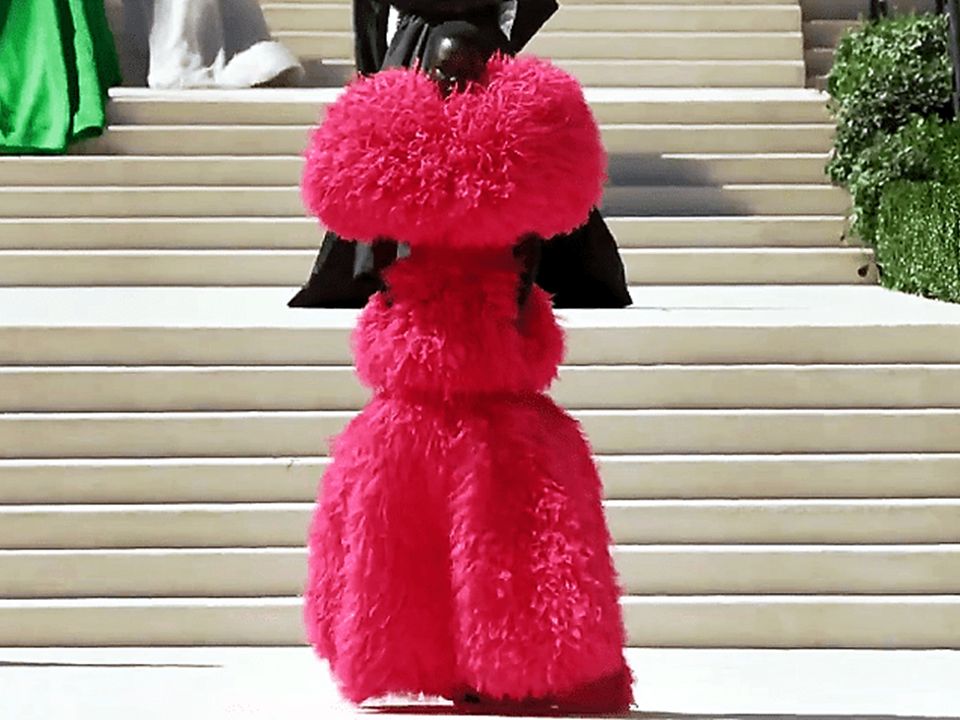
While the Balenciaga presentation took place in a real jardin, as opposed to Chanel’s make-believe woods, the clothes were a lot less botanically-bent. But there were, strangely, homage to the topiary—one dress looked like it came straight from Jardins de Marqueyssac in the Dordogne region. But as it was coloured hot (!) pink, it could have been a poodle of a very wealthy marquise who paid a groomer with a box dye too much. Mr Piccioli was clearly doubling down on the monumental aspect of couture while many brands have been softening things and going for casual. For Balenciaga, Mr Piccioli’s hand was unmistakable, especially in the silhouettes and the treatment of volume and void. He had refined a distinct vision at Valentino, which he was now gamely trying to cram into the Balenciaga matrix. A strange fate, considering that early Balenciaga remains the very wellspring of our modern obsession with exaggerated shapes. When Valentino overwhelmed Balenciaga’s stricter forms, the fabric stopped being a bloom and started being a hedge.
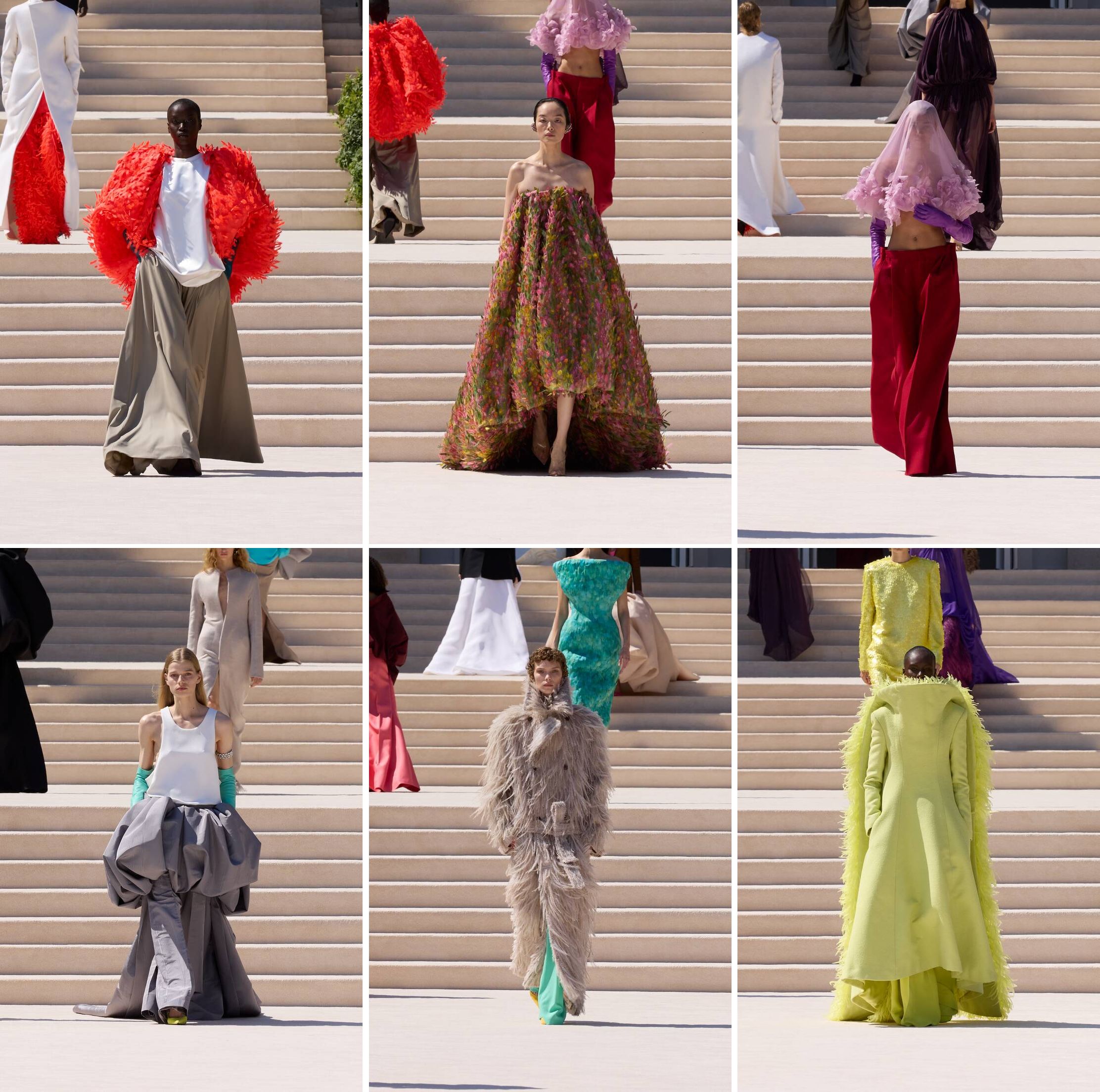
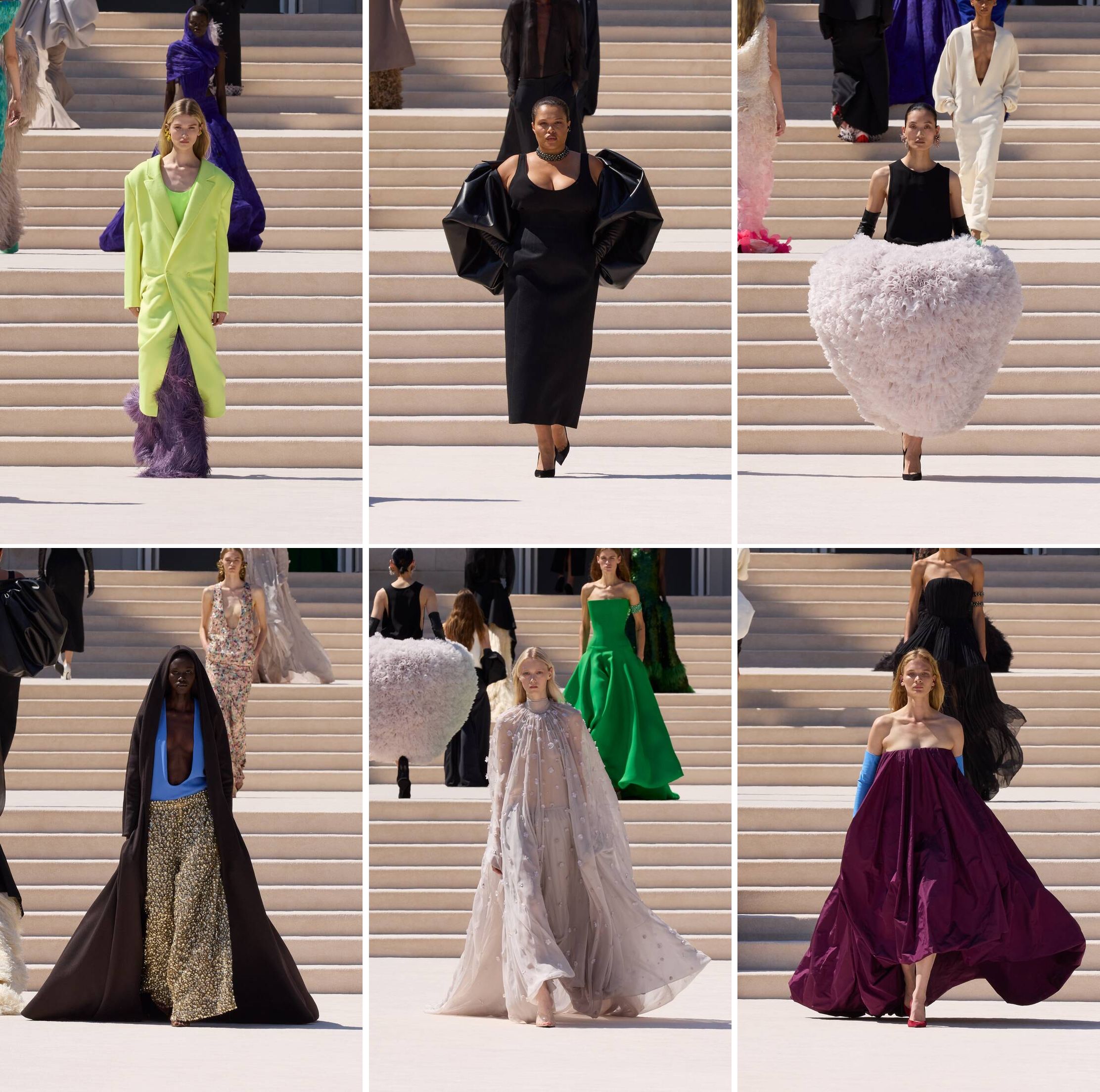
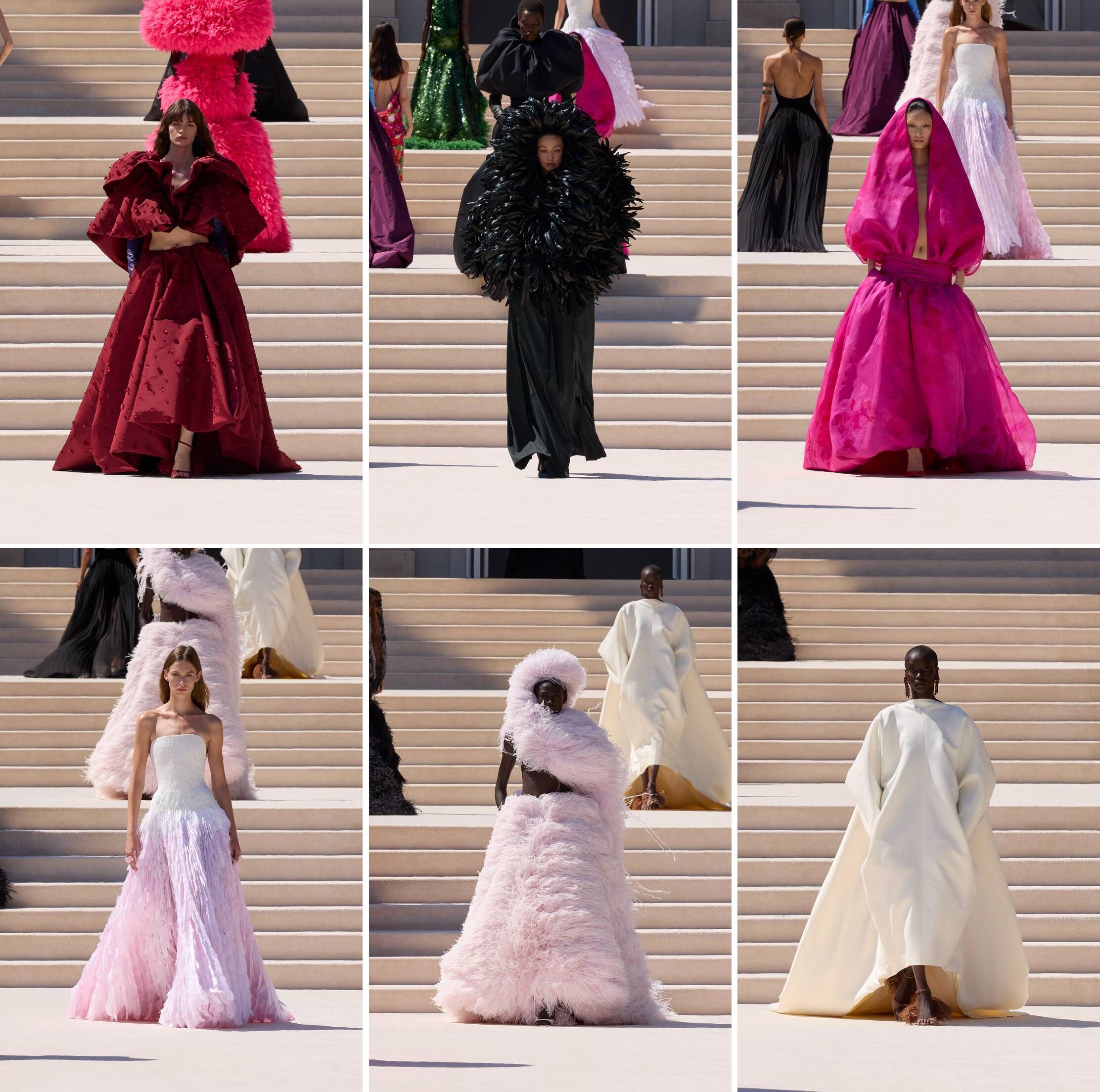
We sat through three viewings of the show’s digital transmission, and the singular element that forced itself upon our attention was the clash between the brand’s heritage of architectural volume as a tool of lightness and Mr Piccioli’s signature of volumetric density as a tool of romanticism. There is no denying that Cristóbal Balenciaga and Mr Piccioli love volume, but they arrived there from opposite directions. Mr Balenciaga used stiff fabrics like silk gazar to create space between the body and the garment—the clothes were designed to float. He practically controlled air. By contrast, Mr Piccioli’s volume felt like it was built up or on top of the body, or allowed to hang from shoulders. Many pieces, especially the coats, were not only massive and distended; their sleeves were too long and the skirts pooled. In camping, they would have been tents poorly pitched. Perhaps post-Demna Gvasalia, a sleeve that’s too long or a skirt that drags isn’t a mistake. Mr Piccioli made the excess fabrics a gesture; it signalled couture as anti‑utility. It was deliberately too much.
Mr Piccioli explained to the media that what he tried to do was to marry the tailleur with the flou. This was a high-stakes balancing act. If done well, we could see the structure of a suit with the ethereal, fluid movement of a gown. But what we discerned was not a language of lightness. This was not Louis Vuitton’s Nicolas Ghesquière getting the tailleur to do the flou and vice versa for LV’s spring/summer 2025. At Balenciaga, it did not turn out to be an unusual challenge; it was a forced marriage. To be sure, there was Mr Piccioli’s love of feathery surfaces and floaty outers pieces. But the opening ensemble immediately set the tone… of confusion. Were we really at Balenciaga? A red feathered coatie over a loose white blouse, worn atop massive khaki palazzos left us thinking of one of our favourite Valentino couture shows, the spring/summer 2018 season. Even Gigi Hadid with the black feathered wreath framing her face. But this time, Mr Piccioli outdid himself: pumping up the volume as if couture needed more amplification. Sporting these threads on a university campus didn’t exactly graduate the collection to scholarly, nor did it grant it a degree in unstudied style. When Hedi Slimane filmed the Celine spring/summer 2024 show in the Bibliothèque Nationale de France, he offered a refined and intellectual pedigree for the clothes. Pierpaolo Piccioli putting a hooded fuchsia gown that opened to below the waist in a student courtyard didn’t make the gown campus chic—it just made it look like it got lost on the way to the Met Gala.
Screen shot (top): Balenciaga. Photos: Balenciaga

