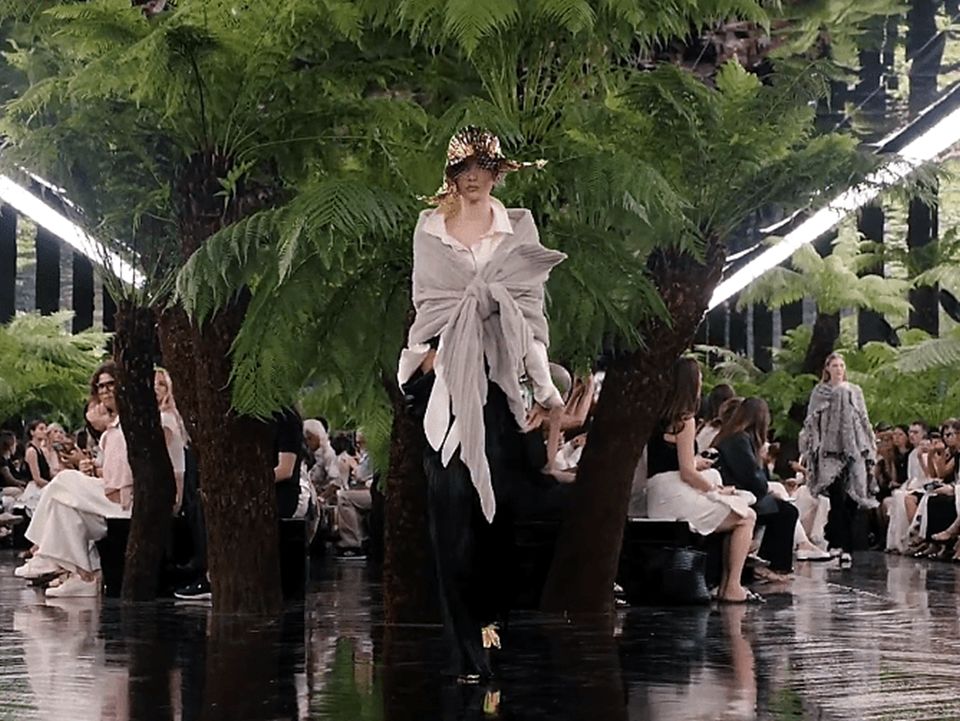
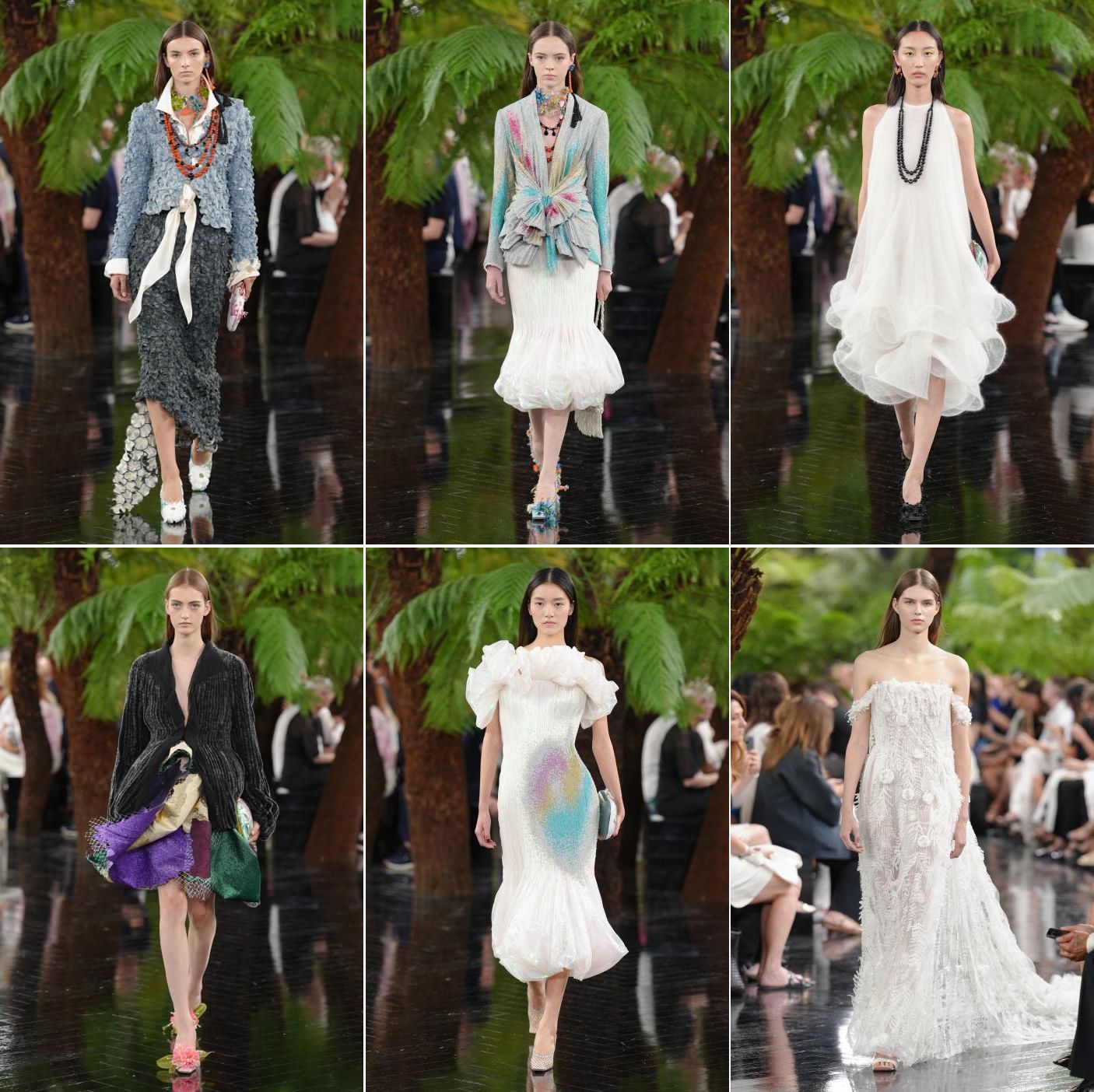
Dior’s autumn/winter 2026 couture collection was all ethereal softness, studied pliability, and textural excess, occupying the plant-adorned room like a ghost—present, but quite unburdened by purpose
Three days before the Dior haute couture show in Paris, the fashion stir began 5,835 kilometres away in New York, specifically at Madison Square Garden. The “Wedding of the Year” between Travis Kelce and Taylor Swift in a hippodrome of hype and hush featured the bride in Dior couture, personally designer by Jonathan Anderson, media reports have stressed. It was a choice as expected as it is expensive. Given the affair’s supposed top-secret status, we are still waiting for a definitive look at the gown. However, if the single, suspiciously blurred “leaked” photo making the rounds is to be believed, the design managed to be aggressively conventional. Ms Swift, ever the devotee of the expected, apparently opted to complete the agreeable fairytale princess arc. We assume the glass slippers were sold separately. Regrettably, her bridal finery was not able to serve as a foretaste of the Dior show, staged last night (our time) at the Musée Rodin. Rather than a cultural moment, it functioned as a sobering reminder that even the most formidable couture house can be coaxed into aligning with a star whose fashion choices are reliably predictable.
It was a strange sequence: the Wedding of the Year’s high-octane pageantry that necessitated road closures, followed by a collection that did not aim to be Collection of the Year, arriving with all the ambition of afternoon tea in a conservatory. Dior set up a greenhouse on the museum’s verdant grounds to show the collection, but this was not, strictly speaking, clothes inspired by, say, the Kew Gardens or Gardens by the Bay. Rather, it was homage to the American artist Lynda Benglis, whose poured latex and wax sculptures embody excess, fluidity, and “muscular”—as Mr Anderson described it—joy. This was not his first collaboration with the artist, having featured her work for Loewe previously. This time the interpretation was rather literal. But more puzzling was Dior’s fascination with America. The maison showed its cruise 2026 in Los Angeles two months ago and now they’re honouring American art. At around the same time of the showing of the couture, Donald Trump raised the ire of the football world with not just fumbling the symbolism of a red card, but blurring the boundary between sport governance and political meddling: he called FIFA’s president, Gianni Infantino, to complain, intervening in disciplinary matters he clearly didn’t understand. This is the reality of the world now, even the fashion world: one country provides both the radical art language that Dior covets and the grotesque spectacle the world deplores.
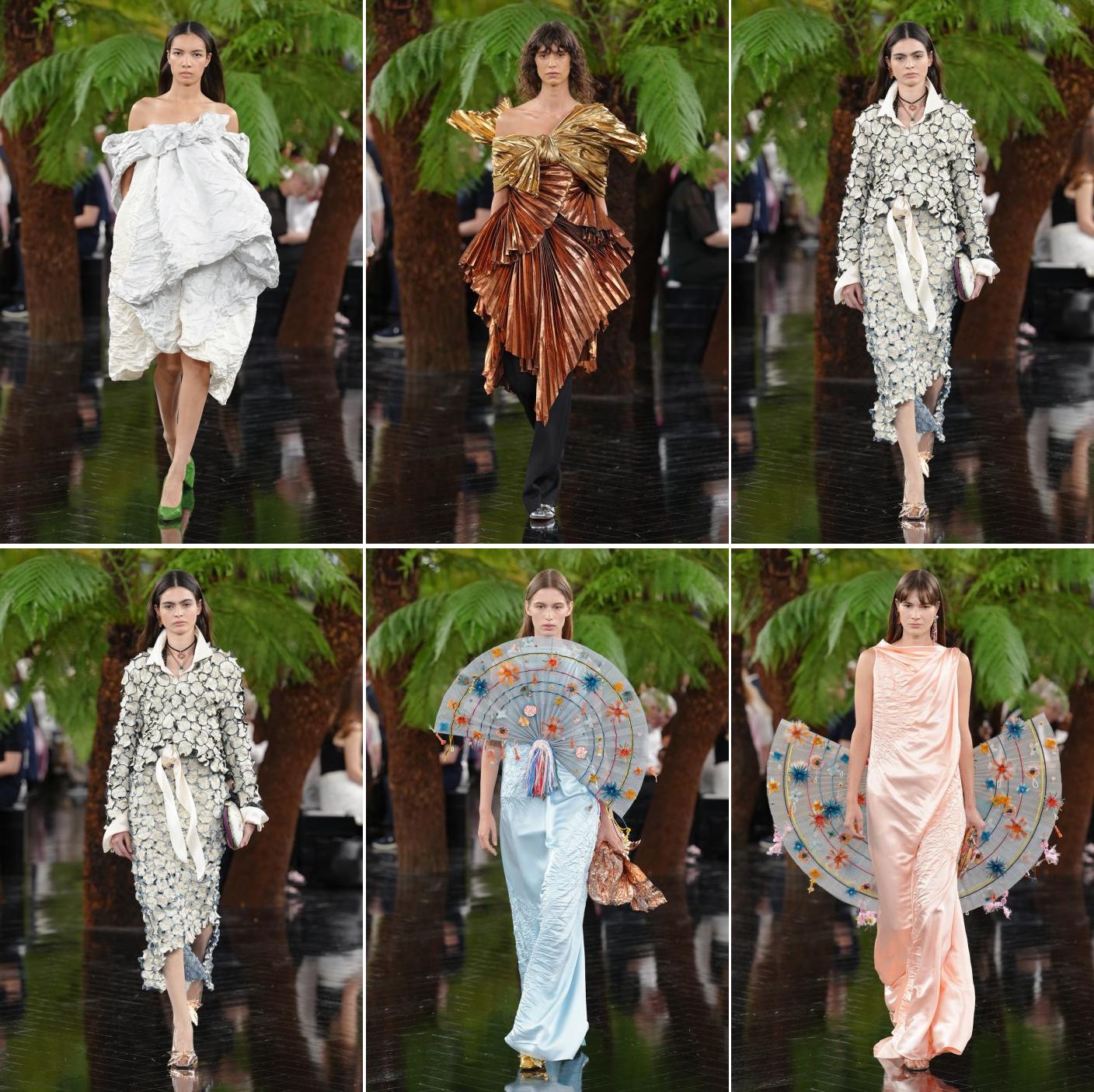
The work that inspired Mr Anderson is understandable, but the execution tethered to his reference, less so. One of Ms Benglis’s pieces from 1979’s Peacock series—a mixed-media Japanese-style foldable fan of wire mesh, littered with trinkets of plastic, enamel, and glass—was transformed into a massive bodice of a gown and equally large derriere ornament of another. Ms Benglis picked those cheerful but cheesy pieces in Ahmedabad, India, where she was staying at the time with her long-time partner, the Indian microbiologist/art collector Anand Sarabhai, who introduced her to his homeland’s rich visual culture and materials. She deliberately used those everyday, cheap materials found in markets to question her American audience: “what makes something valuable or good art?” Conversely, Mr Anderson, in a capitalist plot twist the Americans would appreciate, hand-embroidered the trinkets identically with couture’s finest materials (except the frame and separators of the fan, which were made with scrap metal). This was not Margiela Artisanal’s “found objects”, but it did totally neutralised Ms Benglis’s cheeky “prank”, except that it still looked cheap, like tourist-friendly wall art seen everywhere in Asia, from Kuala Lumpur’s Central Market to Bangkok’s Chatuchak. Did Mr Anderson anticipate a higher destination—the Costume Institute when it, perhaps, pays homage to the peacock?
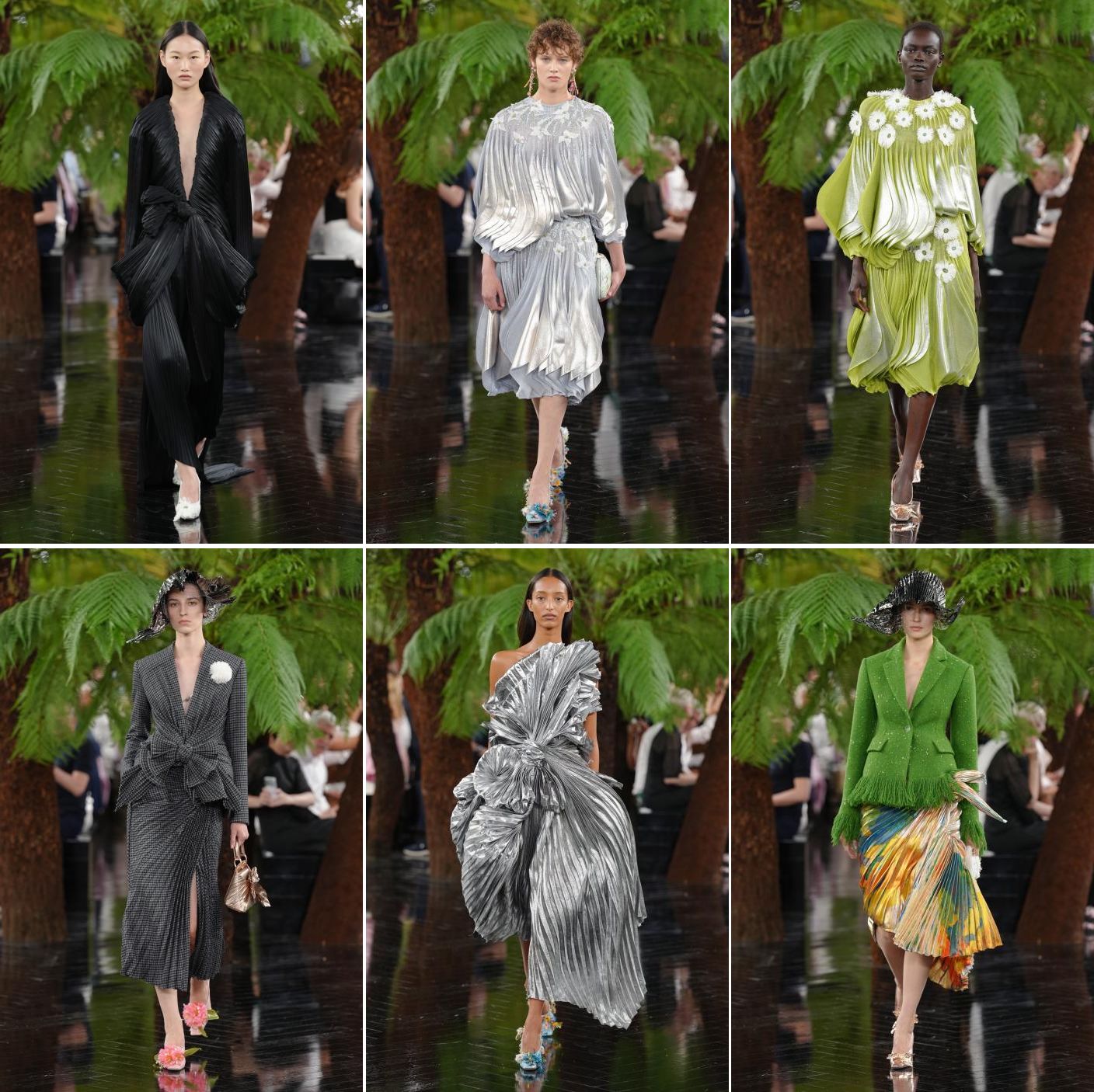
In the other pieces of collection, the application of Lynda Benglis’s art was not less obvious, such as the undeniably elegant Eridanus from 1984. This piece and others from the Knot series, were scrunched-up pleated metal sheets that, in effect, could be gift-wrap bows. Mr Anderson applied the tactile toppers to various parts of the body, often bottom heavy, as well as clutch bags. In his enthusiasm, he also brought considerable pleating to the clothing themselves. While the Dior maison has used pleats in the past, mostly for skirts to give them the volume that protracted the New Look, Mr Anderson’s owed an unmistakable debt to the plissé of Madame Grès, which later informed Issey Miyake’s own experiments with pleats. In fact, except for the conventional placements, the Dior pleated bows were akin to Mr Miyake’s wildly sculptural ones. Additionally, there was also an unmistakable relaxing of the Dior silhouette. The maison is not known for their shirts except during Gian Franco Ferré’s tenure, when they were dramatically romantic and voluminous. Now, shirts with stand collars were worn open-necked, like Hawaiian shirts—relaxed and light. Could this be a semiotic reaction to Chanel featuring Charvet and, eventually, acquiring the brand? The casualness of Jonathan Anderson’s couture is consistent with the general trend of blurring the lines with the prêt‑à‑porter. Dior’s social credit score is safe.
Screen shot (top):;dior/YouTube. Photos: Dior

