Melania Trump made her UFC debut and let it be known that she got the memo. It was ring-girl glam, without the bargain-bin pricing
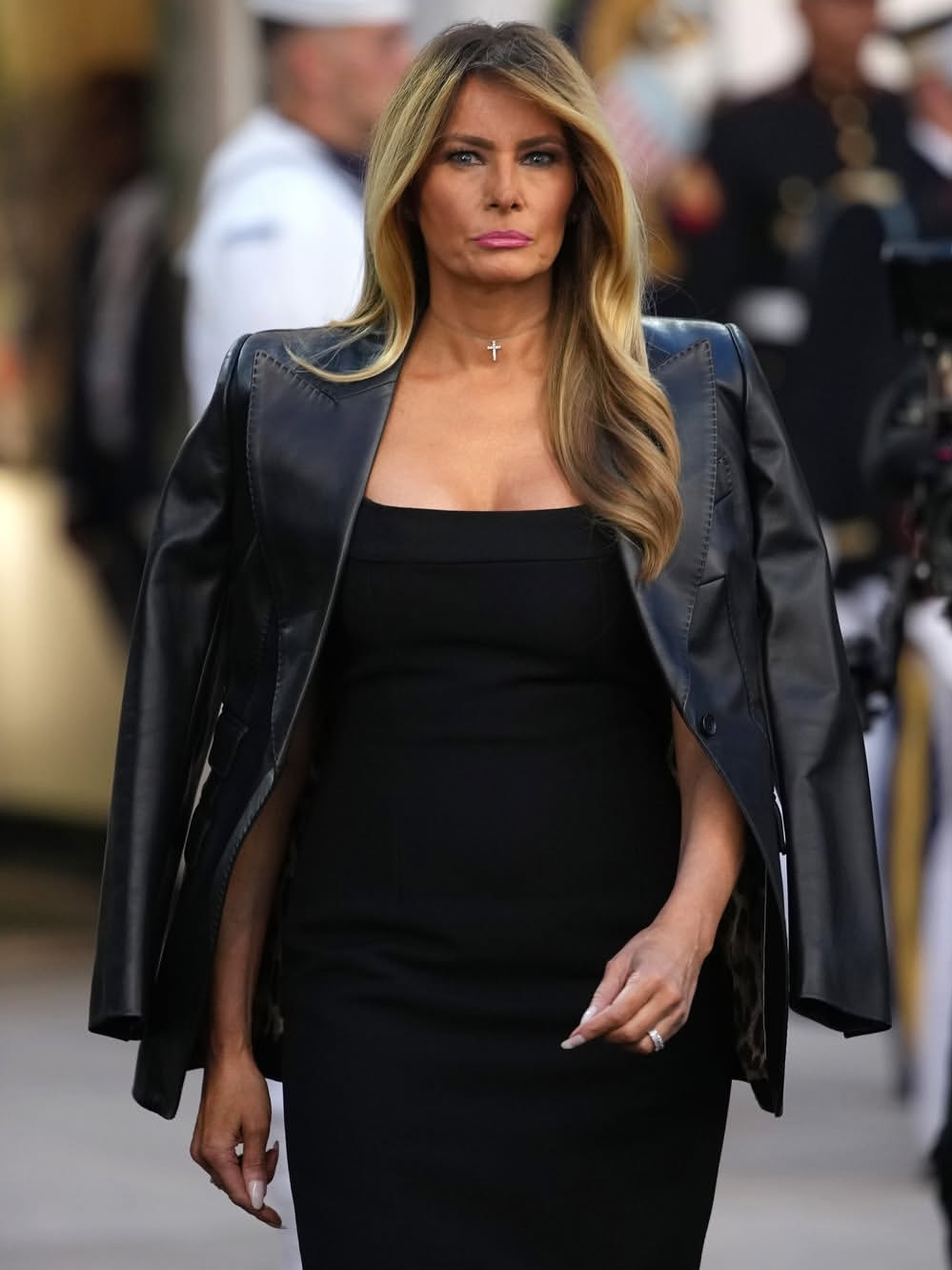
Melania Trump walking from the White House to her front-row seat under The Claw. Photo: holausa/X
She has historically treated her husband’s UFC outings with the enthusiasm of accompanying one’s mother-in-law to the market to buy pig’s caul. She even skipped the recent Knicks game at Madison Square Garden entirely. Yet, Melania Trump would not miss this fight night, arriving typically cold and free of her husband’s foundation-smeared hand, gliding down from the White House towards The Claw, flanked by a military aide who possessed all the warmth and conversational agility of a food court stool. And then very quickly, the first lady was under The Claw—the new backyard playpen, apparently erected without her input. Although this was the president’s night, she appeared willing to be pulled into the gladiatorial arena even if not by choice (like her self-vetted documentary), but by obligation, subjected to the same brutal optics that define Donald Trump’s political theatre. And, it was her husband’s 80th birthday. As one Borg famously said, “resistance is futile”.
Her outfit of choice was surprisingly not her usual executive-fierce pantsuits. Rather, it seemed to mirror the spectre of the first lady in her own home: a monolith of black. It was another easy homage—a convenient WhatsApp to Dolce & Gabbana. The base was a sleeveless, square-neck, nipped-at-waist dress that went past her knee. On top of that she threw on, rather than wear, a leather blazer with peaked lapels that were, at their widest point, broader than her jaw. The svelte silhouette and the low neckline that effectively framed her decolletage and enhanced the cleavage were a mature woman’s tribute to the Octagon Girls. It is often said that “you can’t have a fight night without the UFC Octagon Girls”, yet they were conspicuously absent at the cage on the South Lawn. It is not clear why they were excluded, but the sly reading is that the absence of ring girls could have been a calculated move to avoid the optics of Donald Trump ogling scantily‑clad women while Melania was seated next to him, right upfront.
The svelte silhouette and the low neckline that effectively framed her decolletage and enhanced the cleavage were a mature woman’s tribute to the Octagon Girls
Without those girls—also called “brand ambassadors”—it was left to Mrs Trump to be the stand-in for the male gaze. This she grasped with the kind of clarity usually reserved for neon signs, such as those under The Claw. She understood that she was dressing for a heterosexual crowd; she is not Madonna. And that’s the brilliance of the gesture. In the absence of ring girls, Mrs Trump’s fashion became the sanctioned spectacle: a controlled injection of glamour that could satisfy the audience’s expectation of feminine presence. But she tempered that with the leather jacket thrown over her shoulders, very much like how UFC fighters drape a robe or towel, or flag over their backs. It’s a ritual of exhaustion, triumph, and identity, but for her, it was grit, ornament, and armour. It is interesting to note that she did drape a cardigan over her shoulders, but a leather jacket (to align with the event, sport coat?) with pronounced shoulders—a nod to the crowd’s appetite for combat aesthetics. The sleek styling transformed her from ornamental substitute into a figure who visually echoed the fighters themselves.
As the night concluded and the fireworks ignited over the Washington Monument, Mrs Trump emerges as a figure who understands that her role is not simply to be seen, but to reframe what is seen. She dresses for herself, but with an eye directed at the crowd, the cameras, and the narrative. Even the almost negligible chocker with the tiny cross pendant she wore with intent: actively signaling to the specific, aspiring MAGA-influencer class, among them, Karoline Leavitt. Melania Trump has always known exactly what she likes and, more importantly, how to forge that affinity into a personality-led industrial complex. She is not a portrait commissioned by outsiders; she’s her own curator, she wields her own editorial control. And nowhere is that more evident than she playing herself in Melania. The film’s vacuity, as critics noted, is precisely the point: it’s not about content, but about sustaining her aura as a consumable spectacle. We saw all that right under The Claw.

