Ivanka Trump’s recent appearance on the David Senra Show invited listeners into the deep end of a sea’s very shallow apron
On 31 May, the American podcaster David Senra broadcast an interview with compatriot Ivanka Trump on his show Founders. Ms Trump described how she discovered Sazan Island, off the Albanian coast, and her designs on a protected national marine park. Within 24 hours after that show aired, furious protests broke out in Albania, denouncing Ms Trump’s grand plans. While the blueprint for the island was revealed in 2024 by her husband Jared Kushner, it is her current tone-deaf description with no reference to how the development will benefit regular Albanians that seemed to have triggered the locals. In a country where public access to coastline and protected areas is fiercely defended, her rhetoric sounded like isolated access as destiny. There is now even a name for the demonstrations on the streets of Tirana: Flamingo Revolution, a direct reference to the protected aquatic birds that populate the threatened Vjosa-Narta wetlands adjacent to the island site. But even on her home soil, much criticism has been levelled against the Trump family’s curious, enduring fascination with “private islands”.
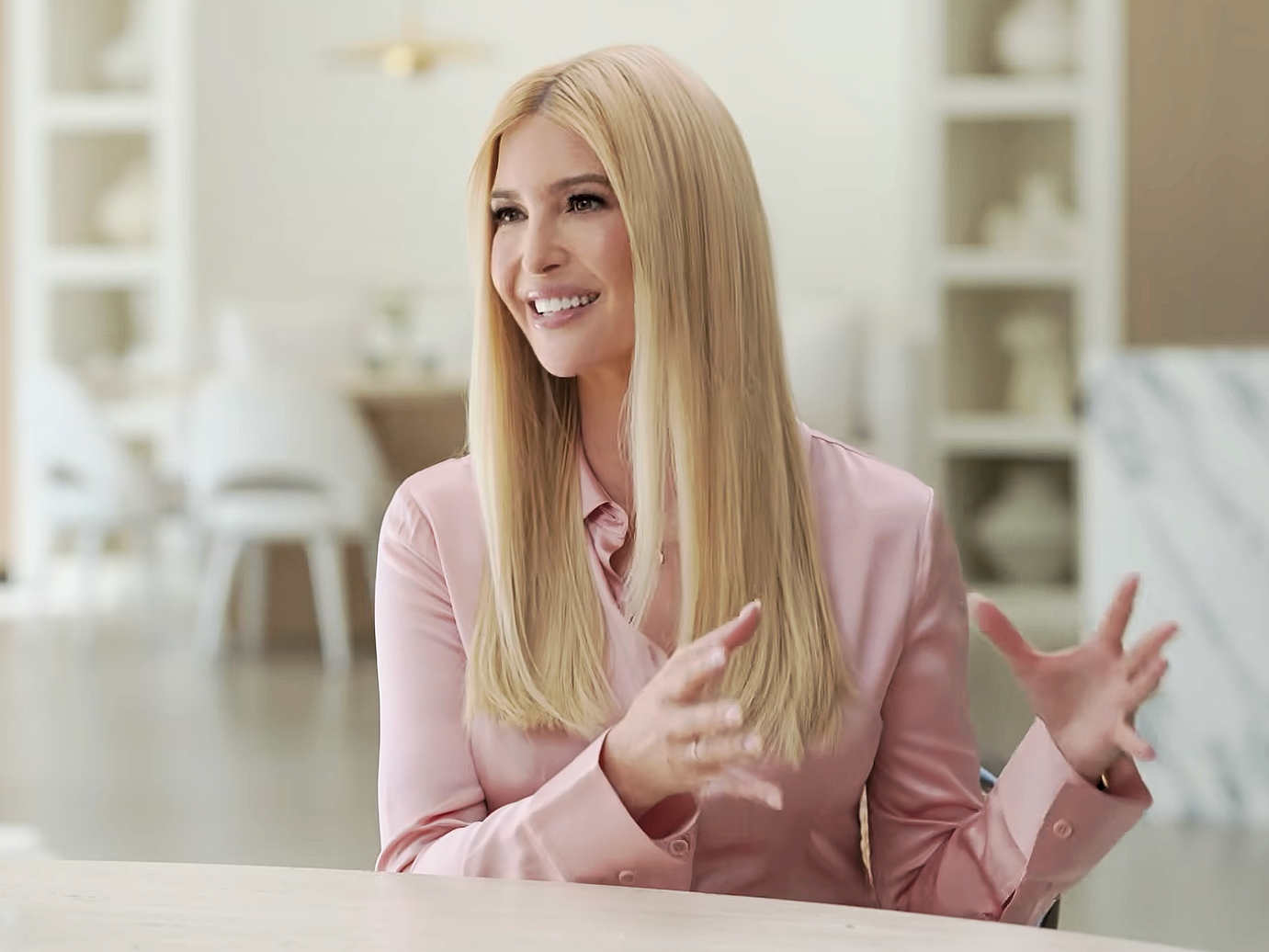
That whole episode of Founders was made to look somewhat ’rosy’. The colours of the set were predominantly shades of white, the illumination soft and diffused, everything around the interviewer and his subject deliberately dropped to a bokeh blur, and the property developer, as she implied, appropriately wore a soft housecoat in a hue beautifully akin to calamine, definitely not the colour of pink flamingos. The set’s soothing palette was designed to encase her in a bubble of innocence and the intellectual appeal of a coffee-damp teaspoon or the black mug—an odd black dot in front of her—from which she took sips. And possibly to preemptively absolve her of the angrily critical reception she was about to receive. It is not clear why she chose such a placid shade for the interview, but that low-level intensity of pink was not only about sweetness, it was also used as a pastel shield against the ground reality of her dreamy Mediterranean project. In addition, a pyjama set, stripped of ornament, signals casual restraint. It’s easily misread as approachable and trustworthy, and, the most crucial of all, relatable.
The set’s soothing palette was designed to encase her in a bubble of innocence and the intellectual appeal of a coffee-damp teaspoon
For a podcast about founders, Ms Trump foundered rhetorically into the deep. She mentioned the provocative Sazan project early on in the 83-minute broadcast, describing it as “going back to my real estate roots”. That invocation was, to us, a classic ‘nepo baby’ move. Her claim to real estate authority doesn’t come from clawing her way up through independent projects or building a portfolio from scratch. It comes from inheriting proximity to her father’s empire. She was made executive VP of acquisitions and development at the Trump Organization in her twenties — a role that owed more to lineage than to proven expertise. Her most visible projects—such as the Trump International Hotel in D.C.—were family ventures, not independent developments. Her assertion with a smile of “going back” is not a return to personal foundations but a retreat to family inheritance. Sure, this is a project with her husband (who also comes from a real estate background), but she is using inherited “roots” to justify a project that uproots Albanians from their own protected terrain.
From that moment, it was easy to see that she lacks the professional ballast to stay afloat, never mind if she could only wade in the water. Much has already been said about how she “effectively discovered” the island that sat conspicuously opposite the heel of Italy’s boot and just on top of the spout of Albania. She continued to impress: “And over the course of many years, we developed the opportunity to help realise its potential…” Opportunity, to most people, is binary. One has the opportunity or does not. It’s something seized (carpe diem!), not something “developed”. To “develop” an opportunity suggests it didn’t exist naturally—it had to be manufactured, engineered, or carved out. That suggests behind‑the‑scenes manoeuvring. In the context of Sazan, “developing the opportunity” sounds like lobbying, concessions, and privatisation deals—not a serendipitous discovery. It implies the opportunity was made by bending rules, not found by chance; it even hints at something nefarious.
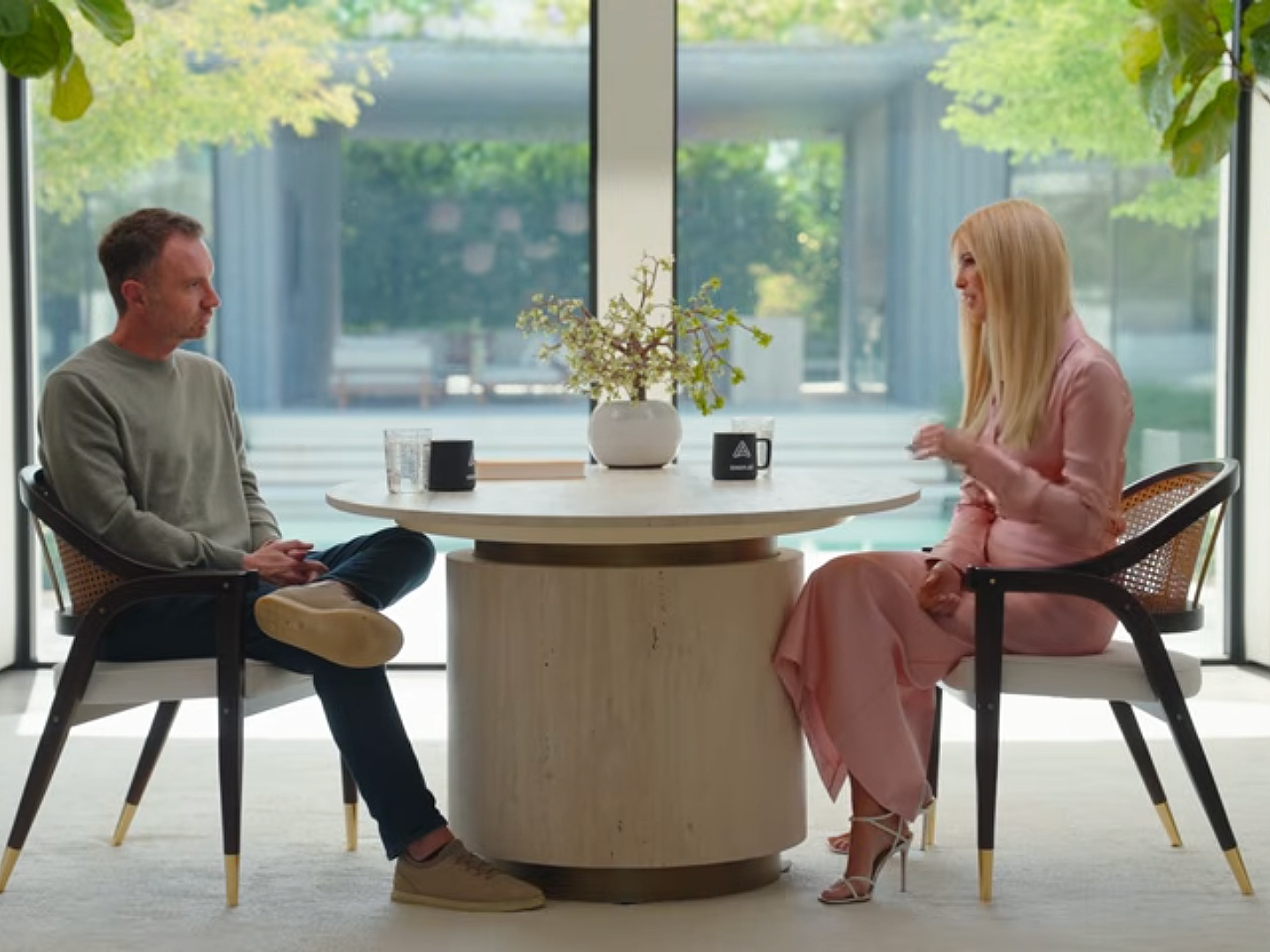
David Senra and Ivanka Trump
It is really easy to poke holes into every sentence she uttered in that calm, lower register she tends to prefer when facing a camera, but what is truly disingenuous is her saying that “it is not even a business for me despite the scale of it… It feels more like a challenge than anything else.” We know the Trump family relies on the rhetorical playbook of self-contradiction to carry their messages through. It is fascinating that a single thought could contradict itself before it even finished leaving her mouth. We struggle to wrap our head around a business that isn’t and yet is measured by scale. That word implies organizational complexity, financial stakes, and market—even social—impacts. Yet everything was merely a “challenge”, which seems like she wants to be seen as motivated by personal growth or curiosity rather than profit. Calling it “not a business” risks erasing the responsibilities and consequences that come with “scale”. If it’s just a “challenge”, then failures or harms (which increasingly look to be on the horizon as independent probes and environmental objections mount) might be brushed off as part of the game rather than serious business missteps.
We are inclined to believe that Ms Trump has been binge-watching The White Lotus. In the American TV series, the resort is a stage on which privilege cloaks itself in “authentic” experiences, where the architecture and staff are props for elite self‑discovery. Ms Trump’s Sazan rhetoric—“going back to my real estate roots,” “rising from the landscape”, “integration with nature”—sounds like it was lifted straight from that dramaturgy. The soft lighting, the pyjama set, the dusty pink: they’re the influencer’s version of The White Lotus mise‑en‑scène, designed to make the privatisation of a former fortress look like barefoot serenity. Key themes of the series are reflected in her serene regaling: money as weapon, illusion of progress, transactional relationships, imperialism and tourism, and, crucially, the ugly American traveller of wealth. The White Lotus, as we understand it, is meant to expose the absurdity of elites colonising paradise. Ivanka Trump seemed to have absorbed only the surface—the aesthetic of the patina of leisure—and missed the satire entirely. So instead of parody, she’s reproducing it: staging herself as the protagonist of a luxury narrative while Albanians protest on the streets of Tirana. The president’s daughter was not just watching The White Lotus—she was living it.
Screen shots: davidsenra/YouTube
 Style on the Dot
She described it the way people describe a discovery — an empty canvas, waiting. Romantic. Visionary. She even placed it “in the middle of the Mediterranean.” It is not. Sazan sits at the entrance to the Bay of Vlorë, where the Adriatic and the Ionian Seas meet.
LikeLike