The Japanese clothier’s latest incarnation on our island is a beautiful store at New Bahru, but what is it doing there?
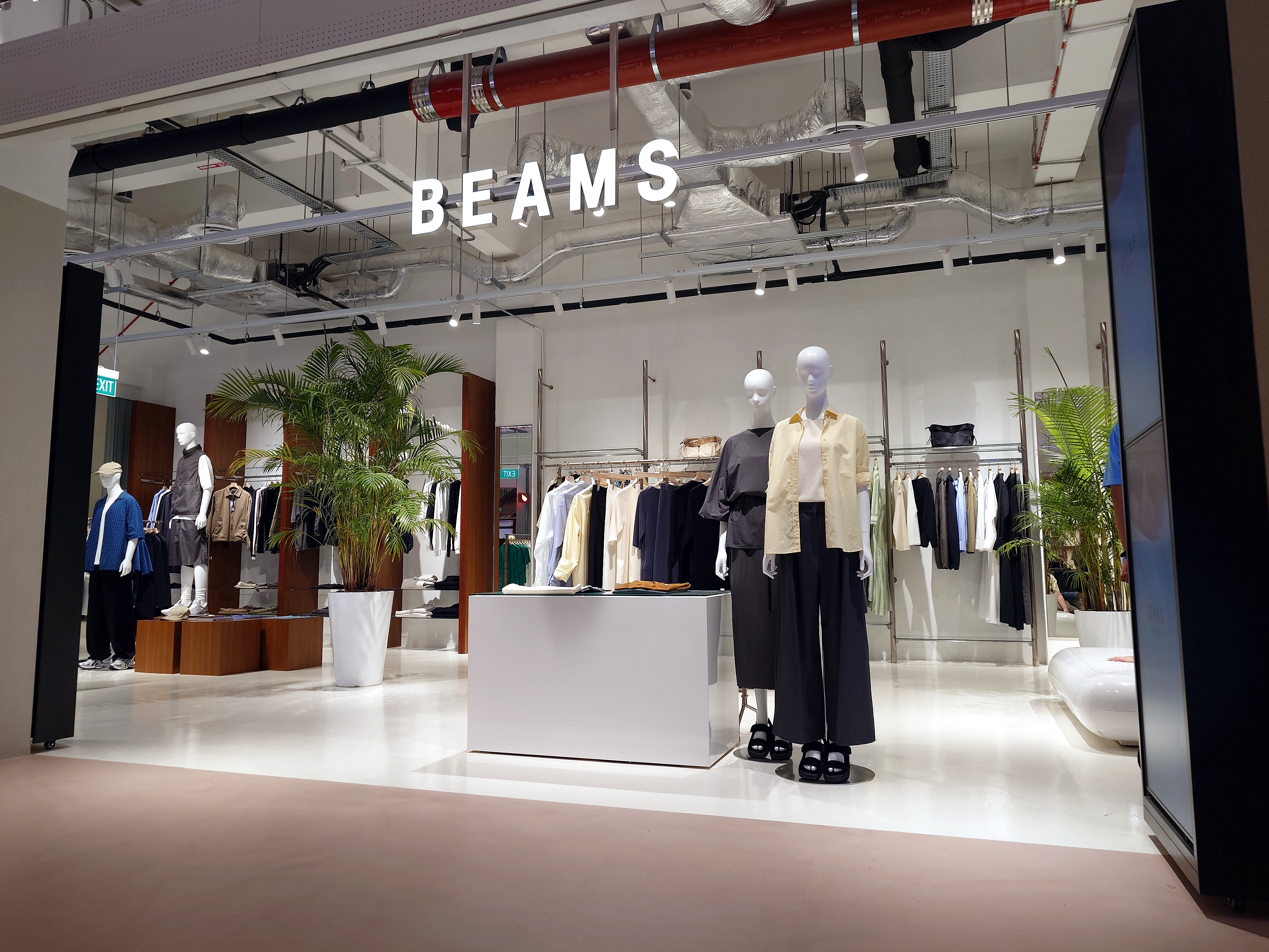
Beams has had an on and off relationship with Singapore. It’s inaugural visit was in 2014 as a pop-up at the defunct Kapok store in the National Design Centre. It has been chasing that initial lapse in judgment ever since. That first visit was a 30-day sojourn. It took a full month for them to truly appreciate the difficulty of selling to the crowd here, known to be resistant to charm, taste, and quality. Selling here requires a special kind of masochism—you offer refinement to a room that would honestly prefer a discount voucher. But that somehow was the allure for Beams. In the past 12 years, they have returned intermittently in various forms (pop-up was preferred) and through the proxy Colony Clothing. And then permanently (at least, so far) within the Lumine store at Raffles City. And then the pop-up again—curiously at the newly opened wing of New Bahru, the Factory Block.
Before we get to Beams itself, there is the small matter of braving New Bahru first. We had originally visited Beams on its first announced opening date of 28 April. As it turned out, there was a three-day delay that we were not aware of. New Bahru is one of those buildings-turned-“lifestyle”-centre that is described as “destinational” because it is not easy to get to. As it is tucked deep inside the residential River Valley neighborhood at Kim Yam Road (off Mohammed Sultan Road), it lacks a direct MRT and bus connection, making accessibility a frequent complaint among visitors. There is a shuttle service, but not all first-time visitors are privy to that information. Perhaps that would not be a problem for the bulk of their targeted customers. If social media is to be believed, New Bahru draws the “creative class”. But when we arrived at the School block (Former Nan Chiau High School) of the two-building complex, which lacked defined entry points, we were unexpectedly overwhelmed by the stroller-and-poodle brigade.
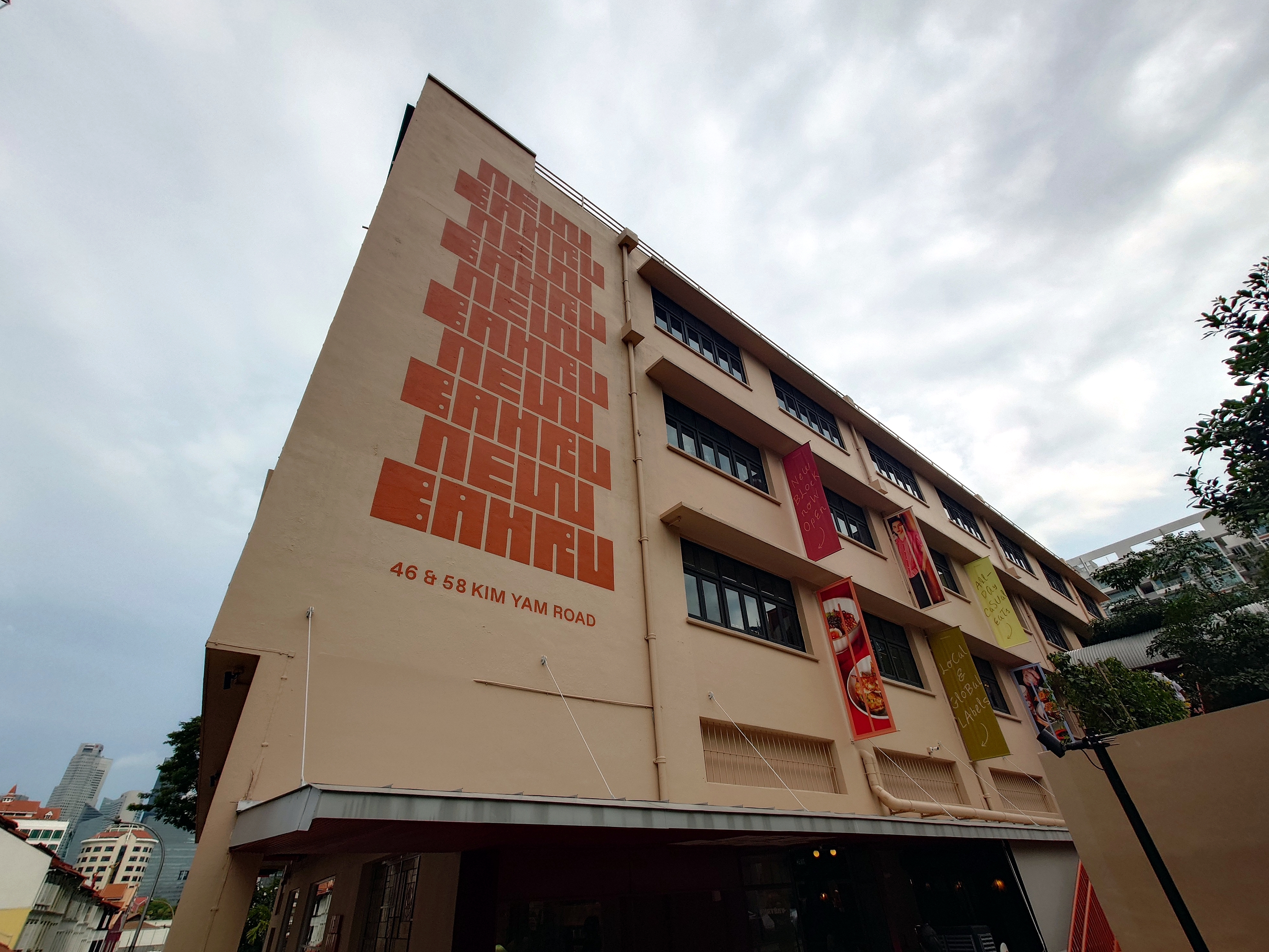
New Bahru touts itself as a “campus of creativity”. On the actual grounds, it seemed to us part Café Melba at Goodman Art Centre and part Tan Boon Liat Building, only much shorter. The “campus”, as it turned out, is not quite a crucible of “creativity”. It implies organisation, clustering, and shared space. It’s about proximity, not necessarily innovation. You can have a campus of banks, a campus of fruiterers, or a campus of yoga studios, but it doesn’t assure creative output. New Bahru is, however, not the first to fall victim to its own linguistic inflation. On our island, this isn’t exactly unique—Gillman Barracks was branded as a contemporary art cluster, Funan as a “tech playground”, DORS as a “creative incubator”. In each case, the rhetoric outpaces the reality. And, notably, the use of a school for retail is not exactly new either. In 2008, Comme des Garçons, together with design maestro Theseus Chan of WERK, opened CDG’s legendary Guerrilla Store at the former Methodist Girls’ School on Mount Sofia. It was housed in an actual classroom, with the old desks and new scrawls on the blackboard. What stood out and is still remembered is that it was an organic, insider secret. They did not have to sell manufactured cool.
Beams is sited away from the corridored sprawl of the School Block, in the Factory Block that was once the production home of Tai Wah Garments, considered a cornerstone of Singapore’s manufacturing boom in the ’60s. Beams is on the ground floor of this smaller building and is better accessed through the entrance on Kim Yam Road itself. The Japanese brand enjoys a singular presence on this level, anchoring a retail mix that skips from sneakers and outdoor gear, to homeware, and, inexplicably, dumplings. While we were there, the storefront remained largely untroubled by browsers, even when there was a sizeable crowd in this block, which seemed to draw the resolutely hungry, presumably because the Dining Hall is here on the second floor. In all likelihood, the primary draw is less the curation and more the seductive embrace of central air-conditioning—an attraction few escaping those muggy corridors next door can resist. Even a design hub is really a tactical, 23°C refuge and, conveniently, a queueing zone for food.
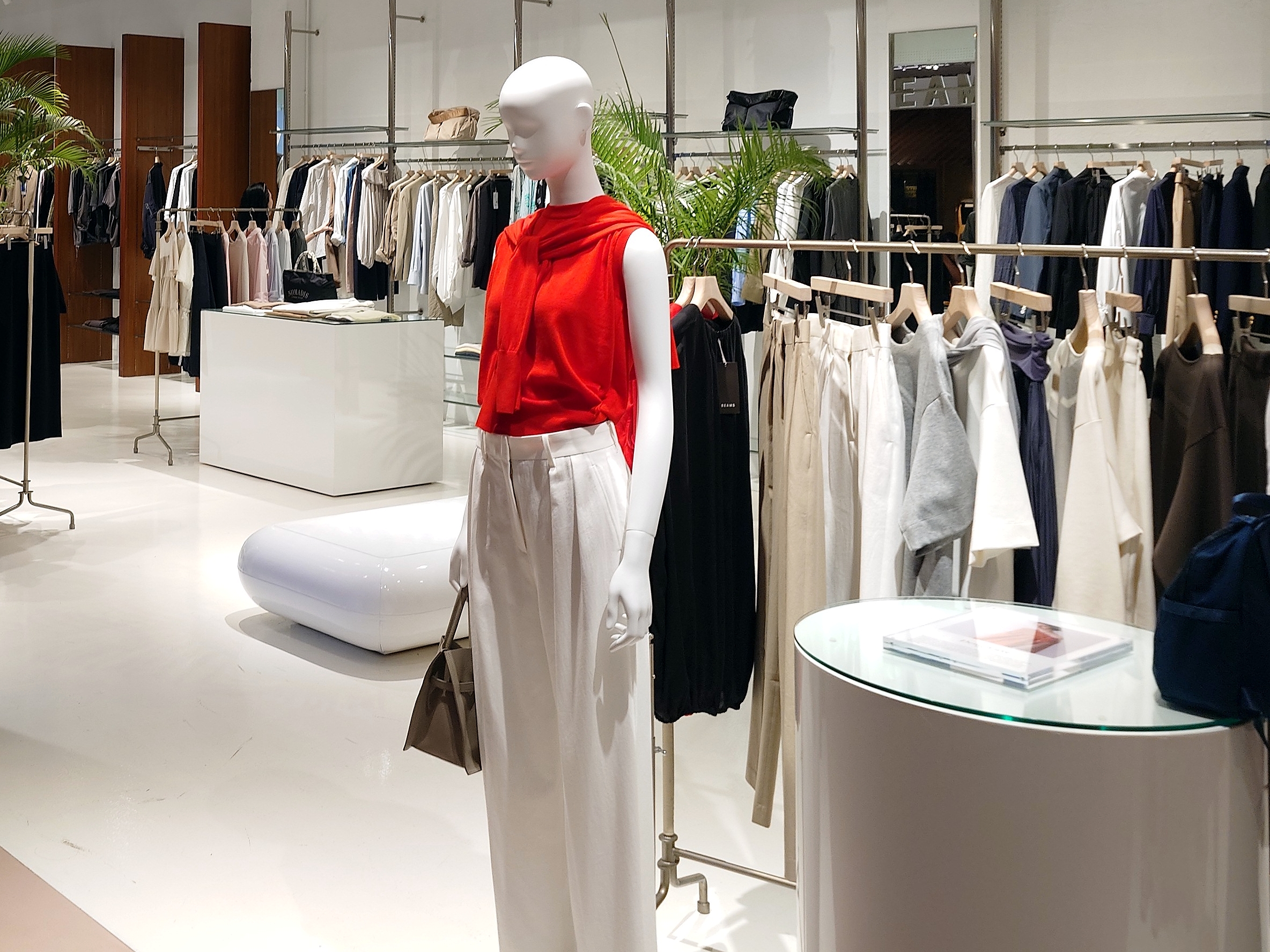
Like its past pop-ups and the placid presence at Lumine, Beams in our city is a shadow of its Japanese self. We calibrated our expectations well below the Shinjuku flagship, yet we still managed to be over-optimistic. The elongated store, with the palette of beige, metal, and wood, is not small—about as spacious as the Beams at EmSphere in Bangkok, which seems to us a more intense street-forward and high-energy space than the one seen here. Staying away from the Ivy League/preppy aesthetic that is part of its wide-ranging lexicon, the merchandising leans into the commercial, calculated reality of the Singaporean fashion consumer too concerned with the unceasing heat to bother with sartorial effort. For the men, this translates to a relentless rotation of T-shirts; for the women, lightweight blouses and aggressively low-effort dresses to meet a potential mother-in-law for the first time. We are not Tokyo, but we are somehow functioning as its forgotten and forgettable, humid outpost. The tempting question is, did Beams dump down for Singapore?
Outside of Japan, Beams is not directly managed by the Tokyo head office. In Bangkok, the stores are run by a franchisee, The Mall Group (owner of Siam Paragon and EmSphere). In our city, Beams has been variously associated with the menswear store Colony Clothing. While the developer of New Bahru, The Lo & Behold Group, enthusiastically trumpets the arrival of a marquee regional flagship to validate its new real estate play, Tokyo quietly registers it as a risk-mitigated, long-term pop-up (they called ours a “limited store” in Japan), purportedly shielding its global balance sheet behind the operational buffer of Beams Taiwan and a localised company named Infinity 23. It offers a telling glimpse into the enduring weight of their uneven SG experience. While the local press screams “flagship”, Beams has constructed enough corporate insulation to pack its duffel bags and go home the moment the stroller brigade proves completely unseduceable to the cult of sleek, smart Japanese utility.
Photo: Galerie Gombak

