As usual, all flash, no dash
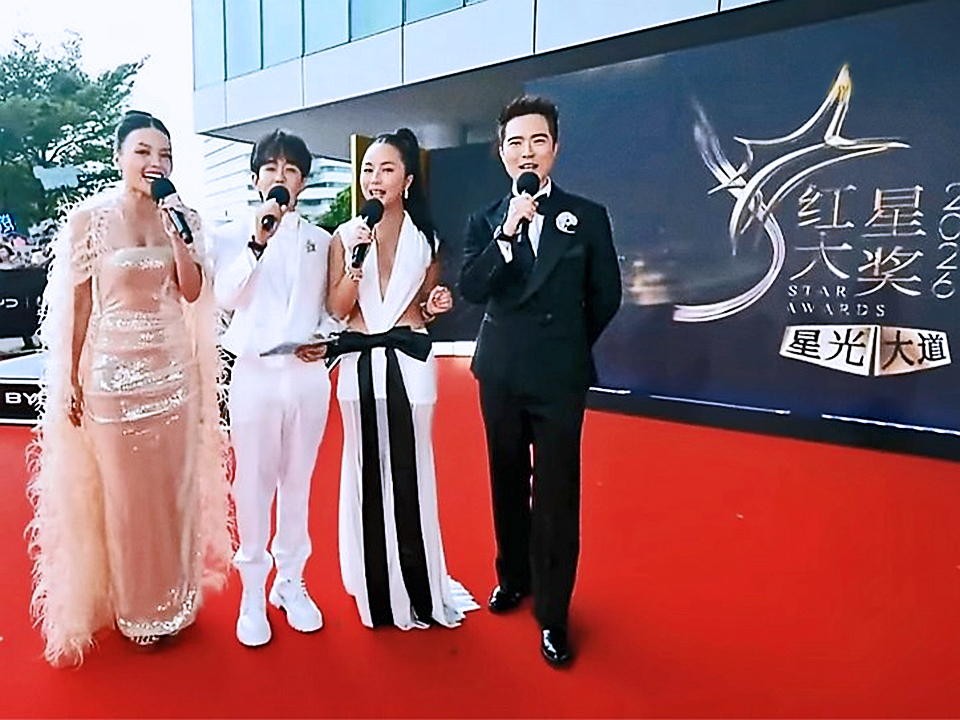
The four hosts of the Walk of Fame: (from left to right) Hazelle Teo, Jeremy Chan, Germaine Tan, and Lee Teng
Thirty one years later and the plot has yet to thicken. Star Awards (红星大奖) 2026 might have hinted at the firmament, but the only thing truly celestial is the astronomical amount of time we’ve spent waiting for a single sign of evolution. It is amazing that year after year, they dish out the same dullness as if the last three decades were just a very long, very draggy, very beige rehearsal for a premiere that would never actually come. In the lead up to this year’s Awards, one trailer that kept popping up on television and online claimed that the event “真的是星光熠熠啊 (is truly dazzling)!” There is scintillating beauty in self-aggrandisement for a ceremony that has yet to unfold. If they put half as much effort into being significant as they do into pretending to be, they might actually survive a brush with the truth. Prestige can be manufactured. Style remains stubbornly not.
This year, the Star Awards was themed “Born to Glow”. That sounded like inevitability than merit. In Chinese, it was “零起风华, 微光成炬” or From Zero to Brilliance, From Spark to Torch. What a scintillating feat to 一步登天,突飞猛进! To Heaven in a Single Bound, To Rapid Progress with a Sudden Advance. Chinese four-character idioms (成语, chengyu) are traditionally cautionary or descriptive, but here they became a sly mirror, showing that the slogan was just a modern remix of ancient shortcuts. “Born to Glow”—like being “dazzling”—sounded like an over-promise. You can’t ignore the wicked irony, too: The red carpet was essentially a slo-mo 烤肉架 (kaoroujia or rotisserie) set against a 29°C forecast that felt like 33°C once the AccuWeather humidity joined the chat. Traipsing down the Walk of Fame (星光大道) was a one-and-a-half-hour affair, as Desmond Tan did in an ankle-length wool coat isn’t just a fashion choice; it was a committed performance piece: “You, Jane. I, Human Sous-Vide.”
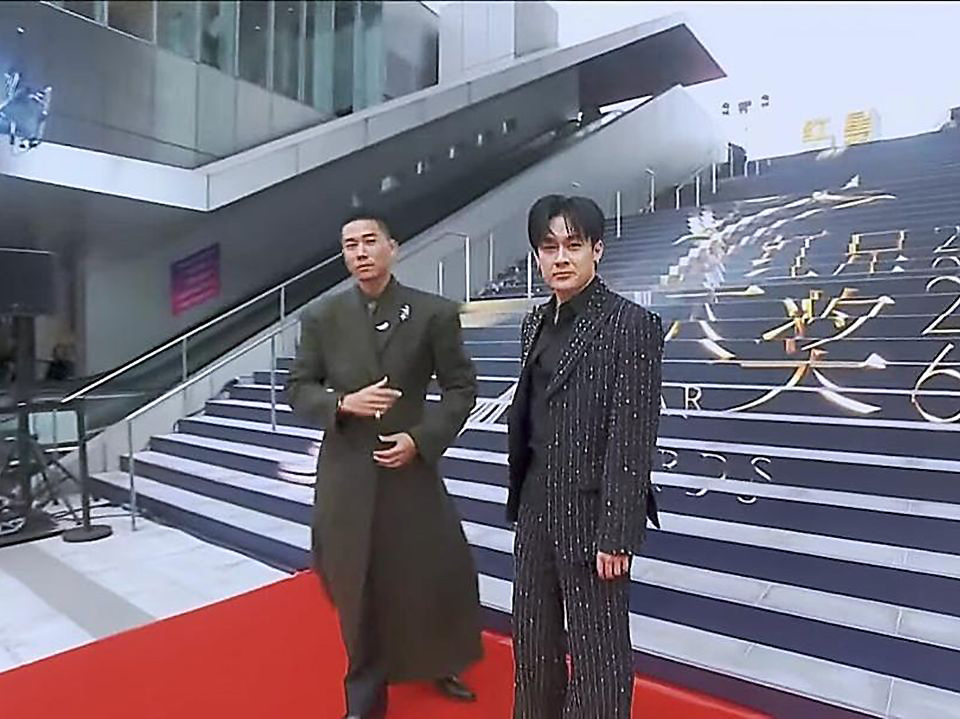
Desmond Tan and Richie Koh performing the Walk of Fame
We have always been intrigued by MediaCorp’s glowing artistes who love outerwear on the red carpet, even if they’re “just a spring coat”, as one Desmond Tan fan told us after the telecast of the Award ceremony. Even for spring, a coat keeps warm. But that should not be the coat’s main function on the red carpet, which for the Walk of Fame, was laid out at the outdoor Mediacorp Campus Plaza in equatorial splendour. The weather was so nourishing that some of the stars expressed appreciation for the fans who turned up and could take being baked. Mr Tan continues his unwavering devotion to the ankle-length coat this time, draped in enough double-breasted excess from the French designer Louis Gabriel Nouchi to suggest the actor was either deathly allergic to a breeze or, come Walk of Fame time, prepared to be whisked away by a sudden and violent typhoon. It is possible that he views a mild drop in temperature as a personal assassination attempt.
The tailored outer is, of course, the preferred choice of the male stars and those nearly there. This year, almost all wore blazers with pronounced shoulders, including Mr Tan. Leading the loaf-ly pack were two radio DJs, for whom looking iconic has been the only thing keeping their egos from falling out of their seasonal packaging: Jeff Goh (吴万隆) and Kenneth Chung (钟坤华). Mr Goh wore a pale green-grey, double-breasted suit (unidentified) that was as boxy as a delivery van, but with less the usefulness. He seemed to have a thing for the anti-fit, happy to look like an uncle nervously trying to pilfer two sourdough boules beneath a blazer that clearly had no interest in being an accomplice. His fellow YES 933-er, Mr Chung, kept his shoulders prominent, but he looked like a deflated puri. In the past several years, he was sure to make himself noticeable, especially his footwear, but for 2026, he shifted the attention to a spot that enjoyed the proximity of his heart.
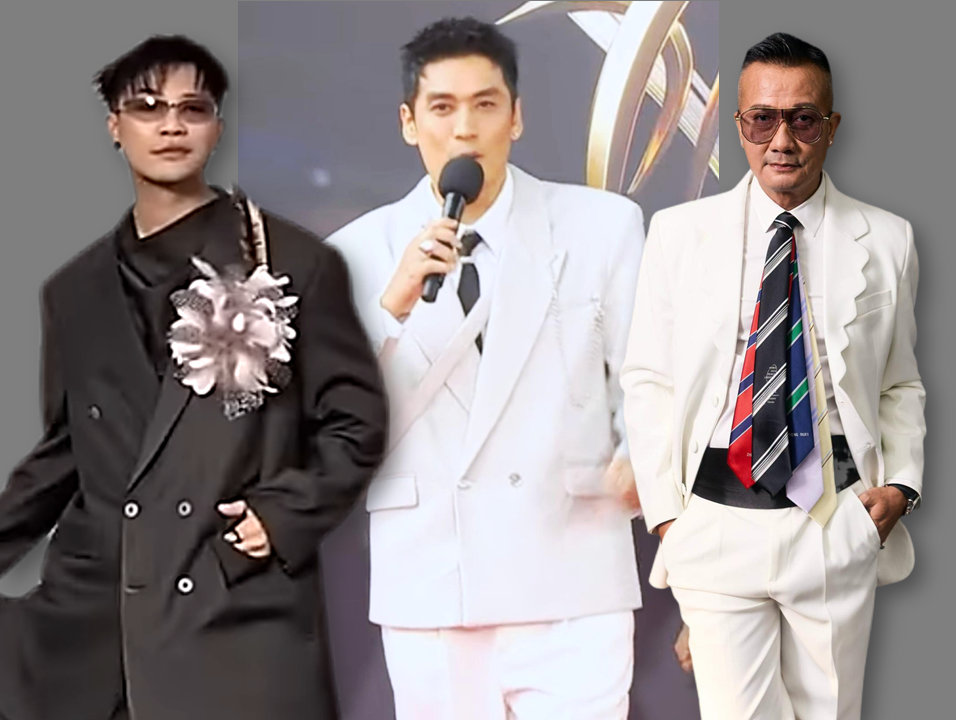
Keeping the suit-jacket fancy. From left, Kenneth Chung, Jeff Goh, and Chen Hanwei
For those who allowed not the shoulders to do the heavy hoisting, accessories played a vital part. Forget the women leading the charge; it was the men who decided to be the peacocking centerpieces, draped in enough finery to make a Baccarat dangling from the ceiling look underdressed. Mr Chung plonked a massive mixed-media floral on his left breast of the Terry Lim-designed blazer, the way Carrie Bradshaw did, but without the flair to run miles in Manolos. Not to be outdone, Elvin Ng (黄俊雄) placed an even larger bloom, similarly on the left side of his chest, but as it was larger than his face, it sometimes appeared to be overgrowth from his underarm. More discreet was Zhang Ze Tong (张哲通), who wore a semblance of the bunga kantan bud on the lapel of his Dries van Noten tux (that was reminiscent of the tulips that the grooms Marc Jacobs and Char Defrancesco wore when they got married in January). There were other sensational sundries. Chen Hanwei (陈汉玮) decided that five ties were better than one. The fabric display was flanked by lapels with scallop edge, cleverly beating the narrow, embroidered versions seen in Emerald Hill: The Little Nyonya Story. Less competitive was Tan Ting Fong (陈廷丰), another radio DJ, with merely two (or was it three?) ties. Nothing says chin decor better than a conference of pussy bows.
When the red carpet was a runway for the men’s plumage display, it gave the women a chance at consistency that out-matched a dial tone. Sexy, sheer, and strategic were present, accounting for every square inch of the red carpet that wasn’t already occupied by a man’s vanity. In the heat, it is hard to glow when you try not to glisten. Which is why some of the fellows were three degrees from melting, while the women simply looked like they were being backlit by a higher power. It’s the ultimate in climate-controlled narcissism: providing the men with a view while ensuring the women remain the only ones not reaching a boiling point. He Ying Ying (何盈莹) clearly understand auto-cool in her Ferragamo tunic with a V-neck designed to let the heat out and the judgment in. Or Bonnie Loo (罗美仪), in a gown by the Vietnamese label Firefly Studio that was a commitment to the rice paper aesthetic. When the weather is unforgiving, it made sense to come as a summer roll. Even Aj Jie Zoe Tay (郑惠玉) understood the importance of ventilation. She wore a Valentino gown with a pink leaf placed diagonally across the bodice and an able slit, left ajar for her right limb to take a breather.
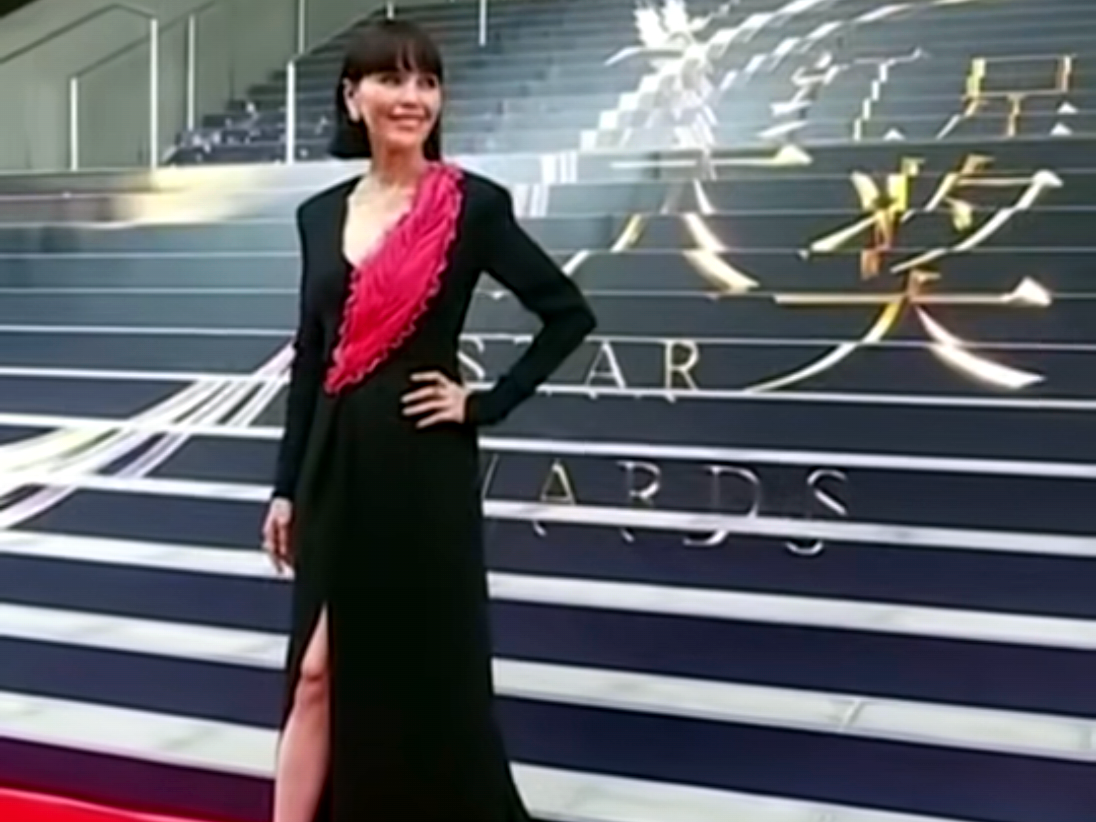
Zoe Tay in her veteran cool
The red-carpet action was merely the appetiser for the night’s main course: a total annexation by the Emerald Hill industrial complex. With its 17 nominations, Emerald Hill: The Little Nyonya Story was the tok panjang of the ceremony. The results arrived with all the suspense of a knock-knock joke from a three-year-old. Everyone knew who was behind the door, and yet we had to perform the ritual of asking “who’s there?” for three hours. That the best supporting actor went to Tyler Ten (邓伟德)—who wore a Bvlgari Serpenti necklace, again—rather than Andie Chen (陈邦鋆) was a move that prioritised the “glow” of a brand ambassador over the grit of a seasoned actor. Mr Ten is the “Born to Glow” archetype, the ready ‘spark-to-torch’ darling. Even Jesseca Liu’s (curiously, also Serpenti-wearing) long-awaited Best Actress win—secured after twenty-two years of riding the proverbial “unicycle”—felt less like a breakthrough and more like a final, weary coronation in a kingdom that has run low on new ideas.
When a single production such as Emerald Hill eventually secured seven major wins, it reinforced the pat-on-the-back view that so many have held about the Star Awards since its inception. It reinforced the perception that the awards are less about serious evaluation and more about affirming the success of Mediacorp’s flagship dramas. They say that Emerald Hill is too popular not to be so vividly recognised. McDonald’s is crowd-pleasing, but it isn’t in the Michelin Guide. Or, take Peranakan embroidery on the kebaya: the floral motifs are admired by many, but the apex of craft is judged by the fineness of the needlework, the subtlety of the cut, the discipline of restraint. Popularity applauds the craft; the craft is measured in precision. If there is one thing the Peranakan culture teaches us is that the apex of craft is best exemplified in their cuisine’s most popular ingredient—the buah keluak. It’s not an attractive seed, with a pulp that is vile black. To make it edible, it is first fermented, then cleaned, and prepared over days. The smell brings people in, but it is the craft that keeps the dish very much alive. It is not born to glow, but illuminate the palate it does.
*Flowery but bearing no fruit
Screen shots: MediaCorp and mediacorpentertainment/YouTube

