The undertakings Melania Trump has set in motion—including the recently announced Imperia—are decidedly heavy. Her televised explanations of where they are headed are rather less so, even than the jackets she has worn to the recordings
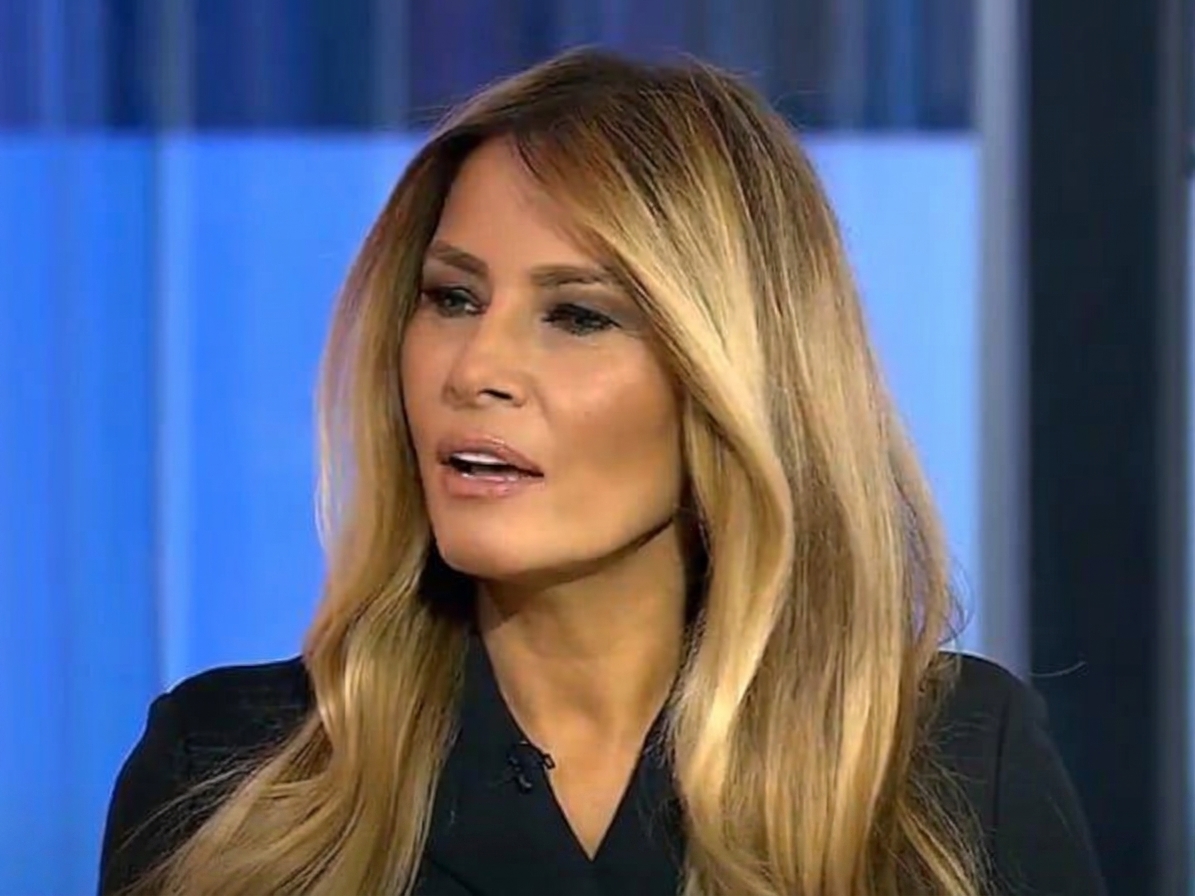
Melania Trump announced her latest venture Imperia in September—news we let drift past without a hint of bother. The Latin name momentarily piqued our curiosity, though we let that go unexamined as well. And then came the interview with Stuart Varney of Fox Business‘s ‘Varney & Co’ two days ago. As is customary for interviews with the first lady, it kicked off with a marshmallow of softball disguised to probe. Less than 30 seconds later, while lightly discussing her Ukraine-related work, she helpfully pointed to institutional resources available to her—the United Nations General Assembly—only to shrink it to “Nation”. Yes, in the singular. We might have let this slip-up pass as people drop articles, plural endings, and syllables in live interviews all the time. But Mrs Trump had spent the past two months touting her own “initiative” Imperia, which is allegedly global in scale. Counting past one when invoking the United Nations feels like an entry-level requirement for a global platform. After all, Americans would, no doubt, be very shocked if she called the U.S. “United State”.
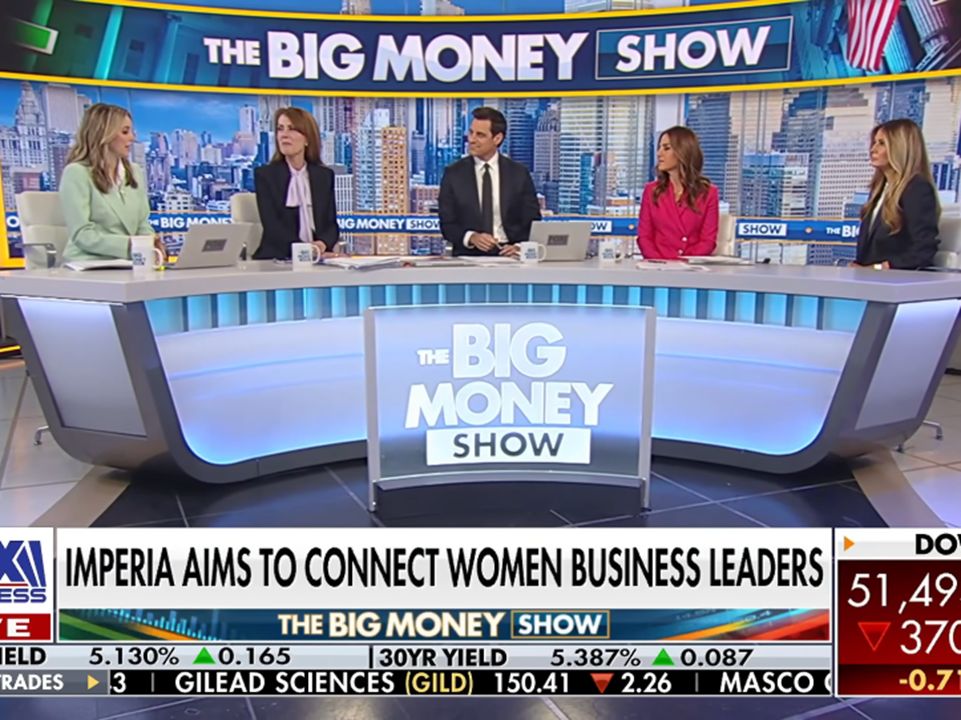
To launch Imperia, Mrs Trump made quite a publicity triumph of it. The introduction took place at the New York Stock Exchange (NYSE) as part of mutual back-scratching dressed casually as market heritage. This was not the first time she delightfully rang—or pressed, to be precise—the opening bell. Back in January, she activated it alongside NYSE leadership to promote her Amazon MGM documentary, Melania, ahead of its release and subsequent derision. Eight months later, she was back, this time flanked by NYSE President Lynn Martin and AMD CEO Lisa Su, just to name two. Next to actual titans of industry, Mrs Trump looked like a plus-one who had wandered onto the wrong stage, with the visual register of pocket lint. She followed the bell-ringing with two Fox News interviews later that day, a safe-space itinerary that welcomed her arrival like a papal blessing, highlighted by one host declaring, “We’re beaming in your presence. We can’t thank you enough for being here”. That sounded less like journalism than a fan meet and greet.
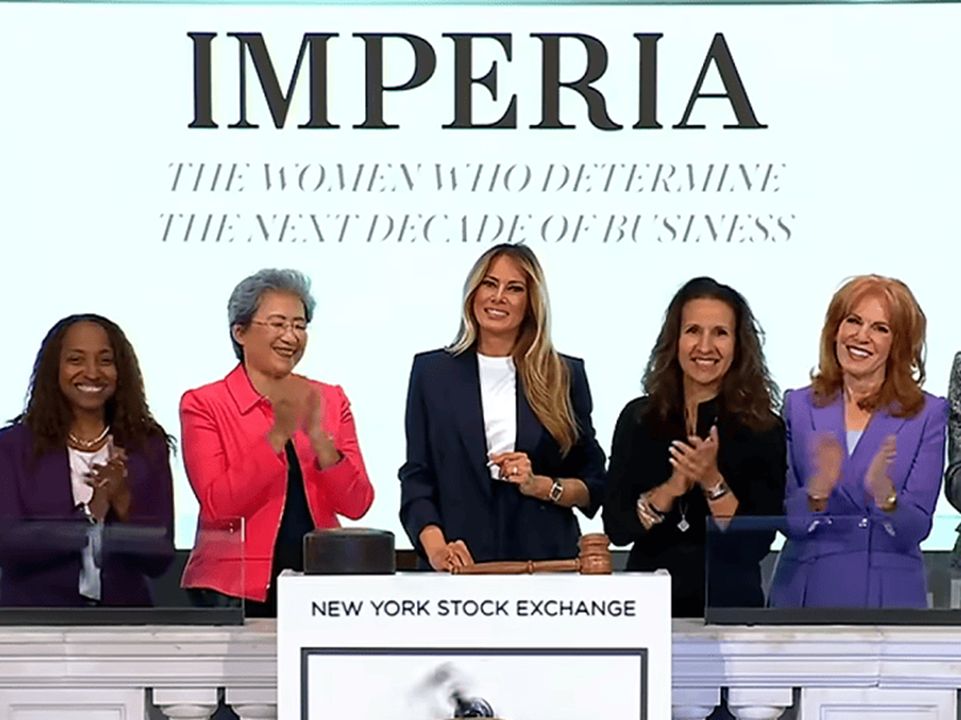
For that NYSE morning alarm—part financial drama, part personal publicity—Melania Trump wore a wool, pin-striped, navy skirt suit by Givenchy, according to Breitbart News. She channelled contrived ’80s Wall Street power dressing, paired with a white crew-neck T-shirt for a touch of Miami Vice—a nod to an area just 114 kilometres south of Mar-a-Lago, where Mrs Trump spends much of the year. But “power” here was the sort that arrived with a press release rather than a balance sheet. Whatever she had to say during the 15-minute chat show carried less weight than the wool of her suit. A friendly interview is usually where a founder shines. The host is effectively holding up the microphone and inviting the guest to tell the audience exactly what matters. But Mrs Trump refused to illuminate. She wasn’t being interrogated by a hostile journalist (one even asked her advice for his daughters), nor was she facing a congressional hearing. Yet, she struggled to put any real weight behind even her pre-chosen, careful words.
By then, it was already known that the Imperia name—which sounds like the Sony mobile phone line Xperia—was in use by Imperia Global, an international women’s business network founded in 2015 by entrepreneur Jennifer Forbes Iannolo. She recounted to the media that after Mrs Trump’s rousing NYSE morning made headlines, she was flooded with messages and social media follows. According to Ms Forbes Iannolo, she had to pause Imperia Global’s U.S. operations and relocate to Scotland after losing significant funding due to the Trump administration’s crackdown on DEI programmes. Critics quickly noticed that Imperia seems ideologically adjacent to many initiatives that the Trump administration has otherwise criticised under the DEI umbrella. Yet Mrs Trump breezily told her friends at Fox Business, “We’re not talking about that anymore.” By last week, the Aberdeen businesswoman had retained a trademark attorney and advisers to evaluate potential legal action to protect her 11-year-old brand, according to The Times. Not a word of response yet from the first lady or her team. Not a squeak of curiosity from Stuart Varney.
A friendly interview is usually where a founder shines. The host is effectively holding up the microphone and inviting the guest to tell the audience exactly what matters. But Mrs Trump refused to illuminate
The name “overlap”, as the media called it, brings to mind Meghan Markle, not because Melania Trump and Meghan Markle are the same person. They’re not. Their temperaments, public styles, and ambitions seem very different. But they share an identifiably recurring problem: the branding often outruns the demonstrable substance. Both women have a weakness for grand names, but grand names invite grand questions. The doomed American Riviera Orchard begged: Where’s the orchard? Where are the products? What exactly is this thing? When As Ever became the replacement, people asked: As ever what? What’s the core proposition? Likewise, when Melania launches Imperia, it is not unreasonable to want to know Imperia of what? An empire, if that is what the name hints at, generally governs something. A republic administers something. A foundation funds something. A university teaches something. An audience encountering a name like Imperia naturally expects a corresponding scale of achievement, thought, or institutional heft. Instead, they find a networking platform. And a person behind it that can’t quite say what it really does and will continue to do.
Fox News happily called Imperia “Davos for women”, a framing reportedly coined not by Mrs Trump, but her advisor Marc Beckman. That’s a fantastic publicist phrase. The problem is that a phrase like that also raises expectations dramatically. Founded in 1971, Davos—or, to be more precise, the World Economic Forum—is not just a gathering of successful people. It has accumulated decades of associations with global finance, geopolitics, technology, economics, and the exchange of ideas. But, crucially, it was not born as a men’s club. Davos already has female leaders in it. Mrs Trump has not explained why there is a need for a women’s version or what gap it fills. There’s something of a riding on the bandwagon about Imperia. Females executives rising to the top are still trending, and now, more so, staying there. Melania Trump is merely joining the party, a blowout organised by Marc Beckman, someone Mrs Trump seemingly trusts, totally. In circles like these, loyalty is often measured by who has the best lines. It is almost cruel to saddle a public figure with a clever label like ‘Davos for women’ while leaving her unequipped to explain what it actually entails
It is hard to see how the women-for-women trope qualifies as either a fresh idea or an indispensable one. When Maria Grazia Chiuri joined Dior in 2016, she too played that card: a woman designer designing for women. Why a decade-old talking point is still doing the heavy lifting remains unclear. Once a clever rhetorical fix, now the equivalent of a song dearly loved until it became every alarm clock ring tone going off in the morning. When Ms Chiuri first arrived at Dior (an East Wing favourite, even when that part of the White House is gone), the point was that the maison has always had creative leads who were men. Now a woman was in charge. That was a story. The problem is that every story has a shelf life and the expiry date keeps moving up. Ten years later, the question is no longer “what does a woman bring”, but “what does this particular woman bring”. Identity can open the conversation. Eventually it cannot be sustained. Mrs Trump’s message of “women should support women” belongs to the same rhetorical family as “women designing for women”. Neither statement is false, of course, but at some point, both eventually encounter diminishing returns.
At some point audiences want the next layer: support women towards what? Both designing for women and supporting women describe a demographic relationship. They do not primarily say anything about the underlying idea. At NYSE that September morning, Mrs Trump had AMD’s Lisa Su to her right. That was a symbolic moment, but Ms Su’s significance is not a woman leading women; she is leading AMD, competing in semi-conductors, and actively participating in the AI transformation that the first lady has been trying to spark interest in since walking down a White House corridor in March with a humanoid to kick-start the inaugural Fostering the Future Together Global Coalition Summit. Ms Su’s standing next to FLOTUS at the NYSE was a perfect opportunity for Mrs Trump to say on Fox Business, “We had Lisa Su with us at Imperia. AI is transforming industries, investment, and entrepreneurship. One of my goals is ensuring women are part of that transformation”. That’s not especially brilliant, but even that did not occur to her. Melania Trump’s strongest medium has never been speech. It may have been symbolism. The trouble begins when symbolism is asked to function as strategy, mission, or vision. That’s where the weight starts to disappear—right as the heft of her jacket becomes impossible to ignore.
Screen shots: Fox Business

