The bi-annual Boutiques Fair rebranded, dropping the latter half of its name, but it’s still small batch, large scale
Evidently worried that Boutiques Singapore, the rebranded, 24-year-old retail event, might struggle to draw a crowd at its usual F1 Pit Building haunt, CNA stepped in two days before the doors opened today with a Style and Beauty editorial. The writer dutifully recited the press release and touted that the fair “will spotlight over 300 brands across fashion, lifestyle, jewellery, beauty and more”. Never mind that “over 300” is an elastic bit of PR arithmetic where 301 is technically “over 300”, or that “more” tells the reader precisely nothing. Clearly unable to contain her enthusiasm, she continued: “And, of course, no Boutiques Singapore event would be complete without a wide array of delectable treats and immersive experiences for the whole family”. Quite how she already knew the treats would be delectable before a single stall had opened (the preview was only last night) remains a journalistic mystery. Or how “immersive” the F1 Pit Building can actually get when its main job is being a glorified garage.
Stranger still was the total silence around the name change for the event formerly known as the Boutiques Fair—a bold new identity so exclusive that even the press release wasn’t told about it. Back in July, The Straits Times reported that founder Charlotte Cain had launched Boutiques Asia: The Bangkok Edition—which presumably meant the flagship in the country where it all began suddenly needed a suffix just to tell itself apart. Yet we cannot help thinking that dropping “Fair” from the moniker was a transparent play for prestige positioning. Having spent over two decades—dating back to a modest, one-day, 17-stall fair in 2002—wedded to the word, we are now apparently asked to believe the whole thing is strictly an all-boutique affair. It is quite a revealing rebrand. Dropping “Fair” removes the whiff of a temporary market (even when it still is) or a trade event. Boutiques Fair has always been an oxymoron for us. Together, they also create a comic image: a giant event celebrating smallness.
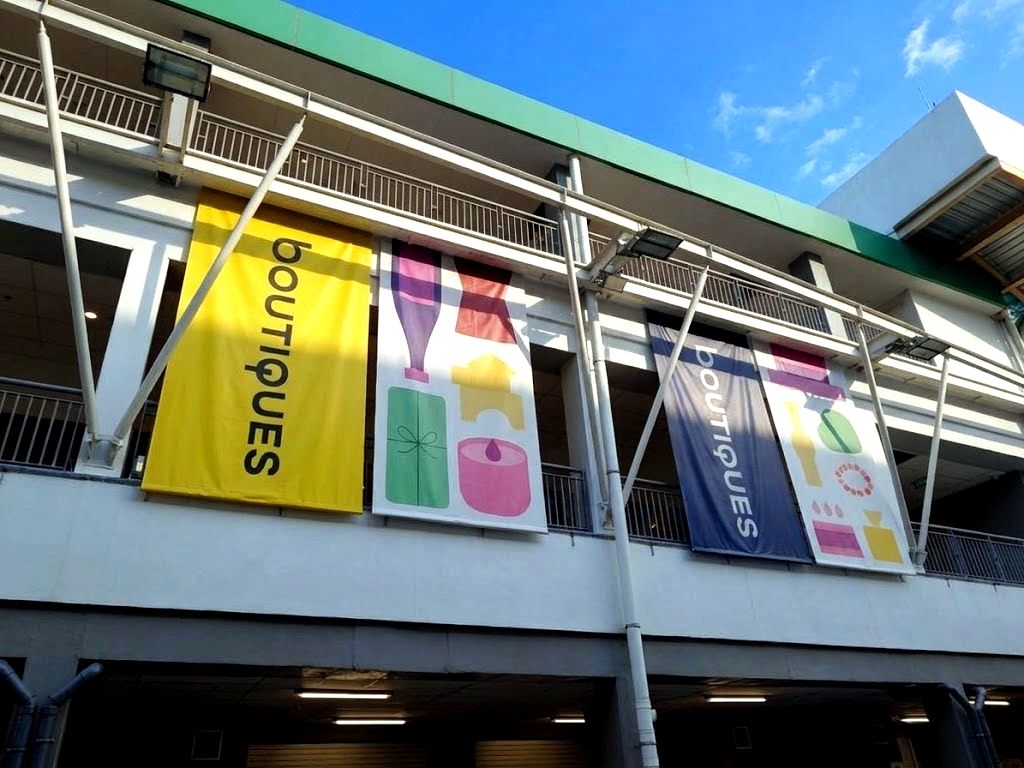
In its earlier years, what made Boutiques Fair known was not that it was “boutique” in the retail sense. Rather, it concentrated practitioners of craft and small-scale production who were otherwise dispersed or unrepresented. The word that would have been more accurate was almost “makers”, although it now carries its own Instagram-era baggage. So perhaps the name change was inevitable. But strangely, the application this year is inconsistent. On one end of the ultra-long Pit Building façade, two drop banners out of four were emblazoned with the word “boutiques” (in lower case). On the directional drop signs and standees at the entry points into the event proper, “boutiques” was used followed by “SINGAPORE” in the next line. Upon entering, we were immediately greeted by a venue guide behind a table. The black tablecloth on it underscored her upper body and welcomed us to the “boutique FAIRS SINGAPORE”—a mash-up that has never even been the event’s historical name, even if it is used in the web address. This is oddly inconsistent, but visibly a pasar approach to branding and, perhaps, a fitting preview of what lay inside.
But even curiouser was that no one seemed to know when “Fair” was kicked out of the picture. We spoke to five vendors and none them were not able to tell us when. One even asked: “Got name change, meh?” We were not aware of it until reading the CNA article. When we looked into it, we could not find an official announcement that gave the exact date. One stall-keeper told us that “it could be 2025”. But in April 2024, media coverage was still referring to the event as “Boutiques Fair” (The Peak even called it “Boutique Fairs”), as well as “Boutiques Fair Spring/Summer 2024 edition”. By October of that year, the organiser’s own website was using the name “Boutiques Singapore” for the Gifting Edition 2024. Dispensing with “Fair” likely occurred between April and October 2024. A quietly executed rebrand with zero fanfare—presumably because “Fair” sounded a bit too humble for the markups. The renaming is almost an inadvertent confession. The old name at least implied an event format. The new name is so abstract that it effectively says that they are no longer defined by what is made within, but by the kind of taste they represent.
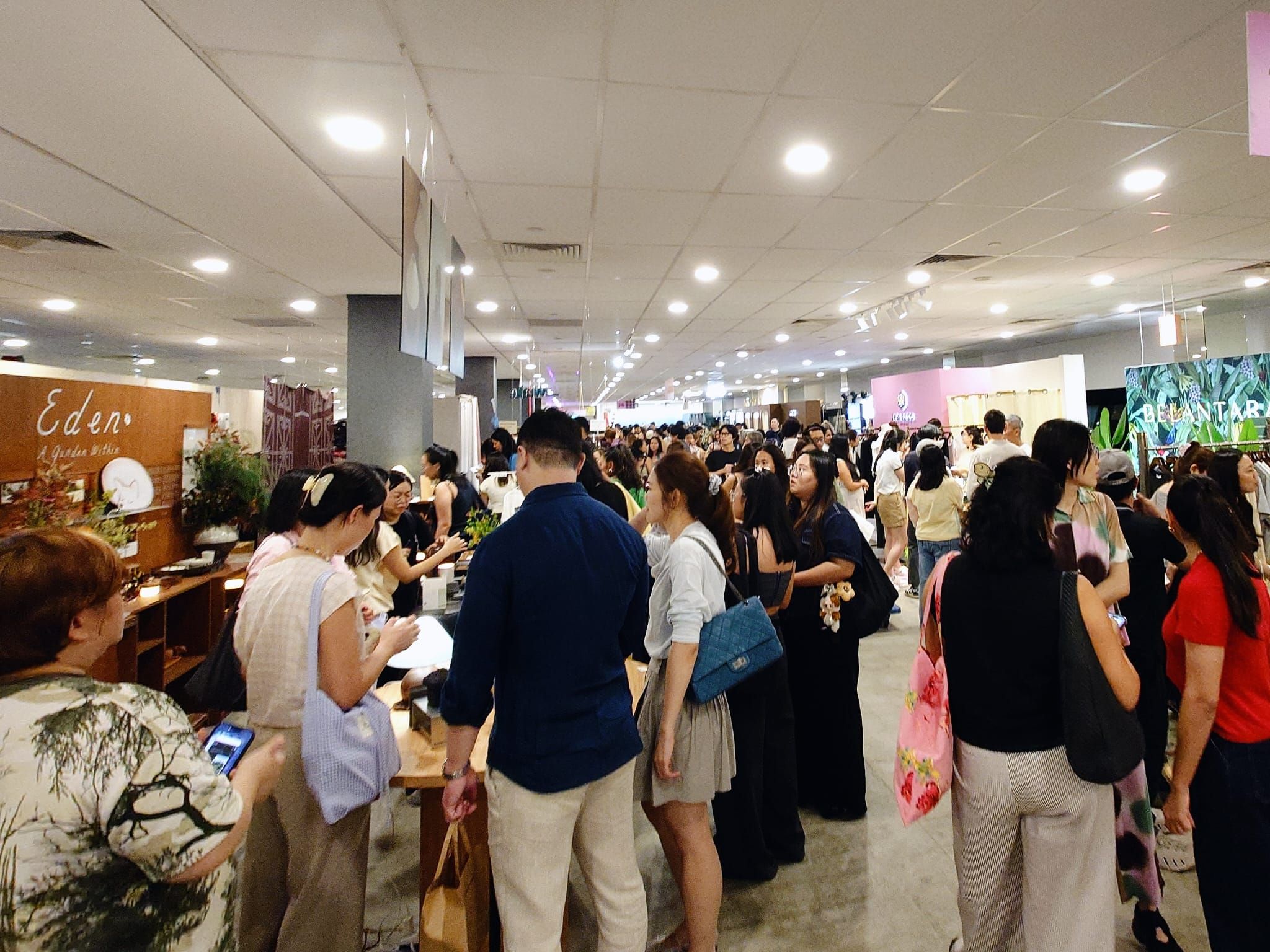
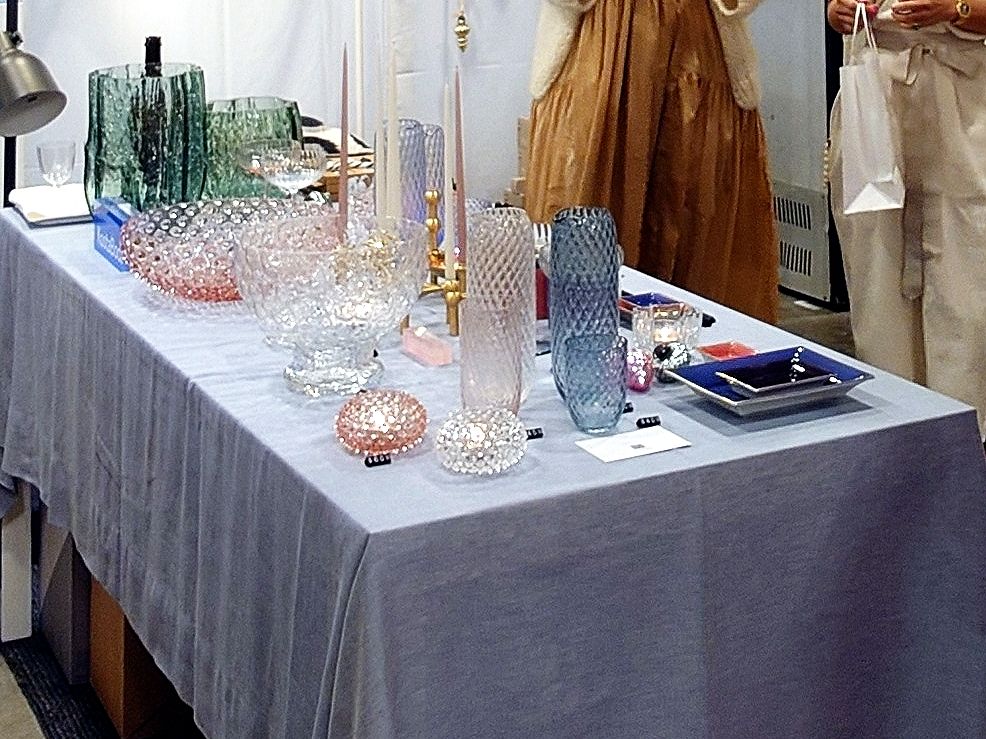
An atas positioning is understandable. Aspiration pulls people—and brands—up. However, what is the point of a sleeker name and logo when the event hasn’t traded upwards, looking no different from last year, the year before that, and the one before that? Aspirational repositioning only works when there is evidence that the thing itself has moved. After we entered, starting the event from level three and working down to two, the first thing that hit us was how familiar everything was. The fair (let’s just call it what it is) still consisted largely of temporary booths, folding fixtures, densely packed vendors, the usual categories, and broadly the same retail proposition as five or ten years ago. Removing “Fair” began to look superficial and meaningless. The language may say institution, but the content says “Fair”. If a visitor from, say, 2018 were teleported into today’s event, would they conclude they were seeing a fundamentally new proposition? We doubt it. Some vendors were still selling off tables, with crude tablecloths thrown over them, and products strewn like they were in the middle of a stock count. The fair format was clearly alive. The boutique, barely.
To us, Boutiques Singapore and its previous guise have always been expatriate women’s gaze on what is Asia, its attendant craft and fashion. It was, for a long time, filtered through that particular lens, a sensibility that was present from the beginning, not a later corruption. “Boutiques” in the plural form is an odd banner to brand an event around. In any case, a boutique is simply a retail format. It is not a discipline, a craft, or an artistic category. It tells us almost nothing about what’s being displayed to be sold. Over the years, the craft heart at its founding lost its steady beat, but is still there, in the hum of a street bazaar—less a curated artisan studio and more the bustling energy you’d find in the tourist districts of neighbouring Southeast Asian cities. Charlotte Cain’s own biography matters here. The event didn’t arise from Singapore’s traditional craft communities deciding they needed a marketplace. It emerged from a small network of designers, makers and entrepreneurs that Cain already knew. The original curation inevitably reflected those social and aesthetic circles.
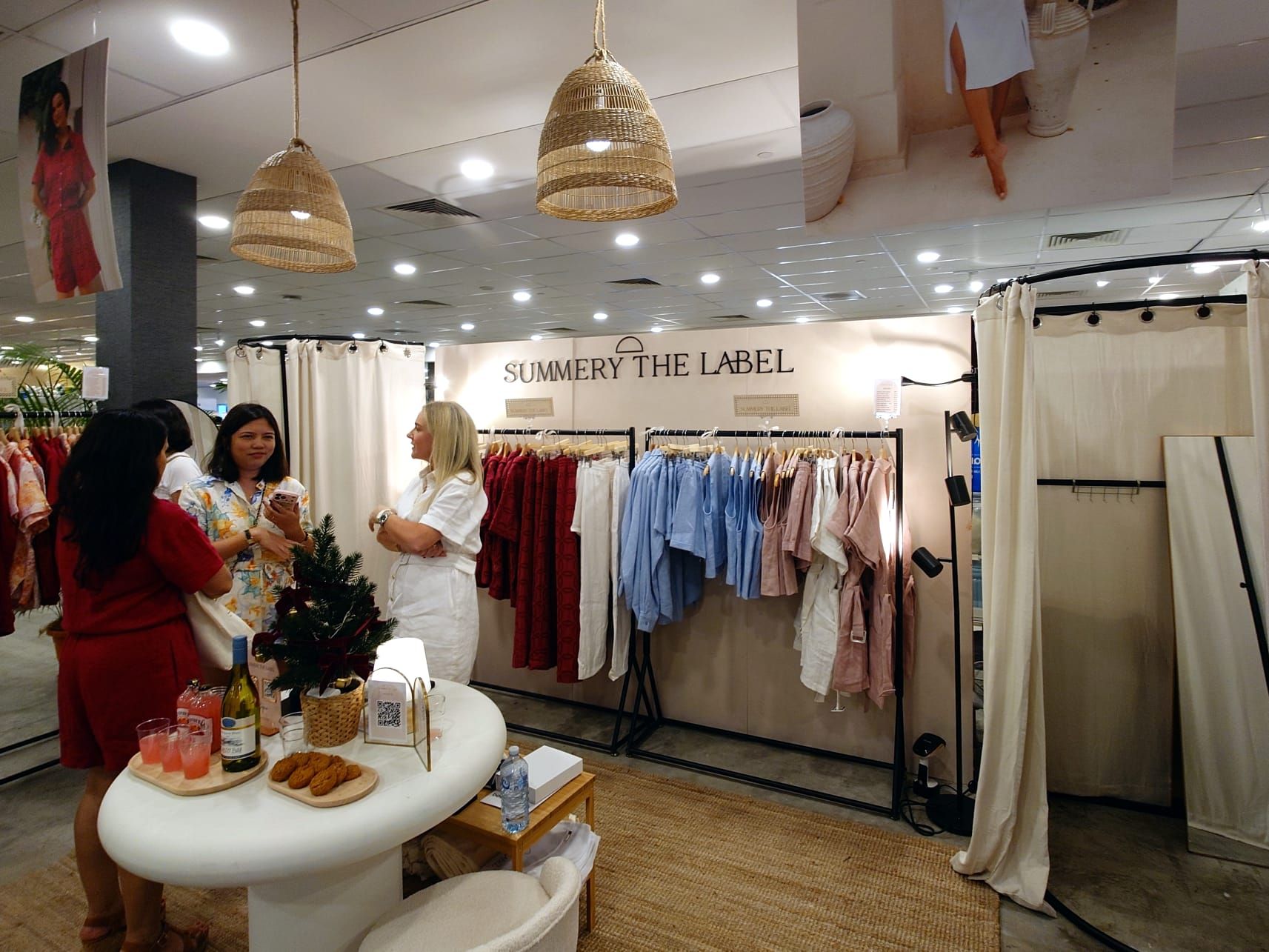
What still fascinated us at the fair was that this gaze often presents itself as cosmopolitan and pan-Asian, but it is actually highly selective. The “Asia” of Boutiques tends to veer towards what may be perceived to have exotic value. For a long time, the usual suspects were from Bali, India, or Nepal. And it was artisanal but not necessarily vernacular, ethnic, but not too much, colourful but not within taste limits, local, but legible to a globally mobile customer, and, crucially, culturally distinct but not culturally demanding. Sometimes we wonder, when gleefully fluorescent batik T-shirts were spotted, if the vendors had gone to Bali’s Garlic Lane and enjoyed a container-load liquidation event. And we can’t help but feel that these objects no longer celebrated Southeast Asian craft heritage but a garment someone failed to sell in Kuta. The problem with that is once that possibility enters our mind, it’s difficult not to look at some of the merchandise in quite the same way. To be sure, the issue isn’t geography but symbolism. Some places confer immediate lifestyle value. Others just do not.
Talking to shoppers at the fair confirmed our hunch: many were repeat visitors. When asked what brought them back, most drew a blank. One lass did say, “Aiya, nothing to do, follow friends, lor.” Through the years, we have observed the fair-goers to be a mix of expatriates (two different women, sundress-clad and sun-drenched, told us that they were here to support friends who had set up stalls), locals, and tourists, or people who profited from or identified with that ecosystem. As we finished the second storey of the fair, which surprisingly did not take up the entire length of the floor, it dawned on us that we might have stumbled upon an event organised by Expat Living. Lest we be mistaken, not because all the exhibitors or visitors were expatriates, but because the aesthetic centre of gravity can feel remarkably similar. The recurring ingredients were unmistakable: resort and holiday fashion; homewares that signal vintage-y, global taste; artisanal provenance; wellness products; indie labels, founder narratives; ethically flavoured consumption; and most definitely, hints of a bohemian bent. The observable thing is that many Singaporeans have joined it. When we left less than an hour later, we noticed the yellow drop signs above us again, and realised the abbreviation of the new name spelled BS. How fascinating.
Photos: Zhao Xiangji

