Persistent online chatter points to Chemena Kamali occupying the seat Anthony Vaccarello recently vacated. The thrill is not yet palpable
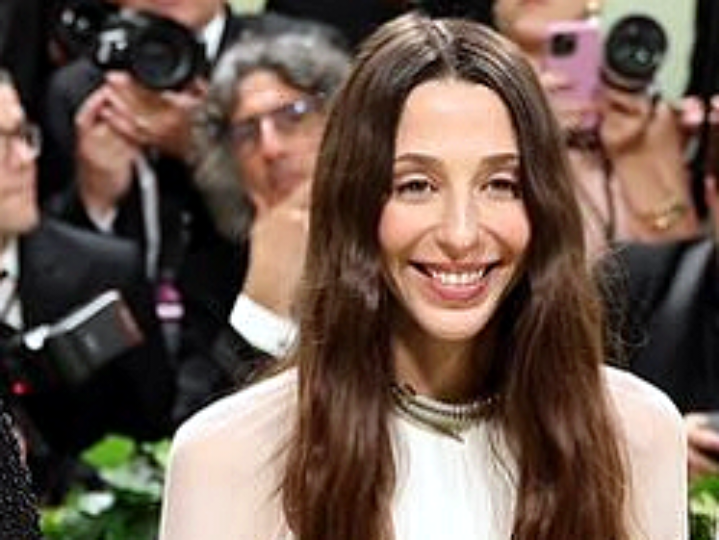
Rumours are no longer that—they’re really just spoilers for reality. Fiction used to take imagination; now it just takes a minute on social media and a crowd willing to nod along. No one was surprised that Anthony Vaccarello was leaving Saint Laurent—the rumours were far too rife. Now, so is the hearsay that his former lieutenant, Chemena Kamali, will be his successor. The luxury industry moves with such hasty appetite that the next course is served before anyone has had time to digest the first. What makes the rumour feel less like a rumour is that it solves several problems at once. It offers continuity rather than rupture. As a former ready-to-wear design director under Mr Vaccarello, Ms Kamali already knows the internal language of the house. It allows Kering to present a change as evolution rather than a revolution. But what we are asking is not whether Kamali can do Saint Laurent. The more interesting question is whether Saint Laurent actually wants what Kamali currently represents.
At Chloé, Ms Kamali’s success has rested on a revival of bohemian romanticism, immense softness, pure femininity, and a kind of free-fall 1970s nostalgia. Saint Laurent under Mr Vaccarello has been almost the opposite: hard-edged glamour, nocturnal seduction, razor silhouettes, massive shoulers, and a highly controlled image machine. Her woman runs barefoot in chiffon while his struts at midnight in black leather and stilettos. So the other question: is she really the right fit? Having worked for the house does not make it hand in glove. Who can forget Virginie Viard, especially now that she is opening up old wounds? If we look further back, there was also Sarah Burton at Alexander McQueen. ‘Worked there before’ is one of the weakest succession arguments in fashion, because there is a profound difference between being an excellent lieutenant and being the person who defines the regime. The nature of Ms Kamali’s supposed contribution continues to elude definition. What is her authorial signature when removed from Chloé’s ecosystem?
‘Worked there before’ is one of the weakest succession arguments in fashion, because there is a profound difference between being an excellent lieutenant and being the person who defines the regime
What’s fascinating is that she seems to love going back to maisons she stepped down from. It is one of the strangest recurring features of Ms Kamali’s career. Her current triumph is effectively a return to a house where she had already spent formative years under, first Phoebe Philo, and later, Clare Waight Keller (now at Uniqlo). It looks to us that she came back not as a revolutionary outsider, but almost as a prodigal daughter reclaiming familiar territory. That’s why we find the Saint Laurent rumour psychologically plausible, but aesthetically not. Whereas some designers are driven by perpetual conquest, moving from house to house in search of their next kingdom, others remain content to build within existing boundaries. Ms Kamali’s pattern looks different. She acts almost exclusively as a high-tier corporate boomerang, orbiting the exact same two studios for twenty years. She seems attracted to unfinished conversations. She returns to institutions she already knows and asks, “What if I were the one in charge this time?”
Until now, nobody really heard of Chemena Kamali. If they did, they didn’t care. It’s an uncomfortable truth, but we did not either. If you had asked even fairly engaged luxury consumers in 2023, the year she became the creative director of Chloé, “Who is Chemena Kamali”, most would draw a blank. What’s remarkable is how quickly the narrative was rewritten after her Chloé debut. Suddenly, profiles appeared presenting her almost as a long-awaited saviour. Vogue’s certainly did. In 2024, it ran a feature that quoted Ms Kamali saying that she was “just expressing the most honest form of femininity”. That sentiment fitted the editors’ desperation for the return of romance, emotional dressing and a very specific, almost Laura Ingalls softness, after years of cynical luxury and algorithmic hype. But what does “honest” even mean? Honest compared to what? Is there dishonest femininity? Elsa Schiaparelli’s certainly was not honest. It was surreal, artificial, absurd, and often gloriously so. What we read in that sentence was not design proposition. It was a contemporary fashion-media slogan. It came pre-approved for profile writers. And it was wonderfully Vogue-compatible.
Photo: chemena/YouTube

