Jonathon Anderson’s latest collection for Dior turned away from the conventional equilibrium of prettiness. But, did it not look like last season’s, nutty or not?
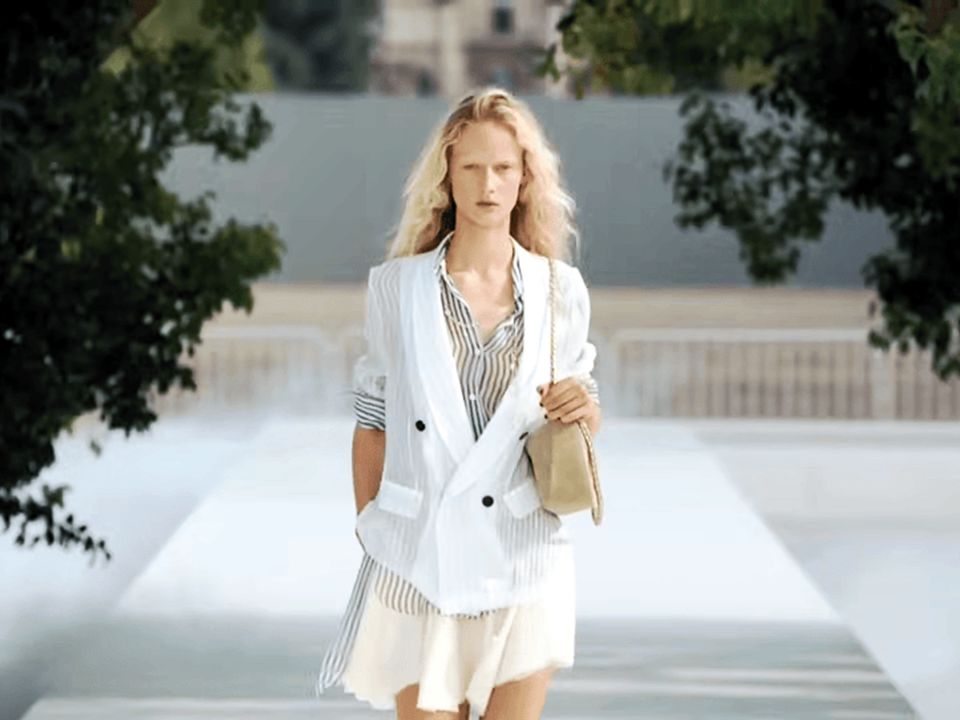
The Dior invitation this season is the most talked-about because it came in a fairly large box. Inside, there was a pair of walnuts, cushioned as if they were high jewellery. On the invitation card itself, the two kernels protected by their unmistakably wrinkly shells were identified as “Wénwán Walnuts”, including the Chinese translation 文玩核桃 (wenwan hetao), which could be translated as ‘cultural plaything walnuts’. Online, they were shown off with the dramatic anticipation of unboxing videos. It was so big a deal that it prompted WWD to write a feature about massive three-dimensional invites: “Why Fashion Show Invitations Keep Getting Bigger”. In response to the preciously boxed 文玩核桃 Olivier Bialobos, deputy managing director in charge of global communication and image at Dior, told the trade paper: “We chose objects that bring good luck, in tribute to Mr. Dior’s superstitious nature and his deep attachment to charms and talismans.” In China, the walnuts are not lucky charms and their use had nothing to do with 迷信 (mixin) or superstition, but something far more mundane: 养生 (yangsheng)—maintaining good health. For the modern user, to keep the hands occupied.
What is fascinating to us is the specificity. Dior specifically chose the 文玩核桃. That is a very precise cultural reference. The average European or American luxury consumer is unlikely to distinguish a 文玩核桃 from a regular walnut. The distinction only becomes meaningful if you are addressing people familiar with Chinese culture. Who would immediately recognise the cultural practice of rubbing and pairing the nuts? Or, the the 养生 associations? The more culturally specific the object becomes, the more the Dior narrative starts to look like a selective extraction. They don’t need a global audience to understand 文玩核桃. They only need one audience. And right now, no luxury house can afford not to think about China. That doesn’t necessarily mean the gesture is cynical. Luxury houses have borrowed from Chinese objects, Japanese objects, Indian objects, and countless others for decades. Sure, the boilerplate “cross-cultural dialogue”. But the choice of a pair of specifically Chinese nuts, presented as a central symbol, inevitably raises the question: Why this object, and why now?
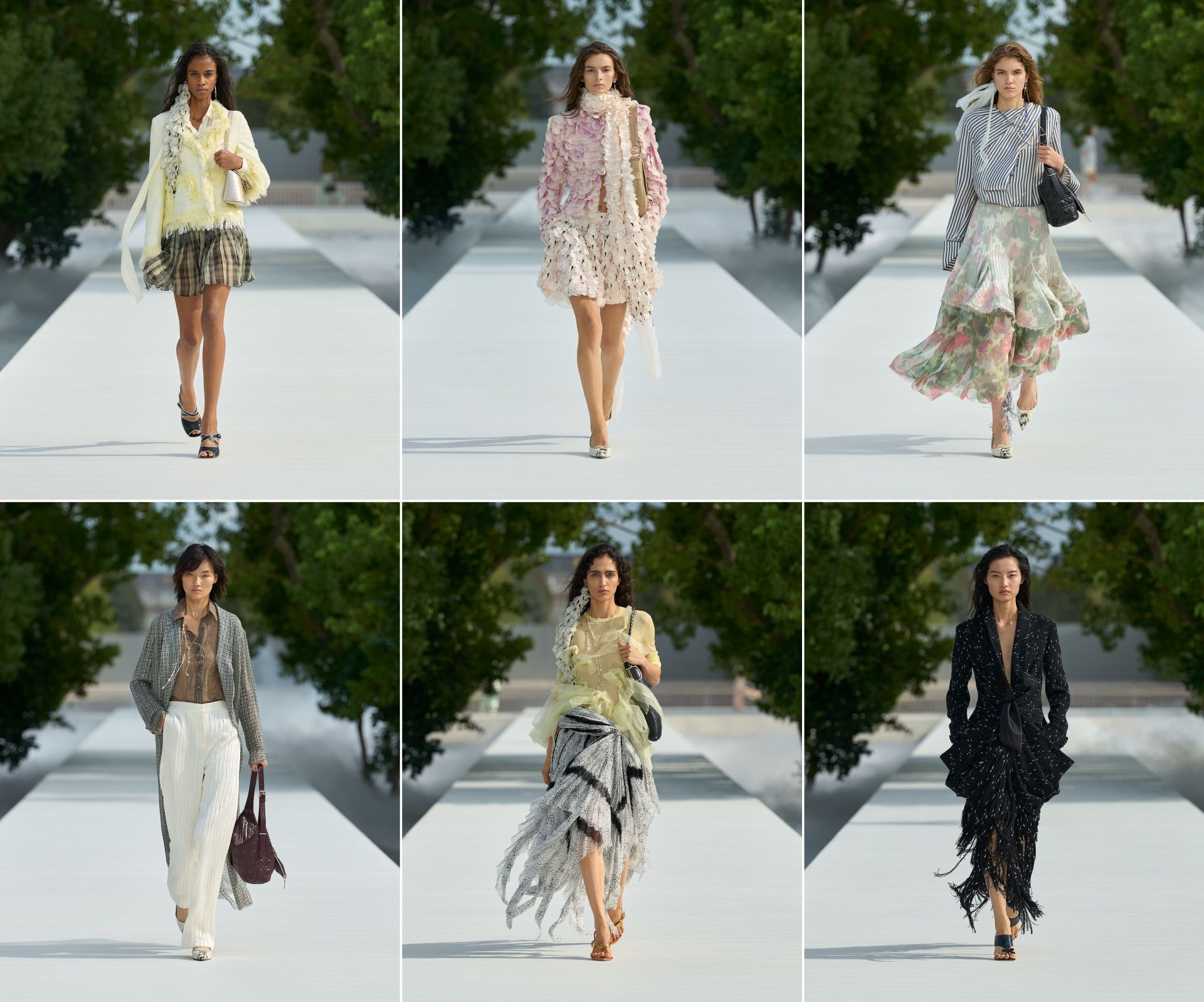
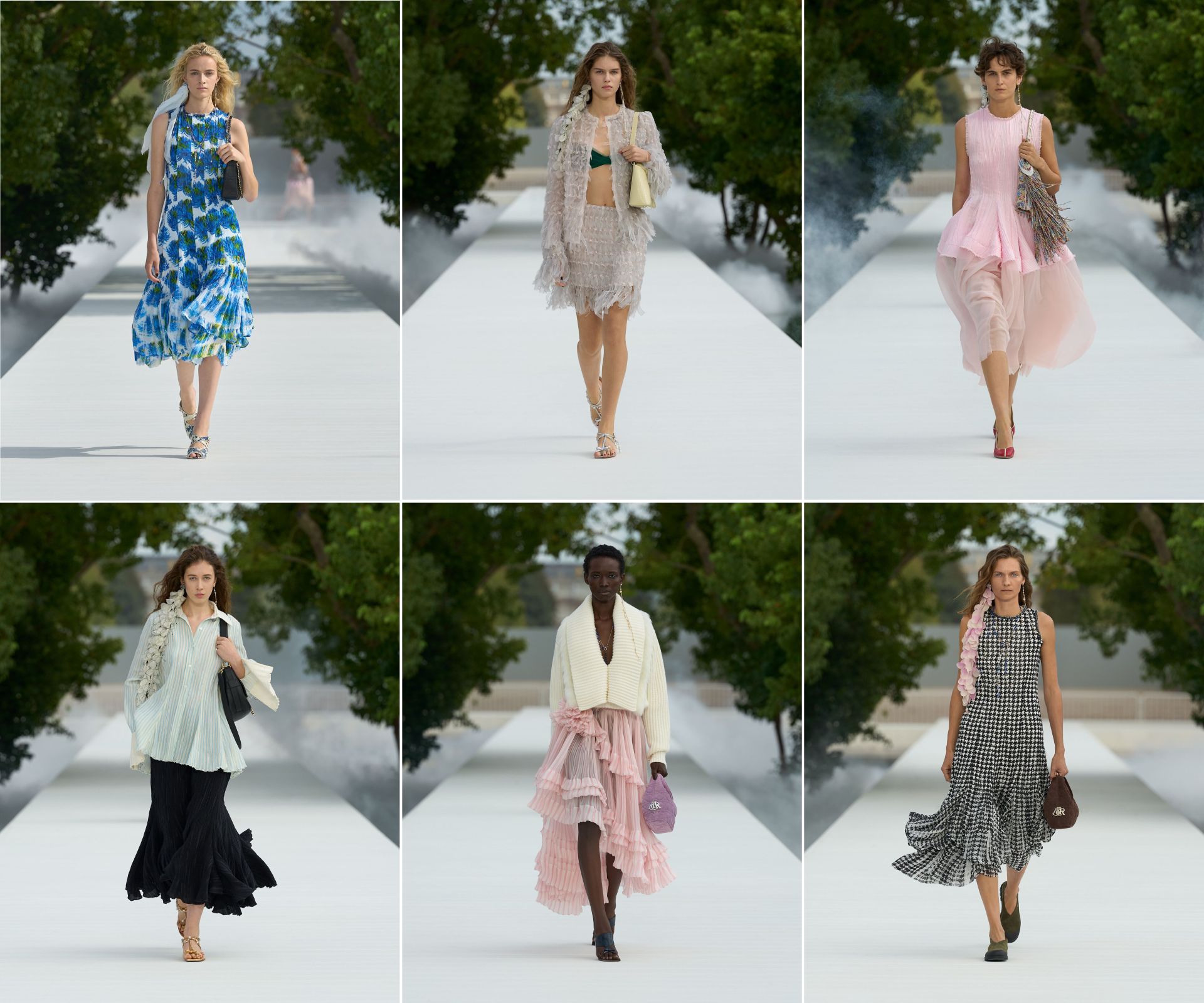
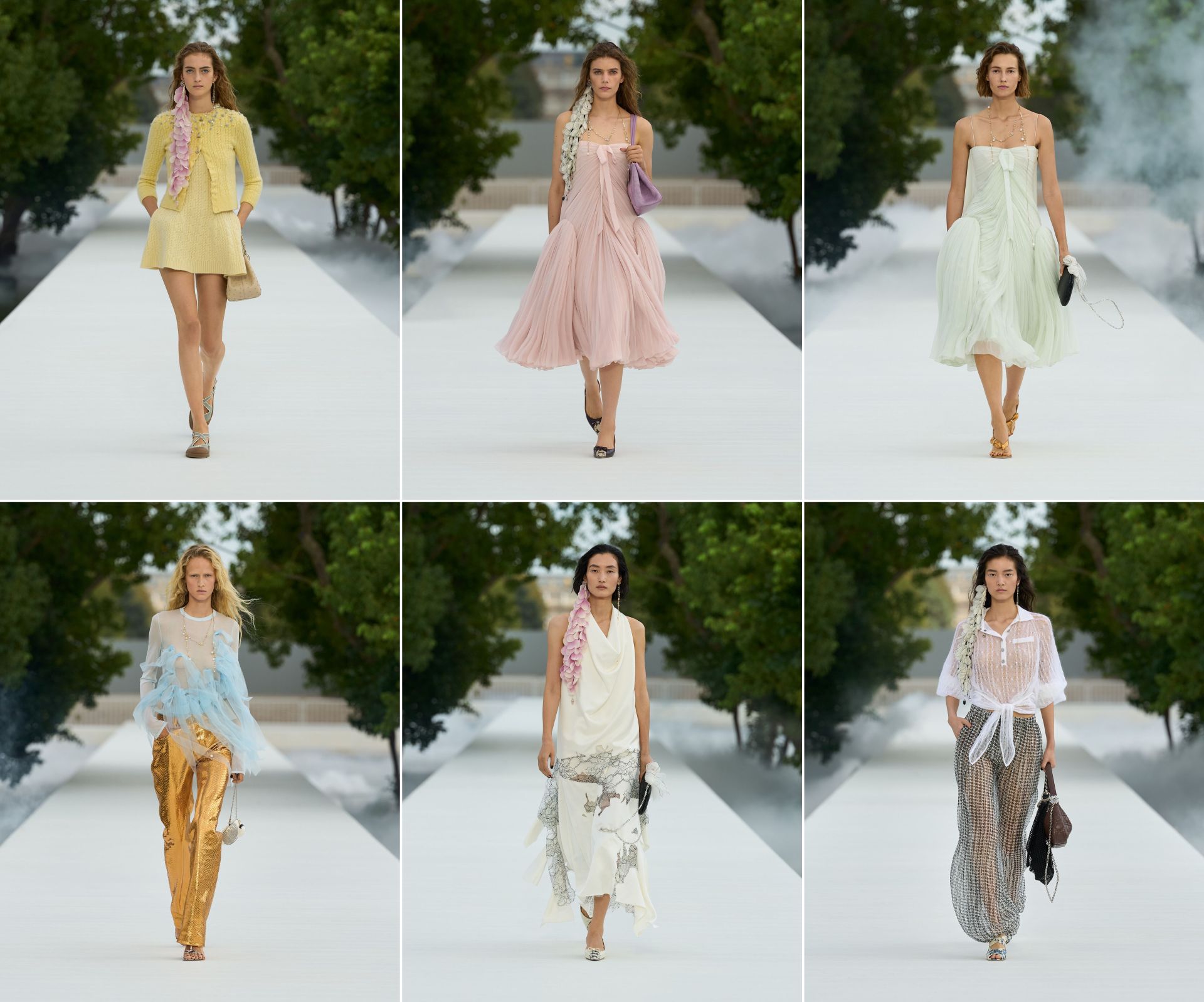
We looked for the visual clues, but the walnut itself did not organically connect to the strongest visible features of the collection. Our fault entirely: we were seeking an architectural joint when we should have been accepting the deconstructed void. If we look at the first Chinese word for walnut, there is also the homonym (and wordplay) of 合 (he) 和 (he). These are puns known as 谐音 (xieyin), with 合 meaning to fit, match or unite while 和 is harmony, peace, or togetherness. However, those qualities were not evident on the Dior runway. We can understand the styling choice of using one earring, but we are unable to see the 合or the 和 in that fabric emerging from the right ear and swaying below the breast. Could they merely be appendages as profound explorations of movement so that we would be left wondering if they were jewellery? Or something about to get caught in a Grab car door? It looked to us that they existed because they animated dramatically on the runway livestream. We are certain that hanging or laying still in a boutique, they’re far less persuasive. Mr Anderson’ strongest skill at Dior may currently be increasing the amount of narrative attached to ordinary garments. The ear-fabric detail is almost a perfect symbol of that tendency. It was really just a strip of cloth working very hard.
But does it make the underlying clothes more appealing? We are not convinced it does. Looking at the abundance of statement skirts and that inexplicable sheer harem pants, we can’t help but think of Maria Grazia Chiuri. Jonathan Anderson is a flouncier version. Because if you strip away the fabrics, the craft, the rhetoric—and yes, the 文玩核桃—there is an uncomfortable structural similarity between the two of them. Sure, they start with different references, but emerge with the same mechanism. The further Mr Anderson moves from his early Loewe days, the more he is drawn the to the path Ms Chiuri trodded. Mr Anderson was quoted in WWD to have said, “What if tailoring is imagined as flou?” It certainly is elegantly phrased, but the underlying proposition does not strike us as especially novel for 2027. After all, Nicolas Ghesquière made the same proposition the in the spring/summer 2025 season. That collection was described by the house as fusing tailoring with airy contours and fluid forms. There were no imported nuts involved. Dior’s study of lightness did not crack theirs. Mr Ghesquière was interested in keeping tailoring and flou in productive conflict. John Anderson seemed less interested in the contradiction than in the release from it. He tried to make tailoring become flou. Why a hard nut when the collection is so much about softness isn’t transparent. A real 文玩核桃 acquires its patina through genuine use. It is lived. Dior’s weightless fluff is not.
Screen shot (top): dior/YouTube. Photos: Dior

