Two words for a people, yet the spotlight found only one Pink
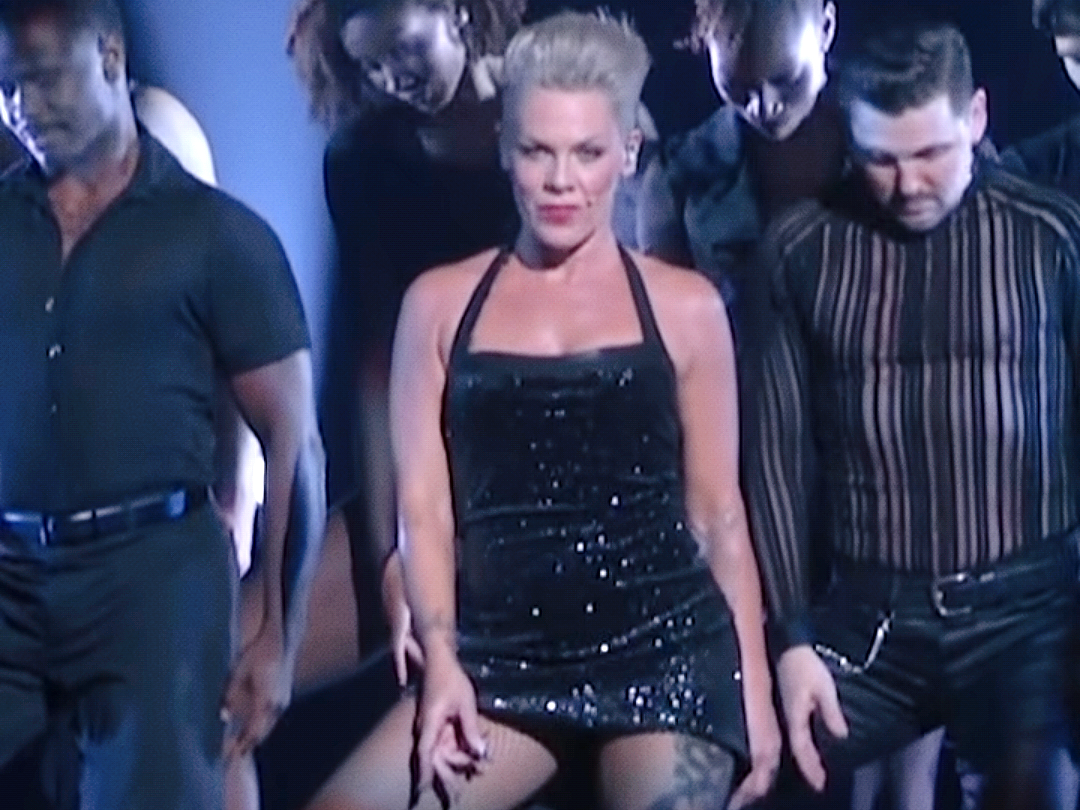
Ego is the cornerstone of the artistic temperament. But, when it breaks containment, it tends to curdle into an unedifying public farce that routinely weaponises “us” when it distinctly meant “I”. In the wake of the Macklemore firestorm, Pink—a rare species of mainstream agitator—dutifully added her own predictably outraged voice to the swelling chorus. She first deftly shared a post from the advocacy group StopAntisemitism, which had awfully attacked two unambiguous words that Macklemore used, cleverly reframing them as “anti-Israel propaganda”, a “false genocide”, an “ambush” of Jewish fans, a “political nightmare against the Jewish state”, and the phrase alone was “grounds for refunds and apologies”. Pink, many saw, endorsed a post that treated a two-word call-to-action not as a statement about a people, but primarily as an offense committed against Jewish concertgoers, as well as Israel. Netizens called her out. When initial pushback arrives, she posts a series of defensive, snarky memes. On 12 September, she penned a reaction piece on Instagram of such profound length that any composition teacher would weep at the prospect of grading it.
Then, the backlash arrived. Unsurprisingly, Pink shifted her reaction to her own experience and identity. In that lengthy statement, she spent considerable space (even taking up the comments section, instead of using a carousel of slides) to discuss her Jewish identity, her UNICEF work, the assumptions people made about her, how social media treated her, and how she felt misrepresented. From a rhetorical standpoint, that was a familiar pattern in today’s celebrity discourse. Their experiences matter. The original issue becomes secondary to the celebrity’s experience of the backlash. We read her unwieldy sketch of her life, thrice. The repetition was necessary, both to survive its length and to ensure we caught every meaning in the text even if that would be like picking out flower sprinkles in a salad. We stand with the many, many folks who feel she had transformed a socio-political statement about a people into a drama about herself. Public figures often respond to criticism by clarifying their position and defending their reputation. We get that. But the criticism she was expressing was really about narrative displacement: the spotlight moved from the subject of the dispute to the misfortune—and danger—of her being caught inside it.
We stand with the many, many folks who feel she had transformed a socio-political statement about a people into a drama about her important self
We are unclear why we were suddenly watching a multi-millionaire retreat into the fortress of her own hurt feelings while a humanitarian crisis plays out in the background. The manifesto checks every predictable box of celebrity extreme, wobbly hurt, even the dragging up of a decade-old costume controversy to discredit Macklemore. But what was most unsettling was her use of her being a mother as if the sanctity of maternity granted an automatic monopoly on moral clarity. “What I need is to be able to say, as a Jewish mother, that scared me, and it scared people I love.” She did not say why it scared her, whether the fear is proportionate, whether the interpretation is fair. And, once she invoked the phrase “Jewish mother”, the argument suddenly wears a suit of armor no one dares scratch. She was no longer simply a participant in an argument. She becomes a caretaker, a protector, a representative of vulnerable dependents. The rest of us are monsters. Moreover, Pink was not scared any more than she wanting the discussion to proceed through the lens of her fear. She is extraordinarily privileged: She has money, security, influence, lawyers, publicists, multiple homes, a global platform, and direct access to millions of people. She is insulated from the dangers that many of us face every day. But that’s the point because it strips away the power imbalance. The wealthy celebrity disappears; the fearful Jewish mother remains.
But what stood out for us in her IG novella was the one-line paragraph: “You don’t get to decide that for us.” This came after she said that Macklemore “took the mic to tell all of the Jews in the stadium that it was not about them.” Suddenly, the argument was recast as a question of collective identity and group membership. Surreptitiously, she blurred the focus on the subject. It became a dispute over recognition, identity, and personal legitimacy. Rhetorically, the conversation migrated a very long way from the subject that triggered it. The irony is that Macklemore used only two words. Yet the subsequent discourse ballooned into a long-winded explanation about motherhood, ancestry, intentions, belonging, and misrepresentation. The people named in those two words largely disappeared from the conversation. Macklemore spoke earnestly. He did not bully. He did not blast. He did not blame. But now, the object of concern changed to one mother who was “scared”, so much so she needed to scold. It morphed from a humanitarian crisis to the interior life of a Western pop star. And the only thing common between them is the letter P.
Screen shot: pink/Instagram

