When forced to account for a opening act’s abrupt exit from his American tour, Ed Sheeran quickly discovers that moral fortitude is entirely optional once the PR damage control begins
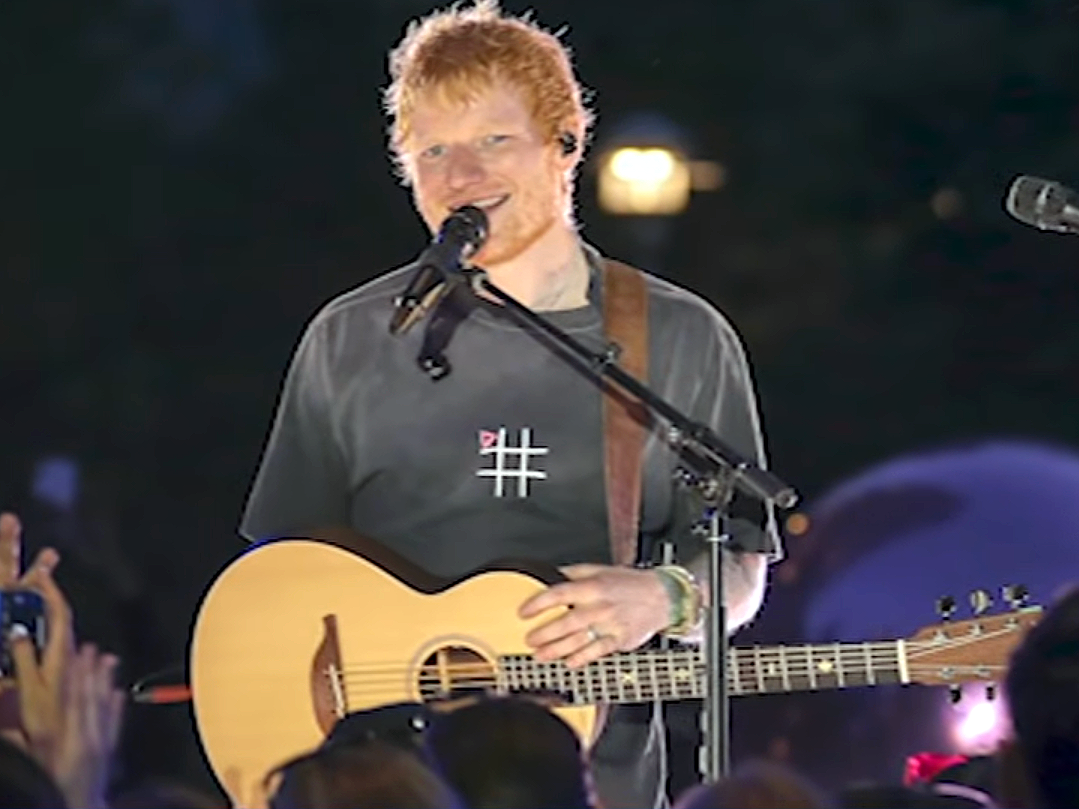
Ed Sheeran during The Loop tour. Screen shot: abcnews/YouTube
The absolute moral bankruptcy of modern pop royalty when faced with the mildest gust of institutional pressure can be truly staggering. By now, the aftermath of rapper Macklemore taking a moral stand while performing at the Ed Sheeran concert in New Jersey is all over wherever news is dispensed, but what is perplexing is the response from the British singer, who seemingly believes that holding a microphone exempts one from erecting a spine. Ten hours ago, or more than 36 hours after the fiasco officially flared up and made headlines, Mr Sheeran posted a statement on Instagram—shocking to literally no one—explaining his cowardice in real-time. Or why a multi-millionaire was seized by sudden, acute paralysis in the presence of a billionaire. Apparently, a checking account with seven figures is simply too light to balance out the gravitational pull of a stadium owner walking into a room.
These days stars, much like influencers, don’t apologise. They issue a multiple-slide IG “statement”. In Mr Sheeran’s case, six. The response is essentially a nervous recoil from Macklemore’s inoffensive invocation of “free Palestine”. He opened with thoughts on what he defined from the the start as a “conflict”, writing “I am appalled by the conflict between Israel and Palestine.” We noticed right away that “appalled” is not horrified. It is the safe, bloodless verb of the spectator who wishes to register an emotion without affirming a reality. And to dignify this slaughter with the word “conflict” is to frame a one-sided annihilation as a duel. Naturally, Israel comes first in the sentence—because when writing propaganda disguised as neutrality, the state holding the biggest dagger is always granted top billing.
We noticed right away that “appalled” is not horrified. It is the safe, bloodless verb of the spectator who wishes to register an emotion without affirming a reality
Ed Sheeran is a songwriter; he is in the business of communicating through songs. He understands the nuances of words and what they can evoke. Yet, in his statement, he showed that he is linguistically challenged. An artist uses language to illuminate reality. He, instead, managed to hammer himself squarely on the thumb with it. In his second slide, he executed a flashy harakiri. “I spoke to venues at length all week to try and build a bridge.” First, there’s the feeble “try”. It immediately brought to mind the James Ingram song Just Once: “I did my best, but I guess my best wasn’t good enough”—a line sergeants during national service love to make recruits sing, out loud. And then, “build a bridge”. Between what points or who? Surely, a songwriter knows that that is a geography-free cliché— imagines construction without a span, confusing the act of laying bricks with actual connection. And then he pulled out a name: Robert Kraft, the billionaire owner of the New England Patriots and CEO of The Kraft Group.
It became time to remember that when the Jewish billionaire stadium owner—a prominent figure who has faced public controversy, most notably making headlines in 2019 when he was charged with solicitation of prostitution in Florida (charges that were eventually dropped after a court blocked video evidence)—enters the chat, the headliner is rarely more than a tenant in someone else’s empire. Mr Sheeran essentially tried to launder his own capitulation through a venue owner and a promoter’s contract, pretending that holding the briefcase somehow absolved him of sharing the loot. It is, however, far easier to see that he wanted the credit for inviting a friend on tour (because Macklemore had, apparently, asked), but traded his backbone for a box-office guarantee when he saw two signatures other than his own. What bridge was indeed built? Not even a rope crossing. This chum-to-the-world persona ultimately did not allow him to cross to any side. The bridge is celebrated as an object in itself. The destination is never named.
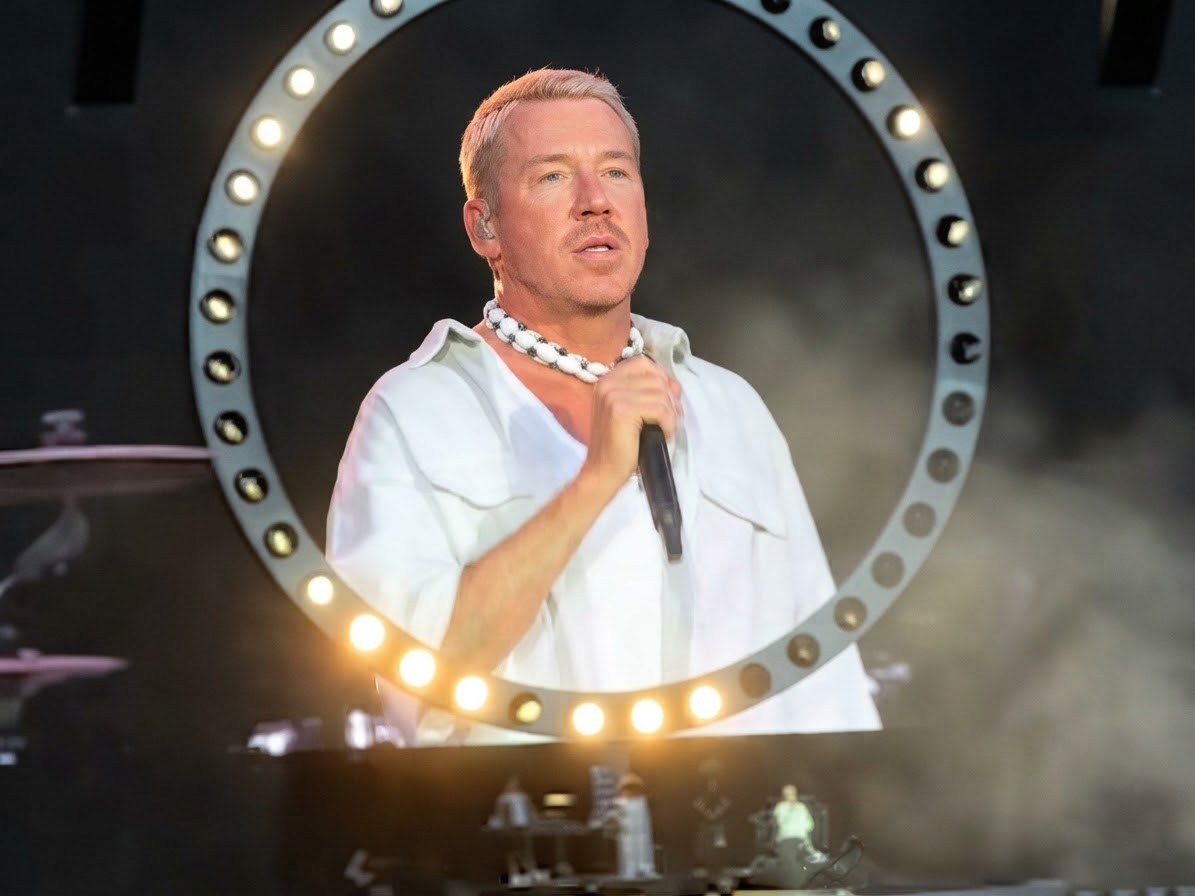
Macklemore making his plea. Screen shot: abcnews/YouTube
It would be tedious—and maddening—to examine every single one of the lamely-written slides. There should be a strict limit to how many excuses for intellectual destitution a person can ingest before pure self-preservation kicks in. Still, one particular masterpiece of delusion managed to transcend the rest, leaving one final point that demanded attention. Mr Sheeran wrote firmly: “I am not complicit.” Who said he was? And, if he believes so, in what? That is a curious claim. Did he want to say he was not entangled? But not involved and not complicit aren’t the same thing. The first is administrative; the second is moral. In fact, the premise is simpler than he thinks. Everyone now pissed with him requires only an answer to a single, unadorned question: “Where do you stand?” And the answer came as “I am not complicit”. With the six funereal-looking slides, he spent a great deal of effort explaining what he is not, but very little was expended to shed light on what he is. That was a statement of distance, not belief.
When the people running the culture are rewarded precisely for their ability to pacify and entertain without disturbing the peace, you end up with a world where even pop’s premier corporate diplomat become the extension of corporate risk-management. We have been repeatedly told that Ed Sheeran is one of the greatest songwriters of his generation. That could be true, but ultimately, his legacy won’t be measured in reviews. It will be weighed in gate-receipt gold. English music-makers conquering America to make vast amounts of money is as old as Liverpool lads realising Yankees will happily pay West End prices for a three-chord racket. Yes, from the Beatles to Duran Duran to Coldplay, the cultural addiction to conquering the U.S. market runs deep. Coldplay’s Chris Martin even served as the “creative curator” of the World Cup’s first-ever Super Bowl-style halftime spectacle, marrying massive sporting capital and toothless, feel-good institutional pop. It is a multi-generational pilgrimage, really. They cross the Atlantic as innovators, but by the time they reach the apex of stadium stardom, they have almost always been absorbed into the American corporate matrix—where protecting the brand means checking your spine at the customs gate, before ICE gets to it. A country that treats foreigners with bureaucratic suspicion easily demands total moral surrender in return.
Update (16 Sep 2026, 16:05): Hours after Ed Sheeran’s stunning Instagram statement, all his opening acts for The Loop American tour has pulled out, including Irish singers Aaron Rowe, Lukas Graham, Mr Sheeran’s own tour band Beoga, and the American singer-songwriter, brother of Billie Eilish, Finneas (both are of Irish and Scottish descent). Media reports are now describing the unsupported pop star as “scrambling to save his tour”

