Ten years at Uniqlo U proves to be the perfect run—long enough for Christophe Lemaire and Sarah-Linh Tran to permanently elevate our everyday wardrobes, and brief enough to bow out while the collection still shines
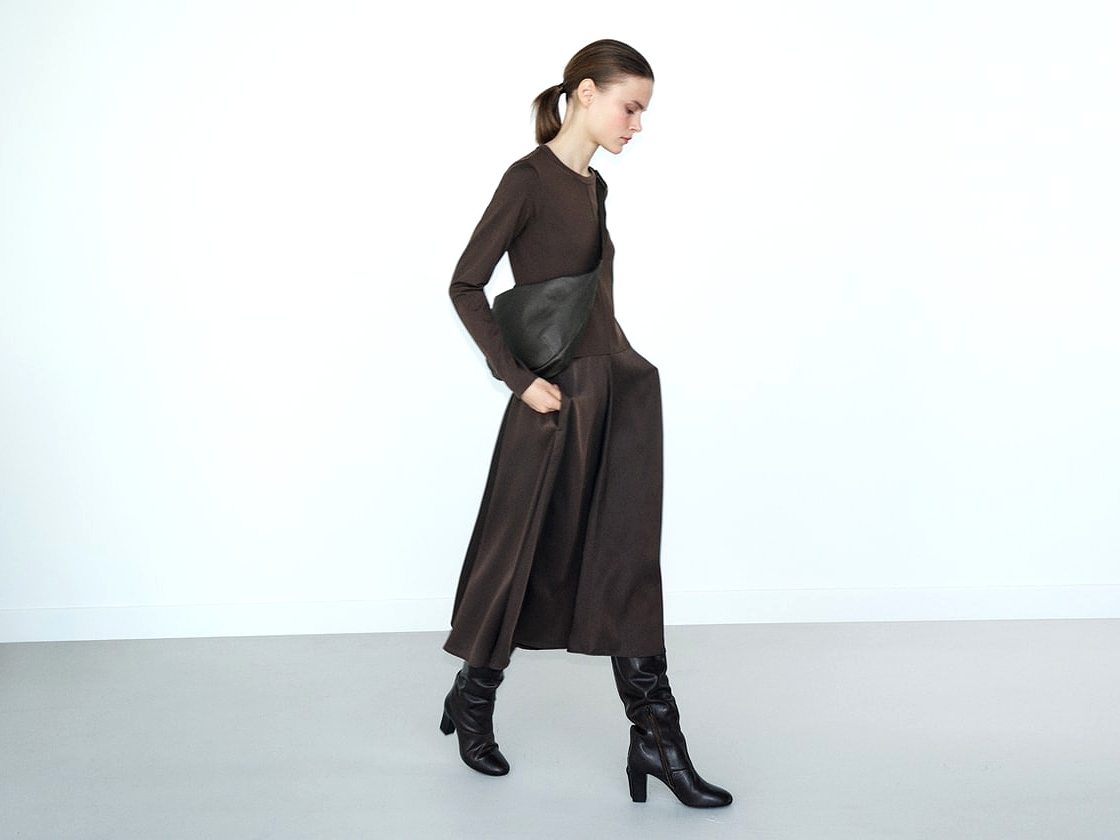
Sleek ensemble from the Lemaire team’s last Uniqlo U collection. Photo: Uniqlo
A decade offers room enough to leave an indelible mark, and wisdom enough to walk off the studio while the light remains perfect. The duo behind the French brand Lemaire, Christophe Lemaire and his partner Sarah-Linh Tranh, are parting ways with Uniqlo U with a beautifully calibrated swan song. In a press release and corporate rollout detailing the fall/winter 2026 10th anniversary collection, Uniqlo’s parent company, Fast Retailing, announced that the duo steering the sub-label Uniqlo U will conclude their journey with the brand. Interestingly, after acknowledging his hire’s contribution to developing what was then a nascent concept, president and CEO Tadashi Yanai remarked in his own statement: “I hope that our relationship with Mr Lemaire will continue into the next chapter.” what next chapter remains? Perhaps this may not be a full stop, but a transition.
Interestingly, president and CEO Yanai Tadashi, in his own statement, after acknowledging his hire’s contribution to the development of what back then was a new concept, said, “I hope that our relationship with Mr. Lemaire will continue into the next chapter.” It sounds to us that Mr Tadashi’s parting hope hinted at something beyond a clean break. Fast Retailing is known to protect its star creative directors with the sort of airtight discretion usually reserved for a state secret or a non-disclosure agreement drafted by a prestigious Tokyo law firm. And they have no qualms resuscitating what would be, for others, dead sub-brands: the marvelously minimalist +J label, for example, conceived in collaboration with Jil Sander. To call the relaunch of the +J in November 2020 enthusiastically received is an exercise in understatement that is on par with describing a stampede as a brisk jog. Like Jil Sander, the Lemaire duo are primed for further collaborations.
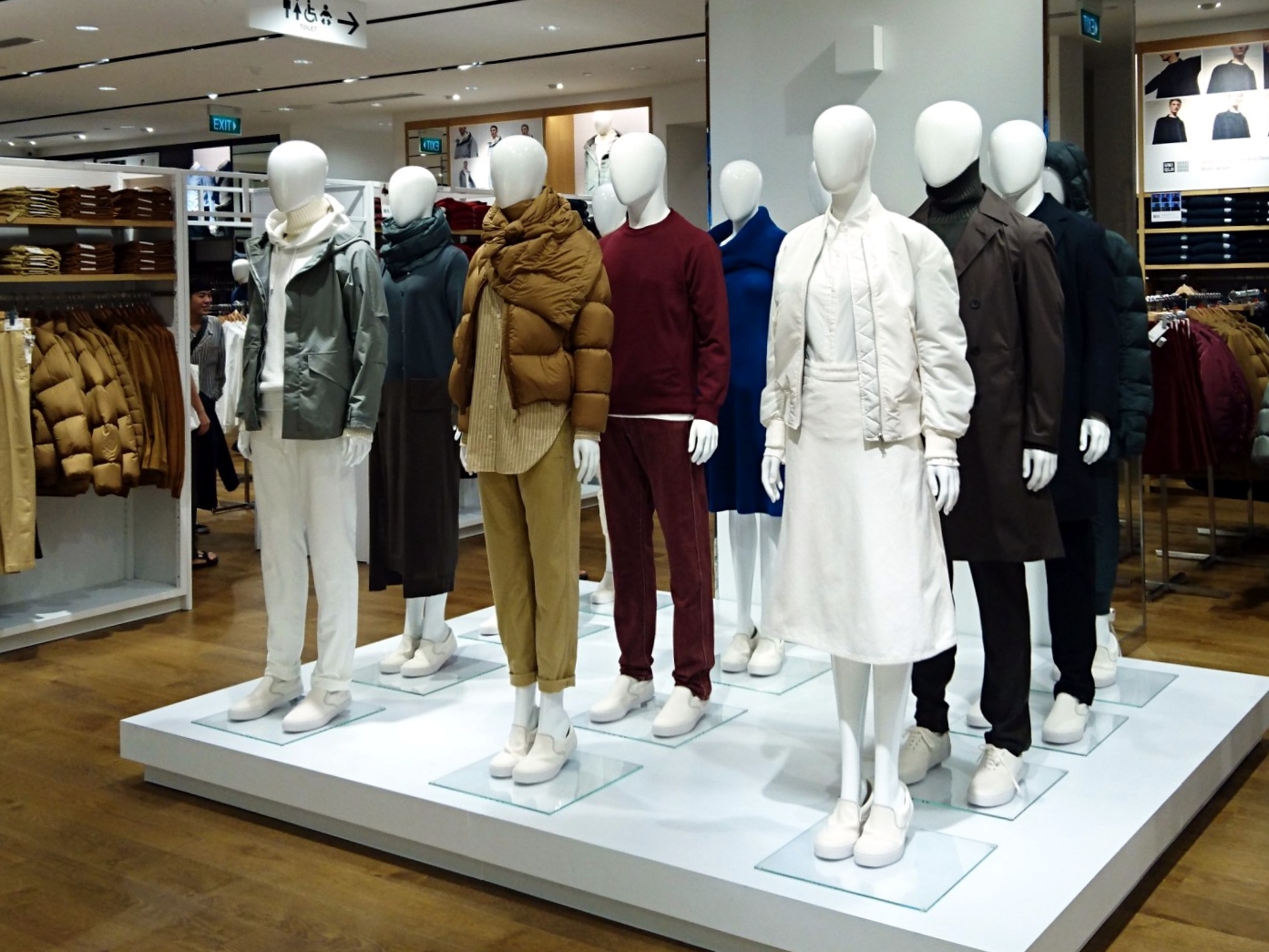
Uniqlo U launch at Orchard Central in 2016. File photo: Galerie Gombak for SOTD
In fact, Uniqlo U was a sort of second act for the Lemaire brand at the Japanese retail giant. In 2015, Uniqlo and Lemaire collaboration was launched at a time when roomy silhouettes were considered novel—in fact, long before the Airism cotton oversized T-shirt , first introduced in 2020, supposedly became the national obsession among certain male demographics a couple of years later. But it would take Uniqlo U’s version in their sometimes off-beat dusty colours that really became the staple of fashionable wardrobes. We recall that in 2016, at the launch of the second Uniqlo and Lemaire collection at their ION Orchard store, a woman firmly told her boyfriend, who had tried pair of joggers, that what he had on were “too baggy”. And then she educated him: “Aiya, nobody wears loose pants, lah. You look like ah pek.” Back in the day, Uniqlo was indeed guilty of a different kind of detention: trapping consumers in trousers so painfully skinny that wiggling required an act of Parliament. But little did she know.
In the mid-2010s, the general public was still psychologically tethered to the strange stranglehold of slim-fit culture, making Lemaire’s leaning on generous proportions feel genuinely radical and, to the uninitiated, wildly baggy. Uniqlo U iteration of the Airism cotton oversized T-shirt placed carved a distinct niche ahead of other mass-retail brands, possessing a visual weight and design clarity that punched far above its price. Along the way, the style was so well-loved that it became Singaporean men’s “national uniform”—worn by office workers, students, café staff, and streetwear kids alike. Uniqlo even described it in its stores’ visual communication as “The SG Uniform”. In one fell swoop, it lost the aura of distinction. One cafe owner, who has closed his business because it “was not tenable”, told us: “when I wanted black T-shirts as uniform for my staff, I just went into Uniqlo and grab those Uniqlo U tees.” It practically doubled as standard-issue.
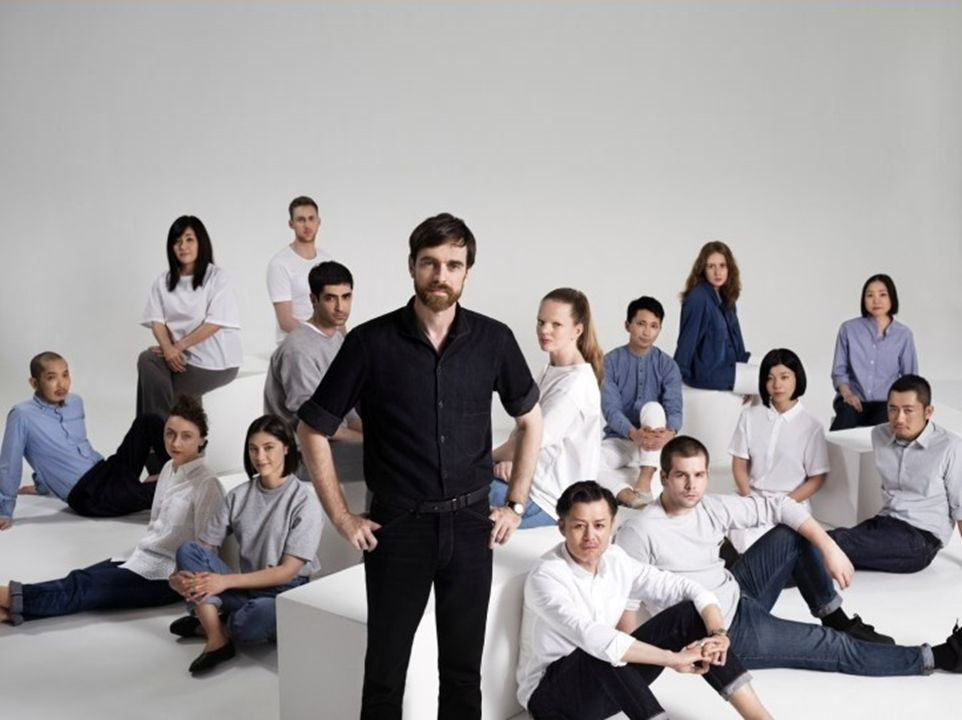
Christophe Lemaire (centre) with his team at the Uniqlo R&D Centre in Paris back in 2016. Photo: Uniqlo
The success of the oversized T-shirt has been attributed to the easy “democratisation” of fashion. Everyone could have a piece of it. “Democratisation” sounds noble, but in fashion it often means flattening. The oversized tee’s success was framed as accessibility—anyone could wear it, and everyone did wear it. What began as a boxy, Paris R&D‑approved garment became the default. The tee was no longer fashion, but logistics, like air‑conditioning or MRT trains, necessary but invisible. But as it stands, Mr Lemaire and Ms Tran didn’t just sell clothes; they systematically broke the conditioning of an entire decade’s worth of hyper-restrictive high-street tailoring, turning what was once dismissed as uncle-wear (”ah pek” style) into the undisputed uniform of comfort-fit, modern elegance. And, nearly a decade later, fashion has duly rediscovered it the moment the rest of the island stopped caring. As tomb robbers would likely say, nothing beats the thrill of digging up a corpse just as the ground has settled.
In 2023, Uniqlo introduced its third sub-label, also distinguished by a letter of the English alphabet, called Uniqlo: C. Stewardship of the new line was handed to the British designer and former Givenchy creative director, Clare Waight Keller (the ‘C’ in the label presumably a nod to her given name). If Uniqlo U was the Lemaire duo’s Parisian minimalism, C was meant to be Ms Keller’s trend-led counterpoint. Garments from Uniqlo U never looked like they were trying to be clever or overly styled; they just offered pieces that felt instantly lived-in, allowing the wearer to move without restriction. The line does not trend on exaggerated silhouettes, while C tends to. Uniqlo U ran a disciplined marathon; Uniqlo C sprints through a trend cycle like it’s being hounded. The parent company tightly guards individual line figures, but retail data, and market trajectory reveal distinct performance patterns between the two: Uniqlo U won on structural endurance—its performance was measured in how it quietly anchored a decade of steady, repeating essentials. Uniqlo C gains on immediate retail and social media theatre, converting rapid-fire trends into swift checkouts. Fast Retailing never bins valuable design equity—they simply deep-freeze it until nostalgia hits critical mass. +J made made a virtue of it.

