Olivier Rousteing is confirmed to go to Rabanne. It is unlikely he will sing a new tune
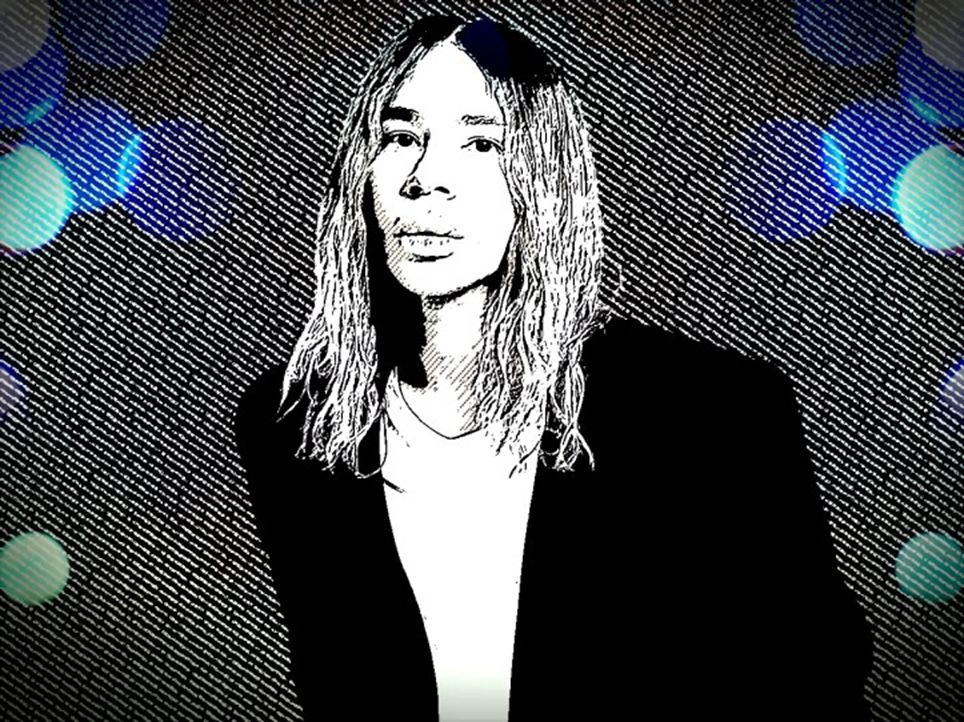
Among rumours of ‘unhoused’ designers appointed here and there, those surrounding Olivier Rousteing seemed more true than most. And they are. The announcement came earlier today and no one was surprised. Rabanne has confirmed the hiring of Mr Rousteing as the replacement for fellow Frenchman Julien Dossena, who was the brand’s creative director for 13 years, just one shy of Mr Rousteing’s not unimpressive 14 at Balmain. Mr Dossena was the go-to indie designer among customers who do not care for the ‘glamour’ of the older houses desiring to play the culture game. He gave Rabanne a cool, intellectual, and slightly underground Parisian vibe that felt wearable yet distinct. A sort of Christopher Bailey gone rogue. And it seemed to have worked since he was there over a decade. BOF reported that Rabanne grew exponentially under Mr Dossena’s watch, officially surpassing €1 billion in sales in 2023. No reason to rock the boat. Yet, business is rarely governed by logic alone, and then came brand owner Puig’s recently quiet reshuffle of the brand’s entire leadership team. While Mr Dossena excelled at building an indie-insider following, Puig’s broader strategy was for Rabanne to be a mega-brand. And for that, they need a mega-designer.
Olivier Rousteing is also a brand sales builder, but more importantly, he’s an audience builder, whether they spent on the brand or not. His Balmain Army, named after BTS’s The Army, following the Balmain X H&M collection in late 2015, was a considerable force—their support was best seen in the massive Balmain Spring/Summer 2023 show at the Stade Jean-Bouin, a rugby stadium in Paris. At that event, reportedly attended by 10,000 to 12,000 fans, Cher walked the runway. He is, therefore, also an expander of celebrity following. Beyoncé wore his gown at this year’s Met Gala and sang his praises to the media. She even hailed his friendship—“Olivier is someone who’s been so loyal to me,” she told the media, “and with whom I’ve created so many incredible, iconic looks.” Those included her co-designs of a 16-ensemble couture collection inspired by her Renaissance studio album. Alongside Beyoncé, the just-as-effusive Rihanna and Kim Kardashian form the foundation of his glamorous inner circle, frequently taking to social media and interviews to champion his vision. Mr Rousteing, therefore, comes with a built-in cheerleading team. Rabanne must have salivated.
Olivier Rousteing is also a brand sales builder, but more importantly, he’s an audience builder, whether they spent on the brand or not
Many luxury maisons are no longer crucibles for experimentation. Clothing designs must now concur with balance sheets. Or sign a devilish pact with algorithms. Digital frameworks are trained on historical performance data. By definition, they tend to favour what has already worked. Mr Rousteing has proven to have this already-worked formula that will fit neatly into can-work-better Rabanne. When brands rely on these systems to dictate creative direction, they enter an aesthetic spiral that may just end at the bottom. This produces the “Instagram face” of corporate brand identity: commercial, screen-friendly, and forgettable by tomorrow. The pact also requires the brand to be a constant content machine. The requirement to feed the algorithm means that brands must prioritise frequency over depth. A brand that exists only to trigger an engagement metric is not a brand; it is a ghost haunting its own feed. The algorithm does not care about your narrative arc; it only bothers with the current dwell time. And Mr Rousteing understands all that; he is even willing to make his own burn tragedy and the theft of Balmain samples before a show into content. Rabanne requires such a bait head.
Historically, a crucible implied a heat-intensive, transformative space. Brands like Balenciaga during the early years of Demna Gvasalia’s reign or, for a less expensive example, Patagonia in its formative years used identity as a site of philosophical confrontation. They were willing to lose money—at least initially—to test a hypothesis about human behavior. But what we are seeing now in unending brand musical chairs is how utterly interchangeable designers are. Or how ‘more of the same’ is preferred by brands, even if it is not by consumers. Brands are not designing worlds; they are designing friction-less funnels. We’ve witnessed it at Valentino, Gucci, and more recently, at Balenciaga and at Fendi, where we saw creative stagnation rather than true evolution. So when it comes to Olivier Rousteing, we are not expecting a different Balmain on new grounds. His approach to fabrics, specifically his preference for heavy, ornate surfacing, is a direct technical overlap with Rabanne’s historical use of metal and unconventional materials. He isn’t likely to abandon these techniques; he’s likely to apply his Balmain filter to them. The media reactions to the appointment have been similar: that he will inject “high-octane glamour, sharp power-tailoring, and pop-culture spectacle” into Rabanne, shifting the brand away from its recent indie-insider tone and turning it into a red-carpet powerhouse. Rabanne has had enough of soft sell. They are ready for hardcore.

